WhatsApp Us (24/7)
 +91 926 888 0303 (24/7)


Our Medical Experts
Max Healthcare is home to eminent doctors in the world, most of whom are pioneers in their respective fields. Additionally, they are renowned for developing innovative and revolutionary clinical procedures.
Find a DoctorDelhi/NCR:
MOHALI:
Dehradun:
BATHINDA:
Mumbai:
NAGPUR:
LUCKNOW:
BHUBANESWAR:

To Book an Appointment
Call Us+91 926 888 0303Basal cell carcinoma is a common form of skin cancer that usually develops on parts of the body that are frequently exposed to the sun such as the face, neck, or arms. It often appears as a slow-growing bump or patch that may bleed, crust, or persist without healing. Although basal cell carcinoma grows slowly and rarely spreads to other parts of the body, it can gradually invade nearby skin and tissue if left untreated. At Max Hospital, our specialists are equipped to manage basal cell carcinoma using proven and effective methods. From precise diagnosis to advanced treatment options such as surgical excision and Mohs surgery, we ensure accurate removal of cancerous tissue with minimal impact to surrounding healthy skin. With a focus on both medical and cosmetic outcomes, our team works to restore skin health and achieve the best possible appearance after treatment.
Basal cell carcinoma (BCC) is the most frequently diagnosed type of skin cancer. It typically starts in the basal cells, which are found in the lowest layer of the skin’s outer surface. BCC usually appears in areas that receive regular sun exposure, such as the face, ears, neck, and scalp.
The condition tends to grow slowly and rarely spreads to other parts of the body. However, if left untreated, it can damage nearby tissues and cause visible changes to the skin. Common signs include a shiny bump, a pink growth, a scar-like area, or a sore that keeps coming back or doesn’t heal.
Basal cell carcinoma is strongly linked to long-term exposure to ultraviolet (UV) radiation from the sun or tanning beds. People with fair skin, a history of sunburns, or weakened immunity may be at higher risk.
Basal cell carcinoma can appear in different forms, each with its own distinct appearance, behaviour, and risk of recurrence. Identifying the type helps determine the most appropriate treatment and how closely the area should be monitored. The main types include:
This is the most common form of BCC, typically seen on the face, especially around the nose, eyelids, or cheeks. It appears as a raised, pearly or translucent bump with a smooth surface. Small blood vessels (telangiectasia) may be visible on the surface. Over time, the lesion may ulcerate or form a central depression with a crust. Though it grows slowly, if left untreated, it can invade deeper tissues.
Often found on the chest, back, or shoulders, this type appears as a flat, reddish or pink patch with a slightly raised edge and a scaly or dry surface. It can be mistaken for dermatitis, psoriasis, or other inflammatory skin conditions. Superficial BCC spreads more across the surface of the skin rather than penetrating deeply. It is more common in younger patients and is typically less aggressive.
This less common but more aggressive form appears as a scar-like, flat, firm, or waxy patch with ill-defined borders. It is usually skin-coloured or slightly yellow and may feel harder than the surrounding skin. Often found on the face, it tends to grow more deeply and infiltrate surrounding tissues, including nerves and muscles, which can make treatment more complex.
This variant contains melanin, giving it a dark brown, blue, or black colour. It can resemble a mole or melanoma, especially in people with darker skin tones. Despite its colour, it behaves similarly to other types of BCC but may require careful examination to differentiate it from other pigmented skin lesions.
This form is known for its aggressive growth pattern, extending deeper into the skin and potentially affecting nearby structures. It often lacks clear borders and may appear as a slightly indurated or thickened area with minimal surface changes. Because it grows beneath the surface, it can be difficult to remove completely without a thorough surgical approach.
Basal cell carcinoma most often occurs due to long-term exposure to ultraviolet (UV) radiation, typically from sunlight. UV radiation can damage the DNA in skin cells, particularly the basal cells located in the outermost layer of the skin. Over time, this damage can lead to uncontrolled cell growth and the development of cancerous lesions. The condition commonly affects areas exposed to the sun, such as the face, neck, ears, and scalp. Several factors can increase the risk of developing basal cell carcinoma:
Identifying these risk factors can help guide preventive steps and encourage early screening where appropriate.
Basal cell carcinoma often develops slowly and may initially go unnoticed, especially if it resembles a minor skin issue. Unlike many other forms of cancer, it rarely spreads to other parts of the body, but it can still grow large, invade surrounding tissues, and cause local skin damage if not treated in time. The symptoms can vary depending on the type and location of the tumour, but some key warning signs include:
Not all basal cell carcinomas look the same, which is why any unusual change in the skin that persists, changes in appearance, or causes discomfort should be checked by a doctor. Early recognition and diagnosis are key to successful treatment and preserving healthy tissue.
At Max Hospitals, diagnosing basal cell carcinoma involves a thorough clinical evaluation followed by precise diagnostic procedures to confirm the type and extent of the condition. Each case is handled by experienced dermatologists and oncologists who use a combination of clinical skills and advanced tools.
The diagnostic process begins with a detailed physical examination of the affected area. The doctor closely inspects the size, shape, texture, and colour of the skin lesion. Questions may be asked about how long the lesion has been present, whether it bleeds or changes over time, and if there’s any pain or discomfort. The presence of multiple lesions or a personal history of skin cancer may also be considered. In many cases, the appearance of the lesion itself strongly suggests basal cell carcinoma.
A dermatoscope is a handheld device that provides a magnified and illuminated view of the skin. It allows doctors to examine specific features of the lesion that are not visible to the naked eye, such as blood vessel patterns, pigmentation, and surface texture. Dermatoscopy helps differentiate basal cell carcinoma from other skin conditions including benign moles, seborrheic keratosis, or melanoma. This non-invasive tool improves diagnostic accuracy and helps guide the need for a biopsy.
A biopsy is the most reliable way to confirm the diagnosis of basal cell carcinoma. At Max Hospitals, several biopsy techniques may be used depending on the location, size, and type of lesion:
The tissue sample is then examined under a microscope by a pathologist to confirm the presence of cancerous cells and identify the subtype of basal cell carcinoma.
This laboratory process involves examining the skin tissue under a microscope to detect abnormal basal cells and confirm the diagnosis. The pathologist assesses factors such as tumour type (e.g., nodular, infiltrative, morpheaform), depth of invasion, and margin status. This information is essential for planning treatment and predicting the risk of recurrence.
In rare cases where the lesion is unusually large, recurrent, or suspected to have invaded deeper structures such as bone or muscle, imaging tests may be advised. These can include:
Imaging is typically reserved for aggressive or neglected cases and is not routinely required for early-stage BCC.
Basal cell carcinoma treatment is tailored to the size, depth, location, and type of lesion. The goal at Max Hospitals is to remove the cancer completely while preserving as much healthy tissue as possible. Our experienced team of dermatologists, oncologists, and surgeons ensures that patients receive precise, effective care using clinically proven methods. Each case is carefully assessed to determine the most suitable treatment option.
Surgical excision is one of the most commonly used treatments for basal cell carcinoma. The procedure involves removing the tumour along with a margin of surrounding healthy skin to ensure complete clearance. It is usually performed under local anaesthesia and may be suitable for both small and large lesions. The excised tissue is then sent for histopathological examination to confirm that no cancer cells remain at the margins.
Mohs surgery is a specialised technique used for high-risk or recurrent basal cell carcinomas, especially on the face or other cosmetically sensitive areas. It involves removing the tumour in thin layers and examining each layer under a microscope during the procedure. This process continues until no cancer cells are detected, allowing maximum preservation of healthy tissue. Mohs surgery offers high cure rates and is ideal for lesions with unclear borders or aggressive behaviour.
This method involves scraping away the cancerous tissue using a curette (a sharp, spoon-shaped instrument), followed by controlled burning of the area with an electric needle to destroy any remaining cells. It is generally used for small, superficial basal cell carcinomas and is performed under local anaesthesia. Though effective, this technique is not usually recommended for areas with a higher risk of recurrence or where cosmetic outcome is a concern.
Cryotherapy involves freezing the tumour using liquid nitrogen to destroy cancer cells. It is a quick, non-surgical option usually reserved for small, superficial lesions. The treated area forms a scab and gradually heals over time. Although less invasive, this method may carry a slightly higher risk of recurrence compared to surgical options.
For certain superficial basal cell carcinomas, especially when surgery is not feasible, topical medications may be prescribed. These include immune-modulating creams or topical chemotherapy agents. They are applied directly to the lesion over a specific period and may help destroy cancer cells. These treatments are usually considered for early-stage or low-risk cases.
Radiation therapy may be used when surgery is not an option such as in elderly patients, those with medical contraindications to surgery, or for difficult-to-reach lesions. It involves directing focused radiation to the affected area to kill cancer cells. Radiation is generally reserved for complex or advanced cases and may require multiple sessions.
BCC is generally considered a low-risk skin cancer because it grows slowly and rarely spreads to other parts of the body. However, if left untreated or not completely removed, it can lead to several complications, especially in cases involving aggressive subtypes or recurring lesions. At Max Hospitals, treatment is designed to minimise these risks and ensure long-term skin health.
Here are some of the potential complications associated with basal cell carcinoma:
By diagnosing and treating basal cell carcinoma early, most of these complications can be avoided. Max Hospitals ensures careful planning, accurate removal, and close post-treatment monitoring to reduce the risk of recurrence and protect skin function and appearance.
Although basal cell carcinoma is one of the most common and treatable forms of skin cancer, taking steps to prevent it can significantly reduce the risk of developing the condition. Since most cases are linked to ultraviolet (UV) radiation exposure, especially from the sun, preventive efforts mainly focus on sun protection and regular skin monitoring. Here are some effective ways to help prevent basal cell carcinoma:
Max Hospitals offers skin cancer screenings, personalised advice on sun protection, and prompt care for any concerning skin changes.
Basal cell carcinoma is rarely life-threatening, as it tends to grow slowly and usually does not spread to other parts of the body. However, if left untreated, it can become locally invasive. This means it may grow deeper into the skin and damage nearby tissues, including muscle or bone, especially when the tumour is on the face or near vital structures like the eyes, nose, or ears. Early treatment helps prevent complications and limits the need for more extensive surgery.
Although BCC does not spread quickly, starting treatment without unnecessary delay is recommended. The longer it remains untreated, the more it can grow in size and depth, making treatment more complex. Prompt care helps preserve surrounding skin and reduces the chance of scarring or the need for reconstructive procedures.
Yes, there is a possibility of recurrence. BCC can come back in the same area, particularly if the cancer was not completely removed during initial treatment. Some patients are also at risk of developing new basal cell carcinomas in other parts of the skin. Regular follow-up appointments and skin checks are important, especially for individuals with a history of skin cancer.
It is not unusual for people with BCC to develop multiple lesions, either at once or over time. This is more likely in individuals with significant sun damage, fair skin, a weakened immune system, or certain genetic conditions. Ongoing monitoring can help detect any new growths early.
Yes. Even after successful treatment, regular dermatological follow-up is advised. These visits help detect any recurrence or new growths early, before they become complicated. The doctor may also assess for any long-term effects of treatment and provide guidance on sun protection and skin surveillance.
Yes, protecting your skin from further sun exposure is essential. This includes using broad-spectrum sunscreen daily, wearing protective clothing and hats outdoors, and avoiding sunbeds or tanning lamps. It is also important to routinely examine your skin at home and seek medical advice if you notice any new or changing spots.
BCC is more commonly seen in people with light-coloured skin, especially those who burn easily or have freckles. However, it can also affect people with darker skin tones, although the risk is lower. In such cases, the cancer may appear in less exposed areas like the scalp, chest, or back, making early detection more difficult.
Yes, although uncommon, BCC can occur in areas not typically exposed to UV radiation, such as the armpits, genital region, or even the scalp. This can happen in people with specific genetic syndromes, a history of radiation exposure, or a weakened immune system. In such cases, diagnosis may be delayed due to the unusual location of the tumour.
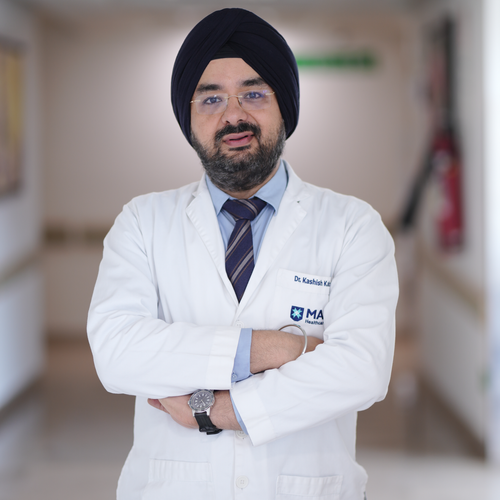
Reviewed by Dr Kashish Kalra, Head of Dept and Consultant, Dermatology, on 05 September 2025.
Email - digitalquery@maxhealthcare.com
Max Healthcare is home to eminent doctors in the world, most of whom are pioneers in their respective fields. Additionally, they are renowned for developing innovative and revolutionary clinical procedures.
Max Healthcare is home to eminent doctors in the world, most of whom are pioneers in their respective fields. Additionally, they are renowned for developing innovative and revolutionary clinical procedures.
Find a Doctor