 WhatsApp Us (24/7)
 +91 926 888 0303 (24/7)


To Book an Appointment
Call us+91 926 888 0303To Book an Appointment
Call us+91 926 888 0303Recent Articles
Why Winter Raises Head Injury Risk: Causes & Symptoms
Winter brings a noticeable drop in temperature, shorter days, and a greater chance of slipping, falling, or getting hurt during routine activities. While most people focus on cough, cold, and seasonal fatigue, one health concern often remains overlooked. Head injuries become more common during cold months due to slippery surfaces, reduced visibility, and stiff muscles that respond slowly in low temperatures. These injuries can affect anyone, whether they are walking to work, commuting on a two-wheeler, playing sports, or simply completing everyday tasks at home, especially young working people class, who need to go out/travel.
Dr. Mukesh Bisht In Neurosurgery Neurosciences Spine Surgery
Jan 09 , 2026
Why Cold Weather Triggers Neck Stiffness: Signs & Symptoms
Neck stiffness is something many people experience from time to time, but as winter approaches, the discomfort often becomes more noticeable. Cold mornings, chilly winds, and long hours spent indoors can leave the neck feeling tight, sore, and less flexible.
Dr. Rajneesh Kummar In Neurosciences Neurology
Jan 09 , 2026
Living with Epilepsy: 5 Everyday Safety Tips
Living with epilepsy can bring unique challenges, but it does not have to limit your independence or quality of life. With the right precautions and awareness, most people with epilepsy lead active, fulfilling lives. Everyday safety is not about restriction; it’s about empowerment, knowing how to reduce risks, and creating an environment that supports your well-being.
Dr. Rajneesh Kummar In Neurosciences Neurology
Jan 07 , 2026 | 5 min read

Blood Clot in Brain: Types, Causes and Treatment
Blood clots, which are typically the body’s natural response in the healing process (to prevent bleeding), can become dangerous when they form inside blood vessels and obstruct blood flow. A blood clot in the brain occurs when a blood vessel becomes blocked or ruptures, disrupting the flow of oxygen and nutrients to the brain. This can lead to severe complications, including damage to brain cells, strokes, or even death. While some individuals may experience mild episodes without noticeable symptoms, others may face serious complications like seizures or paralysis. Understanding the risks and symptoms of blood clots is essential for ensuring prompt medical attention. If you notice any concerning signs, consult a healthcare professional immediately to seek appropriate treatment.
Dr. Kapil Jain In Neurosciences
Jan 06 , 2026 | 7 min read
Most read blogs

Loose motions or Diarrhea is one of the most common ailments across every age group – from infants and mothers to the elderly. Diarrhea is the frequent passage of watery or loose stools across irregular intervals. There are many possible causes of Diarrhea. These include allergies, food poisoning, infections, and stress. As such, Diarrhea is merely a symptom of one of many possible causes. Most of the time, loose motions is not a serious problem and can be treated at home. Below, we've outlined 3 simple h
Max Team In Internal Medicine
Feb 22 , 2018 | 7 min read

To make sure that what you eat helps your body and also helps you stay interested, spread out your food through the day by following different food ideas. You can mix and match the following depending on how much you can eat and whether you are vegetarian or non vegetarian.
Max Team In Obstetrics And Gynaecology Nutrition And Dietetics
Nov 07 , 2020 | 7 min read
When you have loose motions, the most effective way to return to full health is by changing your diet. There are many foods which can help you to soothe your stomach, but there are some foods that can irritate your stomach. We'll proceed by listing out some of the things that you should and shouldn't do when you have loose motions.
Max Team In Internal Medicine
Mar 21 , 2018 | 7 min read

Many people think that squint is a permanent condition and cannot be corrected. But the truth is that eyes can be straightened at any age. Commonly known as “Strabismus”, where the eyes are not aligned in the same direction, this can be present only part of the time, in one or alternating between two eyes. The squinting may turn in (converge), turn out (diverge) or sometimes turn up or down.
Max Team In Ophthalmology Eye Care / Ophthalmology
Nov 13 , 2020 | 7 min read

Strain on Spine- It Could be a Slipped Disc!
Our spine consists of multiple bones called vertebrae that are stacked on top of each other. In between the vertebrae there are protective circular pads called discs, which contain a softer gel-like substance. These discs are responsible for maintaining the body's flexibility and wide range of movement. What is Slipped Disc? It is also known as prolapsed or herniated disc- which occurs when one of the discs is damaged, thereby causing pressure on the nerves. Further, it can also cause back pain, neck
Dr. Sanjeev Kumar Gupta In Neurosurgery Neurosciences
Jan 06 , 2026 | 4 min read
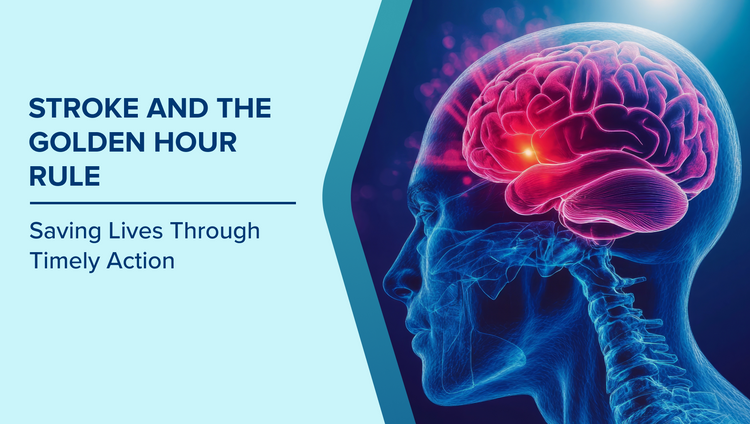
Stroke & The Golden Hour Rule: Risk Factors & Treatment Option
Stroke is a serious health condition that can have life-altering consequences. It happens when the flow of blood to a specific part of the brain is blocked or reduced, leading to sudden loss of function such as difficulty in speaking, facial deviation, loss of limb movement, vision problems, dizziness, or imbalance.
Dr. Abhishek Srivastava In Neurosciences Neurology
Jan 06 , 2026 | 1 min read

Aphasia: Symptoms, Types, Causes & Treatment
Aphasia is a complex and often misunderstood neurological condition that silently challenges affected individual's ability to communicate and express themselves. Beyond the surface, aphasia carries profound implications, affecting not only speech but also comprehension, reading, and writing. In this article, we delve into the finer lines of this condition, exploring its symptoms, causes, treatment options and prevention tips. Let’s begin.
Dr. Nikhil Dongre In Neurosciences
Jan 06 , 2026 | 8 min read

Epilepsy: Symptoms, Types, Causes and First Aid
Epilepsy refers to brain disorders that can cause frequent seizures. It can affect people of any group, but it usually begins in children or people above 60 years of age. If you have two or more seizures, you may be diagnosed with epilepsy. Keep reading to find out more about epilepsy.
Dr. Mohit Goel In Neurosciences
Jan 06 , 2026 | 3 min read
By Specialities
- Aesthetic And Reconstructive Surgery
- Allergy
- Anaesthesia
- Arthroscopic Surgery
- Arthroscopy & Sports Injury
- Audiology
- Ayurveda Medicine
- Bariatric Surgery / Metabolic
- Bone Marrow Transplant
- Breast Cancer
- Cancer Care / Oncology
- Cardiac Anesthesia
- Cardiac Electrophysiology-Pacemaker
- Cardiac Sciences
- Cardiac Surgery
- Cardiac Surgery (CTVS)
- Cardiology
- Child Development Clinic
- Clinical Psychology
- Critical Care
- Dental Care
- Department of General Surgery and Robotics
- Dermatology
- Diabesity Clinic
- Diabetes Educator
- Dietetics
- Emergency & Trauma
- Emergency Medicine
- Endocrinology & Diabetes
- Endodontist & Cosmetic Dentist
- ENT
- ENT(Ear Nose Throat)
- Eye Care / Ophthalmology
- Foetal Medicine
- Gastro Intestinal & Hepatopancreatobiliary Surgical Oncology
- Gastroenterology, Hepatology & Endoscopy
- Gastrointestinal & Hepatobiliary Oncology
- Gastrointestinal Surgery
- General Surgery
- Gynaecologic Laparoscopy
- Gynecologic Oncology
- Haematology
- Hair Transplant
- Hand & Limb Reconstruction
- Head & Neck Oncology
- Health And Wellness
- Hematology
- Hematology Oncology
- Infertility & IVF
- Institute of Laparoscopic, Endoscopic & Bariatric Surgery
- Internal Medicine
- Interventional Cardiology
- Interventional Neurology
- Interventional Radiology
- Kidney Transplant
- Laboratory Medicine / Pathology
- Laparoscopic / Minimal Access Surgery
- Liver Transplant and Biliary Sciences
- Lung Transplant
- Maternity
- Maxillofacial Surgery and Implantology
- Medical & Surgical Gastroenterology
- Medical Oncology
- Mental Health And Behavioural Sciences
- Metabolic And Bariatric Surgery
- Molecular Oncology & Cancer Genetics
- Musculoskeletal Oncology
- Musculoskeletal Surgical Oncology
- Neonatology
- Nephrology
- Neuro Oncology
- Neurology
- Neurosciences
- Neurosurgery
- Nuclear Medicine
- Nutrition And Dietetics
- Obstetrics And Gynaecology
- Oncology Reconstructive Surgery
- Ophthalmology
- Orthopaedics & Joint Replacement
- Paediatric (Ped) Cardiac Surgery
- Paediatric (Ped) Cardiology
- Paediatric (Ped) Endocrinology
- Paediatric (Ped) Gastroenterology
- Paediatric (Ped) Hematology
- Paediatric (Ped) Intensive Care
- Paediatric (Ped) Nephrology
- Paediatric (Ped) Neurology
- Paediatric (Ped) Neurosurgery
- Paediatric (Ped) Oncology
- Paediatric (Ped) Pulmonology
- Paediatric (Ped)/Medical Oncology
- Paediatric Haematology
- Paediatrics (Ped)
- Pain Management
- Palliative Care
- Periodontology
- Physiotherapy & Rehabilitation Medicine
- Psychiatry
- Pulmonology
- Radiation Oncology
- Radiology
- Rheumatology
- Robotic Joint Replacement
- Robotic Surgery
- Spine Surgery
- Surgical Oncology
- Thoracic Oncology
- Thoracic Oncology Surgery
- Thoracic Surgery
- Transfusion Medicine
- Uro-Oncology
- Urology
- Vascular Surgery