 WhatsApp Us (24/7)
 +91 926 888 0303 (24/7)


To Book an Appointment
Call Us+91 926 888 0303Atrial Septal Defect Treatment: A Complete Family Guide to Managing Congenital Heart Disease
By Dr. Ambukeshwar Singh in Interventional Cardiology
Nov 28 , 2025 | 5 min read

Atrial Septal Defect, also known as ASD, is one of the most common forms of congenital heart disease found in children and adults. Although the diagnosis can worry any parent or family member, the encouraging news is that ASD treatment has advanced greatly over the years. With modern techniques such as catheter-based closure, device closure, and minimally invasive heart procedures, most patients are treated safely and recover well.
What Is ASD or Atrial Septal Defect
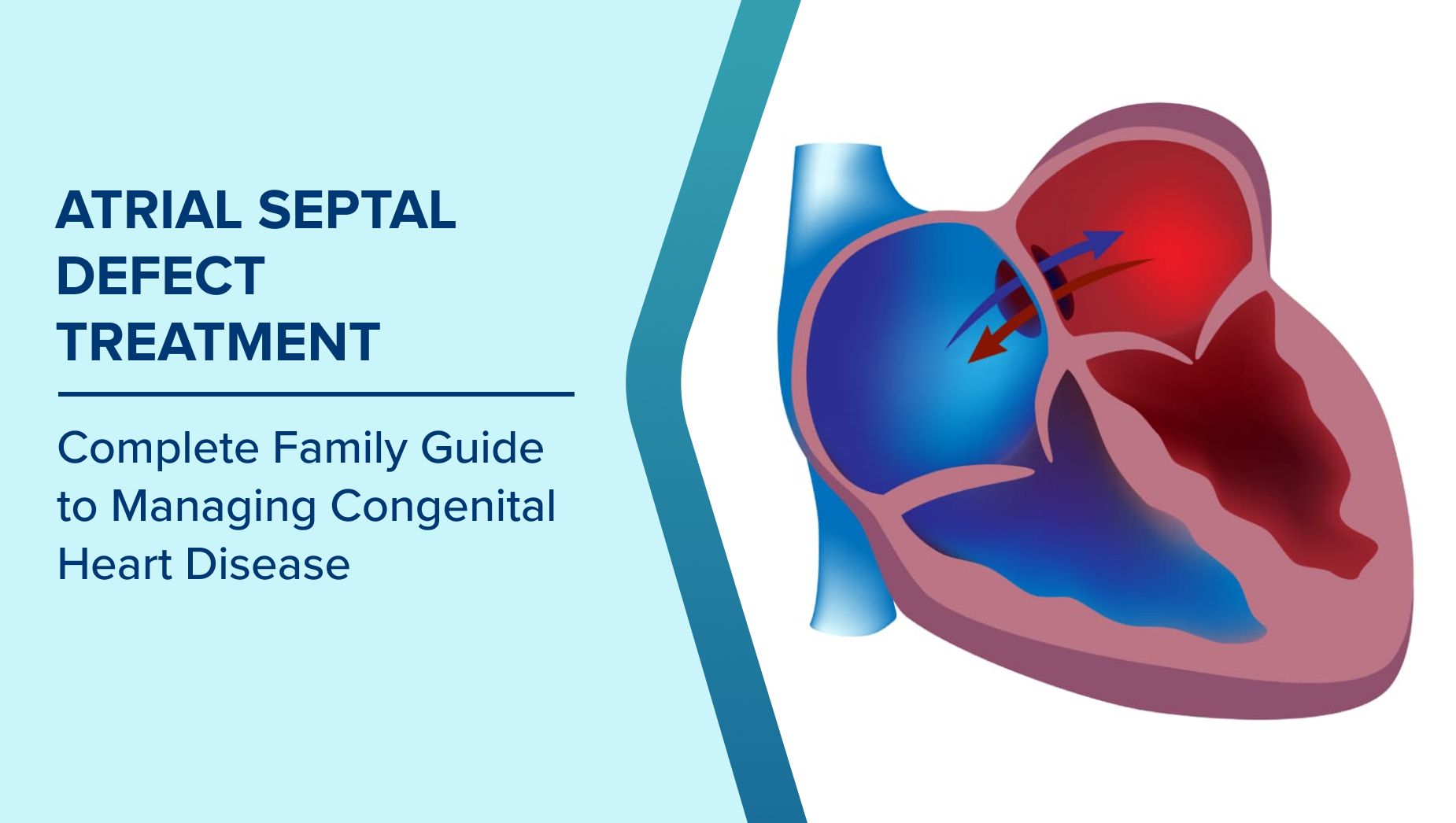
ASD is a small opening or hole between the two upper chambers of the heart, known as the atria. A normal heart sends oxygen-rich blood to the body and oxygen-poor blood to the lungs. When there is a hole between the atria, the blood flows in the wrong direction and mixes. Over time, this unnecessary blood flow can put extra pressure on the heart and lungs.
This condition is present at birth, which is why it is called a congenital heart disease. Some children show symptoms early, while others may grow into adulthood without knowing they have ASD.
How ASD Affects Heart Health
A small ASD may not cause any problems for years. However, larger defects can gradually strain the heart. The following changes may occur when ASD is left untreated:
- Increased blood flow to the lungs: Too much blood travels to the lungs, which can cause high pressure in the lung vessels.
- Enlargement of the right side of the heart: The right atrium and ventricle work harder to manage the extra blood flow.
- Irregular heartbeats: Long-standing ASD can cause arrhythmias because the heart chamber stretches over time.
- Risk of heart failure later in life: Continuous overload on the heart can lead to weakening over many years.
Early Signs and Symptoms of ASD
Many parents notice that symptoms are mild or sometimes not visible at all. However, some common signs include:
- Tiring quickly during play or exercise
- Poor weight gain in infants
- Frequent respiratory infections
- Shortness of breath
- A soft heart murmur heard during routine checkups
- Palpitations or irregular heartbeat in older children or adults
- Swelling of legs or fatigue later in adulthood
When Should Families Seek Medical Help?
You should consult a cardiologist or paediatric heart specialist when:
- A doctor hears a murmur during a routine checkup
- Your child shows repeated tiredness or breathlessness
- Growth is slower than expected
- There is a history of congenital heart disease in the family
- An adult experiences unexplained fatigue or palpitations
- A routine health examination suggests a heart defect
Modern ASD Treatment Options
The good news is that most ASD cases can be treated safely, and the heart becomes structurally normal after closure. Treatment depends on the size and location of the hole, the patient’s age and whether symptoms are present.
Catheter-Based ASD Device Closure
This is the most common and preferred treatment for many patients.
How it works:
A thin, flexible tube is inserted into a blood vessel in the groin. Through this tube, the cardiologist places a special device at the site of the hole. The device acts like a small patch that seals the opening.
Why families choose it:
- No large cuts
- Short hospital stay
- Quick return to normal activities
- Very safe for children and adults
- Excellent long-term results
Minimally Invasive ASD Surgery
If device closure is not suitable because of the defect’s size or shape, minimally invasive surgery is another effective option.
Procedure overview:
The surgeon makes small cuts on the right side of the chest. Special instruments are used to reach the heart and close the hole using a patch. This is less invasive compared to traditional open-heart surgery and offers faster recovery.
Benefits:
- Smaller scars
- Less pain
- Relatively quick healing
- Very safe in experienced hands
Open Heart Surgery
This approach is used when the ASD is large, has unusual anatomy or is accompanied by other heart defects. It is a well-established and safe procedure done under general anaesthesia.
Treatment method:
The surgeon uses a patch made of pericardium or synthetic fabric to seal the opening.
Why it may be necessary:
- Complex ASD
- Associated congenital heart problems
- Multiple holes requiring a full surgical view
How ASD Is Treated in Children Versus Adults
Children
- Most ASDs are discovered during routine paediatric visits
- Device closure is the most common choice
- Children recover quickly and can resume school and play soon after
- Early treatment prevents long-term complications
Adults
Some adults are diagnosed late because the defect remains silent for years.
Treatment focuses on:
- Relieving symptoms
- Preventing arrhythmias
- Reducing strain on the heart
- Avoiding future complications
Recovery After ASD Treatment
After device closure
- Most patients go home within a day
- Normal activities resume quickly
- Follow-up scans ensure proper device positioning
After minimally invasive surgery
- Hospital stay is usually short
- Pain is minimal
- Recovery takes a few weeks
After open-heart surgery
- Slightly longer recovery
- Full healing occurs in a few months
- The long-term outlook is excellent
Why Early Diagnosis Matters
Detecting ASD in childhood helps prevent heart enlargement, lung pressure problems and rhythm issues later in life. Timely treatment ensures:
- Healthy growth and development
- Normal exercise tolerance
- Protection from long-term complications
- Peace of mind for families
Lifestyle and Care Tips for Families
Simple steps help children and adults stay healthy after ASD closure.
- Maintain regular follow-ups
- Encourage gentle physical activity in the early recovery phase
- Provide a balanced diet to support heart health
- Ensure good dental hygiene to reduce infection risk
- Inform doctors about the ASD history before any future procedures
- Manage respiratory infections quickly, especially in young children
Conclusion
ASD or Atrial Septal Defect is one of the most treatable forms of congenital heart disease. With modern medical imaging, early diagnosis and advanced ASD treatment options like device closure and minimally invasive surgery, patients can enjoy a normal and healthy life. Whether diagnosed in childhood or adulthood, timely care ensures strong long-term results and prevents complications.
Families today have access to safe, effective and reliable heart hole treatment options that make recovery smooth and life thereafter active and fulfilling.
Frequently Asked Questions
How long does an ASD closure procedure take?
A catheter-based closure usually takes around one to two hours. Minimally invasive surgery may take slightly longer. Open surgery typically requires a few hours, depending on the complexity.
Can patients travel after ASD treatment?
Travel is generally allowed after follow-up clearance from the cardiologist. Most patients can travel short distances within a week of device closure.
Is activity restricted after the procedure?
Heavy exercise and contact sports are restricted for a short period. Daily activities and school routines usually resume quickly after device closure.
Are there any special precautions for dental procedures after ASD closure?
Doctors may recommend preventive antibiotics for some patients to reduce the risk of infection. This is especially important in the first year after closure.
How soon can adults return to work?
Patients who undergo device closure may return to work within a few days, while those who undergo surgery may need a few weeks of recovery.
Can ASD reopen after treatment?
Once the device or patch has healed into place, the chance of reopening is extremely low. Routine follow-ups ensure everything remains normal.
Written and Verified by:

Related Blogs


Blogs by Doctor
Hormones and Heart Health: Oxytocin, Adrenaline, Cortisol & Wellness Tips
Dr. Ambukeshwar Singh In Interventional Cardiology
Aug 27 , 2025 | 2 min read
TAVR: The Minimally Invasive Solution for Aortic Valve Disease
Dr. Ambukeshwar Singh In Interventional Cardiology
Oct 01 , 2025 | 3 min read
Most read Blogs


Related Blogs
Blogs by Doctor
Hormones and Heart Health: Oxytocin, Adrenaline, Cortisol & Wellness Tips
Dr. Ambukeshwar Singh In Interventional Cardiology
Aug 27 , 2025 | 2 min read
TAVR: The Minimally Invasive Solution for Aortic Valve Disease
Dr. Ambukeshwar Singh In Interventional Cardiology
Oct 01 , 2025 | 3 min read
Most read Blogs