 WhatsApp Us (24/7)
 +91 926 888 0303 (24/7)


To Book an Appointment
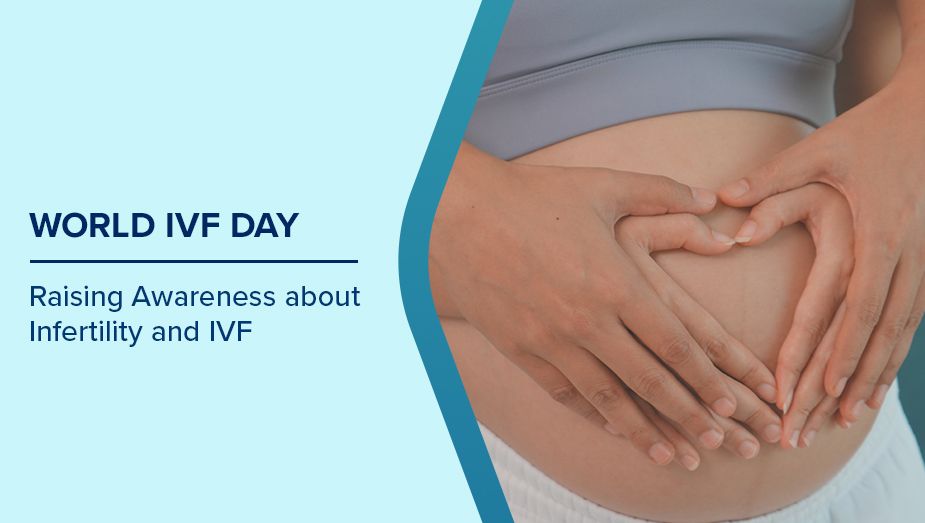
Call Us+91 926 888 0303World IVF Day 2025: Raising Awareness about Infertility and IVF
By Dr. Soma Singh in Infertility & IVF
Jul 07 , 2025 | 11 min read
2

World IVF Day marks a major milestone in the progress of medical science - the birth of the first baby conceived through in vitro fertilisation (IVF). This day serves as both a celebration of scientific progress and a reminder of the emotional and physical journey that many couples face when struggling with infertility. With millions around the world affected by reproductive challenges, World IVF Day aims to spark open conversations, break down stigma, and raise awareness about the advancements and accessibility of fertility treatments such as IVF.
History and Significance of World IVF Day
World IVF Day is observed every year on 25th July to mark the birth of Louise Brown, the world’s first baby conceived through In-vitro fertilisation (IVF), in 1978. Her birth was a major scientific breakthrough that changed the course of reproductive medicine. It offered new hope to couples facing infertility and opened the door to possibilities that once seemed out of reach.
The significance of this day goes beyond commemorating a medical milestone. By recognising this day, awareness is raised about both the emotional challenges of infertility and the medical advances that continue to support individuals and couples on their journey to becoming parents.
Acknowledging Infertility is the First Step Towards Treatment
Many individuals and couples delay seeking help for infertility because acknowledging the problem can feel overwhelming. Feelings of guilt, embarrassment, or fear of judgement often lead to silence, which in turn postpones medical evaluation. However, recognising that something may not be working as expected is an important first step. It helps in understanding that infertility is a medical condition, not a personal failure. In addition to that, early acknowledgement also improves the chances of successful treatment, as the success of infertility treatments depends upon the age of the couple. The sooner the condition is addressed, the more choices are available.
What is IVF and How Does It Help Infertile Couples?
In vitro fertilisation (IVF) is a widely used assisted reproductive technique that enables fertilisation to occur outside the human body. The process begins with hormone injections given to the woman that stimulate the ovaries to produce multiple eggs. These eggs are then collected through a minor procedure and are placed in a test tube, where they are combined with sperm. If fertilisation occurs, the resulting embryos are closely monitored for a few days before one or more healthy embryos are transferred into the uterus.
IVF helps couples by offering a way to bypass the natural fertilisation process, which may not be working due to various medical or biological reasons. It provides greater control over each stage of conception, from egg development to embryo selection. IVF can also be adapted to suit different needs, including the use of donor eggs, donor sperm, or surrogacy. For couples who have faced repeated challenges conceiving, IVF offers a renewed opportunity to achieve pregnancy and fulfil their hopes of starting or growing a family.
When is IVF Recommended?
IVF is usually considered when other methods of achieving pregnancy have not been successful or are unlikely to work. Doctors may recommend IVF in the following circumstances:
- Blocked or damaged fallopian tubes: IVF bypasses the fallopian tubes, making it possible to achieve fertilisation in the lab.
- Low sperm count or motility: IVF can help when there are issues with the number or movement of sperm, as fertilisation takes place under controlled conditions.
- Ovulation disorders: If ovulation is irregular or absent, IVF can assist by using hormone therapy to stimulate egg production.
- Endometriosis: This condition can affect the function of the ovaries, uterus, and fallopian tubes, making IVF a helpful option in some cases.
- Unexplained infertility: When no clear cause is found and all conservative treatment fails, IVF may be suggested as a way to improve the chances of pregnancy.
- Previous failed fertility treatments: Couples who have not had success with treatments such as medication or intrauterine insemination (IUI) may be advised to consider IVF.
IVF may also be recommended in cases where genetic testing is needed before implantation, or when using donor eggs, sperm, or embryos. The decision to proceed with IVF depends on several factors, including age, medical history, and how long pregnancy has been attempted without success. A fertility specialist usually guides this process after a thorough assessment.
Read More:- Demystifying Male Infertility: Causes, Symptoms, Tests & Treatment Options
What Should You Expect During the IVF Procedure?
The IVF process is carried out in several well-defined stages. Each stage is carefully monitored and adjusted depending on how the body responds. Here’s what typically happens:
Ovarian Stimulation
The first stage involves daily hormone injections to stimulate the ovaries to produce multiple eggs instead of just one. This process typically lasts between 9 to 14 days. During this time, ultrasound scans and blood tests are used to track how the ovaries are responding and to monitor the development of follicles containing the eggs.
Trigger Injection and Egg Retrieval
When the follicles reach the right size, a final injection, often called a “trigger shot”, is given to help the eggs mature. Egg retrieval is usually scheduled around 34 to 36 hours later. This is a minor procedure carried out under sedation or light anaesthesia, where a thin needle is passed through the vaginal wall to collect the eggs from the ovaries. Patients are discharged on the same day.
Sperm Collection and Fertilisation
On the day of egg retrieval, a sperm sample is collected from the male partner or a donor. In the laboratory, the eggs and sperm are combined to allow fertilisation to take place. In certain cases, ICSI is used, where a single healthy sperm is directly injected into an egg to assist fertilisation.
Embryo Development
Once fertilisation occurs, the embryos are cultured in the lab for several days, usually between three to five. Embryologists monitor their development and assess the quality of each embryo. The healthiest embryos or embryos are selected for transfer, and any additional viable embryos may be frozen for future use.
Embryo Transfer
Embryo transfer is a straightforward procedure that does not require anaesthesia. A thin catheter is negotiated through the cervix to place the embryo into the uterus. It is generally painless and takes only a few minutes. After the procedure, a brief period of rest may be advised before going home.
Post-Transfer Phase and Pregnancy Testing
Following embryo transfer, hormone support is usually continued to help support the pregnancy. Around two weeks later, a blood test is performed to check for pregnancy. This waiting period can be emotionally challenging, and patients are encouraged to stay in touch with their care team for support. If pregnancy is confirmed, follow-up scans and blood tests are done to monitor the early stages of pregnancy and check that it is progressing normally.
Read More:- Infertility: When to Seek Medical Help?
What are the Risks of the IVF Procedure?
Although IVF is a generally safe procedure, it does carry some medical risks. These risks may vary depending on individual health factors, age, pathology and how the body responds to treatment.
- Ovarian hyperstimulation syndrome (OHSS): This can occur when the ovaries hyper respond to fertility medications, leading to enlarged ovaries and fluid accumulation in abdomen. In most cases, symptoms are mild, but severe OHSS may require hospital admission.
- Multiple pregnancy: If more than one embryo is transferred, there is a risk of twins or triplets, which increases the chances of premature birth, low birth weight, and pregnancy complications. Single embryo transfer is often advised to lower this risk.
- Egg retrieval complications: The procedure used to collect eggs is generally safe but may cause bleeding, infection, or injury to nearby structures in rare cases.
- Ectopic pregnancy: In some cases, the embryo may implant outside the uterus, usually in the fallopian tube. This is a serious condition and requires prompt medical treatment.
- Miscarriage: As with natural pregnancies, there is a risk of miscarriage during IVF. The likelihood depends on various factors, including age and embryo quality.
Fertility specialists discuss these risks in detail before starting an IVF cycle.
What are Some Common Myths Associated with IVF?
Despite its growing use and success, IVF is often misunderstood. Several myths continue to circulate, creating unnecessary doubts and anxiety for those considering treatment. Clarifying these can help couples feel more confident and informed.
Myth: IVF always works in the first cycle
Fact: Success in the first attempt is not guaranteed. IVF success rates depend on several factors, including age, egg and sperm quality, and any underlying health conditions. Many couples may require more than one cycle before achieving pregnancy, and treatment plans are often adjusted based on how the body responds in each round.
Myth: IVF leads to multiple births most of the time
Fact: Modern IVF practices aim to reduce the risk of multiple pregnancies by transferring a single embryo whenever possible. This approach, called elective single embryo transfer (eSET), is widely used to prioritise the health of both the mother and baby. The chances of twins or triplets are now much lower than they were in the early days of IVF.
Myth: IVF is only for older women
Fact: IVF is not limited to a particular age group. Although age does affect fertility, younger women may also require IVF due to conditions such as blocked fallopian tubes, endometriosis, or male factor infertility.
Myth: IVF babies are less healthy than naturally conceived babies
Fact: IVF babies are just as healthy as those conceived without assistance. The procedures involved are carried out under strict medical supervision, and children born through IVF undergo the same developmental milestones as other children. Studies continue to show no significant differences in health outcomes.
Myth: IVF is the only solution for infertility
Fact: IVF is one of several treatment options and is usually considered after other methods have not worked. Depending on the diagnosis, doctors may first suggest fertility medications, lifestyle changes, or procedures like intrauterine insemination (IUI). IVF is typically used when these methods are unlikely to be effective or have already been tried without success.
By addressing these common myths, it helps reduce hesitation and encourages more informed decisions when exploring treatment options for infertility.
How Can We Raise Awareness On World IVF Day?
World IVF Day provides an opportunity to start conversations, share information, and reduce the stigma surrounding infertility and fertility treatments. Awareness can be raised in several meaningful ways, both individually and within communities.
- Sharing real experiences: Personal stories from individuals or couples who have undergone IVF can help others feel less isolated. These accounts make the subject more relatable and human, encouraging open discussion.
- Educational content: Posting accurate, easy-to-understand information about IVF on social media, blogs, or community platforms helps dispel myths and provides clarity to those seeking answers.
- Involving healthcare professionals: Clinics and hospitals can hold awareness events, offer free fertility consultations, or post informative videos to highlight available treatments and support.
- Support group engagement: Encouraging people to join or form peer support groups, online or in person, creates safe spaces where questions can be asked without judgement.
- Using campaigns and hashtags: Participating in online awareness campaigns using hashtags such as #WorldIVFDay or #IVFAwareness helps reach wider audiences and keeps the conversation active.
Raising awareness is not just about information, it’s about creating an environment where infertility is treated with understanding and IVF is seen as a valid and hopeful path to parenthood.
Final Words
Going through many months of trying to conceive without success can be emotionally exhausting. It often brings a sense of uncertainty and quiet frustration that builds over time. But with the right medical support, the process can start to feel more manageable. At Max Hospital, fertility specialists take the time to understand each couple’s situation and offer guidance with care and clarity. For those who have been trying for a long time and are now looking for answers, IVF is one of the treatment options available. Reach out to a fertility specialist at Max Hospital to explore the support and options available.
Frequently Asked Questions
How long should one try to conceive naturally before considering IVF?
Most doctors recommend trying for at least 12 months if under 35, and around 6 months if over 35, before exploring fertility treatment options like IVF. However, some may need earlier evaluation based on medical history.
How should one prepare physically and emotionally before starting IVF?
Maintaining a healthy lifestyle, managing stress, and attending counselling if needed can help prepare both body and mind. A pre-IVF consultation often includes advice on nutrition, supplements, and avoiding certain habits.
Can lifestyle factors affect the success of IVF?
Yes. Factors such as smoking, excessive alcohol intake, poor diet, lack of sleep, and being significantly under- or overweight can affect both egg and sperm quality, and may influence IVF outcomes.
How much time does an IVF cycle take from start to finish?
An IVF cycle typically takes around 4 to 6 weeks, starting from ovarian stimulation to pregnancy testing. Sometimes, embryos are not transferred in the same menstrual cycle of egg collection, frozen embryos are transferred later for different reasons.
Can IVF be done using frozen eggs or embryos?
Yes. Many clinics offer the option to freeze eggs or embryos for future use. Frozen embryo transfer (FET) is now a common part of IVF treatment and often has success rates similar to fresh transfers.
What support is available during the IVF process?
Apart from medical guidance, good centres offer psychological counselling, peer support groups, and patient coordinators to help manage appointments and communication throughout the treatment.
Is it possible to choose the gender of the baby through IVF?
Gender selection is not permitted for non-medical reasons in India. It may only be considered when there is a risk of passing on a serious sex-linked genetic condition, and is regulated by law.
Can someone with previous failed IVF cycles still try again?
Yes. IVF can be tried multiple times. Many people have successful pregnancies after one or more failed IVF attempts. The fertility specialist will usually review the previous cycle and suggest changes to improve the outcome.
What is the cost of IVF treatment?
IVF cost can vary depending on the clinic, the type of treatment needed, and the number of cycles required. It typically includes consultations, medications, procedures, and laboratory charges. It’s best to consult the hospital directly for an accurate estimate based on individual needs.
Written and Verified by:

Related Blogs

Dr. Richa Singh In Infertility & IVF
Nov 08 , 2020 | 2 min read

Dr. Richa Singh In Infertility & IVF
Nov 08 , 2020 | 2 min read
Blogs by Doctor
IVF Success Rate by Age: How Fertility Changes Over Time
Dr. Soma Singh In Infertility & IVF
Jul 18 , 2025 | 4 min read
Future Trends in IVF: Embryo Testing & Gene Editing
Dr. Soma Singh In Infertility & IVF
Jul 18 , 2025 | 4 min read
Most read Blogs


Related Blogs
Dr. Richa Singh In Infertility & IVF
Nov 08 , 2020 | 2 min read
Dr. Richa Singh In Infertility & IVF
Nov 08 , 2020 | 2 min read
Blogs by Doctor
IVF Success Rate by Age: How Fertility Changes Over Time
Dr. Soma Singh In Infertility & IVF
Jul 18 , 2025 | 4 min read
Future Trends in IVF: Embryo Testing & Gene Editing
Dr. Soma Singh In Infertility & IVF
Jul 18 , 2025 | 4 min read
Most read Blogs