 WhatsApp Us (24/7)
 +91 926 888 0303 (24/7)


To Book an Appointment
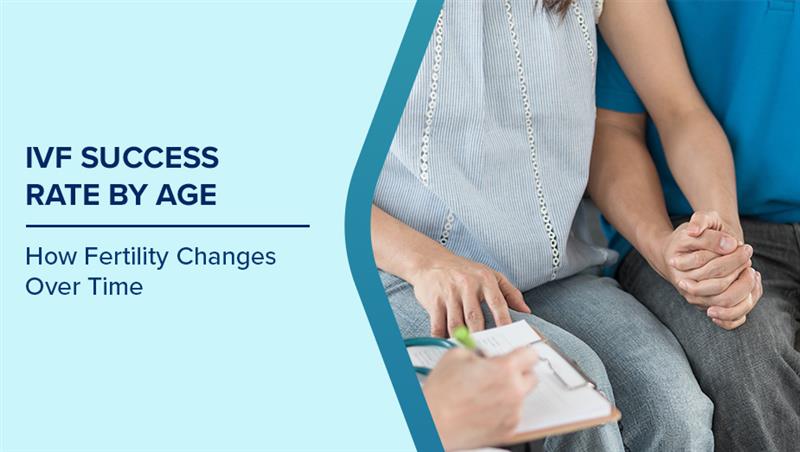
Call Us+91 926 888 0303IVF Success Rate by Age: How Fertility Changes Over Time
By Dr. Soma Singh in Infertility & IVF
Jan 05 , 2026 | 4 min read
1

Starting or growing your family is one of life’s most exciting journeys, but for many couples, age can become a crucial factor when trying to conceive. As a fertility specialist, I often see hopeful parents who don’t realise how much their age affects IVF success until they’re already facing challenges. Whenever one is planning for IVF or any other fertility treatment, understanding the link between women’s age, egg quality, and IVF outcomes can help in making informed decisions.
Why Age Matters in IVF
Women’s age is the single most important prognosis factor for IVF success. A woman’s age directly impacts her egg quantity and quality.
- Before age 35: Most women have a good ovarian reserve (number of eggs) and healthier eggs. IVF success rates are highest here, often above 40% per cycle.
- Between 35-37: Egg numbers and quality start to drop. IVF success rates decline slightly, but many patients still have a reasonable chance of success.
- Between 38-40: Fertility begins to drop faster. Success rates for IVF after 35 can fall to around 20-30% per cycle.
- Over 40: IVF success rates decrease significantly. By 42, the chances of a successful IVF cycle may drop below 10-15%, mostly due to egg quality issues.
Men’s fertility also declines with age because of semen abnormality and chances of birth defects rises too.
Egg Quality and Age: The Critical Connection
Eggs age just like the rest of our bodies. As women get older:
- Eggs accumulate DNA errors that make fertilisation or embryo development less likely.
- The risk of chromosomal abnormalities, like Down syndrome, increases.
- Miscarriage rates also rise with age because embryos may not develop properly.
This is why many clinics recommend using donor eggs for women over 42 to improve IVF outcomes.
IVF After 35: What to Expect
For women aged 35 and older, it’s important to manage expectations and be proactive:
- Testing ovarian reserve with AMH (anti-Mullerian hormone) levels and antral follicle count (determined by Trans-vaginal Sonography) can give insights into egg quantity.
- Consider advanced fertility techniques, such as preimplantation genetic testing (PGT), to select healthy embryos.
- Consider egg freezing if you plan to delay pregnancy but want to preserve your fertility with younger eggs.
IVF Over 40: Facing the Challenges
Trying IVF over 40 doesn’t mean it’s impossible, but it does require realistic expectations:
- The number of eggs retrieved in each IVF cycle often decreases.
- The risk of miscarriage can rise above 50% in this age group.
- Many women over 40 choose donor eggs, which can offer success rates similar to those seen in younger women.
Remember, the journey may take longer, and it’s essential to stay emotionally and physically prepared.
Fertility Treatment Options for Older Women
If you’re older and facing fertility challenges, you’re not alone. Here are options to consider:
- IVF with your own eggs: Still possible, but success rates are lower.
- IVF with donor eggs: Offers much higher success rates, even for women over 45.
- Embryo adoption: An alternative if both egg and sperm quality are a concern.
- Fertility preservation: Freezing eggs in your early 30s can help secure higher-quality eggs for future IVF.
Lifestyle Tips to Support IVF Success at Any Age
While age isn’t something you can control, these steps can boost your chances:
- Eat a balanced diet rich in leafy greens, berries, lean proteins, and healthy fats.
- Avoid smoking and limit alcohol, both of which harm egg quality.
- Maintain a healthy weight, as both underweight and obesity can disrupt hormones.
- Manage stress through yoga, meditation, or counselling.
- Track your ovulation to plan the right timing for natural conception or IVF cycles.
When to See a Fertility Specialist
Don’t wait too long to seek help. Here’s when you should book an appointment:
- If you’re under 35 and have tried to conceive for a year without success.
- If you’re 35 or older and have tried for six months without success.
- If you have known fertility issues, irregular cycles, or a history of miscarriage.
A fertility specialist can assess your situation and recommend the best course of action.
Conclusion
Women’s age is one of the most important factors in IVF success. Understanding how it affects your fertility can help you make timely, informed decisions about your path to parenthood. If you’re concerned about age-related fertility issues or want to learn more about your options, consult a fertility specialist. The earlier you start, the more choices you’ll have.
Frequently Asked Questions
Does IVF success depend more on egg quality or sperm quality?
While both are important, egg quality declines faster with age than sperm quality, making it the bigger factor in IVF success.
How do doctors assess egg quantity before IVF?
They use ovarian reserve tests, such as AMH levels and ultrasound, to count antral follicles, along with considering your age.
Is IVF with frozen eggs as successful as IVF with fresh eggs?
In many cases, yes, especially if eggs were frozen at a younger age when their quality was better.
How many IVF cycles does it usually take for women over 40 to conceive?
It varies, but many women over 40 need multiple cycles or consider donor eggs for higher chances of success.
Written and Verified by:

Related Blogs

Dr. Richa Singh In Infertility & IVF
Nov 08 , 2020 | 2 min read

Dr. Richa Singh In Infertility & IVF
Nov 08 , 2020 | 2 min read
Blogs by Doctor
World IVF Day 2025: Raising Awareness about Infertility and IVF
Dr. Soma Singh In Infertility & IVF
Jul 07 , 2025 | 11 min read
Future Trends in IVF: Embryo Testing & Gene Editing
Dr. Soma Singh In Infertility & IVF
Jul 18 , 2025 | 4 min read
Most read Blogs


Related Blogs
Dr. Richa Singh In Infertility & IVF
Nov 08 , 2020 | 2 min read
Dr. Richa Singh In Infertility & IVF
Nov 08 , 2020 | 2 min read
Blogs by Doctor
World IVF Day 2025: Raising Awareness about Infertility and IVF
Dr. Soma Singh In Infertility & IVF
Jul 07 , 2025 | 11 min read
Future Trends in IVF: Embryo Testing & Gene Editing
Dr. Soma Singh In Infertility & IVF
Jul 18 , 2025 | 4 min read
Most read Blogs