 WhatsApp Us (24/7)
 +91 926 888 0303 (24/7)


To Book an Appointment
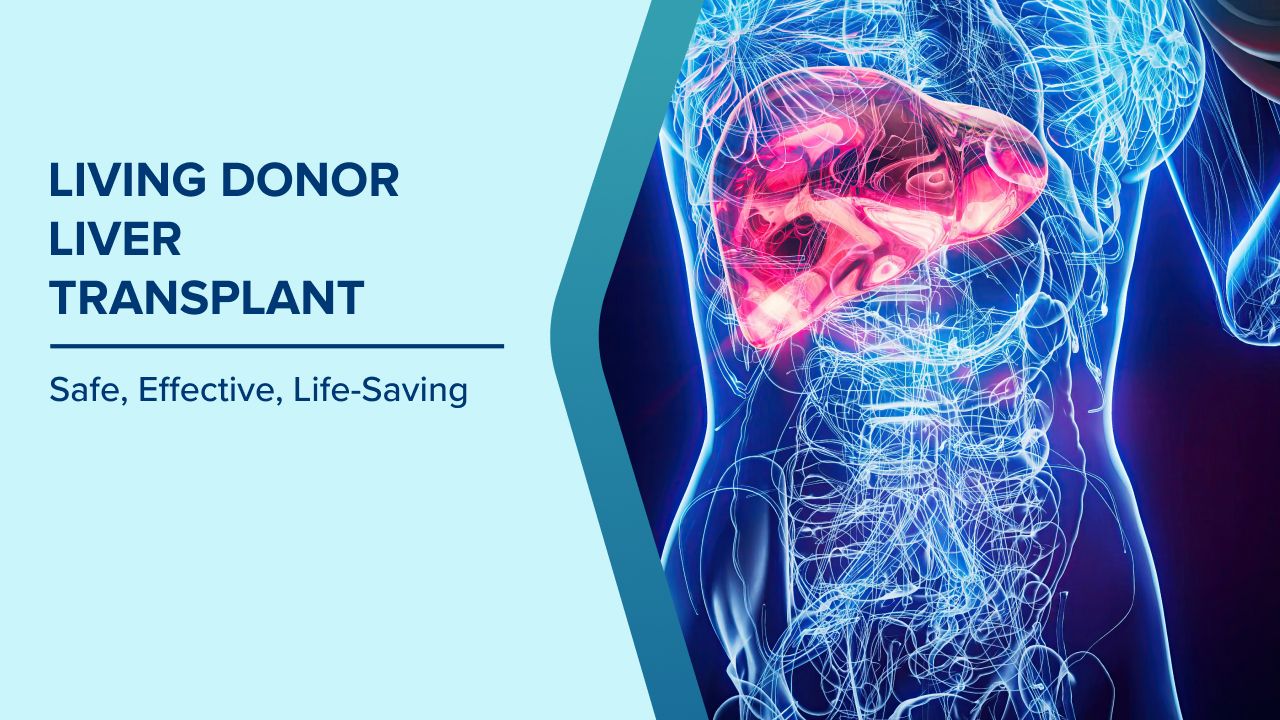
Call Us+91 926 888 0303Living Donor Liver Transplant: Safe, Effective, Life-Saving
By Dr. Vipul Gautam in Paediatric (Ped) Gastroenterology , Gastroenterology, Hepatology & Endoscopy
Feb 12 , 2026

Liver transplantation has moved from being an unfamiliar medical term to a well-established treatment option in India. The burden of serious liver disease in our country is steadily rising. The main reasons are the growing epidemic of fatty liver associated with obesity, chronic hepatitis B and C infections, alcohol-related liver damage, inherited metabolic disorders, and sudden acute liver failure in both adults and children. When the liver reaches a stage where it can no longer recover with medicines, transplantation becomes the only effective way to save life.
A liver transplant involves replacing a diseased liver with a healthy liver from a donor. This donor may be a brain-dead individual through cadaveric organ donation, or a living relative who donates a part of their liver. The human liver is an organ with an extraordinary ability to regenerate. Because of this quality, a portion of the liver from a healthy donor can successfully support a recipient. In India, living donor liver transplantation is often the more feasible option due to the limited availability of cadaveric donors.
The shortage of deceased organ donors remains one of India’s biggest challenges. Compared to many Western nations, cadaveric donation rates are still low. As a result, living donation has become the backbone of transplant activity in the country. The general public needs to understand that living donor transplantation is performed with the highest safety standards. Donor evaluation is extremely detailed, and donor surgery is performed with the utmost care. At the same time, living donation is not the only path forward. Cadaveric organ donation is equally crucial. India needs a stronger culture of organ pledging and family consent after brain death. Increasing awareness about deceased donations will expand the national donor pool and reduce the pressure on families. Supporting cadaveric donation is a social responsibility that can transform many lives from a single donor.
India today stands among the leading countries in liver transplantation. The nation has some of the best doctors, advanced infrastructure, and high-level surgical and medical expertise in this field. Indian transplant centres follow international protocols and deliver outcomes comparable to top global programs. The combination of excellent results and relatively low procedural cost has made liver transplant an achievable procedure for a large section of patients. One major indicator of India’s strength is that our country attracts many foreign nationals for liver transplant surgery. International patients travel to India because they find world-class medical expertise, dependable hospitals, transparent systems, and costs far lower than in Europe, America, or the Middle East. This global trust reflects how far India has advanced in liver transplantation.
Public awareness can make transplantation even more effective. People should seek specialist help if there are danger signs like persistent jaundice, unexplained abdominal swelling, repeated bleeding, severe weakness, or sudden drowsiness in a liver patient. Early assessment prevents complications and keeps costs controlled.
Written and Verified by:

Related Blogs

Dr. Pankaj Vohra In Paediatric (Ped) Gastroenterology
Aug 21 , 2014 | 2 min read

Blogs by Doctor
Most read Blogs


Related Blogs
Dr. Pankaj Vohra In Paediatric (Ped) Gastroenterology
Aug 21 , 2014 | 2 min read
Blogs by Doctor
Most read Blogs