 WhatsApp Us (24/7)
 +91 926 888 0303 (24/7)


To Book an Appointment
Call Us+91 926 888 0303Ascites Explained: Causes, Symptoms, and Treatment Methods
By Dr. Saurabh Patle in Gastroenterology, Hepatology & Endoscopy
Jan 06 , 2026 | 12 min read
4

Ascites is a medical condition that can affect individuals across different health backgrounds, often indicating a deeper issue within the body. Characterised by noticeable physical changes and discomfort, it can significantly impact daily life and overall well-being. When the liver is significantly damaged, its ability to produce a protein called albumin gets reduced. This protein plays an important role in keeping fluid inside the blood vessels. Without it, the fluid starts to leak out and collect in the abdominal cavity. This fluid buildup is known as ascites. As the condition can arise from different underlying issues, it’s important to understand what’s causing it and how it shows up. This blog takes a closer look at how ascites develops, what symptoms to watch for, and what treatment usually involves. Let’s start with the basics.
What is Ascites?
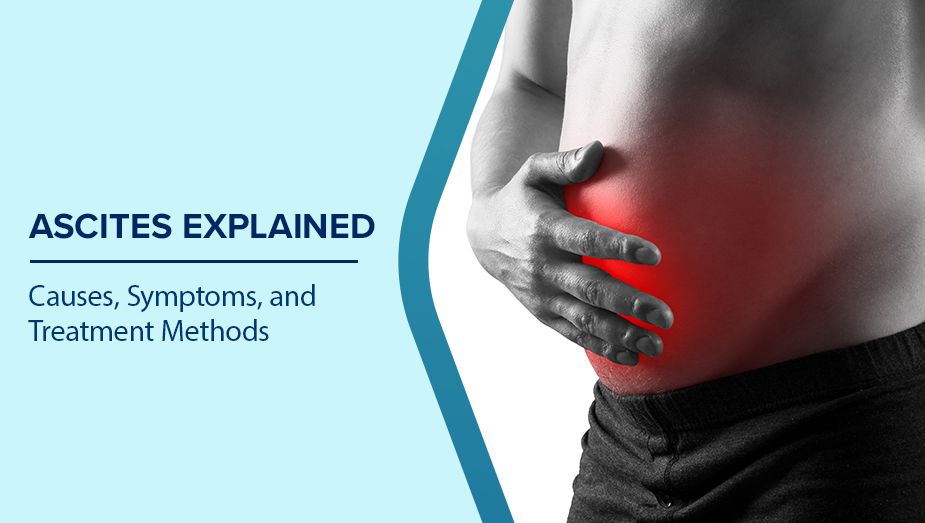
Ascites is the medical term for fluid buildup in the abdominal cavity. It causes visible swelling and a feeling of heaviness or tightness in the belly. This fluid collects between the organs and the inner lining of the abdomen.
It’s not a condition on its own but usually a sign of an underlying problem. The most common cause is advanced liver disease, especially cirrhosis. Other causes include cancer, heart failure, kidney disease, and certain infections like tuberculosis.
The amount of fluid can vary. In mild cases, it may go unnoticed. In more severe cases, it can cause discomfort, make it harder to eat or breathe, and lead to complications if not treated.
Ascites often develop slowly, but in some cases, the fluid can build up quickly. Either way, it’s a sign that something inside the body isn’t working as it should and needs medical attention.
What Causes Ascites?
Ascites develops when something disrupts the normal balance of pressure and fluid in the abdomen. The liver, kidneys, heart, and lymphatic system all play a role in this balance. When one or more of these systems fail, fluid can start to leak into the abdominal cavity. Here are the main ascites causes:
1. Liver Cirrhosis
Cirrhosis is the most common cause of ascites. It occurs when long-term damage to the liver leads to scarring. This scarring slows down blood flow through the liver, causing pressure to build up in the portal vein (a condition known as portal hypertension). At the same time, the damaged liver can no longer produce enough albumin, a protein that helps keep fluid inside the blood vessels. The result is a double effect: increased pressure pushes fluid out, and low albumin allows it to leak more easily. That fluid ends up in the abdominal cavity and leads to ascites.
2. Cancer
Certain types of cancer can cause fluid to build up in the abdomen, particularly cancers of the stomach, colon, pancreas, ovaries, or liver. This is known as malignant ascites. It usually happens when cancer spreads to the lining of the abdominal cavity or blocks lymphatic channels, which would normally drain fluid away. In these cases, the fluid can build up quickly, often with symptoms that include abdominal discomfort, bloating, and reduced appetite. Malignant ascites can be harder to manage and often comes back after drainage.
3. Heart Failure
When the heart isn’t pumping effectively, blood backs up into the veins, including those that go through the liver. This causes increased pressure in the liver’s blood vessels and the surrounding area. Over time, the pressure forces fluid out of the blood vessels and into the abdominal space. Ascites caused by heart failure is more common in people with right-sided or congestive heart failure. These patients may also have swelling in the legs, shortness of breath, and fluid in the lungs.
4. Kidney Disease
In advanced kidney failure, the kidneys can’t remove excess sodium and water from the body. As fluid builds up in the bloodstream, it can eventually leak into surrounding tissues, including the abdomen. Low albumin levels, common in kidney disorders, make this worse by reducing the body’s ability to hold fluid inside the blood vessels. Ascites caused by kidney disease is usually part of a larger picture of generalised swelling, known as oedema.
5. Infections
Infections can also lead to ascites, especially in areas where diseases such as tuberculosis are more common. Tuberculous peritonitis, for example, affects the lining of the abdomen and causes inflammation, which leads to fluid buildup.
What are the Common Symptoms of Ascites?
The ascites symptoms often develop gradually, especially when the fluid builds up slowly over time. In some cases, they appear more quickly, depending on how severe the underlying condition is. The most noticeable signs are related to the increasing pressure and size of the abdomen.
- Abdominal swelling: The most noticeable sign. The belly may gradually enlarge as fluid collects, and clothes may feel tighter around the waist.
- A feeling of heaviness or tightness: The abdomen often feels full or stretched, even without eating much.
- Loss of appetite: As the fluid builds up, it presses against the stomach, causing a sense of fullness after eating only a small amount.
- Shortness of breath: The fluid buildup can push against the diaphragm, making it harder to breathe, especially when lying down.
- Bloating or digestive discomfort: A persistent bloated feeling, sometimes mistaken for gas or indigestion.
- Swelling in the legs and ankles: Fluid retention may extend to the lower limbs, often worsening by evening or after long periods of sitting.
- Fatigue and weakness: Reduced food intake, poor sleep, and extra fluid weight can lead to general tiredness and reduced energy.
- Sudden weight gain: The increase isn’t due to fat or muscle, it comes from fluid accumulation in the abdomen.
- Nausea: In some cases, the pressure on the stomach and intestines can trigger mild nausea.
How is Ascites and its Cause Diagnosed?
Diagnosing ascites involves two main steps: first, confirming that fluid is present in the abdomen, and second, identifying what’s causing it. Both are equally important, as ascites is usually a sign of an underlying condition that needs treatment.
Physical Examination
The process usually begins with a clinical assessment. A doctor checks for signs like a swollen abdomen, shifting dullness, or a fluid wave. These signs suggest that fluid has collected inside the abdominal cavity. However, in mild ascites cases, physical examination alone may not be enough to confirm ascites.
Ultrasound
Ultrasound is the most commonly used method to detect ascites. It can identify even small volumes of fluid and is a quick, non-invasive way to confirm fluid accumulation. It also provides information about the liver’s appearance and guides safe fluid removal during paracentesis.
CT Scan
A CT scan may be used when more detailed imaging is needed. It helps confirm the presence of fluid and gives a clearer view of the liver, pancreas, lymph nodes, and other abdominal structures. CT is particularly helpful if cancer or infection is suspected as the cause of ascites.
Diagnostic Paracentesis
Once fluid is confirmed, paracentesis is done to sample and analyse it. A thin needle is used to withdraw fluid from the abdominal cavity under sterile conditions. The sample is sent to a lab to test for protein content, cell count, bacteria, and cancer cells. These results help doctors identify the cause of the ascites, whether it’s due to liver disease, cancer, infection, or another issue.
Serum-Ascites Albumin Gradient (SAAG)
This test compares the albumin level in the blood to the level in the ascitic fluid. A high SAAG suggests portal hypertension, which is commonly seen in cirrhosis. A low SAAG points to non-liver-related causes such as infections, malignancies, or inflammation of the abdominal lining. SAAG is one of the most reliable ways to categorise the cause of ascites.
Blood Tests
Blood tests are done alongside imaging and fluid analysis to check liver function, kidney health, and possible signs of infection or cancer:
- Liver function tests (LFTs): ALT, AST, bilirubin, INR
- Serum albumin: For SAAG calculation and protein status
- Renal function tests: Urea and creatinine
- Complete blood count (CBC): To look for anaemia or infection
- Tumour markers: Like CA-125, CEA, or CA 19-9 if malignancy is suspected
These tests provide supporting information that helps confirm the cause of ascites and guide treatment decisions.
What are the Treatment Options for Ascites?
Treatment for ascites focuses on relieving the fluid buildup and addressing the underlying cause. The treatment plan depends on the amount of fluid, how fast it’s building up, and how well the liver and other organs are functioning.
Dietary Changes
The first step in treating ascites is usually to reduce sodium in the diet. Sodium encourages the body to retain water, which worsens fluid accumulation in the abdomen. A sodium-restricted diet, typically limiting intake to less than 2 grams per day, can help slow down fluid buildup.
In cases where blood sodium levels drop too low (hyponatremia), doctors may also advise restricting daily fluid intake. This usually applies to patients with more advanced disease or those who are on higher doses of diuretics.
Dietary changes are most effective in early to moderate cases of ascites, especially when combined with medications. A clinical dietitian may be involved in planning meals that maintain nutritional balance without excess salt.
Diuretics (Water Tablets)
In many cases, fluid buildup can be reduced with the help of water tablets, commonly known as diuretics. These medicines help the kidneys remove extra salt and water from the body through urine, which gradually reduces the volume of fluid in the abdomen.
Doctors typically start with one type of diuretic and may adjust the dose or add another based on how the body responds. The aim is to remove the fluid slowly and safely, often targeting a steady drop in weight each day. Rapid fluid loss can lead to complications, so regular monitoring of kidney function, blood pressure, and salt levels is important.
Diuretics are often used along with dietary changes, especially salt restriction, to improve their effectiveness.
Therapeutic Paracentesis
When ascites becomes severe or causes significant discomfort, doctors may recommend therapeutic paracentesis. In this procedure, a sterile needle is used to drain fluid directly from the abdominal cavity. It offers immediate relief from pressure, shortness of breath, and abdominal pain.
In large-volume paracentesis, where several litres are removed at once. Intravenous albumin may be given during or after the procedure. This helps maintain blood pressure and reduces the risk of kidney complications.
Paracentesis is often repeated in patients who do not respond to diuretics or who have frequent fluid buildup, a condition called refractory ascites.
Transjugular Intrahepatic Portosystemic Shunt (TIPS)
TIPS is a specialised procedure done when ascites no longer responds to diuretics or requires frequent paracentesis. It involves creating a channel within the liver using a stent to connect the portal vein and hepatic vein. This reduces pressure in the portal system and slows down fluid leakage.
TIPS is usually done under imaging guidance by an interventional radiologist. It can be effective in controlling fluid buildup, but it's not without risks. Some patients may develop hepatic encephalopathy (a condition marked by confusion and memory changes), after the procedure. TIPS is considered carefully, especially in those with poor liver function or other complications.
Treating the Underlying Cause
Long-term management of ascites depends on addressing the root problem. In most cases, this is cirrhosis, which may be caused by:
- Chronic hepatitis B or C
- Long-term alcohol use
- Non-alcoholic fatty liver disease (NAFLD)
Treatment might involve antiviral medications, alcohol cessation support, or managing metabolic conditions like diabetes and obesity. In cancer-related ascites, fluid may return despite drainage, so oncologists may recommend chemotherapy or other cancer-specific therapies to reduce fluid formation.
For patients with heart failure or kidney disease, ascites is managed by controlling those conditions, through medications, dialysis, or other disease-specific approaches
Liver Transplant
For patients with end-stage liver disease, where ascites keeps returning despite all treatments, liver transplantation may be the only long-term solution. Transplant replaces the damaged liver with a healthy one, resolving the portal hypertension and stopping further fluid buildup. After successful liver transplant, most patients no longer experience ascites, but the procedure requires lifelong follow-up and immunosuppressive medications.
What are the Complications of Ascites?
If ascites is not treated or continues to worsen, it can lead to several serious complications. These include:
Spontaneous Bacterial Peritonitis (SBP)
One of the most serious complications is infection of the ascitic fluid, known as spontaneous bacterial peritonitis. It usually occurs without any obvious source of infection. People may develop fever, abdominal pain, confusion, or worsening fatigue. In some cases, there are no clear symptoms, and the infection is only detected through fluid analysis. SBP requires prompt antibiotic treatment and is considered a medical emergency. If not treated quickly, it can lead to kidney failure, sepsis, or even death.
Hepatorenal Syndrome
This is a type of kidney failure that occurs in people with advanced liver disease and severe ascites. It happens when changes in blood flow reduce kidney function, even though the kidneys themselves are not damaged. The condition can develop gradually or suddenly and is often triggered by infections, dehydration, or overuse of diuretics. It usually requires hospital treatment and carries a poor prognosis unless liver function improves or a transplant is done.
Breathing Difficulties
As ascitic fluid builds up, it pushes against the diaphragm and reduces space for the lungs to expand. This can cause shortness of breath, especially when lying flat or during physical activity. In severe cases, even simple movements for eg., walking or eating can become difficult. Large-volume paracentesis is often done in these situations to relieve pressure and improve breathing.
Hernias
Increased pressure in the abdomen can lead to the development of hernias, especially umbilical or inguinal hernias. These may appear as soft bulges near the belly button or groin. In some cases, hernias can become painful or strangulated, which may require urgent surgical repair.
Malnutrition
Even though the abdomen may appear full, people with ascites often struggle to eat enough due to early satiety, nausea, or fatigue. Combined with liver dysfunction, this can lead to significant nutrient deficiencies and muscle wasting. Over time, this can weaken the immune system and delay recovery from infections or procedures.
Can Ascites Be Prevented?
Ascites itself is usually a result of an underlying condition, most often liver cirrhosis. In people with known liver disease, steps can be taken to reduce the risk of fluid buildup or delay its onset. These include:
- Avoiding alcohol: Long-term alcohol use is a leading cause of liver damage. Quitting alcohol can slow or stop disease progression, especially in early-stage cirrhosis.
- Managing hepatitis: Early diagnosis and proper treatment of hepatitis B or C can help prevent chronic liver damage.
- Maintaining a healthy weight: Obesity increases the risk of non-alcoholic fatty liver disease (NAFLD), which can progress to cirrhosis over time.
- Controlling other medical conditions: Managing diabetes, high cholesterol, and high blood pressure can also reduce liver strain.
- Regular monitoring: People already diagnosed with liver disease should have regular follow-ups to track liver function and detect early signs of complications, including ascites.
Consult Today
Dealing with unexplained abdominal discomfort, swelling, or fatigue can be unsettling, especially when the cause isn’t clear. If you're dealing with unexplained abdominal swelling or already know you have liver-related issues, consider scheduling an appointment at Max Hospital. Our hepatology and gastroenterology teams work closely to diagnose what’s causing the swelling and other symptoms, and recommend tailored treatment plans based on the underlying case and the patient’s overall health and condition.
Written and Verified by:

Related Blogs

Dr. Nivedita Pandey In Gastroenterology, Hepatology & Endoscopy , Liver Transplant and Biliary Sciences
Nov 07 , 2020 | 2 min read

Dr. Nivedita Pandey In Gastroenterology, Hepatology & Endoscopy , Liver Transplant and Biliary Sciences
Nov 07 , 2020 | 2 min read
Blogs by Doctor
Lower Abdominal Pain: Causes and Treatment Options
Dr. Saurabh Patle In Gastroenterology, Hepatology & Endoscopy
Aug 01 , 2025 | 11 min read
Most read Blogs


Related Blogs
Dr. Nivedita Pandey In Gastroenterology, Hepatology & Endoscopy , Liver Transplant and Biliary Sciences
Nov 07 , 2020 | 2 min read
Dr. Nivedita Pandey In Gastroenterology, Hepatology & Endoscopy , Liver Transplant and Biliary Sciences
Nov 07 , 2020 | 2 min read
Blogs by Doctor
Lower Abdominal Pain: Causes and Treatment Options
Dr. Saurabh Patle In Gastroenterology, Hepatology & Endoscopy
Aug 01 , 2025 | 11 min read
Most read Blogs