 WhatsApp Us (24/7)
 +91 926 888 0303 (24/7)


To Book an Appointment
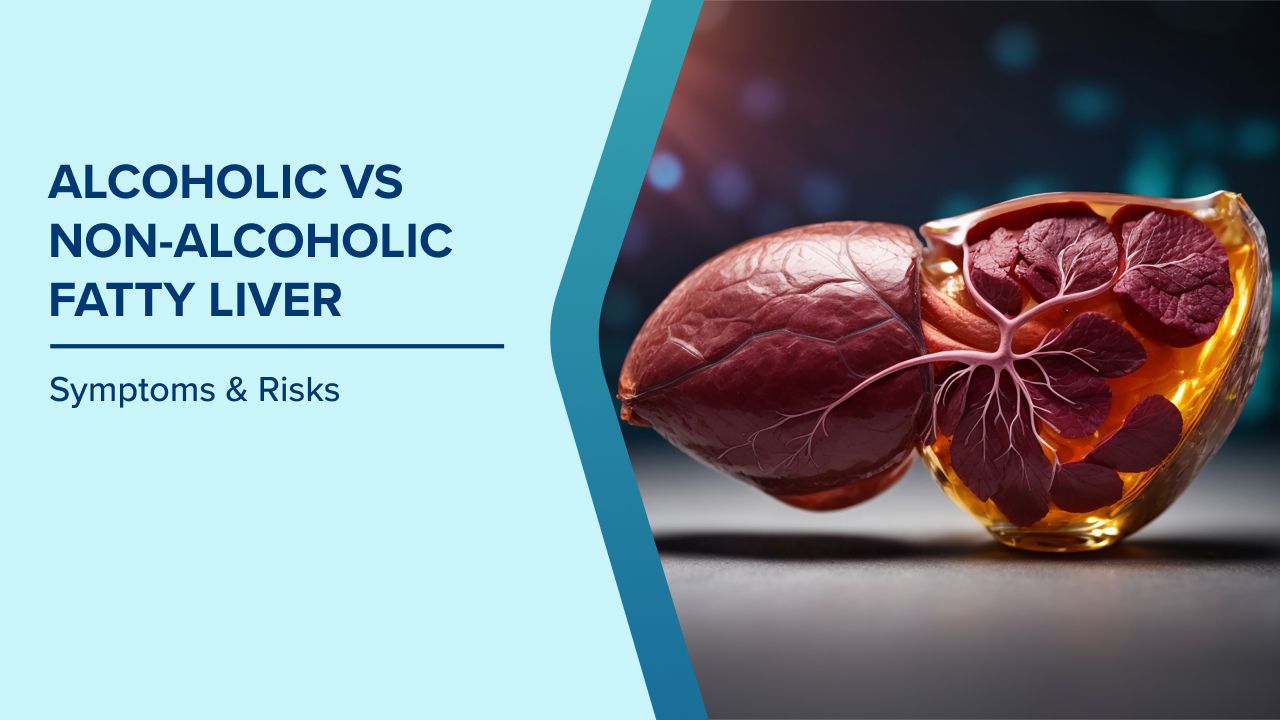
Call Us+91 926 888 0303Alcoholic vs Non-Alcoholic Fatty Liver: Symptoms & Risks
By Dr. Saurabh Patle in Gastroenterology, Hepatology & Endoscopy
Jun 01 , 2026

Fatty liver disease is a common condition in which excess fat accumulates in liver cells, affecting normal liver function. It has two main types: Alcoholic Fatty Liver Disease (AFLD) caused by alcohol consumption, and Non-Alcoholic Fatty Liver Disease (NAFLD) linked to metabolic factors like obesity and diabetes. Although both conditions affect liver health, their causes and progression differ significantly. Understanding the difference between alcohol and non-alcoholic fatty liver is important for early detection, prevention of complications, and timely medical care.
What Is Fatty Liver Disease?
Fatty liver disease occurs when fat builds up in the liver beyond normal levels. The liver helps in metabolism, detoxification, and digestion. When fat accumulation increases, liver function may gradually become impaired. There are two major types:
- Alcohol-related fatty liver disease (AFLD)
- Non-alcoholic fatty liver disease (NAFLD)
Both can range from mild fat buildup to severe inflammation and liver damage if not managed early.
What Is Alcoholic Fatty Liver Disease (AFLD)?
Alcoholic Fatty Liver Disease (AFLD) occurs due to excessive alcohol intake over time. When alcohol is metabolised in the liver, it produces toxic substances that interfere with normal fat metabolism. This leads to fat accumulation inside liver cells. Key points:
- Early stage of alcohol-related liver disease
- Often reversible if alcohol consumption is stopped early
- Can progress to alcoholic hepatitis or cirrhosis if drinking continues
AFLD is directly linked to drinking patterns and duration of alcohol use.
What Is Non-Alcoholic Fatty Liver Disease (NAFLD)?
Non-Alcoholic Fatty Liver Disease (NAFLD) occurs in people who consume little or no alcohol. It is strongly associated with lifestyle and metabolic conditions such as:
- Obesity
- Type 2 diabetes
- High cholesterol
- Sedentary lifestyle
NAFLD is currently the most common type of fatty liver disease globally. It often develops silently and is frequently detected during routine health check-ups or liver function tests.
Alcohol vs Non-Alcoholic Fatty Liver: Key Differences
Understanding AFLD vs NAFLD helps patients identify risk factors and take preventive action.
Cause
- AFLD: Excessive alcohol consumption
- NAFLD: Metabolic imbalance (obesity, diabetes, poor lifestyle)
Risk Factors
- AFLD: Heavy and long-term alcohol use
- NAFLD: Obesity, insulin resistance, high cholesterol, inactivity
Progression
- AFLD: Can progress quickly if alcohol use continues
- NAFLD: Usually slow progression, but can worsen silently
Reversibility
- AFLD: Often reversible in early stages with complete alcohol cessation
- NAFLD: Reversible with weight loss and metabolic control
Lifestyle Influence
- AFLD: Directly linked to alcohol intake
- NAFLD: Strongly linked to diet, physical activity, and metabolic health
Symptoms of Fatty Liver Disease
Fatty liver is often called a "silent disease" because early stages may not show clear symptoms. Common symptoms include:
- Fatigue or low energy
- Mild discomfort in the upper right abdomen
- Unexplained weight changes
- General feeling of weakness
In many cases, fatty liver is detected incidentally during routine blood tests.
Risk Factors for Fatty Liver
Alcohol-Related Risk Factors
- Regular heavy alcohol consumption
- Long-term alcohol dependency
Non-Alcoholic Risk Factors
- Obesity or overweight
- Type 2 diabetes
- High cholesterol or triglycerides
- Sedentary lifestyle
- Poor dietary habits
These risk factors significantly increase the likelihood of liver fat accumulation.
How Is Fatty Liver Diagnosed?
Fatty liver disease is diagnosed using a combination of clinical evaluation and tests:
- Liver Function Tests (LFTs): Check liver enzyme levels
- Ultrasound Scan: Detects fat accumulation in the liver
- CT or MRI Scan: Provides detailed imaging in complex cases
- Liver Biopsy (rare cases): Confirms severity and inflammation
Early diagnosis is important to prevent disease progression.
Can Fatty Liver Be Reversed?
Yes, in many cases, especially in early stages, fatty liver disease is reversible. Key factors in reversal:
- For AFLD: Complete avoidance of alcohol
- For NAFLD: Weight loss, improved diet, and regular physical activity
The liver has a strong ability to regenerate if damage is detected early and lifestyle changes are made consistently.
Complications If Left Untreated
If fatty liver disease is not managed, it may progress to serious conditions:
- Liver inflammation (steatohepatitis)
- Fibrosis (scarring of liver tissue)
- Cirrhosis (advanced liver damage)
- Liver failure in severe cases
- Hepatocellular Carcinoma (Liver Cancer)
Early intervention can significantly reduce these risks.
Prevention and Lifestyle Management
Prevention plays a key role in maintaining liver health. Recommended measures:
- Maintain a healthy body weight
- Follow a balanced, low-fat diet
- Exercise regularly
- Limit or avoid alcohol consumption
- Manage diabetes and cholesterol effectively
Even small lifestyle improvements can significantly reduce liver fat over time.
When to See a Doctor
Medical consultation is recommended if you experience:
- Persistent fatigue or weakness
- Abnormal liver function test results
- Ongoing abdominal discomfort
- History of alcohol use or metabolic disorders
Early medical evaluation helps prevent long-term liver damage.
Conclusion
Both Alcoholic Fatty Liver Disease and Non-Alcoholic Fatty Liver Disease affect liver health, but their causes are different, one linked to alcohol use and the other to metabolic factors. Early detection is crucial because both conditions can progress silently. The good news is that fatty liver is often reversible in early stages with proper lifestyle changes and medical guidance. Understanding these differences helps individuals take timely action and protect long-term liver health effectively.
Frequently Asked Questions
Is non-alcoholic fatty liver disease dangerous?
Yes, if left untreated, NAFLD can progress to inflammation, fibrosis, or cirrhosis. Early detection and lifestyle changes can prevent complications.
Can fatty liver be cured completely?
In the early stages, fatty liver can often be reversed with lifestyle modifications and removal of underlying causes such as alcohol or obesity.
Does fatty liver always cause symptoms?
No, most people do not experience symptoms in the early stages. It is often detected through routine blood tests or imaging.
How long does it take for fatty liver to develop?
It develops gradually over months or years, depending on risk factors like alcohol intake or metabolic health.
Can skinny people get fatty liver disease?
Yes, even individuals with normal body weight can develop NAFLD due to genetics or internal fat accumulation.
What foods worsen fatty liver?
Foods high in sugar, refined carbohydrates, and unhealthy fats can worsen fatty liver by increasing fat deposition in the liver.
Written and Verified by:

Related Blogs

Dr. Nivedita Pandey In Gastroenterology, Hepatology & Endoscopy , Liver Transplant and Biliary Sciences
Nov 07 , 2020 | 2 min read
Dr. Nivedita Pandey In Gastroenterology, Hepatology & Endoscopy , Liver Transplant and Biliary Sciences
Nov 07 , 2020 | 2 min read
Blogs by Doctor
Ascites Explained: Causes, Symptoms, and Treatment Methods
Dr. Saurabh Patle In Gastroenterology, Hepatology & Endoscopy
Aug 01 , 2025 | 12 min read
Lower Abdominal Pain: Causes and Treatment Options
Dr. Saurabh Patle In Gastroenterology, Hepatology & Endoscopy
Aug 01 , 2025 | 11 min read
Most read Blogs


Related Blogs
Dr. Nivedita Pandey In Gastroenterology, Hepatology & Endoscopy , Liver Transplant and Biliary Sciences
Nov 07 , 2020 | 2 min read
Dr. Nivedita Pandey In Gastroenterology, Hepatology & Endoscopy , Liver Transplant and Biliary Sciences
Nov 07 , 2020 | 2 min read
Blogs by Doctor
Ascites Explained: Causes, Symptoms, and Treatment Methods
Dr. Saurabh Patle In Gastroenterology, Hepatology & Endoscopy
Aug 01 , 2025 | 12 min read
Lower Abdominal Pain: Causes and Treatment Options
Dr. Saurabh Patle In Gastroenterology, Hepatology & Endoscopy
Aug 01 , 2025 | 11 min read
Most read Blogs