 व्हाट्सऐप करें (24/7)
 +91 926 888 0303 (24/7)


सार:रेक्टल कैंसर की घटनाएं विश्व स्तर पर, विकसित और विकासशील दोनों देशों में बढ़ रही हैं। नियोएडजुवेंट कीमोरेडियोथेरेपी (एनए-सीटीआरटी) के बाद टोटल मेसोरेक्टल एक्सिशन, स्थानीय रूप से उन्नत रेक्टल कैंसर (एलएआरसी) के लिए मानक उपचार है। एनए-सीटीआरटी स्फिंक्टर के संरक्षण में सुधार करता है, स्थानीय पुनरावृत्ति को कम करता है, और पैथोलॉजिकल कम्प्लीट रिस्पांस (पीसीआर) की दर को बढ़ाता है। इस अध्ययन का उद्देश्य एक निजी तृतीयक कैंसर देखभाल केंद्र में एनए-सीटीआरटी प्राप्त करने वाले रेक्टल कार्सिनोमा वाले पेशेंट्स की जनसांख्यिकी और नैदानिक परिणामों (समग्र उत्तरजीविता [ओएस], रोग-मुक्त उत्तरजीविता [पीएफएस], और पीसीआर दर) की रिपोर्ट करना है। विकिरण योजना डेटाबेस की जांच की गई ताकि जनवरी 2021 से दिसंबर 2023 तक विकिरण ऑन्कोलॉजी विभाग में आने वाले पेशेंट्स की पहचान की जा सके। हिस्टोलॉजिकल रूप से पुष्टि किए गए रेक्टल एडेनोकार्सिनोमा वाले 67 पेशेंट्स की पहचान की गई, जिनमें से 44, जिन्हें एनएसीटीआरटी प्राप्त हुआ था, उन्हें अध्ययन में शामिल किया गया। पूर्वव्यापी डेटा डिस्चार्ज सारांश और अस्पताल रिकॉर्ड के माध्यम से एकत्र किया गया। विश्लेषण एसपीएसएस सॉफ्टवेयर v20 का उपयोग करके किया गया। निदान के समय पेशेंट्स की औसत आयु 55.5 वर्ष थी, और 68.2% पुरुष थे। सबसे आम शिकायत रेक्टम से रक्तस्राव (61.4%) थी, और अधिकांश पेशेंट्स स्टेज III (79.5%) में थे। एनए-सीटीआरटी के बाद, 45.5% पेशेंट्स को सर्जरी से पहले नियोएडजुवेंट कीमोथेरेपी (एनएसीटी) दी गई। केवल 23 पेशेंट्स की सर्जरी हुई, और एनए-सीटीआरटी के बाद सर्जरी के लिए ड्रॉपआउट दर विभिन्न कारणों से 47.7% थी। पोस्टऑपरेटिव हिस्टोपैथोलॉजी से पता चला कि जिन पेशेंट्स की सर्जरी हुई, उनमें से 45.4% में पूर्ण या लगभग पूर्ण प्रतिक्रिया देखी गई, और पीसीआर दर 22.7% थी। इस समूह के लिए औसत पीएफएस और औसत ओएस क्रमशः 38 महीने और 40 महीने थे। बहुभिन्नरूपी विश्लेषण में, कॉमोरबिडिटीज और की गई सर्जरी को ओएस के लिए महत्वपूर्ण रोगनिदान कारकों के रूप में पाया गया।
एनए-सीटीआरटी के साथ कैपेसिटाबाइन, लोकलली एडवांस्ड रेक्टल कैंसर (एलएआरसी) में एक व्यवहार्य और प्रभावी दृष्टिकोण है, जो वास्तविक दुनिया में अनुकूल ट्यूमर रिग्रेशन और सर्वाइवल परिणाम प्राप्त करता है। हालांकि, एनए-सीटीआरटी के बाद उच्च ड्रॉपआउट दर और सर्जिकल हस्तक्षेप में देरी, उन व्यवस्थित बाधाओं की ओर इशारा करती है जिन पर ध्यान देने की आवश्यकता है। पेशेंट्स के अनुपालन को अनुकूलित करने, बहु-विषयक समन्वय में सुधार करने और सहायक देखभाल तक पहुंच का विस्तार करने के लिए संस्थागत प्रयास, ऐसे वातावरण में उपचार के लाभों को अधिकतम करने के लिए महत्वपूर्ण हैं।
मुख्य शब्द:कार्सिनोमा रेक्टम, रेक्टल एडेनोकार्सिनोमा, नियोएडजुवेंट कीमोरेडियोथेरेपी (एनए-सीटीआरटी), कैपेसिटाबाइन-आधारित रेजिमेन, टोटल मेसोरेक्टल एक्सिशन (टीएमई), पैथोलॉजिकल कंप्लीट रिस्पॉन्स (पीसीआर), प्रोग्रेशन-फ्री सर्वाइवल (पीएफएस), ओवरऑल सर्वाइवल (ओएस), लोकली एडवांस्ड रेक्टल कैंसर (एलएआरसी)।
परिचय
रेक्टल कार्सिनोमा एक महत्वपूर्ण वैश्विक स्वास्थ्य समस्या है, और विकसित और विकासशील दोनों देशों में इसकी घटनाओं में वृद्धि हो रही है। ग्लोबोकैन 2022 के आंकड़ों के अनुसार, कोलोरेक्टल कैंसर, घटनाओं के मामले में तीसरे और मृत्यु दर के मामले में दूसरे स्थान पर है।1 हाल के दशकों में, स्थानीय रूप से उन्नत रेक्टल कैंसर (एलएआरसी) के लिए उपचार रणनीतियों में महत्वपूर्ण बदलाव आया है, और मल्टीमॉडल दृष्टिकोण से स्थानीय नियंत्रण और समग्र उत्तरजीविता (ओएस) दोनों में सुधार हुआ है। नियोएडजुवेंट कीमोरेडियोथेरेपी (एनए-सीटीआरटी), विशेष रूप से जब केपेसिटाबाइन को रेडियोसेंसिटाइज़र के रूप में उपयोग किया जाता है, तो एलएआरसी (स्टेज II और III) के लिए एक मानक चिकित्सीय पद्धति के रूप में उभरी है, जो संभावित ट्यूमर डाउनस्टेजिंग, स्फिंक्टर संरक्षण की बढ़ी हुई दर और स्थानीय पुनरावृत्ति को कम करने की पेशकश करती है।2-4
कैपेसिटाबाइन, जो 5-फ्लूरोरासिल (5-एफयू) की एक ओरल प्रोड्रग है, अपनी प्रभावशीलता, आसान प्रशासन और अनुकूल टॉक्सिसिटी प्रोफाइल के कारण व्यापक रूप से स्वीकार किया गया है।5 रेडियोथेरेपी के साथ मिलाकर उपयोग करने पर, यह रेडियोसंवेदनशीलता को बढ़ाता है और निरंतर इन्फ्यूजन 5-एफयू की नकल करता है, जिससे यह कई संस्थानों के प्रोटोकॉल में एक पसंदीदा एजेंट बन गया है।
अच्छी तरह से स्थापित दिशानिर्देशों के बावजूद, निजी तृतीयक कैंसर केंद्रों से प्राप्त वास्तविक दुनिया के प्रमाण, विशेष रूप से कम और मध्यम आय वाले देशों में, सीमित हैं। पेशेंट की जनसांख्यिकी, ट्रीटमेंट का पालन और मल्टीमॉडल देखभाल तक पहुंच में भिन्नताएं अक्सर परिणामों को इस तरह से प्रभावित करती हैं जो बड़े नैदानिक परीक्षणों में प्रतिबिंबित नहीं हो सकते हैं।6 इसलिए, वैश्विक मानकों को स्थानीय अभ्यास वातावरण के संदर्भ में समझने के लिए संस्था-विशिष्ट विश्लेषण आवश्यक हैं।
यह अध्ययन एक निजी तृतीयक कैंसर केयर सेंटर में कैपेसिटाबाइन-आधारित रेजिमेन का उपयोग करके नियोजित एनएसीआरटी (NACTRT) से इलाज किए गए रेक्टम कार्सिनोमा वाले पेशेंट्स के 3 साल के पूर्वव्यापी विश्लेषण को प्रस्तुत करता है। इसके मुख्य उद्देश्यों में इस समूह की जनसांख्यिकीय प्रोफाइल, नैदानिक और पैथोलॉजिकल प्रतिक्रियाओं और शुरुआती परिणामों का मूल्यांकन करना शामिल है, जिससे वास्तविक दुनिया के नैदानिक सेटिंग में इस उपचार दृष्टिकोण के व्यावहारिक कार्यान्वयन और ऑन्कोलॉजिकल प्रभावशीलता में मूल्यवान अंतर्दृष्टि मिल सके।
सामग्री और विधियाँ
हमने जनवरी 2021 से दिसंबर 2023 तक रेडिएशन ऑन्कोलॉजी डिपार्टमेंट में आने वाले उन पेशेंट्स के रेडिएशन प्लानिंग डेटाबेस की जांच की और 67 ऐसे पेशेंट्स मिले जिनमें हिस्टोलॉजिकल रूप से रेक्टल एडेनोकार्सिनोमा की पुष्टि हुई थी। इन 67 पेशेंट्स में से, 44 पेशेंट्स को एनए-सीटीआरटी दिया गया और उन्हें इस अध्ययन में विश्लेषण के लिए शामिल किया गया, जैसा कि चित्र 1 में दिखाया गया है।
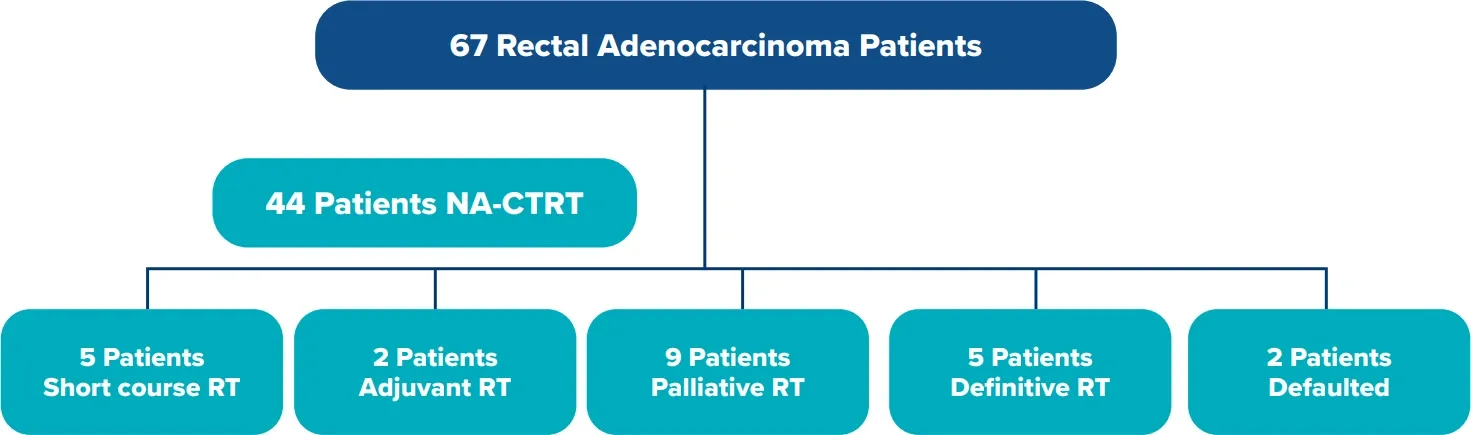
चित्र 1:रेडिएशन ऑन्कोलॉजी डिपार्टमेंट में आने वाले पेशेंट्स का कंसोर्ट डायग्राम।
एनए-सीटीआरटी: नियोएडजुवेंट कीमोरेडियोथेरेपी; आरटी: रेडियोथेरेपी
सभी पेशेंट्स की कंट्रास्ट-एन्हांस्ड प्लानिंग कंप्यूटेड टोमोग्राफी (सीटी) स्कैनिंग की गई, जिसमें स्लाइस की मोटाई 2.5 से 3 मिमी तक थी। जिन पेशेंट्स में किडनी की समस्या थी, उनमें बिना कंट्रास्ट वाले स्कैन किए गए। बेहतर ट्यूमर की पहचान के लिए बेसलाइन मैग्नेटिक रेजोनेंस इमेजिंग (एमआरआई) और पॉज़िट्रॉन एमिशन टोमोग्राफी-कंप्यूटेड टोमोग्राफी (पीईटी-सीटी) स्कैन का उपयोग किया गया, जहाँ यह संभव था। ट्रीटमेंट में रेडियोथेरेपी की खुराक शामिल थी, जो या तो 25 भागों में 45 Gy या 50 Gy, या फिर 3 भागों में 5.4 Gy की बूस्ट खुराक के साथ दी गई। क्लिनिकल टारगेट वॉल्यूम (सीटीवी) में प्राइमरी ट्यूमर, लिम्फैडेनोपैथी और उच्च जोखिम वाले नोडल क्षेत्र शामिल थे, जिनमें मेसोरेक्टल, प्रीसेक्रल, इंटरनल इलियाक और ओब्टुरेटर लिम्फ नोड्स शामिल थे। इंटेंसिटी-मॉड्यूलेटेड रेडियोथेरेपी (आईएमआरटी) 6-एमवी फोटॉनों का उपयोग करके टोमोथेरेपी या क्लिनैक-आईएक्स मशीनों के माध्यम से दी गई, जिसमें सटीक स्थानीयकरण और सत्यापन के लिए ऑन-बोर्ड इमेजिंग सिस्टम का उपयोग किया गया। एनए-सीटीआरटी सत्रों के दौरान, 625 मिलीग्राम/एम2 की खुराक में दिन में दो बार ओरल टैबलेट कैपेसिटाबाइन दी गई, और पूर्ण रक्त गणना, लिवर फंक्शन टेस्ट, किडनी फंक्शन टेस्ट, उम्र और पेशेंट की सामान्य स्थिति के आधार पर खुराक में समायोजन किया गया।
एनए-सीटीआरटी के बाद, पेशेंट्स का मूल्यांकन सर्जिकल रिसेक्टेबिलिटी के लिए एमआरआई/पीईटी-सीटी के साथ किया गया, जो अंतिम रेडियोथेरेपी के लगभग 8-12 सप्ताह बाद किया गया। एनए-सीटीआरटी के बाद, पेशेंट की स्थिति और एमआरआई मूल्यांकन के अनुसार, प्रीऑपरेटिव कीमोथेरेपी (0-4 साइकिल) दी गई। आम तौर पर, एनए-सीटीआरटी के पूरा होने के 7 से 14 सप्ताह बाद रेडिकल सर्जरी की गई। पोस्टऑपरेटिव हिस्टोपैथोलॉजी और ट्यूमर रिग्रेशन स्कोर को प्रतिक्रिया मूल्यांकन के लिए रिकॉर्ड किया गया। फॉलो-अप विवरण अस्पताल के कंप्यूटरीकृत पेशेंट रिकॉर्ड सिस्टम से और टेलीफोनिक फॉलो-अप के माध्यम से प्राप्त किए गए। विश्लेषण अप्रैल 2025 में किया गया, जिसमें परिणामों का आकलन करने के लिए न्यूनतम 15 महीने की फॉलो-अप अवधि थी।
हमारा लक्ष्य एनए-सीटीआरटी प्राप्त करने वाले पेशेंट्स में पैथोलॉजिकल कंप्लीट रिस्पॉन्स (पीसीआर) की दर और 4 साल के ऑन्कोलॉजिकल परिणामों की रिपोर्ट करना था, जिसमें प्रोग्रेशन-फ्री सर्वाइवल (पीएफएस) और समग्र ओएस शामिल हैं। पीएफएस को निदान की तारीख से लेकर पहली प्रगति या किसी भी कारण से मृत्यु की तारीख तक की अवधि के रूप में परिभाषित किया गया था, या अंतिम फॉलोअप विज़िट पर इसे सीमित किया गया था। ओएस को निदान की तारीख से लेकर किसी भी कारण से मृत्यु की तारीख तक की अवधि के रूप में परिभाषित किया गया था, या अंतिम फॉलोअप विज़िट पर इसे सीमित किया गया था। सर्वाइवल विश्लेषण कपलान-मेयर विधि का उपयोग करके किया गया था, और सभी सांख्यिकीय विश्लेषण एसपीएसएस संस्करण 20 सॉफ़्टवेयर (आईबीएम कॉर्पोरेशन, एमेनक, न्यूयॉर्क, एनवाई) का उपयोग करके किए गए थे। रोगनिदान कारकों के बहुभिन्नरूपी विश्लेषण करने के लिए कॉक्स प्रोपोर्शनल हजार्ड्स रिग्रेशन मॉडल का उपयोग किया गया था।
परिणाम
इस समूह में 44 पेशेंट्स थे, जिनमें से 30 (68.2%) पुरुष थे। निदान के समय पेशेंट्स की औसत उम्र 55.5 वर्ष थी। 61.4% पेशेंट्स की उम्र 60 वर्ष या उससे कम थी। 20 (45.5%) पेशेंट्स में अन्य बीमारियाँ भी पाई गईं, जिनमें डायबिटीज़, हाई ब्लड प्रेशर, कोरोनरी आर्टरी डिजीज (सीएडी), हाइपोथायरायडिज्म और/या क्रोनिक किडनी डिजीज (सीकेडी) शामिल हैं। सबसे आम शिकायत रेक्टम से खून आना (पीआर) था, जो 61.4% पेशेंट्स में देखा गया, इसके बाद आंत की आदतों में बदलाव (40.9%) और पेरिएनल/पेट में दर्द (36.4%) था। अन्य लक्षणों में बार-बार उल्टी, मवाद का निकलना, पेरिएनल में खुजली, भूख/वजन में कमी, मल त्याग पर नियंत्रण न होना, एनीमिया या सामान्य कमजोरी शामिल हैं। डायग्नोस्टिक मूल्यांकन में कोलोनोस्कोपी/रेक्टोसिग्मोइडोस्कोपी और बायोप्सी शामिल थी, जिससे सभी पेशेंट्स में एडेनोकार्सिनोमा की पुष्टि हुई। मध्यम और खराब रूप से विभेदित ट्यूमर (जिसमें साइनट रिंग हिस्टोलॉजी शामिल है) क्रमशः 29.5% और 18.2% पेशेंट्स में देखे गए। गुदा के किनारे से दूरी के आधार पर, 68.2% पेशेंट्स में लो रेक्टल डिजीज (गुदा के किनारे से 5 सेमी तक बीमारी का विस्तार), 25% पेशेंट्स में मिडिल रेक्टल डिजीज (> 5–10 सेमी गुदा के किनारे से) और 6.8% पेशेंट्स में हाई रेक्टल डिजीज (> 10–15 सेमी गुदा के किनारे से) थी। स्टेजिंग के लिए उपयोग किए जाने वाले इमेजिंग तौर-तरीकों में 25% पेशेंट्स में केवल एमआरआई, 18.2% पेशेंट्स में केवल पीईटीसीटी और 56.8% पेशेंट्स में एमआरआई और पीईटी-सीटी दोनों शामिल थे। क्लिनिकल स्टेजिंग से पता चला कि अधिकांश पेशेंट्स स्टेज 3 (79.5%) में थे। विवरण तालिका 1 में संक्षेप में दिया गया है।
| विशेषता (एन = 44) | प्रतिशत (n) |
|---|---|
| लिंग: पुरुष/महिला | 68.2% (30) / 31.8% (14) |
| निदान के समय औसत आयु (वर्षों में)। | 55.5 |
| औसत (श्रेणी) | 54.7 (20–88) |
| आयु समूह | |
| 60 वर्ष या उससे कम | 61.4% (27) |
| 60 साल | 38.6% (17) |
| मौजूदा अन्य बीमारियाँ। | 45.5% (20) |
| पेशेंट की मुख्य शिकायतें | |
| गुदा से खून आना। | 61.4% (27) |
| आंतों की आदतों में बदलाव। | 40.9% (18) |
| पेट/गुदा में दर्द | 36.4% (16) |
| अन्य शिकायतें | 11.4% (5) |
| हिस्टोलॉजिकल ग्रेडिंग | |
| अच्छी तरह से विकसित | 38.6% (17) |
| मध्यम रूप से विभेदित | 29.5% (13) |
| खराब तरीके से विभेदित/सिग्नेट रिंग | 18.2% (8) |
| उपलब्ध नहीं है। | 13.6% (6) |
| जांच | |
| सिर्फ एमआरआई | 25.0% (11) |
| केवल पीईटी-सीईसीटी | 18.2% (8) |
| एमआरआई और पीईटी-सीईसीटी | 56.8% (25) |
| कोलोनोस्कोपी/रेक्टो-सिग्मोइडोस्कोपी और बायोप्सी | 100% (44) |
| रोग की औसत लंबाई (सेंटीमीटर में)। | 5.8 सेंटीमीटर |
| 6 सेंटीमीटर से कम या बराबर | 59.1% (26) |
| 6 सेंटीमीटर | 40.9% (18) |
| ट्यूमर कहाँ स्थित है। | |
| हाई रेक्टल | 6.8% (3) |
| मिडिल रेक्टल | 25.0% (11) |
| लो रेक्टल | 68.2% (30) |
| क्लिनिकल स्टेज | |
| cT1/2/3/4 | (0)/(6)/(26)/(12) |
| cN0/1/2 | (9)/(17)/(18) |
| cM0/1a/1b | (44)/(0)/(0) |
| ग्रुप स्टेज | |
| स्टेज 2 | 20.5% (9) |
| स्टेज 3 | 79.5% (35) |
टेबल 1:जनसांख्यिकी और प्रारंभिक विशेषताओं का विवरण।
संक्षिप्त रूप:सीईसीटी: कंट्रास्ट-एन्हांस्ड कंप्यूटेड टोमोग्राफी; एमआरआई: मैग्नेटिक रेजोनेंस इमेजिंग; पीईटी: पॉज़िट्रॉन एमिशन टोमोग्राफी
लगभग आधे पेशेंट्स (45.5%) को सर्जरी से पहले नियोएडजुवेंट कीमोथेरेपी (एनएसीटी) दी गई, जिसमें सबसे आम कीमोथेरेपी रेजिमेन 13 पेशेंट्स में मॉडिफाइड फोलफॉक्स था। 44 पेशेंट्स में से, 23 पेशेंट्स की सर्जरी हुई, 7 पेशेंट्स ने सर्जरी से इनकार कर दिया, 3 में बीमारी बढ़ गई, 2 सर्जरी के लिए चिकित्सकीय रूप से उपयुक्त नहीं थे, और 9 का फॉलो-अप नहीं हो पाया। एनए-सीटीआरटी के बाद सर्जरी के लिए ड्रॉपआउट दर 47.7% थी। जिन 23 पेशेंट्स की सर्जरी हुई, उन पर विभिन्न सर्जिकल प्रक्रियाएं की गईं, जिनका विवरण टेबल 2 में दिया गया है, और अंतिम रेडियोथेरेपी फ्रैक्शन के बाद सर्जरी में लगने वाला औसत समय 11.9 सप्ताह था।
| ट्रीटमेंट की जानकारी (एन = 44) | प्रतिशत (n) |
|---|---|
| रेडियोथेरेपी की खुराक (एन = 44) | |
| 50.4 ग्रे | 61.4% (27) |
| 50.0 ग्रे | 38.6% (17) |
| नियोएडजुवेंट कीमोथेरेपी (N = 44) | |
| हाँ (फोलफॉक्स/कैपऑक्स/फोलएफआईरिनॉक्स) | 45.5% (13/6/1) |
| नहीं। | 54.5% (24) |
| नियोएडजुवेंट कीमोरेडियोथेरेपी के बाद (एन = 44)। | |
| सर्जरी हुई। | 52.3% (23) |
| पेशेंट ने सर्जरी से इनकार कर दिया। | 15.9% (7) |
| फॉलो-अप के लिए संपर्क नहीं हो पाया। | 20.5% (9) |
| प्रगति | 06.8% (3) |
| एनेस्थीशिया के लिए उपयुक्त नहीं। | 04.5% (2) |
| सर्जरी प्रक्रिया (एन = 23) | |
| एलएआर (लो एंटीरियर रिसेक्शन) | 21.7% (5) |
| यू-एलएआर (अल्ट्रा-लो एन्टीरियर रिसेक्शन) | 08.7% (2) |
| ए.पी.आर. (एब्डोमिनो-पेरिनियल रिसेक्शन) | 60.9% (14) |
| आईएसआर (इंटर-स्फ़िंक्टरिक रिसेक्शन) | 08.7% (2) |
| नियोएडजुवेंट कीमोरेडियोथेरेपी के बाद सर्जरी में लगने वाला औसत समय (सप्ताह में)। | 11.9 (± 2.9) |
| ट्यूमर रिग्रेशन स्कोर (एन = 23) | |
| स्कोर 0 | 22.7% (6) |
| स्कोर 1 | 22.7% (5) |
| स्कोर 2 | 40.9% (9) |
| स्कोर 3 | 13.7% (3) |
टेबल 2:रेडियोथेरेपी, कीमोथेरेपी और सर्जरी ट्रीटमेंट के बारे में जानकारी।
पोस्टऑपरेटिव हिस्टोपैथोलॉजी और ट्यूमर रिग्रेशन स्कोर से पता चला कि 45.4% पेशेंट्स में पूरी तरह से या लगभग पूरी तरह से सुधार हुआ, जबकि 40.9% पेशेंट्स में आंशिक सुधार हुआ और 13.7% पेशेंट्स में NA-CTRT के प्रति खराब/कोई प्रतिक्रिया नहीं देखी गई। pCR की दर 22.7% थी। NA-CTRT प्राप्त करने वाले पेशेंट्स के लिए औसत PFS (प्रोग्रेशन-फ्री सर्वाइवल) और औसत OS (ओवरऑल सर्वाइवल) क्रमशः 38 महीने और 40 महीने थे, जबकि माध्य PFS और OS तक नहीं पहुंचा (टेबल 3 और टेबल 4)। 21 महीने के माध्य फॉलो-अप के साथ, 4 साल का PFS और OS क्रमशः 73% और 77% था, जैसा कि चित्र 2 और चित्र 3 में दिखाया गया है।
| प्रोग्रेशन-फ्री सर्वाइवल (पीएफएस) के लिए माध्य। | ||||
|---|---|---|---|---|
| अनुमान | मानक त्रुटि | 95% कॉन्फिडेंस इंटरवल | ||
| निचली सीमा | ऊपरी सीमा | |||
| 37.995 | 2.895 | 32.321 | 43.669 | |
टेबल 3:औसत प्रोग्रेशन-फ्री सर्वाइवल (पीएफएस)। ए. अनुमान को सबसे लंबे समय तक जीवित रहने के समय तक सीमित किया गया है, यदि डेटा अधूरा है।
| Meana for Overall Survival (OS) | ||||
|---|---|---|---|---|
| Estimate | Standard error | 95% Confidence interval | ||
| Lower bound | Upper bound | |||
| 39.765 | 2.838 | 34.202 | 45.327 | |
Table 4: Mean overall survival (OS). aEstimation is limited to the largest survival time if it is censored.
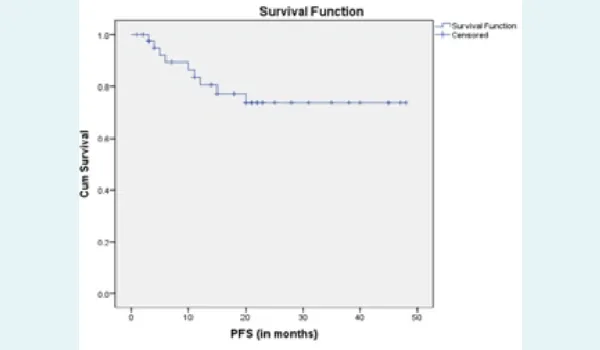
Figure 2: Kaplan–Meier survival curve for progression-free survival.
Abbreviation: PFS: Progression-Free Survival.
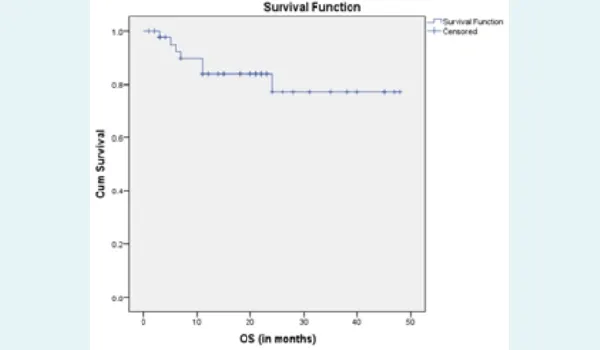
Figure 3: Kaplan–Meier survival curve for overall survival
Abbreviation: OS: Overall Survival.
A Cox proportional hazards regression model was used to perform multivariate analyses to identify different prognostic factors associated with OS (univariate analysis is shown in Table 5). Related factors for OS were investigated in univariate and multivariable analyses that included age group, gender, comorbidities, histological grade, disease length, distance of disease from anal verge, clinical tumour stage, clinical nodal stage, overall stage group, NACT before surgery, and whether surgical resection was performed. Univariate analysis of OS revealed that age group, comorbidities, distance of disease from anal verge, and NACT before surgery had p ≤ 0.05. Surgical resection was not found to be significant on univariate analysis; however was included in multivariable analysis. After multivariate adjustment, comorbidities (χ2= 7.163, p = 0.007), and surgery (χ2= 7.419, p = 0.006) were found to be significant factors for OS.
| Factors | Chi-square (χ2) | p values |
|---|---|---|
| Age group (> 60 years vs ≤ 60 years) | 5.63 | 0.018 |
| Gender (female vs male) | 0.192 | 0.662 |
| Comorbidities (present vs absent) | 5.668 | 0.017 |
| Histological grade | 1.121 | 0.772 |
| Disease length (> 6 cm vs ≤ 6 cm) | 1.112 | 0.292 |
| Distance of the disease from the anal verge | 7.173 | 0.028 |
| Clinical T stage | 5.474 | 0.065 |
| Clinical N stage | 0.974 | 0.614 |
| Stage (II vs III) | 0.408 | 0.523 |
| Neoadjuvant chemotherapy before surgery (given vs not given) | 4.597 | 0.032 |
| Surgery (done or not) | 3.022 | 0.082 |
Table 5: Univariate analysis of overall survival.
Discussion
This study provides valuable real-world data on the demographic and clinical outcomes of patients with carcinoma of the rectum undergoing planned NACTRT with a capecitabine-based regimen in a private tertiary care setting in India. The results reflect both the effectiveness and challenges associated with multimodal therapy in a population often underrepresented in global clinical trials.
The majority of patients in our cohort were male (68.2%), with a median age of 55.5 years. This aligns with data from Indian population-based cancer registries, where colorectal cancers tend to present at a younger age than in Western cohorts.1,7 A notable 61.4% of our patients were ≤ 60 years of age, supporting the trend of earlier disease onset in South Asian populations, possibly linked to genetic predisposition and dietary/lifestyle risk factors.8 A significant proportion of patients (45.5%) presented with comorbidities, which may impact treatment decisions and overall outcomes.
Low rectal tumours predominated (68.2%), consistent with regional epidemiologic data showing a higher prevalence of low rectal involvement.9 Most patients presented with advanced disease, with 79.5% in Stage III, underscoring the need for early detection strategies and timely referral.
All patients received intensity-modulated radiotherapy (IMRT), with 50.4 Gy or 50 Gy regimens, in combination with concurrent oral capecitabine. This is in line with standard international protocols and highlights the feasibility of implementing advanced radiotherapy techniques in private centres.10 The capecitabine dose (625 mg/m² BID) administered during radiation mirrors that used in major trials, such as NSABP R-04, where it demonstrated non-inferior outcomes to infusional 5-FU.11
Almost half of the cohort (45.5%) also received NACT post-NA-CTRT but prior to surgery, mainly with modified FolFOx, reflecting an adaptation of total neoadjuvant therapy (TNT) concepts emerging in modern rectal cancer management.1,12 However, the post-NA-CTRT attrition rate was substantial: 47.7% of patients did not proceed to surgery. This is a concerning finding, with reasons including patient refusal (15.9%), disease progression (6.8%), medical unfitness (4.5%), and loss to follow-up (20.5%). These data highlight systemic and socio-economic barriers to comprehensive care, such as treatment-related fatigue, financial constraints, or inadequate patient counselling.13 This dropout rate is higher than in trial settings, where compliance is tightly monitored.
Among patients who underwent surgery, the pCR rate was 22.7%. These results are consistent with published pCR rates for capecitabine-based NA-CTRT, which typically range from 15%–30%.14 A favourable tumour regression score (TRG 0–1) was seen in 45.4% of patients, indicative of effective downstaging and radiosensitisation.
At a median follow-up of 21 months, 4-year PFS and OS were 73% and 77%, respectively. While these survival results are encouraging, interpretation is limited by the relatively short follow-up period and a significant proportion of patients being lost to surgical follow-up.
On univariate analysis, age > 60 years, presence of comorbidities, low tumour location, and receipt of NACT before surgery were all significantly associated with OS (p ≤ 0.05). However, surgery showed only a trend toward significance (p = 0.082), but may have been underpowered due to the high dropout rate. Multivariate Cox regression revealed comorbidities (χ² = 7.163, p = 0.007) and surgery (χ² = 7.419, p = 0.006) as independent predictors of OS. These findings reinforce that optimal patient selection, perioperative care, and management of coexisting conditions are essential to improving outcomes. Contrary to many studies, clinical T and N staging, and group stage were not statistically significant predictors in our multivariate model, which may be attributed to the relatively small sample size and dominance of Stage III patients in the cohort.
This study’s strengths include the use of standardised treatment protocols, advanced radiotherapy techniques, and real-world demographic data from a private tertiary setting, which is underreported in the literature. However, several limitations — including its retrospective nature, relatively small sample size, high attrition, and loss to follow-up — should be acknowledged. Despite these, the study offers practical insights into the challenges and outcomes associated with NA-CTRT implementation in private oncology practice in India.
CONCLUSION:
NA-CTRT with capecitabine is a feasible and effective approach in locally advanced rectal cancer, achieving favourable tumour regression and survival outcomes in a real-world setting. However, high dropout rates post-NA-CTRT and significant delays in surgical intervention point to systemic barriers that warrant attention. Institutional efforts to optimise patient adherence, improve multidisciplinary coordination, and expand access to supportive care are crucial for maximising treatment benefits in such settings.
Rashi Agrawal, Nelesh Aggarwal, Muskan Gupta, Vivek Mangla. Demographics and Clinical Outcomes
of Carcinoma Rectum Patients After Planned Neoadjuvant Chemoradiotherapy (NA-CTRT) with
Capecitabine-Based Regimen: A 3-Year Experience from a Private Tertiary Cancer Care Centre. MMJ
2025, September. Vol 2 (3).
References
- Bray F, Laversanne M, Sung H, et al. Global cancer statistics 2022: GLOBOCAN estimates of incidence and mortality worldwide for 36 cancers in 185 countries. CA Cancer J Clin. 2024;74(3):229–63.
- Gérard JP, Conroy T, Bonnetain F, et al. Preoperative radiotherapy with or without concurrent fluorouracil and leucovorin in T3–4 rectal cancers: results of FFCD 9203. J Clin Oncol. 2006;24(28):4620–5.
- Bosset JF, Collette L, Calais G, et al. Chemotherapy with preoperative radiotherapy in rectal cancer. N Engl J Med. 2006;355(11):1114–23.
- Hofheinz RD, Wenz F, Post S, et al. Chemoradiotherapy with capecitabine vs fluorouracil for locally advanced rectal cancer: a randomized, multicenter, noninferiority, phase 3 trial. Lancet Oncol. 2012;13(6):579–88.
- Dunst J, Reese T, Sutter T, et al. Phase II trial of capecitabine and radiotherapy in patients with locally advanced rectal cancer. Br J Cancer. 2002;86(7):981–6.
- Glynne-Jones R, Wyrwicz L, Tiret E, et al. Rectal cancer: ESMO Clinical Practice Guidelines for diagnosis, treatment and followup. Ann Oncol. 2017;28(suppl_4):iv22–40.
- Mohandas KM. Colorectal cancer in India: controversies, enigmas and primary prevention. Indian J Gastroenterol. 2011;30(1):3–6.
- Patil PS, Saklani A, Gambhire P, et al. Colorectal cancer in India: an audit from a tertiary center in a low prevalence area. Indian J Surg Oncol. 2017;8(4):484–90.
- Reddy AV, Parthasarathy R, Yadav A, et al. Distribution pattern of rectal cancers in South India and implications for screening. South Asian J Cancer. 2021;10(1):27–30.
- Rödel C, Graeven U, Fietkau R, et al. Oxaliplatin added to fluorouracil-based preoperative chemoradiotherapy and postoperative chemotherapy in locally advanced rectal cancer (CAO/ARO/AIO-04): final results of the German trial. Lancet Oncol. 2015;16(8):979–89.
- Allegra CJ, Yothers G, O’Connell MJ, et al. Neoadjuvant 5-FU or capecitabine with radiation therapy for rectal cancer: NSABP R-04 trial. J Clin Oncol. 2014;32(30):3456–62.
- Garcia-Aguilar J, Patil S, Gollub MJ, et al. Organ preservation in patients with rectal adenocarcinoma treated with total neoadjuvant therapy. J Clin Oncol. 2022;40(23):2546–56.
- Pramesh CS, Badwe RA, Sinha RK. Patient refusal and dropout from cancer treatment: a perspective from India. Lancet Oncol. 2021;22(9):1135–7
- Maas M, Nelemans PJ, Valentini V, et al. Long-term outcome in patients with a pathological complete response after chemoradiation for rectal cancer: a pooled analysis. Lancet Oncol. 2010;11(9):835–44.