 WhatsApp Us (24/7)
 +91 926 888 0303 (24/7)



To Book an Appointment
Call Us+91 926 888 0303Robotic Prostate Surgery: Benefits, Symptoms & Treatment Tips
By Dr. Juned Shaikh in Urology
Jun 24 , 2026

Prostate conditions are increasingly common, especially with advancing age. While many men manage these conditions with medication or monitoring, some eventually require surgical treatment. In recent years, robotic prostate surgery has emerged as a widely used approach due to its precision and controlled technique.
However, not every patient with a prostate condition requires robotic surgery. The decision depends on several factors, including the type of condition, severity of symptoms, response to treatment, and overall health.
Understanding who truly needs robotic prostate surgery helps patients make informed decisions and ensures that surgery is considered at the right time, not too early and not too late.
What Is Robotic Prostate Surgery?
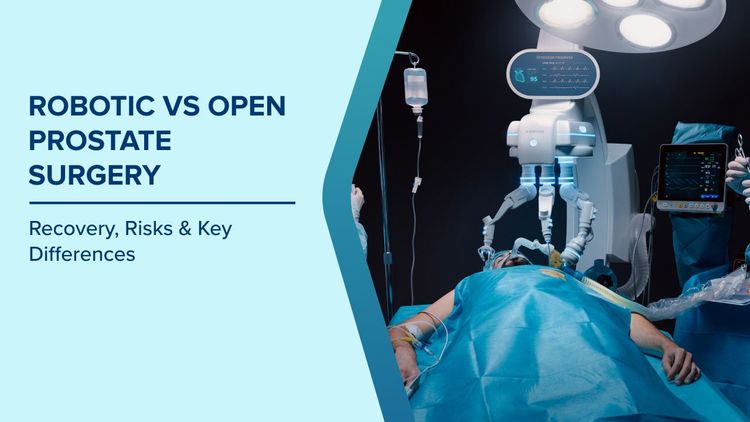
Robotic prostate surgery is a minimally invasive procedure performed using advanced robotic systems that assist the surgeon in carrying out precise movements.
One of the most commonly used systems is the da Vinci Surgical System, which allows better visualisation and control during surgery.
Instead of large incisions, the procedure is performed through small keyhole cuts. The surgeon controls robotic arms that translate hand movements into highly precise actions.
This approach is commonly used for:
- Prostate cancer surgery (prostate removal)
- Selected cases of enlarged prostate when surgery is required
Why Not Everyone Needs Surgery
Before considering any form of surgery, including robotic techniques, most prostate conditions are managed with non-surgical methods.
These may include:
- Medication to control urinary symptoms
- Lifestyle modifications
- Regular monitoring (especially in early prostate cancer)
Surgery is only considered when:
- Symptoms significantly affect quality of life
- The condition progresses despite treatment
- There is a need for definitive removal of the prostate
Robotic surgery is not the first step; it is a carefully chosen option when other approaches are no longer sufficient.
Who Needs Robotic Prostate Surgery?
The need for robotic prostate surgery depends on specific clinical situations rather than a single diagnosis.
Patients Diagnosed with Localised Prostate Cancer
One of the most common reasons for robotic prostate surgery is prostate cancer that is confined to the gland.
In medically appropriate patients, robotic-assisted removal of the prostate may be considered to:
- Remove the cancer completely
- Prevent further spread
- Improve long-term disease control
Not all prostate cancers require immediate surgery. Some are slow-growing and may be managed with monitoring. Surgery is typically considered when:
- The cancer shows signs of progression
- There is a higher risk profile
- The patient is suitable for surgical treatment
Patients with Moderate to Severe Urinary Symptoms from Enlarged Prostate
An enlarged prostate, medically known as Benign Prostatic Hyperplasia, can sometimes cause significant urinary symptoms.
These may include:
- Difficulty starting urination
- Weak urine stream
- Frequent urination, especially at night
- Incomplete bladder emptying
Most cases are treated without surgery. However, robotic surgery may be considered when:
- Symptoms are severe and persistent
- Medications no longer provide relief
- There are complications, such as repeated urinary retention
Patients with Complications Related to Prostate Conditions
Surgery may be recommended when prostate problems begin to affect other aspects of health.
This includes:
- Repeated urinary infections
- Bladder dysfunction due to long-standing obstruction
- Kidney-related concerns linked to urinary blockage
In such cases, the goal of surgery is not just symptom relief but preventing further complications.
Patients Who Have Not Responded to Conservative Treatment
Some patients follow appropriate treatment plans but do not experience meaningful improvement.
Doctors assess:
- Duration of treatment without relief
- Impact on daily life
- Progression of symptoms
If non-surgical treatments have reached their limit, robotic surgery may be considered as the next step.
Patients Suitable for Minimally Invasive Surgery
Not all patients are ideal candidates for robotic surgery. Suitability depends on:
- Overall health condition
- Ability to tolerate anaesthesia
- Extent of the disease
- Previous abdominal or pelvic surgeries
Robotic surgery is typically considered for patients who can safely undergo a minimally invasive procedure and benefit from its advantages.
Read More: Prostate Cancer: How Robotic-Assisted Surgery Improves Outcomes
Who May Not Be an Ideal Candidate?
Robotic prostate surgery may not be suitable in certain situations, such as:
- Advanced disease requiring a different treatment approach
- Medical conditions that increase surgical risk
- Cases where non-surgical management is still effective
In such cases, doctors may recommend alternative treatments tailored to the patient’s condition.
Benefits That Influence the Decision
While the need for surgery is based on medical factors, the choice of a robotic approach is often influenced by its potential advantages.
These may include:
- Smaller incisions
- Reduced blood loss
- Better precision during surgery
- Faster initial recovery compared to open surgery
- Shorter hospital stay in many cases
These benefits make robotic surgery a preferred option when surgery is already indicated.
What Doctors Consider Before Recommending Surgery
The decision to proceed with robotic prostate surgery is not based on a single factor. It involves a detailed evaluation.
Doctors typically consider:
Severity of Symptoms
How much the condition affects daily activities and quality of life.
Disease Characteristics
Whether the condition is stable, progressing, or causing complications.
Patient’s Age and Health
Overall fitness plays a key role in determining surgical suitability.
Expected Outcomes
Whether surgery is likely to provide meaningful improvement.
Patient Preference
Understanding expectations and concerns is an important part of the decision-making process.
Timing Matters: Not Too Early, Not Too Late
One of the most important aspects of robotic prostate surgery is timing.
- Too early: Surgery may be unnecessary if the condition is stable
- Too late: Delayed intervention may lead to complications or reduced outcomes
The goal is to identify the right window where surgery offers the most benefit.
Common Misconceptions About Robotic Prostate Surgery
“Everyone with prostate problems needs surgery”
Not true. Many conditions are managed effectively without surgery.
“Robotic surgery is always better than other treatments”
It is beneficial when surgery is needed, but not a replacement for all treatments.
“Surgery should be done as soon as a problem is detected”
Timing depends on progression, symptoms, and overall health.
The Role of Specialist Evaluation
Deciding whether robotic prostate surgery is needed requires expert assessment.
A specialist helps:
- Confirm the diagnosis
- Evaluate treatment options
- Determine whether surgery is appropriate
- Choose the most suitable surgical approach
This ensures that decisions are based on clinical need rather than assumptions.
Conclusion
Robotic prostate surgery is a precise and advanced treatment option, but it is not required for every prostate condition. It is typically considered when symptoms are significant, complications develop, or conditions like prostate cancer require surgical removal.
The key lies in identifying the right candidates and the right timing. A careful, individualised approach ensures that surgery is recommended only when it offers clear benefits.
If prostate-related symptoms persist or treatment is no longer effective, a specialist evaluation can help determine whether robotic prostate surgery is the appropriate next step.
Frequently Asked Questions
Is robotic prostate surgery only used for cancer?
No, it is commonly used for prostate cancer but may also be considered in selected cases of severe prostate enlargement.
How do I know if I need surgery or not?
The decision depends on symptom severity, response to treatment, and overall health. A specialist evaluation is required.
Is robotic surgery safer than traditional surgery?
It is a controlled and precise technique, but suitability depends on the patient and condition.
Can prostate problems be managed without surgery?
Yes, many cases are treated with medication and monitoring, especially in the early stages.
Does robotic surgery guarantee better results?
Outcomes depend on multiple factors, including the condition being treated and the patient's health, not just the surgical method.
Written and Verified by:

Related Blogs

Dr. Anant Kumar In Urology , Kidney Transplant , Uro-Oncology
Nov 08 , 2020 | 8 min read

Dr. Shailendra Kumar Goel In Urology , Kidney Transplant , Uro-Oncology
Nov 08 , 2020 | 4 min read
Blogs by Doctor
Most read Blogs


Related Blogs
Dr. Anant Kumar In Urology , Kidney Transplant , Uro-Oncology
Nov 08 , 2020 | 8 min read
Dr. Shailendra Kumar Goel In Urology , Kidney Transplant , Uro-Oncology
Nov 08 , 2020 | 4 min read
Blogs by Doctor
Most read Blogs