 WhatsApp Us (24/7)
 +91 926 888 0303 (24/7)


To Book an Appointment
Call Us+91 926 888 0303Cervical Cancer Every Woman Should Know: Early Signs & Habits
By Dr Anadi Pachaury in Surgical Oncology , Cancer Care / Oncology , Breast Cancer , Head & Neck Oncology , Robotic Surgery
Feb 16 , 2026

Cervical cancer develops quietly in many women. It often does not start with dramatic warning signals, which is why listening to the body becomes so important. Subtle changes can appear gradually and may be mistaken for tiredness, stress, or routine hormonal fluctuations. Understanding these early cues does not mean becoming anxious. It means staying informed, aware, and kind to your own health.
Understanding Cervical Cancer In Simple Terms
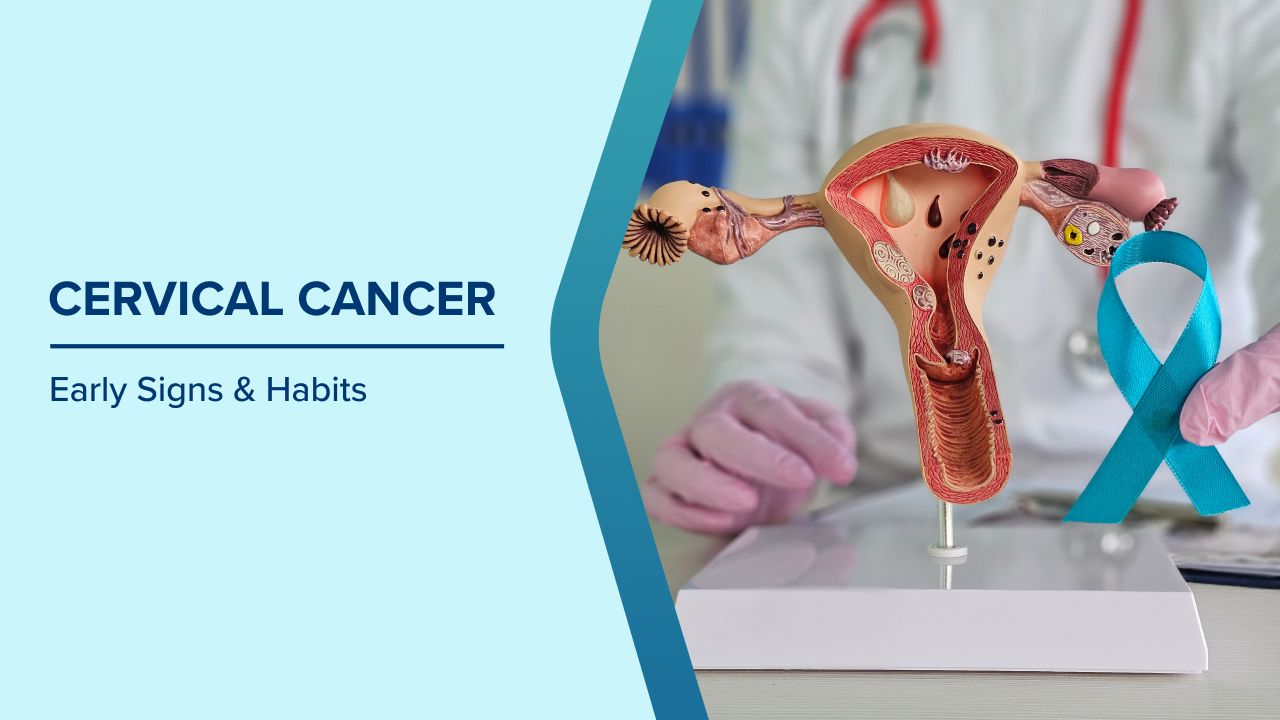
The cervix is the lower part of the uterus and plays an important role in menstruation, fertility, and childbirth. When abnormal cells begin to grow in this area and are not noticed for a long time, cervical cancer may develop.
The body often tries to signal that something is not right. These signals may be physical, emotional, or simply a sense that your body is behaving differently than usual. Every woman’s experience is unique. The goal is not self-diagnosis. The goal is awareness.
Listening to Your Body Without Fear
Women juggle work, family responsibilities, and much more every day. It is very easy to put personal health last. Many women dismiss ongoing discomfort as weakness or stress. However, your body often speaks in soft whispers before anything becomes serious.
If you feel that something has changed and it is persisting rather than disappearing with rest, your awareness matters. Early medical advice is reassuring and protective.
Early Signs That Deserve Attention
Below are early changes that do not usually appear in standard cervical cancer lists but can still be important clues.
Persistent Tiredness That Feels Different
General tiredness after a long day is common. However, fatigue linked with cervical disease often feels different.
- Waking up tired even after a full sleep
- Lack of motivation or interest in daily tasks
- Heaviness in the body without clear reason
Unexplained Changes In Body Weight
Unexplained weight loss or weight gain without dietary or activity changes should not be ignored.
A sudden loss of appetite or feeling full very quickly can also be a signal worth sharing with a doctor.
A Feeling of Heaviness in the Lower Pelvis
Persistent heaviness or pressure in the lower abdomen for weeks deserves medical attention.
Excessive or Foul-Smelling Vaginal Discharge
Discharge that is excessive or has a foul smell should be evaluated by a doctor.
Bleeding After Intercourse
Bleeding after intercourse or between menstrual cycles requires medical attention.
Bloating That Lingers
Bloating that continues beyond the menstrual cycle or appears without food-related triggers should be discussed with a doctor.
Subtle Changes In Bladder Habits
- Frequent urination
- Pressure while urinating
- Feeling of incomplete emptying
Altered Bowel Habits
- Persistent constipation
- Difficulty passing stool
- Fullness near the rectum
Changes In Menstrual Pattern
- Cycles becoming unusually long or short
- Flow different from usual pattern
- Change in cramps
Why Early Recognition Matters
Early medical visits do not mean you have cancer. Many symptoms may be due to hormonal imbalance, stress, or digestive issues.
When to Contact a Doctor
- Symptoms continue for more than 2–3 weeks
- Persistent pelvic heaviness or bloating
- Unexplained weight change or fatigue
- Ongoing urinary or bowel changes
Conclusion
Cervical cancer often begins with subtle signals. Paying attention to your body is an act of wisdom and self-care. If something feels different and is not going away, speak to your doctor.
FAQs
Can cervical cancer affect fertility?
Yes, certain treatments may affect fertility depending on the stage and treatment type.
Does cervical cancer always have early symptoms?
No, it can be silent in early stages. Routine medical care is important.
Can pregnancy occur after treatment?
In some cases, yes. Discuss pregnancy plans with your doctor before treatment.
Does cervical cancer only affect sexually active women?
No, it is not limited to sexually active women. Every woman should monitor her gynaecological health.
Written and Verified by:

Related Blogs

Dr. S. VEDA PADMA PRIYA In Surgical Oncology , Cancer Care / Oncology
May 16 , 2016 | 2 min read

Dr. Kanika Batra Modi In Surgical Oncology , Cancer Care / Oncology
May 26 , 2016 | 4 min read
Blogs by Doctor

Gastrointestinal Cancers: Types, Early Signs, Screening & Treatment
Dr Anadi Pachaury In Cancer Care / Oncology , Breast Cancer , Head & Neck Oncology , Robotic Surgery
Oct 25 , 2021 | 2 min read

Link Between Obesity and Breast Cancer: Understanding the Risks and Taking Action
Dr Anadi Pachaury In Cancer Care / Oncology , Breast Cancer
Oct 22 , 2025 | 4 min read
Most read Blogs


Related Blogs
Dr. S. VEDA PADMA PRIYA In Surgical Oncology , Cancer Care / Oncology
May 16 , 2016 | 2 min read
Dr. Kanika Batra Modi In Surgical Oncology , Cancer Care / Oncology
May 26 , 2016 | 4 min read
Blogs by Doctor
Gastrointestinal Cancers: Types, Early Signs, Screening & Treatment
Dr Anadi Pachaury In Cancer Care / Oncology , Breast Cancer , Head & Neck Oncology , Robotic Surgery
Oct 25 , 2021 | 2 min read
Link Between Obesity and Breast Cancer: Understanding the Risks and Taking Action
Dr Anadi Pachaury In Cancer Care / Oncology , Breast Cancer
Oct 22 , 2025 | 4 min read
Most read Blogs