 WhatsApp Us (24/7)
 +91 926 888 0303 (24/7)


To Book an Appointment
Call Us+91 926 888 0303Frozen Elephant Trunk Surgery: When It’s Needed, How It Helps, and What to Expect
By Dr. Vijayant Devenraj in Cardiac Surgery (CTVS) , Thoracic Surgery , Robotic Surgery
Nov 10 , 2025 | 6 min read
1

Frozen Elephant Trunk surgery is an advanced technique used to treat complex problems of the aorta, such as aneurysms and dissections, in a single, staged procedure. It combines open heart surgery with endovascular (catheter-based) techniques to repair both the aortic arch and the descending aorta in one operation. This approach can help prevent future complications, improve survival, and reduce the need for multiple surgeries.
As awareness of thoracic aortic diseases increases, more people are seeking clear and simple explanations of when this surgery is necessary, what it entails, and how it benefits them.
What Is Frozen Elephant Trunk Surgery?
Frozen Elephant Trunk (FET) surgery is a hybrid aortic repair technique used to treat complex diseases of the aortic arch and descending thoracic aorta.
The aorta is the main blood vessel that carries blood from the heart to the rest of the body. Sometimes, parts of the aorta can weaken or tear, leading to dangerous conditions like:
- Thoracic aortic aneurysm: A bulging or weakening of the aortic wall in the chest.
- Aortic dissection: A tear in the inner layer of the aorta, causing blood to flow between the layers of the vessel wall.
- Aortic arch disease: When the section of the aorta that branches to the brain and arms is affected.
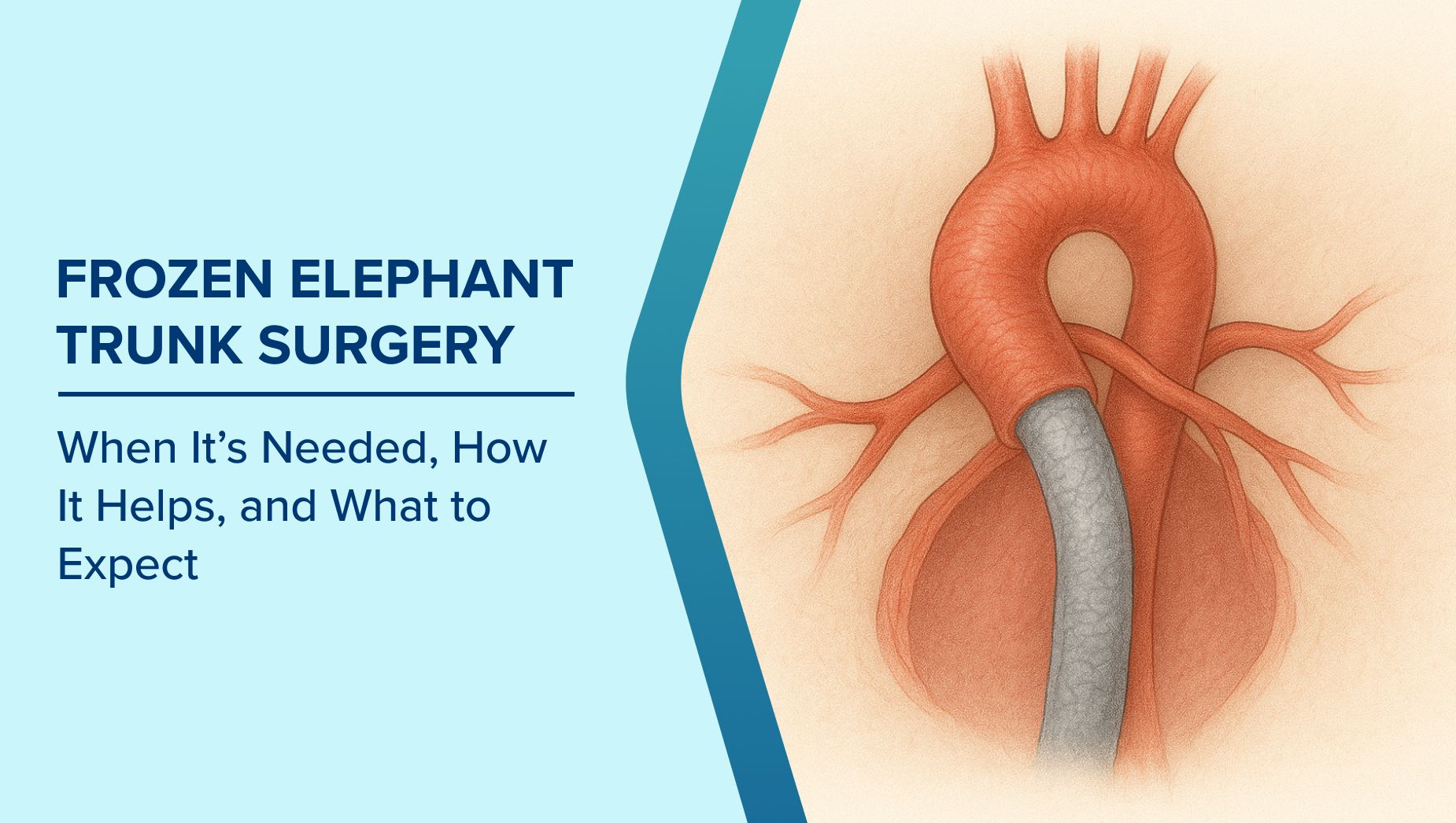
Traditional surgery often required two separate procedures to address both the aortic arch and descending aorta. FET surgery allows doctors to repair both regions in a single stage, using a special stent graft that is surgically implanted into the aorta.
This technique is called “Frozen Elephant Trunk” because the graft resembles the shape of an elephant’s trunk, with one part placed in the arch and the other extending into the descending aorta.
When Is Frozen Elephant Trunk Surgery Recommended?
The timing of FET surgery depends on the patient’s condition, the extent of disease, and overall health. Doctors recommend it for complex aortic problems where conventional surgery or endovascular repair alone would not be enough.
Thoracic Aortic Aneurysm
When the aneurysm involves both the aortic arch and the descending aorta, FET allows surgeons to repair both sections in one operation, reducing the risk of rupture.
Aortic Dissection
For patients with acute or chronic type A or type B dissections that extend into the arch and descending aorta, FET helps stabilise the aorta and prevent future complications such as aneurysm enlargement or rupture.
Redo or Complex Aortic Arch Surgery
Patients who have had previous heart surgery or have complicated aortic anatomy may benefit from FET, as it provides better access and allows comprehensive repair.
Planned Staged Procedures
In some cases, FET is performed as the first step of a planned two-stage surgery, making future interventions safer and simpler if needed.
Why Is Frozen Elephant Trunk Surgery Needed?
FET surgery has several key benefits that make it a preferred option in many complex cases:
- Single-stage repair of the arch and descending aorta, avoiding the need for multiple major surgeries.
- Reduced risk of future aneurysm formation or progression of dissection.
- Improved blood flow to vital organs, including the brain and spinal cord.
- Better long-term survival and lower complication rates compared to traditional staged approaches.
- Facilitates future endovascular repairs if needed, as the stent graft serves as a stable landing zone.
This procedure is especially beneficial in emergencies, such as acute dissections, where quick and comprehensive repair can be life-saving.
Step-by-Step Overview of the Procedure
Although Frozen Elephant Trunk surgery is complex, it can be explained in a few clear steps:
Preparation and Anaesthesia
The patient is placed under general anaesthesia. The surgical team prepares for cardiopulmonary bypass, which temporarily takes over the heart and lung functions during the operation.
Accessing the Aorta
A surgical incision is made in the chest to access the aortic arch. Blood flow to the brain is carefully managed using specialised techniques to protect it during the surgery.
Aortic Arch Repair
The damaged portion of the aortic arch is removed and replaced with a synthetic graft. This restores the structure and integrity of the aortic arch.
Inserting the Frozen Elephant Trunk
A specially designed stent graft is then inserted into the descending aorta through the new arch graft. This “frozen trunk” extends downward to stabilise the diseased segment of the aorta.
Reconnecting Arteries and Restoring Circulation
Once the graft is in place, the arteries that supply blood to the brain and arms are reconnected. Circulation is then gradually restored, and the patient is taken off the heart-lung machine.
Closing and Monitoring
The incision is closed, and the patient is transferred to the intensive care unit for close monitoring during the initial recovery phase.
Recovery and Post-Operative Care
Recovery after FET surgery varies depending on the patient’s age, health status, and complexity of the operation. Generally:
- Hospital stay: Patients typically spend several days in the ICU followed by a longer stay in the hospital for monitoring.
- Mobility: Early mobilisation is encouraged to prevent complications like blood clots and pneumonia.
- Medications: Patients may need medications to control blood pressure, prevent infections, and support healing.
- Follow-up scans: Regular CT or MRI scans are essential to monitor the graft and the remaining aorta.
- Lifestyle adjustments: A heart-healthy lifestyle is encouraged to protect long-term cardiovascular health.
Most patients can return to normal activities within a few weeks to months, depending on their recovery progress and medical advice.
Risks, Outcomes and Long-Term Outlook
Like all major surgeries, Frozen Elephant Trunk surgery carries some risks, including bleeding, infection, stroke, or organ complications. However, when performed in experienced centres, the outcomes are generally excellent, with improved survival rates and reduced need for repeat surgeries.
Long-term outlook depends on factors such as:
- The underlying aortic condition
- Patient’s overall health and age
- Blood pressure control after surgery
- Regular follow-up and imaging
Many patients enjoy a significantly improved quality of life and reduced risk of future aortic events after FET surgery.
Who Should Consider This Surgery and How to Prepare
Patients with complex aortic aneurysms, dissections, or arch diseases may be suitable candidates. Evaluation typically involves:
- Detailed imaging (CT or MRI)
- Cardiac function assessment
- Discussion with a multidisciplinary cardiovascular team
Preparation Tips
- Control blood pressure before surgery.
- Stop smoking and reduce alcohol intake to improve healing.
- Stay active and eat a balanced diet.
- Discuss all medications and health conditions with the surgical team to avoid complications.
Early referral to specialised centres with experience in hybrid aortic surgery is crucial for the best outcomes.
Conclusion
Frozen Elephant Trunk surgery represents a major advancement in aortic arch repair and thoracic aortic aneurysm treatment. Combining open surgery with endovascular techniques allows comprehensive repair in a single stage, improving survival and reducing future risks.
With proper timing, expert care, and regular follow-up, patients can expect positive long-term outcomes. If you or a loved one has been diagnosed with an aortic condition, consulting a cardiovascular specialist can help determine whether this surgery is the right choice.
Frequently Asked Questions
How long does it take to fully recover from Frozen Elephant Trunk surgery?
Recovery varies from person to person. Most patients begin light activities within 4 to 6 weeks, but complete recovery, including regaining full strength and stamina, can take several months. Regular follow-ups and lifestyle modifications help speed up the healing process.
Can Frozen Elephant Trunk surgery be performed in older adults?
Yes, age alone is not a strict limitation. What matters is overall health, heart function, and the presence of other medical conditions. Many older adults successfully undergo the surgery after a thorough preoperative evaluation.
What happens if the aortic condition is left untreated?
Conditions like an aortic aneurysm or dissection can worsen over time, increasing the risk of rupture, stroke, or organ damage. Timely surgical intervention often prevents life-threatening complications.
Will patients need additional procedures after FET surgery?
Some patients may require follow-up endovascular procedures in the future, especially if other parts of the aorta become involved. However, the FET graft creates a stable foundation that makes future interventions safer and simpler.
How is pain managed after Frozen Elephant Trunk surgery?
Pain is usually well controlled with a combination of medications, breathing exercises, and early mobilisation. The discomfort typically decreases steadily over the weeks following surgery.
Can patients travel after this surgery?
Yes, but only after getting medical clearance. Air travel or long-distance trips should be postponed until the patient has recovered sufficiently and follow-up imaging confirms stable healing.
Are there any dietary restrictions after surgery?
A heart-healthy diet low in salt, saturated fats, and processed foods is recommended. Patients are encouraged to focus on fresh fruits, vegetables, lean proteins, and whole grains to support recovery and cardiovascular health.
Written and Verified by:

Related Blogs

Dr. Ganesh Kumar Mani In Cardiac Sciences , Cardiac Surgery (CTVS)
Apr 25 , 2016 | 3 min read

Dr. Kewal Krishan In Cardiac Sciences , Cardiac Surgery (CTVS)
May 02 , 2016 | 4 min read
Blogs by Doctor

Overtraining and Heart Health: Symptoms, Risks, and Safe Exercise Tips
Dr. Vijayant Devenraj In Cardiac Surgery , Robotic Surgery
Aug 27 , 2025 | 3 min read

How to take care of your Heart in winter
Dr. Vijayant Devenraj In Cardiac Sciences , Cardiac Surgery
Oct 21 , 2025 | 5 min read
Most read Blogs


Related Blogs
Dr. Ganesh Kumar Mani In Cardiac Sciences , Cardiac Surgery (CTVS)
Apr 25 , 2016 | 3 min read
Dr. Kewal Krishan In Cardiac Sciences , Cardiac Surgery (CTVS)
May 02 , 2016 | 4 min read
Blogs by Doctor
Overtraining and Heart Health: Symptoms, Risks, and Safe Exercise Tips
Dr. Vijayant Devenraj In Cardiac Surgery , Robotic Surgery
Aug 27 , 2025 | 3 min read
How to take care of your Heart in winter
Dr. Vijayant Devenraj In Cardiac Sciences , Cardiac Surgery
Oct 21 , 2025 | 5 min read
Most read Blogs