 WhatsApp Us (24/7)
 +91 926 888 0303 (24/7)


To Book an Appointment
Call Us+91 926 888 0303Spine Injury After an Accident: Warning Signs to Watch
By Dr. Mohammed Faizan in Spine Surgery
Feb 12 , 2026

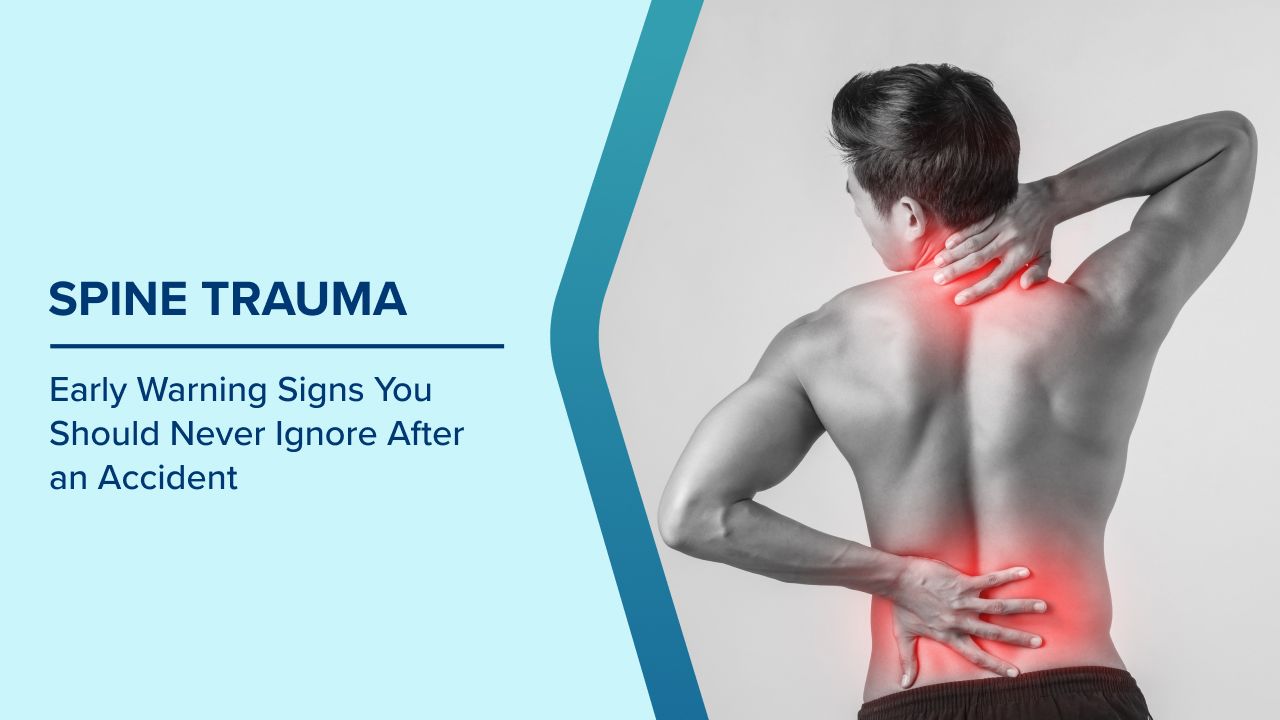
Spine trauma can change life in a single moment. A fall, a collision, or a sudden jerk can put unexpected pressure on the neck or back. Many people focus on visible injuries like cuts and bruises after an accident and overlook the spine. The spine protects the spinal cord, which carries signals between the brain and the rest of the body. Even a small injury in this area can have serious and lasting effects.
One of the biggest challenges with spine trauma is that the damage is not always obvious immediately. Painkillers, shock, or adrenaline can mask symptoms. Some people feel almost normal right after the accident and decide not to see a doctor. Problems then start appearing hours or even days later. Recognising early warning signs can help prevent long-term complications.
Understanding Spine Trauma in Simple Terms
Spine trauma refers to any injury to the vertebrae, spinal cord, surrounding ligaments, or supporting muscles due to an external force. The injury may be mild or severe, but even minor trauma can be dangerous because the spinal cord is delicate.
Spine trauma may involve:
- Compression of vertebrae
- Small or major fractures
- Dislocation of spinal bones
- Injury to discs
- Swelling around the spinal cord
Sometimes the external injury appears small, yet the inner structures have suffered damage. This is why spine trauma needs careful attention after any accident involving the head, neck, or back.
Common Accidents that May Cause Spine Trauma
Spine trauma can occur in many everyday situations. Some of the most frequent include:
- Road accidents, including car, bike, or scooter collisions
- Sudden whiplash movement from abrupt braking
- Slipping in the bathroom or on wet floors
- Falling from stairs, beds, or ladders
- Workplace injuries, especially in construction or heavy lifting
- Sports injuries in activities involving jumping, speed, or contact
Even a low-speed accident can injure the spine. The force of sudden movement is enough to strain or damage spinal structures.
Early Warning Signs People Often Ignore
Here are early red flags that should never be ignored:
Persistent neck or back pain
Pain that does not settle after rest can be a sign of injury. Pain worsening with sitting, standing, or turning the head needs medical evaluation.
Tingling or numbness
Pins and needles in the arms, hands, legs, or feet can indicate nerve irritation or compression.
Weakness in arms or legs
Difficulty lifting objects or walking steadily can signal potential nerve involvement.
Headache linked with neck stiffness
Headaches that start after a fall or collision, especially with neck discomfort, can point toward cervical spine injury.
Difficulty taking deep breaths
If deep breathing increases pain or feels restricted, the thoracic spine may be involved.
Loss of balance or unsteady walking
Trouble coordinating movement can indicate that messages between the brain and limbs are being interrupted.
New bowel or bladder problems
Difficulty passing urine or sudden loss of control is an emergency warning sign.
Delayed Symptoms that May Appear Days Later
Not all symptoms appear immediately. Some develop slowly due to swelling or internal bleeding around the spinal cord.
- Increasing back or neck stiffness
- Shooting pain down the arms or legs
- Burning sensation in muscles
- Reduced range of motion
- Frequent headaches
- Unexplained fatigue after minor activity
When to Seek Emergency Medical Care
Immediate medical help is needed if any of the following occur after an accident:
- Inability to move any part of the body
- Severe neck or back pain right after impact
- Numbness on one or both sides of the body
- Loss of bowel or bladder control
- Visible deformity of the spine
- Loss of consciousness after injury
- Progressive weakness
Until medical help arrives, the person should not be moved unnecessarily.
Why Ignoring Symptoms Can Be Dangerous
Untreated spine trauma can lead to complications such as:
- Chronic pain
- Permanent nerve damage
- Mobility restrictions
- Reduced muscle control
- Spinal deformity
- Risk of paralysis in severe cases
Protecting Your Spine in Daily Life
Simple precautions can lower the risk of severe injury:
- Always wear seatbelts
- Use helmets for two-wheelers
- Keep bathrooms slip-free
- Use railing support on stairs
- Avoid risky lifting techniques
- Maintain muscle strength and flexibility
Conclusion
After any accident, unusual sensations or altered movement should never be ignored. Early evaluation protects long-term mobility and independence.
FAQs
Can someone travel long distances after having spine trauma?
Long journeys immediately after a spine injury are not advised because sitting for prolonged periods can increase stiffness and discomfort.
Is it safe to return to gym workouts after spine trauma?
Heavy workouts should be avoided until a doctor confirms that the spine is stable.
Can spine trauma cause sleep problems even without pain?
Yes, some people experience disturbed sleep due to discomfort in certain positions or subtle nerve irritation.
Will every person with spine trauma need surgery?
No, many spine injuries are managed without surgery through rest, bracing, physiotherapy, and monitoring.
How long does recovery usually take after spine trauma?
Recovery time varies depending on the severity of injury and overall health.
Written and Verified by:

Related Blogs

Prof. (Dr). V.K.Jain In Neurosciences , Spine Surgery
Nov 07 , 2020 | 5 min read
Dr. Amit Gupta In Spine Surgery , Neurology
Nov 07 , 2020 | 2 min read
Blogs by Doctor

Most read Blogs


Related Blogs
Prof. (Dr). V.K.Jain In Neurosciences , Spine Surgery
Nov 07 , 2020 | 5 min read
Dr. Amit Gupta In Spine Surgery , Neurology
Nov 07 , 2020 | 2 min read
Blogs by Doctor
Most read Blogs