 WhatsApp Us (24/7)
 +91 926 888 0303 (24/7)


To Book an Appointment
Call Us+91 926 888 0303How Robotic Systems Are Transforming Transplant Surgery
By Dr. Praanjal Gupta in Urology , Kidney Transplant , Robotic Surgery
Sep 24 , 2025 | 5 min read

Organ transplantation has long been a life-saving procedure for people with end-stage organ failure. Kidney, liver, and heart transplants have restored health and extended lives for millions across the world. Yet, traditional transplant surgeries are often associated with large incisions, extended hospital stays, and a higher risk of complications.
As medical science advances, the focus is shifting toward procedures that not only save lives but also improve patient comfort and long-term outcomes. This is where robotic systems are transforming transplant surgery. By combining surgical expertise with advanced technology, robotic-assisted transplants are reshaping what patients and surgeons can expect from the future of healthcare.
The Rise of Robotic Systems in Surgery
Robotic systems were first introduced to support surgeons in performing highly precise procedures. Over time, they have moved beyond experimental use to becoming a standard tool in many leading hospitals. Their entry into transplant surgery marks a major milestone.
Unlike traditional methods, robotic systems allow surgeons to operate with enhanced precision, flexibility, and control. The robot mirrors the surgeon’s movements and refines them into highly accurate actions inside the body. For transplant patients, this means smaller incisions, less pain, and faster recovery.
How Robotics is Changing Kidney Transplant Procedures
Kidney transplants are among the most common transplant surgeries worldwide. Traditionally, these procedures involve a large abdominal incision to place the donor kidney, which can lead to longer recovery times.
With robotic assistance, kidney transplant surgery is becoming less invasive. Surgeons use robotic arms to place the kidney through much smaller incisions. A high-definition 3D camera provides a magnified view, helping surgeons connect delicate blood vessels and urinary structures with remarkable precision. It also offers live intraoperative assessment of blood flow to the donor kidney after connecting the blood vessels. The minimalistic approach further reduces the risk of surgical site infections and promotes faster recovery and discharge in recipients.
Role of Robotics in Liver Transplantation
Liver transplantation is one of the most complex surgical procedures. The organ’s size, position, and extensive blood supply make the surgery technically demanding. Until recently, robotic systems were rarely used for such intricate procedures. Today, however, robotics is opening new possibilities.
Robotic systems provide surgeons with greater dexterity in confined spaces. The fine movements of robotic arms allow precise dissection and suturing of the liver’s delicate structures. Minimally invasive robotic approaches can also be used in living donor liver transplants, where only a part of the donor’s liver is removed.
For donors, this means a smaller incision and faster recovery. For recipients, robotic technology helps improve accuracy in organ placement and reduces surgical trauma.
Advantages for Surgeons and Patients
The adoption of robotic systems in transplant surgery offers benefits for both patients and surgeons.
For Patients
- Minimally invasive surgery: Smaller incisions reduce pain and scarring.
- Lesser postoperative pain: Patients have a smooth postoperative course.
- Faster healing: Patients often leave the hospital sooner and return to normal life quickly.
- Lower infection risk: Limited exposure and smaller incision reduces the chances of complications.
- Improved outcomes: Precise surgical techniques enhance organ function and survival rates.
For Surgeons
- Enhanced vision: High-definition 3D imaging magnifies the surgical field.
- Greater precision: Robotic arms filter out natural hand tremors, ensuring smooth movements.
- Better ergonomics: Surgeons operate from a console, reducing fatigue during long, complex surgeries.
The combination of these factors results in safer surgeries and better long-term results.
Technological Aspects: How Robotic Systems Work in Transplant Care
Robotic surgery is not about replacing surgeons but about enhancing their abilities. The system typically consists of three main elements:
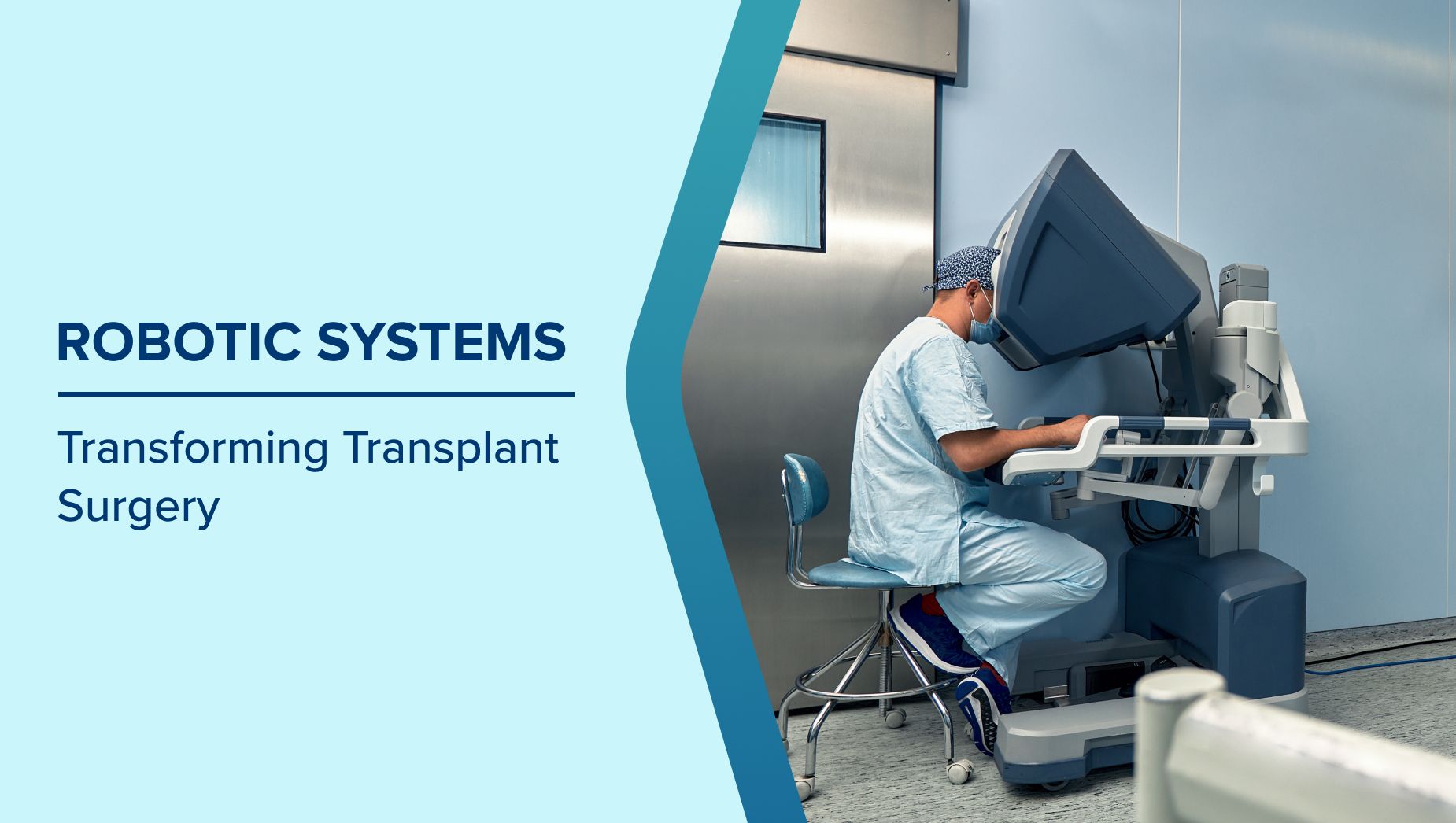
- Surgeon’s Console: Where the surgeon sits and controls the robotic arms using joysticks and foot pedals.
- Patient-side Cart: Robotic arms hold surgical instruments and a camera, executing the surgeon’s commands with unmatched accuracy.
- Vision System: Provides a magnified 3D view of the surgical site, allowing detailed visibility of tissues and blood vessels.
During transplant surgery, the robotic system translates the surgeon’s movements into scaled-down, precise actions inside the patient’s body. This combination of human skill and robotic precision sets a new standard in surgical care.
Healthy Lifestyle and Post-Transplant Care in the Robotic Era
While robotics can make surgery safer and recovery smoother, patients still play an important role in protecting their health after a transplant.
Some key habits include:
- Following prescribed medication schedules to prevent organ rejection
- Attending regular follow-ups to monitor organ function
- Maintaining a balanced diet to support healing
- Staying active with light physical exercise, as recommended by the doctor
- Avoiding infections through good hygiene and safe practices
The combination of advanced surgical techniques and responsible post-operative care offers patients the best chance at a healthy, active life after transplantation.
Breaking the Myths Around Robotic Surgery
Many patients worry that robotic surgery means the robot is performing the operation independently. In reality, the surgeon is in complete control at all times. The robot acts as a highly sophisticated tool, translating the surgeon’s expertise into finer, more accurate movements.
Another common misconception is that robotic surgery is experimental. On the contrary, robotic surgery has been there in practice for almost a decade, it has been scientifically validated and increasingly being integrated into mainstream surgical practice, including transplant procedures, because of its proven benefits.
Addressing these myths helps patients feel more assured when considering robotic transplant options.
Conclusion
Robotic systems are more than just tools; they represent a revolution in surgical precision and patient care. In the field of organ transplantation, they bring hope for shorter recoveries, fewer complications, and improved quality of life.
As more patients and surgeons embrace robotic transplant surgery, the procedure is set to become a new standard of excellence. By combining human expertise with cutting-edge technology, transplant surgery is entering a new era where saving lives also means improving how those lives are lived. Further in the western robotic transplant surgery has spilled over to deceased donors also.
Frequently Asked Questions
Is robotic transplant surgery safe for all patients?
Not every patient is an ideal candidate. The decision depends on health status, organ type, and hospital facilities. A transplant surgeon will assess the suitability on a case-by-case basis.
Can patients expect less pain after robotic transplant surgery?
Yes, smaller incisions generally lead to reduced pain, quicker mobility, and a lower need for strong painkillers.
Does robotic transplant surgery leave visible scars?
Most robotic surgeries use smaller incisions, which usually result in minimal scarring compared to traditional open surgeries and cosmetically better.
Is robotic transplant surgery widely available?
Availability depends on the hospital’s resources and expertise. Larger, specialised centres are more likely to offer this advanced option.
Can robotic transplant surgery be used for re-transplant patients?
Yes, robotic surgery can be an option for patients undergoing a second or repeat transplant, depending on individual anatomy and health status.
Written and Verified by:

Related Blogs

Dr. Anant Kumar In Urology , Kidney Transplant , Uro-Oncology
Nov 08 , 2020 | 8 min read

Dr. Shailendra Kumar Goel In Urology , Kidney Transplant , Uro-Oncology
Nov 08 , 2020 | 4 min read
Blogs by Doctor

Organ Donation: 5 Lesser-Known Facts That Could Save Lives
Dr. Praanjal Gupta In Urology , Kidney Transplant , Uro-Oncology , Robotic Surgery
Aug 20 , 2025 | 3 min read
Most read Blogs


Related Blogs
Dr. Anant Kumar In Urology , Kidney Transplant , Uro-Oncology
Nov 08 , 2020 | 8 min read
Dr. Shailendra Kumar Goel In Urology , Kidney Transplant , Uro-Oncology
Nov 08 , 2020 | 4 min read
Blogs by Doctor
Organ Donation: 5 Lesser-Known Facts That Could Save Lives
Dr. Praanjal Gupta In Urology , Kidney Transplant , Uro-Oncology , Robotic Surgery
Aug 20 , 2025 | 3 min read
Most read Blogs