 WhatsApp Us (24/7)
 +91 926 888 0303 (24/7)


To Book an Appointment
Call Us+91 926 888 0303Robotic Surgery in Cancer Care: Precision, Control and Faster Recovery
By Dr. Abhinav Deshpande in Surgical Oncology , Cancer Care / Oncology , Robotic Surgery
Dec 18 , 2025 | 5 min read
11

Cancer treatment has evolved remarkably over the past few decades, moving from large, invasive surgeries to sophisticated, minimally invasive techniques. One of the most transformative advances in this field is robotic-assisted surgery, a technique that allows surgeons to operate with exceptional precision, control, and accuracy. Today, robotic surgery is not just redefining how cancers are treated but also how patients recover and live after treatment.
This technology is helping doctors target tumours more precisely, preserve surrounding healthy tissue, and improve patient comfort and outcomes. Let’s understand how robotic surgery is making cancer care more accurate, effective, and patient-friendly.
Understanding Robotic Surgery in Cancer Care
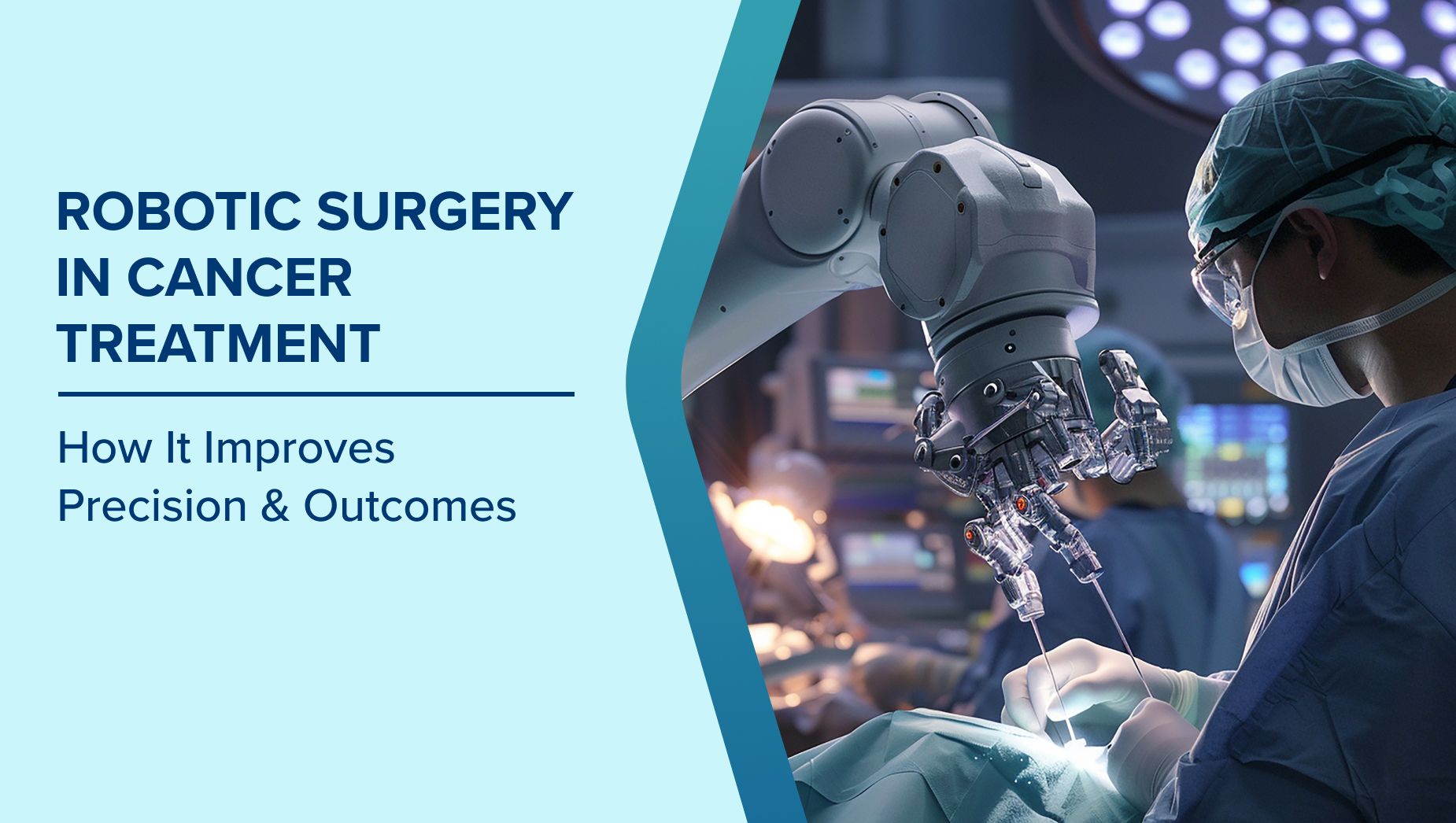
Robotic surgery in cancer treatment involves the use of a computer-assisted system that allows the surgeon to perform complex procedures with greater accuracy than traditional methods. Contrary to what some may believe, the robot does not act independently. Every movement made by the robot is controlled entirely by a highly trained surgeon seated at a console.
The robotic system typically includes three main components:
- Surgeon’s console: Where the surgeon sits and operates using hand and foot controls.
- Patient-side robotic arms: These arms hold and manipulate surgical instruments with remarkable steadiness.
- High-definition 3D camera: Offers magnified, crystal-clear visuals of the surgical site, often up to ten times greater than the human eye can see.
The result is enhanced precision and flexibility, enabling surgeons to access and treat areas that would otherwise be challenging to reach using traditional open or laparoscopic surgery.
How Robotic Surgery Improves Precision
One of the greatest strengths of robotic surgery lies in its accuracy and stability. The robotic arms are designed to eliminate natural hand tremors, allowing surgeons to make precise, minute movements. This precision becomes particularly important when operating near delicate structures such as blood vessels, nerves, or organs.
Some of the ways robotic systems enhance surgical precision include:
- Enhanced visualisation: The 3D, high-definition view allows surgeons to distinguish between healthy and diseased tissues more clearly.
- Micro-movements: The robotic instruments can move with exceptional control and rotate more freely than a human wrist.
- Steadiness and consistency: The system ensures smooth, steady motion without fatigue, even during long or complex procedures.
- Improved access: Surgeons can operate through smaller incisions and reach deeper or narrower spaces without disturbing surrounding tissues.
Together, these features help achieve more complete tumour removal while minimising damage to healthy areas.
Benefits for Cancer Patients
Robotic surgery offers a combination of medical and lifestyle advantages that make recovery smoother and outcomes better. Some of the most notable benefits include:
- Smaller incisions: Only a few tiny cuts are required, reducing visible scarring.
- Less blood loss: The precision of robotic instruments minimises bleeding during surgery.
- Reduced pain: Less tissue trauma leads to quicker comfort after the operation.
- Shorter hospital stay: Patients can usually return home sooner than after traditional surgery.
- Faster recovery: Healing is quicker, allowing patients to resume daily activities earlier.
- Lower infection risk: Smaller incisions and controlled environments help reduce postoperative infections.
For cancer patients, these advantages not only make recovery easier but also help in starting additional treatments, such as chemotherapy or radiation, without unnecessary delays.
Types of Cancer Treated Using Robotic Surgery
Robotic technology is now being used in several types of cancer surgeries, particularly where delicate and precise movements are essential. Some common applications include:
- Esophageal cancer (food pipe): Cancer that forms in the food pipe (esophagus), the tube connecting the throat to the stomach.
- Transoral Robotic Surgery (TORS): A minimally invasive procedure that uses a robot to perform surgery inside the mouth and throat through the oral cavity.
- Thoracic chest surgery: Operations on organs within the chest cavity, such as the heart, lungs, esophagus, and trachea.
- Abdominal cancers: Cancers of organs within the abdomen, most commonly the stomach, liver, pancreas, and intestines.
- Thoracic and head-neck cancers: Provides access to confined areas like the chest or throat where traditional surgery may be difficult.
- Colorectal cancer: Precise removal of tumours from the rectum or colon with minimal disruption to nearby organs.
- Gynaecological cancers: Used for hysterectomy, myomectomy, and treatment of cervical or endometrial cancers.
- Prostate cancer: Robotic prostatectomy allows surgeons to remove the prostate gland with better precision, helping preserve urinary and sexual functions.
- Kidney cancer: Enables removal of kidney tumours while preserving as much healthy tissue as possible.
The choice of robotic surgery depends on the cancer’s location, size, and stage, along with the patient’s overall health and treatment goals.
The Surgeon’s Role in Robotic Precision
Despite the term “robotic surgery,” the surgeon is fully in control at all times. The robot does not perform the surgery by itself; it functions as an advanced tool guided by the surgeon’s expertise.
The surgeon uses the console to manoeuvre robotic instruments, translating every movement of their hands into scaled, precise actions inside the patient’s body. This human-technology partnership combines judgment and experience with technical accuracy.
Recovery and Patient Experience
Recovery after robotic surgery is typically faster and smoother compared to open surgery. Most patients experience less postoperative discomfort, require minimal pain medication, and can return to normal routines sooner.
The hospital stay is often reduced to just a couple of days, and patients are usually able to walk, eat, and move around soon after the procedure.
Emotionally, quicker recovery time and smaller scars contribute to improved confidence and quality of life.
Conclusion
Robotic surgery has revolutionised cancer treatment by offering precision, safety, and faster recovery. It empowers surgeons to perform complex procedures with unmatched accuracy while preserving vital tissues.
For anyone diagnosed with cancer, understanding available treatment options, including robotic surgery, is an important part of making informed decisions.
Frequently Asked Questions
Is robotic surgery suitable for all types of cancer?
Not all cancers require or benefit from robotic surgery. Suitability depends on tumour location, size, and overall health.
How long does it take to recover after robotic cancer surgery?
Recovery varies by procedure, but most patients return to normal activities faster than with traditional open surgery.
Can robotic surgery completely remove cancer?
The goal is maximum safe tumour removal. Complete removal depends on the cancer stage and spread.
Does robotic surgery involve more risks than traditional surgery?
Robotic surgery is generally safe and may reduce risks such as bleeding and infection.
How can I find out if robotic surgery is right for me?
A consultation with a surgical oncologist can help determine the best treatment approach.
Written and Verified by:

Related Blogs

Dr. S. VEDA PADMA PRIYA In Surgical Oncology , Cancer Care / Oncology
May 16 , 2016 | 2 min read

Dr. Kanika Batra Modi In Surgical Oncology , Cancer Care / Oncology
May 26 , 2016 | 4 min read
Blogs by Doctor


Most read Blogs


Related Blogs
Dr. S. VEDA PADMA PRIYA In Surgical Oncology , Cancer Care / Oncology
May 16 , 2016 | 2 min read
Dr. Kanika Batra Modi In Surgical Oncology , Cancer Care / Oncology
May 26 , 2016 | 4 min read
Blogs by Doctor
Most read Blogs