 WhatsApp Us (24/7)
 +91 926 888 0303 (24/7)



To Book an Appointment
Call Us+91 926 888 0303Robotic Breast Surgery: Safety, Risks, Myths and Expectations
By Dr. Abhinav Deshpande in Surgical Oncology , Cancer Care / Oncology , Robotic Surgery
Mar 12 , 2026

When patients hear about robotic breast surgery, the first question that usually comes to mind is simple and direct: Is it safe?
With increasing discussions around robotic cancer surgery in breast cancer treatment, curiosity is natural. Technology in healthcare often brings both hope and hesitation. While some view it as a major advancement, others worry about risks, complications, or over-reliance on machines.
The truth lies in understanding how robotic systems are used, what safety measures are involved, and what patients should realistically expect. Safety in surgery is never about technology alone. It is about training, planning, and careful patient selection.
What Robotic Breast Surgery Actually Involves
Robotic breast surgery refers to procedures performed with robotic assistance under the control of a trained surgeon. The robotic platform translates the surgeon’s hand movements into precise instrument movements inside the body.
Importantly, the system does not make independent decisions. The surgeon remains in full control throughout the procedure. The robotic interface enhances control and access, but judgment and expertise guide every step.
Robotic techniques are used selectively in breast cancer care. They are not applied to all cases. Their use depends on tumour location, stage, anatomical considerations, and overall treatment strategy.
Understanding Surgical Safety in Breast Cancer Treatment
All surgical procedures carry some degree of risk. Robotic surgery is evaluated using the same safety standards as conventional surgery. These include:
- Careful patient assessment
- Preoperative imaging and planning
- Anaesthesia safety protocols
- Sterile operating conditions
- Continuous monitoring during surgery
- Structured postoperative care
The introduction of robotic systems does not remove these principles. It operates within them.
Hospitals that offer robotic breast surgery follow credentialing protocols. Surgeons undergo structured training and supervised experience before performing these procedures independently.
Common Concerns About Robotic Breast Surgery
Fear of Machine Error
One common myth is that a robotic system could malfunction mid-procedure and cause harm. In reality, robotic platforms are built with multiple safety checkpoints and fail-safe mechanisms. If any irregularity is detected, the system can be paused immediately.
Furthermore, surgeons can convert to a conventional approach if necessary.
Worry About Longer Surgery Time
Some patients assume robotic procedures take significantly longer. While initial cases during the learning phase may require additional time, experienced teams perform robotic surgeries efficiently. Duration depends more on case complexity than on the use of robotics.
Concerns About Complications
Complication risks such as bleeding, infection, or anaesthesia reactions exist in all forms of surgery. Robotic assistance does not eliminate risk, but neither does it automatically increase it. Safety outcomes are closely linked to surgical planning and expertise.
Doubts About Cancer Clearance
The primary goal of breast cancer surgery remains complete tumour removal with clear margins. Robotic assistance does not compromise oncological principles. The same standards for cancer clearance apply.
What Determines Safety in Robotic Breast Surgery
Safety is influenced by several factors:
Surgeon Experience
Training and familiarity with the robotic system are critical. Surgical expertise remains the most important variable.
Appropriate Case Selection
Not every breast cancer case is suitable for robotic assistance. Patients with extensive disease or certain anatomical considerations may require conventional approaches.
Institutional Support
Hospitals offering robotic surgery must have experienced anaesthesia teams, oncology specialists, and postoperative care protocols.
Multidisciplinary Planning
Breast cancer care often involves surgeons, medical oncologists, radiation oncologists, and pathologists. Collaborative planning enhances overall treatment safety.
Realistic Expectations from Robotic Breast Surgery
Robotic surgery is a tool. It is not a guarantee of perfect results or absence of complications.
Patients should understand that:
- Recovery varies from person to person
- Mild discomfort after surgery is normal
- Follow up appointments remain essential
- Additional treatments such as chemotherapy or radiation may still be required
Robotic assistance does not replace comprehensive cancer management. It forms one component of an integrated treatment plan.
Comparing Robotic and Conventional Approaches
It is important to avoid framing robotic surgery as superior in every scenario. In some cases, traditional open surgery remains the most appropriate option.
Key considerations include:
- Tumour characteristics
- Breast size and anatomy
- Previous surgeries
- Overall health status
An honest discussion with the treating surgeon helps determine whether robotic surgery offers meaningful benefit in a specific case.
Psychological Impact and Informed Decision Making
Patients often associate newer technology with either great promise or increased risk. Clear communication reduces both exaggerated expectations and unnecessary fear.
Asking the following questions can help:
- How many robotic breast procedures has the surgeon performed?
- What are the possible complications in my case?
- What happens if conversion to open surgery is required?
- How will this approach affect my recovery timeline?
When patients feel informed, confidence improves. Transparency strengthens trust between the patient and the surgeon.
Safety in the Context of Cancer Control
Safety in breast cancer surgery is not limited to avoiding surgical complications. It also means maintaining strict cancer control standards.
This includes:
- Achieving tumour-free margins
- Accurate lymph node evaluation when required
- Proper pathological assessment
- Coordinated follow-up care
Robotic surgery is evaluated within these same oncological principles. Technology must align with long term cancer outcomes, not just short term recovery experience.
When Robotic Breast Surgery May Not Be Recommended
There are situations where robotic assistance may not be appropriate, including:
- Advanced or widespread tumours
- Complex reconstructive needs requiring open exposure
- Patients with certain prior surgical histories
- Medical conditions that increase anaesthesia risk
A responsible surgical team will recommend robotics only when it aligns with patient safety and treatment goals.
The Role of Ongoing Monitoring
After robotic breast cancer surgery, patients follow the same structured monitoring plan as with other surgical approaches.
This includes:
- Wound assessment
- Pathology review
- Imaging when necessary
- Planning for adjuvant therapy
- Long-term surveillance
Safety extends beyond the operating room. Continuous follow-up ensures early detection of any complications or recurrence.
Conclusion
Robotic breast surgery is neither a futuristic experiment nor a replacement for surgical expertise. It is an advanced tool used within established safety frameworks.
Its safety depends on careful patient selection, surgeon experience, institutional support, and adherence to oncological standards. For appropriately selected patients, robotic assistance can be performed safely within a comprehensive breast cancer treatment plan.
The key is informed decision-making. When patients understand the risks, limitations, and realistic expectations, they can approach surgery with clarity rather than fear.
Frequently Asked Questions
Does robotic breast surgery require special anaesthesia?
No, standard general anaesthesia is used, similar to other breast surgeries.
Can robotic breast surgery trigger metal detector alarms?
No, the robotic system does not leave any metal devices inside the body.
Is hospital stay longer after robotic breast surgery?
Hospital stay duration depends on individual recovery, not solely on surgical technique.
Can robotic surgery be performed on both breasts at the same time?
In selected cases, bilateral procedures may be considered based on medical suitability.
Will insurance cover robotic breast cancer surgery?
Coverage depends on the policy and hospital billing structure. Confirm with your provider beforehand.
Written and Verified by:

Related Blogs

Dr. S. VEDA PADMA PRIYA In Surgical Oncology , Cancer Care / Oncology
May 16 , 2016 | 2 min read

Dr. Kanika Batra Modi In Surgical Oncology , Cancer Care / Oncology
May 26 , 2016 | 4 min read
Blogs by Doctor
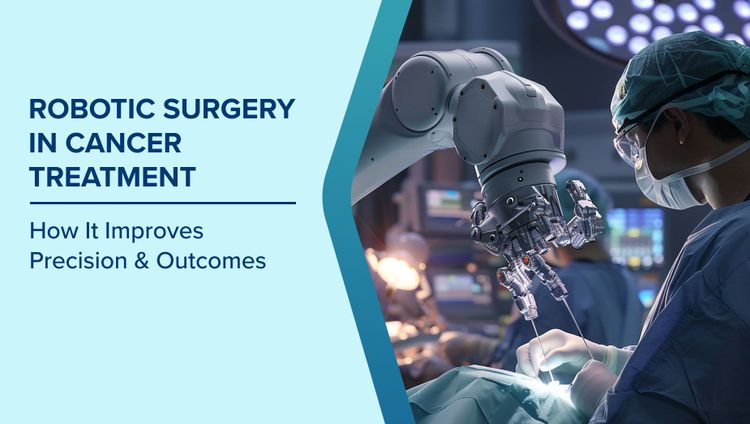
Robotic Surgery in Cancer Care: Precision, Control and Faster Recovery
Dr. Abhinav Deshpande In Surgical Oncology , Cancer Care / Oncology , Robotic Surgery
Dec 18 , 2025 | 5 min read

Most read Blogs


Related Blogs
Dr. S. VEDA PADMA PRIYA In Surgical Oncology , Cancer Care / Oncology
May 16 , 2016 | 2 min read
Dr. Kanika Batra Modi In Surgical Oncology , Cancer Care / Oncology
May 26 , 2016 | 4 min read
Blogs by Doctor
Robotic Surgery in Cancer Care: Precision, Control and Faster Recovery
Dr. Abhinav Deshpande In Surgical Oncology , Cancer Care / Oncology , Robotic Surgery
Dec 18 , 2025 | 5 min read
Most read Blogs