 WhatsApp Us (24/7)
 +91 926 888 0303 (24/7)


To Book an Appointment
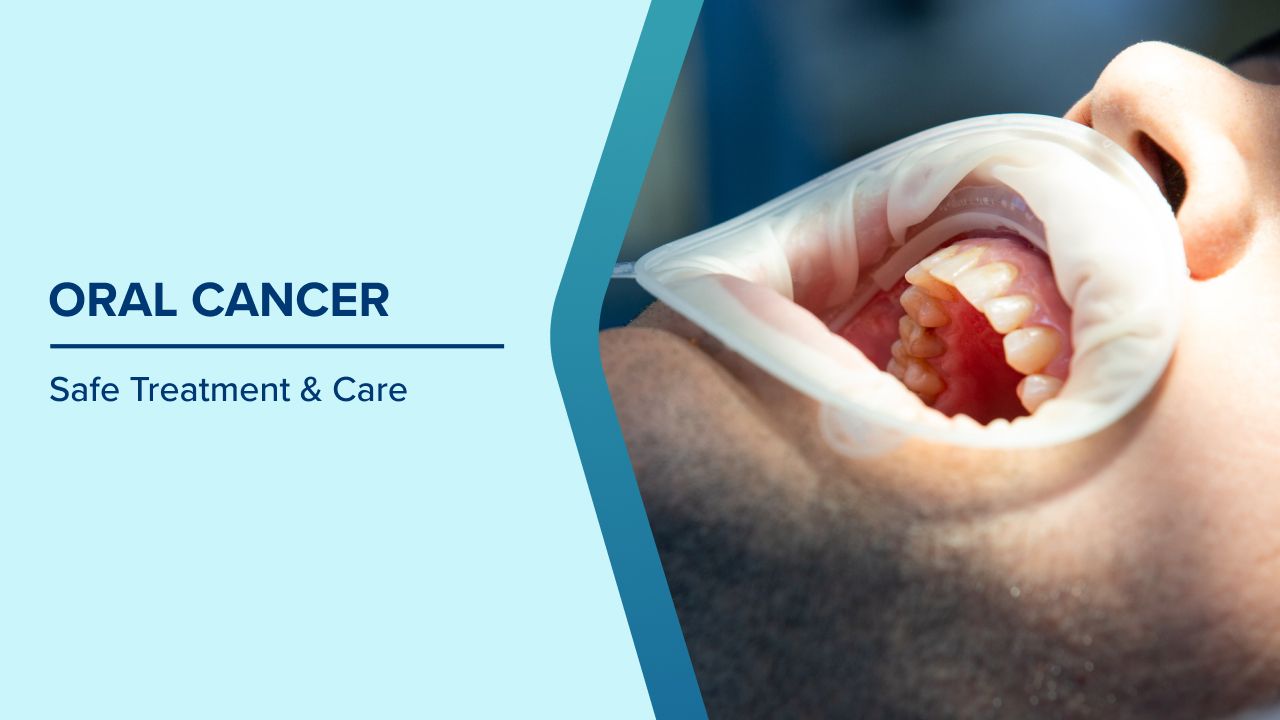
Call Us+91 926 888 0303Modern Radiation Technology in Oral Cancer: Safe Treatment & Care
By Dr. Rajender Kumar in Radiation Oncology , Cancer Care / Oncology , Gastrointestinal & Hepatobiliary Oncology
Jun 01 , 2026

Oral cavity cancer is one of the most common cancers in India, mainly linked to tobacco chewing, smoking, alcohol consumption, and poor oral hygiene. Many patients suffer not only from the disease itself but also from treatment-related side effects affecting speech, swallowing, taste, and nutrition. Fortunately, advances in modern radiation technology have significantly improved both treatment outcomes and quality of life for oral cancer patients.
Role of Radiation Therapy in Oral Cancer
Radiation therapy is commonly used after surgery or along with chemotherapy in selected patients with oral cancer. Earlier radiation techniques often exposed large areas of healthy tissues to radiation, causing severe dryness of the mouth, painful ulcers, difficulty in swallowing, jaw stiffness, and dental complications. Modern radiation oncology has greatly reduced these side effects through highly precise treatment delivery.
Modern Radiation Technologies Improving Treatment Outcomes
IMRT (Intensity Modulated Radiation Therapy)
One of the most important advancements is IMRT (Intensity Modulated Radiation Therapy). This technique delivers radiation precisely to the tumour while protecting nearby healthy structures, such as:
- Salivary glands
- Jawbone
- Spinal cord
- Swallowing muscles
As a result, patients experience less dryness of mouth, fewer swallowing difficulties, and better preservation of speech and nutrition.
IGRT (Image Guided Radiation Therapy)
Another important technology is IGRT (Image Guided Radiation Therapy), where daily imaging helps doctors accurately target the tumour before each treatment session. This improves precision and minimises radiation exposure to normal tissues.
VMAT (Volumetric Modulated Arc Therapy)
VMAT (Volumetric Modulated Arc Therapy) further enhances treatment by delivering radiation more quickly and comfortably while maintaining high accuracy.
Advanced Imaging in Treatment Planning
Advanced imaging techniques such as PET-CT and MRI fusion also help in defining the exact extent of disease, allowing radiation oncologists to plan safer and more effective treatments. These modern technologies not only improve cure rates but also help patients recover faster and return to normal life activities.
Supportive Care During Radiation Therapy
Supportive care during radiation treatment has also improved considerably. It includes:
- Nutritional guidance
- Oral care
- Pain management
- Jaw exercises
- Speech and swallowing rehabilitation
These support measures help patients maintain better overall health during treatment.
Treatment Options for Special Patient Groups
For elderly patients or those who are not fit for major surgery, modern radiation therapy combined with chemotherapy or targeted therapy can provide effective cancer control with an acceptable quality of life.
Early diagnosis and timely treatment remain extremely important because oral cancers detected in early stages have excellent cure rates.
Conclusion
Modern radiation oncology has therefore become a major advancement in oral cancer care, offering patients safer treatment, fewer side effects, and better long-term recovery.
Written and Verified by:

Related Blogs


Dr. Charu Garg In Radiation Oncology , Cancer Care / Oncology , Breast Cancer
Sep 20 , 2017 | 3 min read
Blogs by Doctor
Cerebral Arteriovenous Malformations: Causes, Risks and Treatment
Dr. Rajender Kumar In Radiation Oncology , Cancer Care / Oncology , Head & Neck Oncology
Aug 28 , 2025 | 7 min read
Most read Blogs


Related Blogs
Dr. Charu Garg In Radiation Oncology , Cancer Care / Oncology , Breast Cancer
Sep 20 , 2017 | 3 min read
Blogs by Doctor
Cerebral Arteriovenous Malformations: Causes, Risks and Treatment
Dr. Rajender Kumar In Radiation Oncology , Cancer Care / Oncology , Head & Neck Oncology
Aug 28 , 2025 | 7 min read
Most read Blogs