 WhatsApp Us (24/7)
 +91 926 888 0303 (24/7)


To Book an Appointment
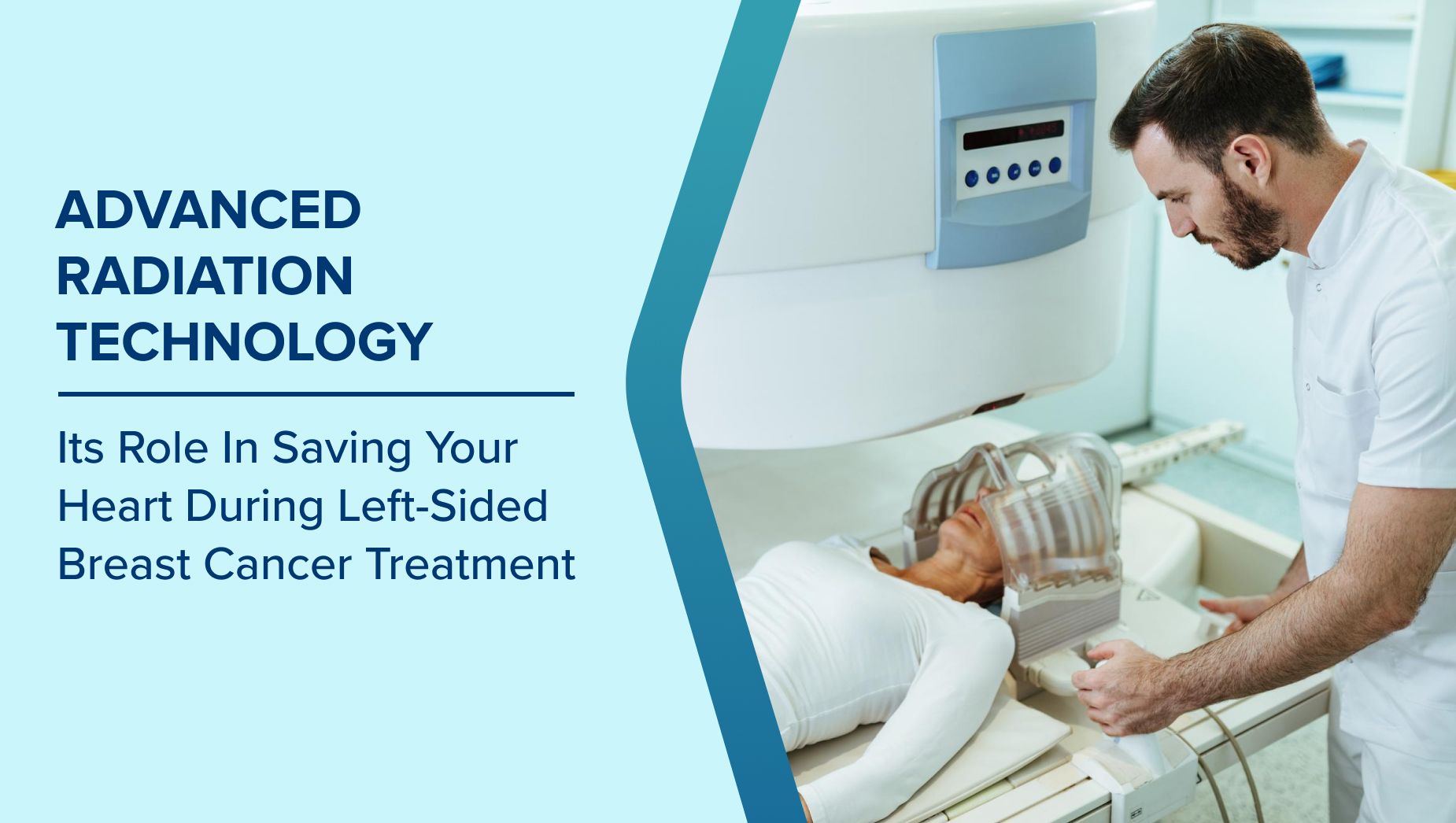
Call Us+91 926 888 0303Advanced Radiation Technology: Its Role in Saving Your Heart During Left-Sided Breast Cancer Treatment
By Dr. Rajender Kumar in Radiation Oncology , Cancer Care / Oncology , Breast Cancer
Dec 08 , 2025 | 2 min read

In the realm of breast cancer care, technological advancements continue to refine the balance between effective tumour control and protection of healthy tissues. Among these innovations, respiratory gating and Deep Inspiration Breath Hold (DIBH) have emerged as transformative techniques in the radiotherapy of left-sided breast cancer patients, where the proximity of the heart to the treatment area poses significant challenges.
Traditionally, radiation therapy plays a crucial role in eliminating residual cancer cells after surgery. However, for patients with left-sided breast cancer, the heart and lungs lie close to the target area, increasing the risk of radiation-induced heart disease and lung complications. These side effects may manifest years later, causing coronary artery disease, heart failure, or pericarditis. To address this, respiratory motion management techniques like DIBH have revolutionised treatment precision and safety.
How Respiratory Gating and DIBH Work
Respiratory gating involves synchronising the delivery of radiation with the patient’s breathing cycle. The treatment is administered only during specific phases of respiration, typically when the heart is farthest from the chest wall, thus reducing the dose to critical organs.
DIBH, a specialised form of respiratory gating, requires the patient to take a deep breath and hold it for a few seconds during radiation delivery. This deep inspiration causes the lungs to expand, naturally pushing the heart downward and away from the breast and chest wall. Advanced imaging and monitoring systems track the patient’s breathing pattern to ensure radiation is delivered precisely during the breath-hold phase.
DIBH represents a major leap forward in patient safety and treatment quality. In left-sided breast cancer, one of our biggest concerns has always been the heart’s exposure to radiation. With the DIBH technique, we can significantly lower the cardiac dose while maintaining excellent tumour control. It’s a simple yet powerful approach that safeguards our patients’ long-term heart health. This technique not only reduces the risk of heart complications but also improves the accuracy of radiation delivery. The use of respiratory gating ensures that radiation is delivered only when the target is in the right position, minimising dose to the lungs and other nearby structures. This level of precision was not possible with older, free-breathing techniques.
Benefits and Future of DIBH
DIBH can reduce the radiation dose to the heart by up to 50% compared to conventional free-breathing techniques. This reduction dramatically decreases the long-term risk of cardiac and pulmonary complications. Patients also report better comfort and confidence during treatment, as the process is non-invasive and easily manageable.
As more patients live longer after breast cancer, protecting the heart becomes as important as curing the cancer itself. Techniques like DIBH ensure that treatments are not only effective but also safer for decades to come.
In an era where quality of life and survivorship are central to cancer care, respiratory gating and DIBH stand out as indispensable tools. For left-sided breast cancer patients, they represent not just an advancement in technology, but a lifesaving innovation, protecting the heart while healing the breast.
Written and Verified by:

Related Blogs


Dr. Charu Garg In Radiation Oncology , Cancer Care / Oncology , Breast Cancer
Sep 20 , 2017 | 3 min read
Blogs by Doctor
Cerebral Arteriovenous Malformations: Causes, Risks and Treatment
Dr. Rajender Kumar In Radiation Oncology , Cancer Care / Oncology , Head & Neck Oncology
Aug 28 , 2025 | 7 min read

Most read Blogs


Related Blogs
Dr. Charu Garg In Radiation Oncology , Cancer Care / Oncology , Breast Cancer
Sep 20 , 2017 | 3 min read
Blogs by Doctor
Cerebral Arteriovenous Malformations: Causes, Risks and Treatment
Dr. Rajender Kumar In Radiation Oncology , Cancer Care / Oncology , Head & Neck Oncology
Aug 28 , 2025 | 7 min read
Most read Blogs