 WhatsApp Us (24/7)
 +91 926 888 0303 (24/7)


To Book an Appointment
Call Us+91 926 888 0303Ovarian Cyst vs Ovarian Cancer: Key Differences, Symptoms & Diagnosis
By Dr. Sarita Kumari in Surgical Oncology , Gynecologic Oncology
Mar 18 , 2026

Ovarian health is essential for overall well-being, but hearing the terms “ovarian cyst” or “ovarian cancer” can be worrying. Most ovarian cysts are harmless and resolve on their own, while ovarian cancer is rare but serious. Understanding the difference between cysts and cancer, recognising symptoms, knowing risk factors, and learning about diagnostic tools can empower women to make informed decisions.
Understanding Ovarian Cysts
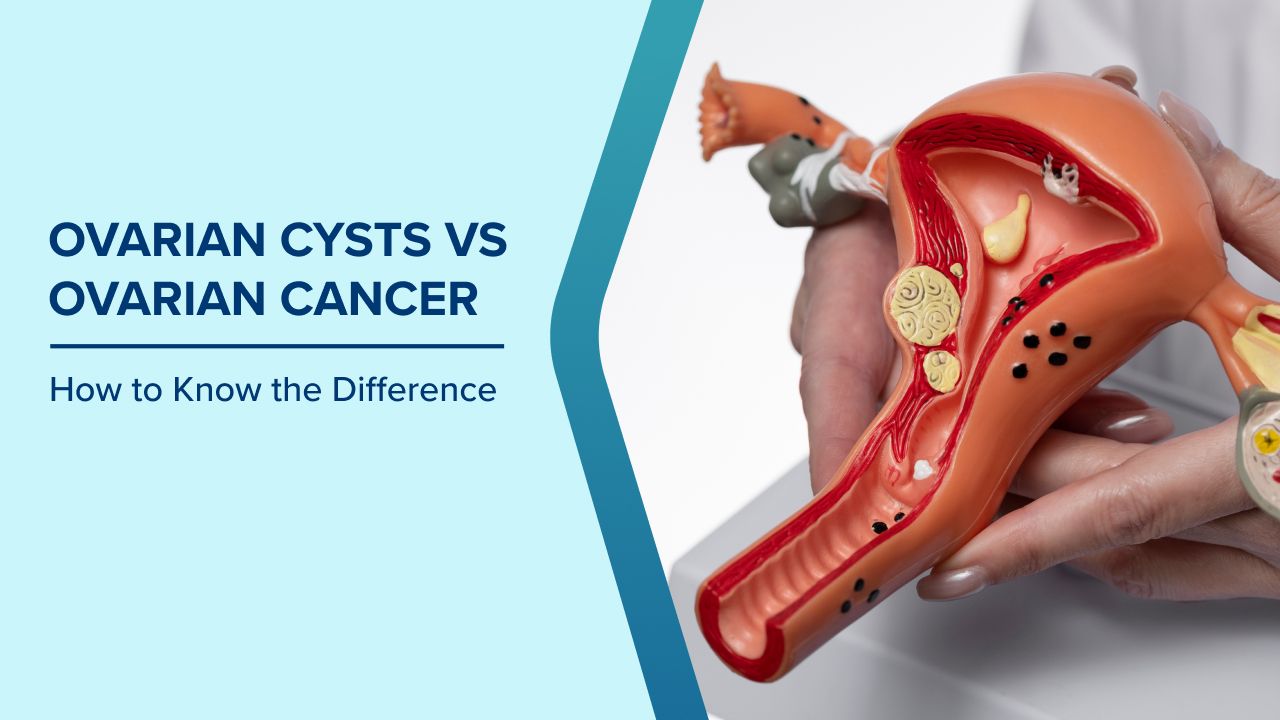
Ovarian cysts are fluid-filled sacs that develop on or inside the ovary. They are very common and often occur during the menstrual cycle. Most ovarian cysts are benign and resolve naturally within a few weeks or months.
Types of Ovarian Cysts
- Functional Cysts: Include follicular cysts and corpus luteum cysts, caused by hormonal fluctuations.
- Complex Cysts: Contain solid tissue or blood and require careful evaluation.
- Endometriomas: Related to endometriosis, sometimes affecting fertility.
- Dermoid Cysts: Contain different tissue types, generally benign.
Common Ovarian Cyst Symptoms
- Mild pelvic discomfort or pressure
- Abdominal bloating or fullness
- Irregular menstrual periods
- Pain during intercourse
Many cysts are asymptomatic and are discovered incidentally during routine exams or ultrasound scans.
Understanding Ovarian Cancer
Ovarian cancer occurs when abnormal cells in the ovary grow uncontrollably. Unlike most cysts, these malignant ovarian tumours can invade surrounding tissues and spread.
Types of Ovarian Cancer
- Epithelial Tumours: Most common in postmenopausal women
- Germ Cell Tumours: Often affect younger women
- Sex Cord-Stromal Tumours: Rare, sometimes hormone-producing
Ovarian Cancer Warning Signs
- Persistent bloating or abdominal swelling
- Feeling full quickly or loss of appetite
- Unexplained weight changes
- Pelvic or lower back pain
- Changes in bowel or bladder habits
These symptoms are often subtle, which is why awareness of risk factors for ovarian cancer and timely medical evaluation are critical.
Key Differences Between Ovarian Cysts and Ovarian Cancer
Understanding the differences can reduce anxiety and guide appropriate care.
Nature of the Growth
- Ovarian Cysts: Fluid-filled sacs, usually benign.
- Ovarian Cancer: Solid or mixed masses with malignant potential.
Symptoms
- Ovarian Cysts: Often mild or absent; may cause bloating, mild pain, or menstrual irregularities.
- Ovarian Cancer: Persistent, progressive symptoms such as abdominal swelling, early satiety, pelvic pain, or bowel/bladder changes.
Age and Risk Factors
- Ovarian Cysts: Common in reproductive-aged women; often linked to hormonal cycles.
- Ovarian Cancer: More likely after menopause and in women with family history, BRCA mutations, or endometriosis.
Growth Pattern
- Ovarian Cysts: Many resolve naturally within weeks to months.
- Ovarian Cancer: Generally progressive and requires intervention.
Detection Methods
- Ovarian Cysts: Found via pelvic exam and ultrasound; simple cysts are fluid-filled with smooth walls.
- Ovarian Cancer: May require complex imaging, CA-125 blood test, and sometimes surgical evaluation.
Treatment Approach
- Ovarian Cysts: Observation, sometimes surgery for large, persistent, or symptomatic cysts.
- Ovarian Cancer: Surgery is standard, often followed by chemotherapy or targeted therapy.
How Doctors Differentiate Between Cysts and Cancer
Pelvic Examination
A gynaecologist can detect adnexal masses or irregularities in the ovaries and recommend further testing if needed.
Ultrasound
- Simple cysts: Fluid-filled, smooth-walled.
- Complex cysts or solid masses: May indicate malignancy, prompting more tests.
Blood Tests
- CA-125 marker: Elevated in some ovarian cancers but may also rise in benign conditions.
- Additional tumour markers may be checked depending on age and type of cyst.
Advanced Imaging
MRI or CT scans help assess complex cysts or suspected malignant ovarian tumours.
Surgical Evaluation
Surgery may be necessary for large, persistent, or suspicious cysts. It allows for a definitive diagnosis and treatment.
When Ovarian Cysts Need Surgery
Not all cysts require surgery. Indications include:
- Persistence beyond 8–12 weeks
- Complex cysts or solid components on ultrasound
- Severe pain or impact on fertility
- Rapidly growing cysts in postmenopausal women
Many ovarian cysts that resolve naturally only need monitoring, emphasising the importance of individualised care.
Risk Factors for Ovarian Cancer
Being aware of risk factors for ovarian cancer helps with early detection:
- Age over 50 or postmenopausal status
- Family history of ovarian, breast, or colon cancer
- BRCA1 or BRCA2 mutations
- Endometriosis or history of infertility
- Early menstruation or late menopause
Women with these risk factors should discuss screening strategies with their gynaecologist.
Ovarian Cancer Early Detection
For high-risk individuals, early detection may include:
- Regular pelvic exams
- Ultrasound monitoring
- CA-125 testing
- Genetic counselling if family history is significant
Early evaluation of persistent cysts or adnexal masses can detect malignancy before advanced symptoms develop.
Conclusion
Distinguishing ovarian cysts from ovarian cancer is possible with careful evaluation. Most cysts are benign and resolve without treatment, while early detection of ovarian cancer significantly improves outcomes. Stay informed, attend regular check-ups, and consult your gynaecologist for persistent symptoms or risk factors. Knowledge, timely evaluation, and reassurance are your best tools for ovarian health.
Frequently Asked Questions
Can ovarian cysts turn into cancer?
Most ovarian cysts are benign and do not become cancerous. Only a small percentage, especially complex cysts in postmenopausal women, may indicate a higher risk.
How can I tell an ovarian cyst from cancer at home?
It’s difficult to differentiate at home because symptoms overlap. Persistent bloating, abdominal pain, or abnormal bleeding should prompt a pelvic exam and imaging.
Are there ovarian cysts that disappear naturally?
Yes, many functional cysts resolve within 1–3 menstrual cycles without intervention. Periodic ultrasounds are usually sufficient for monitoring.
Do I need surgery for all ovarian cysts?
No, surgery is recommended only for large, persistent, symptomatic, or suspicious cysts. Most resolve naturally or can be monitored safely.
Can early-stage ovarian cancer be detected with blood tests?
Blood tests like CA-125 can help, but are not definitive. Early-stage cancer may not elevate CA-125, making ultrasound and gynecologic exams crucial.
Are postmenopausal women at higher risk?
Yes, ovarian cancer risk increases after menopause, and cysts in this group often require evaluation even if asymptomatic.
Does family history matter?
Yes, women with BRCA mutations or strong family history should discuss screening and genetic counselling with their gynaecologist.
Written and Verified by:

Related Blogs

Dr. S. VEDA PADMA PRIYA In Surgical Oncology , Cancer Care / Oncology
May 16 , 2016 | 2 min read

Dr. Kanika Batra Modi In Surgical Oncology , Cancer Care / Oncology
May 26 , 2016 | 4 min read
Blogs by Doctor

Minimally Invasive Gynae-Onco Surgery: Benefits, Recovery & After Tips
Dr. Sarita Kumari In Surgical Oncology , Gynecologic Oncology
Feb 19 , 2025 | 3 min read
Ovarian Cancer: Busting Five Common Myths
Dr. Sarita Kumari In Cancer Care / Oncology , Gynecologic Oncology
Oct 22 , 2025 | 5 min read
Most read Blogs


Related Blogs
Dr. S. VEDA PADMA PRIYA In Surgical Oncology , Cancer Care / Oncology
May 16 , 2016 | 2 min read
Dr. Kanika Batra Modi In Surgical Oncology , Cancer Care / Oncology
May 26 , 2016 | 4 min read
Blogs by Doctor
Minimally Invasive Gynae-Onco Surgery: Benefits, Recovery & After Tips
Dr. Sarita Kumari In Surgical Oncology , Gynecologic Oncology
Feb 19 , 2025 | 3 min read
Ovarian Cancer: Busting Five Common Myths
Dr. Sarita Kumari In Cancer Care / Oncology , Gynecologic Oncology
Oct 22 , 2025 | 5 min read
Most read Blogs