 WhatsApp Us (24/7)
 +91 926 888 0303 (24/7)


To Book an Appointment
Call Us+91 926 888 0303How Bone Marrow Makes Blood: Signs, Habits & Health Tips
By Dr Ankit Kumar in Bone Marrow Transplant , Hematology Oncology
Dec 31 , 2025 | 7 min read

Most people think about blood only when they see a report or feel unwell. Very few stop to wonder where blood actually comes from or how the body manages to make it every single day without us noticing. Deep inside our bones lies a quiet but powerful system that works nonstop to keep us alive. This system is the bone marrow.
Bone marrow is not just another body tissue. It is the factory that produces blood cells needed for oxygen delivery, immunity, and clotting. When this system works well, we feel energetic, heal faster, and fight infections effectively. When it does not, even simple daily tasks can become exhausting.
Bone Marrow as the Body’s Blood-Making System
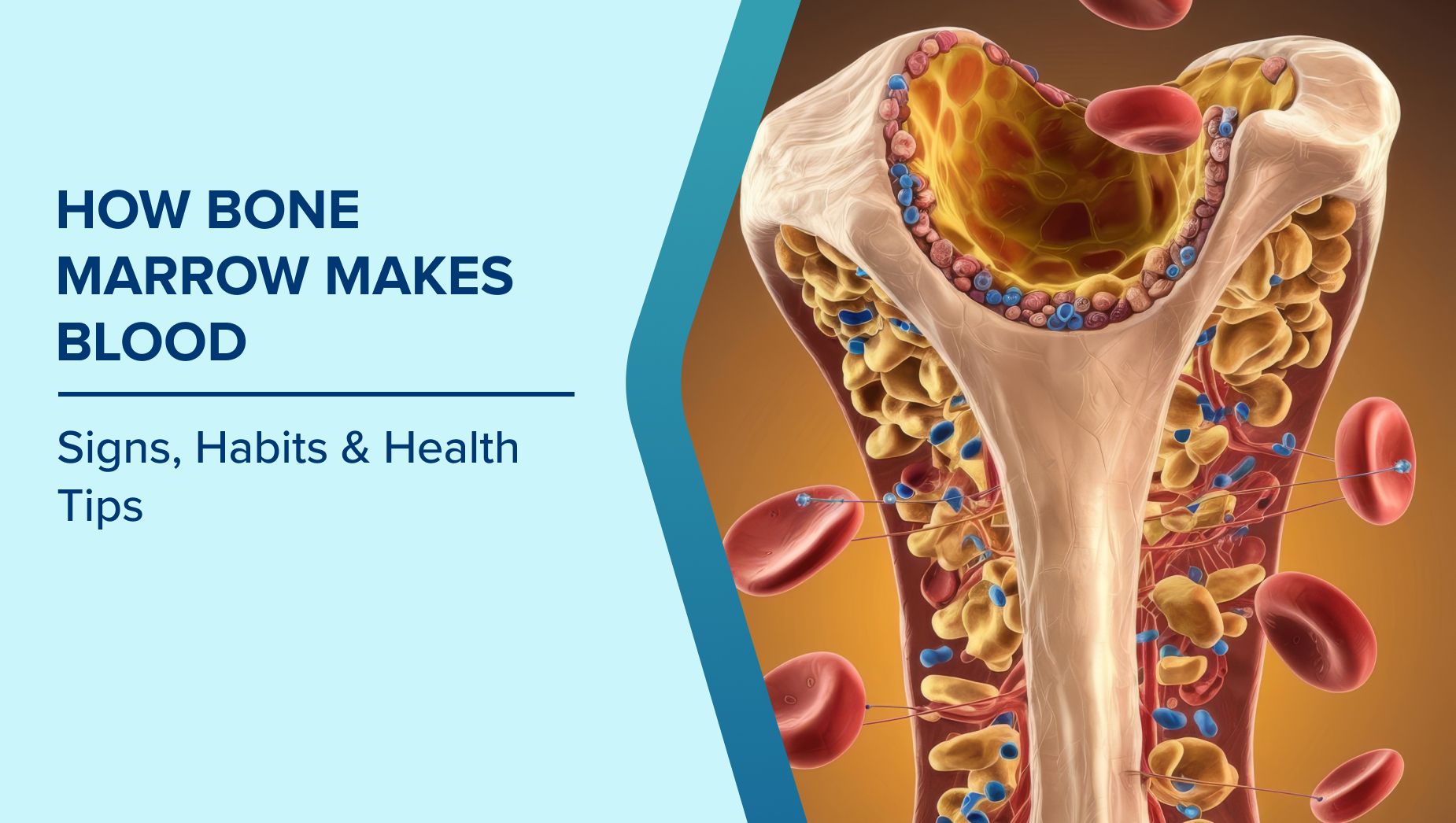
Bone marrow is a soft, spongy tissue found inside large bones such as the hips, spine, ribs, and breastbone. While bones look hard from the outside, their inner space is alive with activity.
Every second, bone marrow produces millions of new blood cells. This process continues from before birth until the last day of life. Even when we are sleeping, resting, or unaware, bone marrow keeps working.
Bone marrow contains special parent cells called stem cells. These cells have the unique ability to develop into different types of blood cells depending on what the body needs at that moment.
Think of bone marrow as a smart production unit that adjusts its output based on demand. If there is bleeding, it increases platelet production. If there is an infection, it boosts white blood cells. If oxygen levels drop, it makes more red blood cells.
How Blood Is Made Inside the Bone Marrow
Blood formation is a step-by-step process that begins with stem cells. These stem cells are not yet specialised. Over time, they receive signals from the body and start transforming into specific blood cells.
The process happens quietly but with remarkable precision. Each type of blood cell plays a role, and balance is essential. Too few or too many of any type can cause health problems.
Bone marrow responds to hormones, oxygen levels, nutritional status, and immune signals. This is why overall health directly affects blood production.
Red Blood Cells and Their Role in Energy and Strength
Red blood cells are the most abundant cells in the blood. Their main job is to carry oxygen from the lungs to every part of the body.
When bone marrow produces healthy red blood cells, muscles receive enough oxygen, the brain stays alert, and organs function smoothly. When production drops, people may feel tired, weak, dizzy, or short of breath.
Red blood cell production depends heavily on iron, vitamin B12, folate, and healthy bone marrow function. Any disruption in these can reduce oxygen delivery and affect daily life.
White Blood Cells and the Body’s Defence System
White blood cells are the soldiers of the immune system. They help the body recognise and fight infections, inflammation, and abnormal cells.
Bone marrow adjusts white blood cell production based on exposure to germs, stress, and illness. During infections, production increases. During recovery, it returns to normal.
When bone marrow cannot produce enough healthy white blood cells, infections become frequent or severe. On the other hand, abnormal overproduction can also signal bone marrow disorders.
Platelets and the Body’s Natural Repair Mechanism
Platelets are tiny blood cells responsible for clotting. They prevent excessive bleeding when we get injured, even from small cuts.
Bone marrow carefully regulates platelet production. Too few platelets can cause easy bruising or prolonged bleeding. Too many can increase the risk of clots.
Platelet balance is especially important during surgeries, injuries, and certain illnesses. Healthy bone marrow ensures this balance is maintained.
What Keeps Bone Marrow Healthy and Active
Bone marrow health depends on many everyday factors. It is not isolated from the rest of the body. What we eat, how we live, and how we manage stress all influence blood production.
Key factors that support healthy bone marrow include:
- Adequate intake of iron, vitamin B12, folate, and protein to support blood cell formation
- Good oxygen levels through regular movement and healthy lung function
- Balanced hormones that signal the marrow to produce the right cells
- A well-functioning immune system that does not overstimulate or suppress marrow activity
- Healthy kidneys and liver that support blood cell survival and regulation
Bone marrow thrives when the body is nourished, rested, and protected from chronic inflammation.
Everyday Habits That Affect Blood Production
Many people unknowingly affect their bone marrow through daily habits. These effects build slowly and may not be noticed until blood counts change. Common habits that influence blood formation include:
- Long-term poor nutrition that lacks essential vitamins and minerals
- Smoking, which reduces oxygen delivery and damages blood cells
- Excessive alcohol intake, which suppresses bone marrow activity
- Chronic stress, which alters hormone balance and immune signals
- Lack of sleep, which interferes with repair and regeneration processes
Small improvements in daily habits can make a meaningful difference in blood health over time.
Early Signs That Blood Production May Be Disturbed
Bone marrow problems rarely cause pain inside bones. Instead, the body shows indirect signs that are often ignored or misunderstood. Early symptoms that may suggest disturbed blood production include:
- Persistent tiredness that does not improve with rest
- Frequent infections or slow recovery from illness
- Easy bruising or bleeding from minor injuries
- Pale skin or shortness of breath during routine activities
- Recurrent headaches, dizziness, or difficulty concentrating
These signs do not always indicate a serious problem, but they should prompt timely blood testing to understand what is happening inside the marrow.
Why Bone Marrow Health Matters at Every Age
Bone marrow health is important from infancy to old age. The demands on blood production change with growth, pregnancy, illness, and aging.
In children, healthy marrow supports growth, learning, and immunity. In adults, it maintains energy, work capacity, and resilience. In older adults, it becomes crucial for preventing infections, anaemia, and slow healing.
Ageing naturally reduces bone marrow efficiency, but lifestyle and medical care can help preserve its function longer.
When Bone Marrow Struggles to Keep Up
Sometimes, bone marrow is unable to meet the body’s needs. This can happen due to nutritional deficiencies, chronic illnesses, infections, medications, or bone marrow disorders.
In some cases, marrow is overworked and becomes exhausted. In others, it produces abnormal cells that do not function properly.
Early detection through routine blood tests allows doctors to identify problems before complications arise. Understanding bone marrow function helps patients take these findings seriously rather than dismissing them as minor issues.
Bone Marrow and Recovery From Illness
After infections, surgeries, or blood loss, bone marrow works harder to restore balance. Recovery depends not only on treatment but also on how well the marrow responds. Supporting recovery involves:
- Rest and proper nutrition to allow marrow regeneration
- Treating underlying causes such as infections or deficiencies
- Avoiding substances that suppress blood production
- Monitoring blood counts to ensure steady improvement
Healthy bone marrow shortens recovery time and reduces complications.
How Blood Tests Reflect Bone Marrow Health
Routine blood tests offer valuable insight into bone marrow function. While they do not directly examine the marrow, they show the outcome of its work.
Changes in red cells, white cells, or platelets can indicate whether production is adequate, reduced, or abnormal. Patterns over time are often more important than single readings.
Understanding this connection helps people appreciate why doctors monitor blood counts even when symptoms seem mild.
Bone Marrow Disorders Awareness Without Fear
Hearing the term bone marrow disorder can be frightening, but awareness does not mean alarm. Many conditions are treatable, manageable, or reversible when detected early.
Awareness helps people seek evaluation sooner rather than later. It encourages follow-up, adherence to treatment, and healthier choices that support blood production.
Protecting Bone Marrow Health Through Simple Choices
Bone marrow responds positively to consistent care. Protecting it does not require drastic measures; only steady attention is needed. Helpful practices include:
- Eating a balanced diet with iron-rich and vitamin-rich foods
- Staying physically active to support circulation and oxygen delivery
- Avoiding smoking and limiting alcohol intake
- Managing stress through healthy coping methods
- Getting regular health checkups and blood tests when advised
These steps support not only bone marrow but also overall well-being.
Conclusion
Bone marrow works silently behind the scenes, producing the blood that keeps every organ alive and functioning. Its role is often overlooked until something goes wrong. By understanding how blood is formed and what supports bone marrow health, people can recognise early warning signs, make informed lifestyle choices, and value preventive care.
Strong blood health begins deep inside the bones, shaped by daily habits and timely medical attention. Caring for bone marrow is not just about avoiding disease. It is about supporting energy, immunity, and quality of life at every age.
Frequently Asked Questions
Can bone marrow recover after illness or deficiency?
Yes, bone marrow can recover well once the underlying cause is treated and nutrition and health are restored.
Does ageing always lead to poor blood production?
Ageing may reduce efficiency, but many older adults maintain good blood counts with proper care and monitoring.
Can stress affect blood formation?
Long-term stress can alter hormone balance and immune signals, which may indirectly affect bone marrow function.
Is bone marrow health linked to immunity?
Yes, healthy bone marrow is essential for producing white blood cells that protect against infections.
Do normal blood tests rule out bone marrow problems?
Normal results usually indicate healthy marrow function, but persistent symptoms may require further evaluation.
Written and Verified by:

Related Blogs


Blogs by Doctor

Anaemia in Adults: Common Causes, Symptoms & Prevention
Dr Ankit Kumar In Bone Marrow Transplant , Hematology Oncology
Dec 29 , 2025 | 4 min read

Most read Blogs


Related Blogs
Blogs by Doctor
Anaemia in Adults: Common Causes, Symptoms & Prevention
Dr Ankit Kumar In Bone Marrow Transplant , Hematology Oncology
Dec 29 , 2025 | 4 min read
Most read Blogs