 WhatsApp Us (24/7)
 +91 926 888 0303 (24/7)


To Book an Appointment
Call Us+91 926 888 0303Gastrointestinal (GI) Cancers: Symptoms, Risk Factors & Early Detection
By Dr Anadi Pachaury in Surgical Oncology , Cancer Care / Oncology , Breast Cancer , Gynecologic Oncology , Head & Neck Oncology , Gastro Intestinal & Hepatopancreatobiliary Surgical Oncology , Robotic Surgery
Mar 02 , 2026

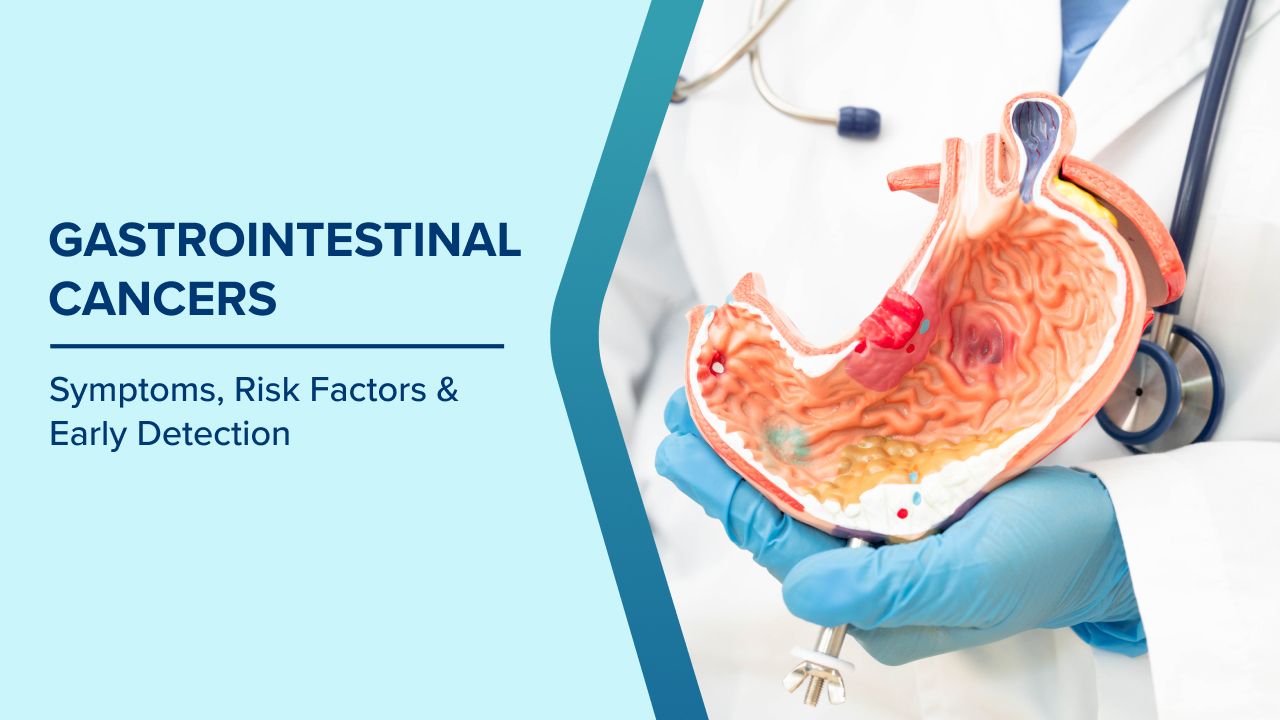
Gastrointestinal cancers (often called GI cancers) are cancers that begin in the digestive system. These include the oesophagus, stomach, liver, pancreas, small intestine, colon, rectum, and anus. These cancers occur over a variable age spectrum, commonly affecting those over 50, but can strike earlier with risk factors. Early detection of these cancers is possible and is important because, for most, survival rates are higher when diagnosed at an early stage. Hence, awareness of symptoms and regular screening are the best ways to protect yourself.
Colorectal Cancer
This is cancer of the colon or rectum, and is very common in India. It often presents with changes in bowel habits such as diarrhoea or constipation, blood in the stools, abdominal pain, unexplained weight loss, or fatigue. Risk factors include age over 50, family history, obesity, smoking, low-fibre diet, and inflammatory bowel disease. Early detection via colonoscopy screening can prevent it by removing polyps before they turn cancerous. It is possible to detect this cancer early by visiting a doctor if any of these symptoms occur.
Stomach Cancer
This is stomach cancer, also known as gastric cancer. It presents with persistent heartburn, indigestion, stomach pain, nausea, vomiting (sometimes bloody), loss of appetite, and weight loss.
It is strongly linked to H. pylori infection, smoking, heavy alcohol use, and family history. Screening with endoscopy is recommended for high-risk groups, and treating H. pylori infection can lower the risk. It is more common in individuals with a strong family history of cancer; hence genetic counselling is recommended.
Esophageal Cancer
This cancer affects the food pipe and is common in India due to tobacco and alcohol use. It shows difficulty swallowing, chest pain, hoarseness, unexplained weight loss, and regurgitation. Risk factors are smoking, alcohol, hot beverages, poor diet, and acid reflux. There is no routine screening for average-risk individuals, but endoscopy is recommended for those with symptoms. Quitting tobacco and alcohol can help prevent this cancer.
Liver Cancer
This cancer arises in the liver, often from chronic hepatitis B/C, cirrhosis, alcohol abuse, or fatty liver disease. Symptoms include jaundice, abdominal swelling or pain, weight loss, fatigue, and easy bruising. Those at high risk include individuals with viral hepatitis or diabetes. Vaccination against hepatitis B and antiviral treatments can prevent many cases. Ultrasound screening for high-risk individuals helps detect disease early. Genetic counselling is strongly recommended for those who have a family history of liver cancer.
Pancreatic Cancer
This is cancer of the pancreas, often diagnosed at a late stage. It presents with jaundice, dark urine, pale stools, abdominal or back pain, loss of appetite, nausea, and sudden weight loss. Risk factors include smoking, obesity, diabetes, family history, and chronic pancreatitis. There is no standard screening test available, but prompt evaluation of symptoms with imaging is key. If any individual with Oesophageal Cancer, Liver Cancer, or Pancreatic Cancer experiences such symptoms, a visit to a doctor followed by imaging studies should be arranged.
General Preventive Strategies of GI Cancers
- Vaccination: HPV and hepatitis B vaccination, where applicable, help reduce the risk of certain GI-related cancers, including liver cancer.
- Routine Screening: Colonoscopy from age 45–50 (earlier if high-risk family history) enables early detection and removal of precancerous polyps.
- Healthy Lifestyle: A diet rich in fruits, vegetables, and whole grains; regular exercise; and maintaining a healthy weight reduces cancer risk.
- Avoid Tobacco: Avoid tobacco use, as it increases the risk of several GI cancers.
- Limit Alcohol: Limit alcohol consumption to lower the risk of liver and other gastrointestinal cancers.
- Early Symptom Evaluation: Seek prompt evaluation for persistent symptoms such as blood in stool, unexplained weight loss, or ongoing abdominal pain.
- Genetic Counselling: Recommended for individuals with a family history of cancer to assess inherited risk.
- Infection Treatment: Treat H. pylori and hepatitis B/C infections with appropriate medications to reduce cancer risk.
Conclusion
Gastrointestinal cancers can often be prevented or caught early. Regular screening, healthy lifestyle choices, vaccination when applicable, and medical evaluation of any unusual GI symptoms can help reduce the risk of cancer. Early detection significantly improves survival rates and treatment outcomes.
Written and Verified by:

Related Blogs

Dr. S. VEDA PADMA PRIYA In Surgical Oncology , Cancer Care / Oncology
May 16 , 2016 | 2 min read

Dr. Kanika Batra Modi In Surgical Oncology , Cancer Care / Oncology
May 26 , 2016 | 4 min read
Blogs by Doctor
Gastrointestinal Cancers: Types, Early Signs, Screening & Treatment
Dr Anadi Pachaury In Cancer Care / Oncology , Breast Cancer , Head & Neck Oncology , Robotic Surgery
Oct 25 , 2021 | 2 min read

Link Between Obesity and Breast Cancer: Understanding the Risks and Taking Action
Dr Anadi Pachaury In Cancer Care / Oncology , Breast Cancer
Oct 22 , 2025 | 4 min read
Most read Blogs


Related Blogs
Dr. S. VEDA PADMA PRIYA In Surgical Oncology , Cancer Care / Oncology
May 16 , 2016 | 2 min read
Dr. Kanika Batra Modi In Surgical Oncology , Cancer Care / Oncology
May 26 , 2016 | 4 min read
Blogs by Doctor
Gastrointestinal Cancers: Types, Early Signs, Screening & Treatment
Dr Anadi Pachaury In Cancer Care / Oncology , Breast Cancer , Head & Neck Oncology , Robotic Surgery
Oct 25 , 2021 | 2 min read
Link Between Obesity and Breast Cancer: Understanding the Risks and Taking Action
Dr Anadi Pachaury In Cancer Care / Oncology , Breast Cancer
Oct 22 , 2025 | 4 min read
Most read Blogs