 WhatsApp Us (24/7)
 +91 926 888 0303 (24/7)


To Book an Appointment
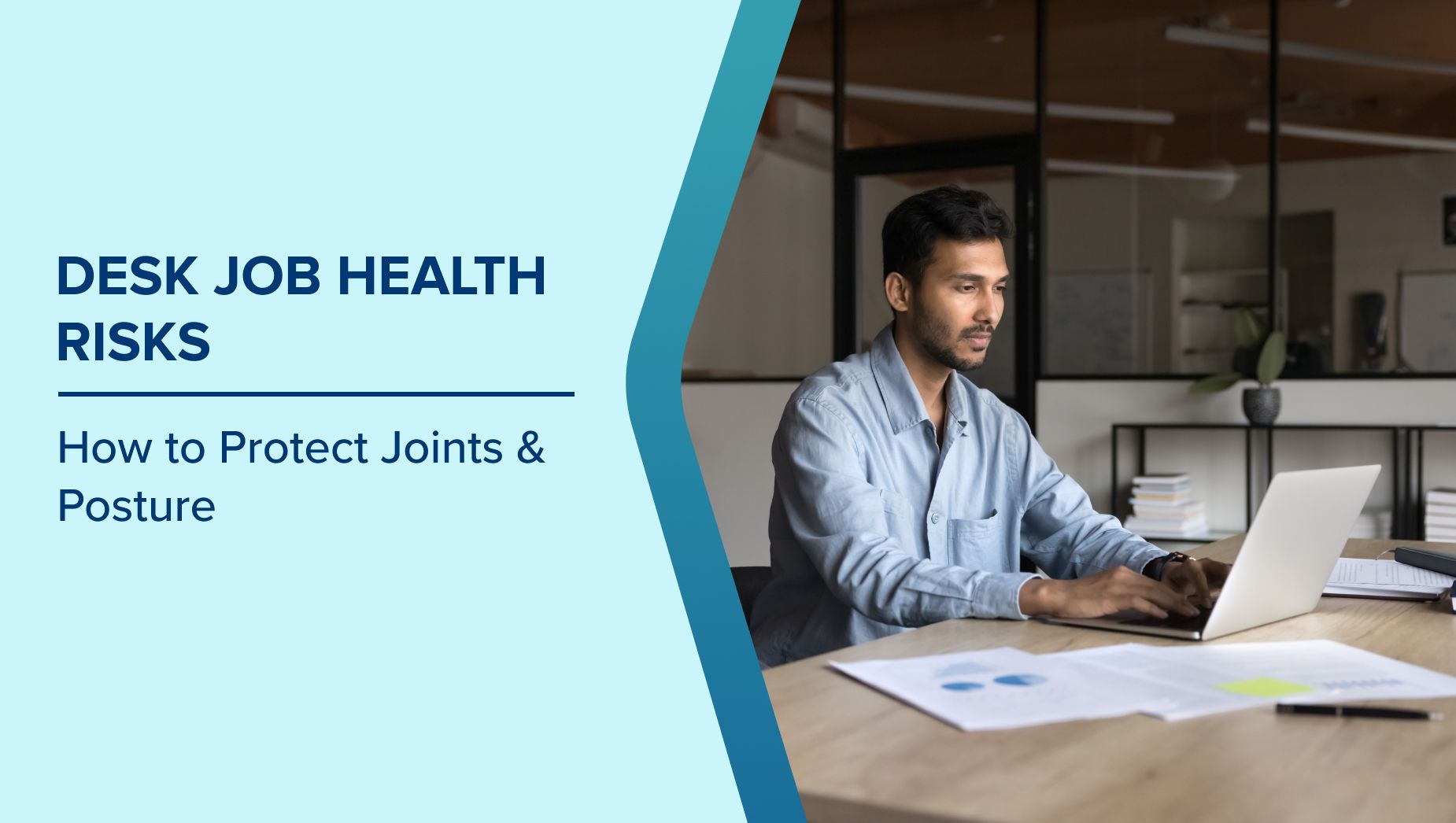
Call Us+91 926 888 0303Desk Job Health Risks: How to Protect Joints & Posture in a Desk Job
By Dr Aditya Banta in Spine Surgery
Sep 03 , 2025 | 5 min read

In today’s digital age, a large number of people spend most of their working hours seated at a desk, staring at a computer screen. While desk jobs may seem physically undemanding, they come with their own set of health challenges, particularly for joint health and posture.
Long hours of inactivity, poor ergonomic setups, and improper sitting positions can slowly but surely take a toll on the body.
Understanding the Risks of a Desk Job
Prolonged sitting and bad posture can lead to musculoskeletal imbalances and repetitive strain injuries. Some of the most common joint-related issues in office workers include:
- Cervical spondylosis (neck arthritis) due to constant forward head posture
- Lumbar disc problems, such as herniation or sciatica, can occur due to slouching
- Knee and hip stiffness, caused by immobility and improper leg positioning
- Shoulder impingement, resulting from unsupported or elevated arm positions
Poor posture doesn’t just affect your joints. Over time, it builds slowly, often going unnoticed until pain or dysfunction appears.
What Good Posture Looks Like at Your Workstation
Maintaining correct posture is not just about sitting up straight; it involves a well-aligned position that supports the natural curves of the spine while evenly distributing body weight.
Key elements of good posture while sitting include:
- Head and neck: Aligned with the spine, not pushed forward
- Shoulders: Relaxed, not hunched or elevated
- Back: Supported by the chair’s lumbar support, maintaining the natural curve
- Arms: Elbows at a 90–100° angle, close to the body
- Wrists: Neutral position, not bent upwards or downwards
- Hips and knees: At roughly the same height, knees bent at a 90° angle
- Feet: Flat on the floor or on a footrest
Understanding and practising proper posture helps prevent joint overload and unnecessary stress on ligaments and muscles.
Ergonomics: Setting Up a Joint-Friendly Workspace
Ergonomics involves tailoring the work environment to suit the individual, rather than forcing the person to adapt to the space. A well-organised workstation can significantly reduce joint stress and help prevent posture-related problems.
Key ergonomic adjustments to consider:
- Chair: Choose the one with adjustable height, armrests, and good lumbar support. Your hips should be slightly higher than your knees.
- Desk: Ensure enough space under the desk to stretch your legs. Your elbows should rest comfortably on the surface without raising your shoulders.
- Monitor: Keep the screen at or just below eye level and about an arm's length away.
- Keyboard and Mouse: Position them so that your arms remain relaxed and your wrists stay in a neutral position.
- Footrest: Ideal if your feet don’t rest flat on the ground.
When working on a laptop, consider using a separate keyboard and mouse, along with a laptop stand, to adjust the monitor height.
Daily Habits to Reduce Joint Strain
Small habits done consistently can make a big difference. Here are some practical ways to reduce joint strain during a desk job:
- Take microbreaks: Every 30–60 minutes, stand up, stretch, or walk around for a few minutes.
- Use the 20-20-20 rule: Every 20 minutes, look at something 20 feet away for 20 seconds to reduce eye and neck strain.
- Avoid slouching: Be mindful of posture throughout the day. Reposition yourself when you catch yourself slumping.
- Stay hydrated: Joints contain synovial fluid, which requires adequate hydration to function properly and provide cushioning.
- Avoid leg crossing: Crossing your legs or sitting unevenly can contribute to pelvic misalignment and lower back issues.
These habits promote circulation, reduce muscle fatigue, and maintain joint mobility.
Simple Desk Exercises and Stretches
Incorporating gentle stretches throughout the day can keep your joints supple and muscles engaged. Here are some effective desk exercises:
Neck and Shoulder Stretches:
- Neck tilts (side to side and forward)
- Shoulder rolls (forward and backwards)
- Upper trapezius stretch (ear to shoulder hold)
Back and Spine:
- Seated spinal twist
- Cat-cow stretch (seated)
- Standing back extension
Wrists and Hands:
- Wrist flexor/extensor stretches
- Finger stretches and squeezes
Hips and Knees:
- Seated leg extensions
- Standing hamstring stretch
- Hip openers (figure-4 stretch on chair)
Even 5–10 minutes of stretching can refresh your posture and reduce joint stiffness.
Work-from-Home Considerations
While working from home offers greater flexibility, it can also encourage less-than-ideal workstation setups, such as using a sofa, bed, or dining table. Over time, these habits can negatively impact joint alignment and overall spinal health.
Tips to maintain a joint-friendly posture at home:
- Designate a specific workspace: Even a small desk with a proper chair can make a difference.
- Avoid working on soft surfaces: Beds and couches do not offer the support your joints need.
- Stay active: Take household tasks as an opportunity to move around during breaks.
- Structure your day: Set alarms to remind yourself to stretch or change position.
Being intentional about posture and environment at home is just as important as in the office.
When to Seek Help: Signs Your Joints or Posture Need Medical Attention
Sometimes, discomfort can be more than just "sitting too long." If you experience any of the following, it may be time to seek professional support:
- Persistent or worsening joint pain
- Numbness or tingling in hands, arms, or legs
- Restricted range of motion
- Headaches or eye strain linked to neck tension
Medical professionals such as physiotherapists, orthopaedic specialists, or occupational therapists can evaluate posture, recommend corrective exercises, and suggest ergonomic improvements.
Conclusion
Desk jobs don’t have to mean poor posture and aching joints. By being proactive in setting up an ergonomic workspace, practising healthy habits, and moving regularly, you can maintain strong posture and protect your joints in the long run.
Remember, small daily changes often lead to significant long-term health benefits. Your body was designed to move, so even in a sedentary job, give it every opportunity to do just that.
Frequently Asked Questions
Can standing desks help prevent joint pain?
Yes, standing desks can reduce prolonged sitting and promote better posture. However, standing for too long can also strain joints, so alternating between sitting and standing is ideal.
What are the best ergonomic accessories for office workers?
Lumbar cushions, footrests, ergonomic keyboards and mouse devices, and adjustable monitor stands are all good additions.
Is it better to sit on an exercise ball at the desk?
Exercise balls can encourage core engagement, but may not provide adequate back support for long periods. They're best used intermittently.
How do I know if my chair is affecting my posture?
If you notice lower back pain, shoulder tension, or slouching after sitting, your chair may lack proper lumbar support or height adjustment.
Does stress impact posture or joint discomfort?
Definitely, chronic stress often results in muscle tightness, particularly in the neck, shoulders, and upper back. This can gradually change your posture and contribute to joint stiffness or discomfort.
Written and Verified by:

Related Blogs

Prof. (Dr). V.K.Jain In Neurosciences , Spine Surgery
Nov 07 , 2020 | 5 min read
Dr. Amit Gupta In Spine Surgery , Neurology
Nov 07 , 2020 | 2 min read
Blogs by Doctor
What is Minimally Invasive Spine Surgery: Purpose, Advantages & Recovery
Dr Aditya Banta In Spine Surgery
Sep 01 , 2025 | 3 min read
Most read Blogs


Related Blogs
Prof. (Dr). V.K.Jain In Neurosciences , Spine Surgery
Nov 07 , 2020 | 5 min read
Dr. Amit Gupta In Spine Surgery , Neurology
Nov 07 , 2020 | 2 min read
Blogs by Doctor
What is Minimally Invasive Spine Surgery: Purpose, Advantages & Recovery
Dr Aditya Banta In Spine Surgery
Sep 01 , 2025 | 3 min read
Most read Blogs