 WhatsApp Us (24/7)
 +91 926 888 0303 (24/7)


To Book an Appointment
Call Us+91 926 888 0303What is Radiosurgery: Cancer Stages, Uses & Benefits
By Dr Shizan Pervez in Radiation Oncology , Cancer Care / Oncology
Apr 30 , 2026
3

When someone hears the word “radiosurgery”, it often sounds complex or even intimidating. In reality, it is one of the most precise and advanced methods for treating certain cancers without making a single incision. Many people assume that it is only used in severe or late stages, but that is not always true.
Radiosurgery does not belong to just one stage of cancer. Its use depends on factors such as tumour size, location, and the patient's overall health. Understanding where it fits in the cancer journey can help patients and families make more informed decisions.
What Is Radiosurgery in Simple Terms
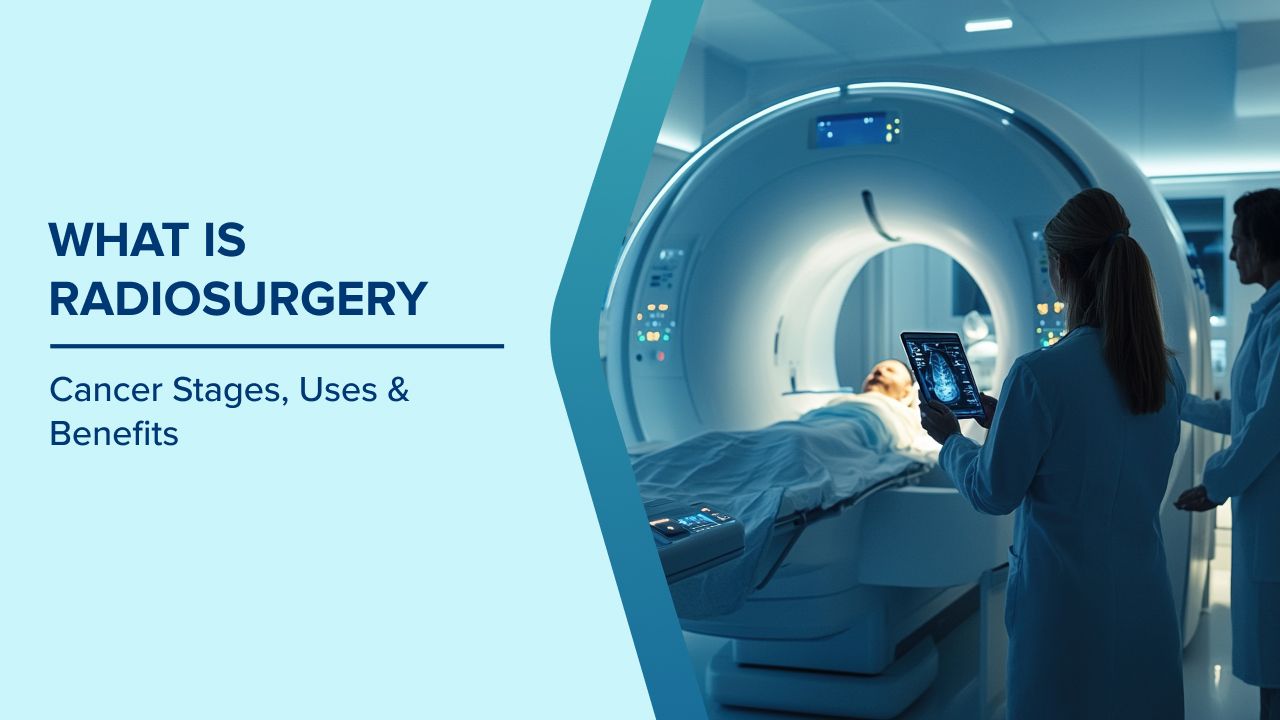
Radiosurgery is a highly targeted form of radiation therapy. It delivers strong doses of radiation directly to a tumour while protecting the surrounding healthy tissue.
Despite its name, it is not a traditional surgery. There are no cuts, stitches, or long hospital stays. The treatment is usually completed in one or a few sessions.
It is commonly known as stereotactic radiosurgery and is often used for tumours in delicate or hard-to-reach areas such as the brain, spine, lungs, or liver.
Why Radiosurgery Is Different From Conventional Treatments
Unlike regular radiation therapy, which is given over several weeks, radiosurgery focuses intense radiation in a very precise way. This allows doctors to treat small areas with high accuracy.
Here is what makes it unique:
- It is non-invasive
- It targets tumours with pinpoint precision
- It reduces damage to nearby tissues
- It usually requires fewer hospital visits
- Recovery time is minimal
Because of these benefits, radiosurgery is often chosen when surgery is risky or not possible.
In Which Stage Is Radiosurgery Done for Cancer
There is no single answer to this question. Radiosurgery can be used in early, intermediate, or advanced stages, depending on the situation. Instead of focusing only on the stage, doctors consider how the tumour behaves and where it is located.
Early Stage Cancer
In early-stage cancers, radiosurgery may be used as a primary treatment. This is especially true when:
- The tumour is small and well-defined
- Surgery is not preferred due to health risks
- The tumour is located in a sensitive area
For example, in certain early-stage lung or brain tumours, radiosurgery can effectively destroy cancer cells without the need for open surgery.
It is often chosen by patients who want a non-invasive cancer treatment with quicker recovery.
Intermediate Stage Cancer
In cancers that are neither very early nor widely spread, radiosurgery is often part of a combined treatment plan.
It may be used:
- After surgery to remove any remaining cancer cells
- Alongside other treatments to improve control over the tumour
- To target specific areas where cancer is active
At this stage, the goal is to prevent the cancer from progressing further and to improve long-term outcomes.
Advanced Stage Cancer
Radiosurgery also plays an important role in advanced cancer care. However, the goal is slightly different here.
Instead of curing the disease, the focus may shift to:
- Controlling tumour growth
- Reducing symptoms such as pain or pressure
- Improving quality of life
It is commonly used in cases where cancer has spread to the brain or spine. Radiosurgery can precisely treat these areas without affecting the rest of the body.
Even in advanced stages, it can make a meaningful difference in comfort and daily functioning.
When Doctors Prefer Radiosurgery Over Surgery
Not every patient is a candidate for open surgery. In many cases, radiosurgery becomes the safer and more practical option.
Doctors may recommend it when:
- The tumour is located deep within the body
- Surgery carries a high risk due to age or medical conditions
- The tumour is close to critical organs
- The patient prefers a non-invasive approach
It is also useful when previous treatments have already been done, and further surgery is not ideal.
Types of Cancer Commonly Treated With Radiosurgery
Radiosurgery is not limited to one type of cancer. It is used across several conditions where precision is crucial.
Some commonly treated cancers include:
- Brain tumours
- Spinal tumours
- Lung cancer
- Liver tumours
- Prostate cancer in selected cases
- Metastatic tumours that have spread from other parts of the body
Its flexibility makes it suitable for both primary tumours and secondary growths.
Benefits of Radiosurgery Across Cancer Stages
Regardless of the stage, radiosurgery offers several advantages that make it an appealing option for many patients.
Key Benefits
- No need for surgical cuts or stitches
- Minimal discomfort during treatment
- Lower risk of infection
- Short recovery period
- High precision reduces side effects
- Can be repeated in some cases if needed
These benefits are especially valuable for patients who want effective treatment with less disruption to daily life.
Limitations You Should Be Aware Of
While radiosurgery is highly effective, it is not suitable for everyone.
Some limitations include:
- Not ideal for very large tumours
- May not replace surgery in all cases
- Effects may take time to show
- Some patients may need additional treatments
It is always important to have a detailed discussion with a specialist to understand whether it is the right option.
How Treatment Planning Works
Radiosurgery is carefully planned before it is delivered. Each treatment is customised based on the patient’s condition.
The process usually includes:
- Detailed imaging scans, such as MRI or CT
- Mapping the exact location of the tumour
- Designing a precise radiation plan
- Delivering treatment in a controlled setting
This level of planning ensures that the tumour receives the required dose while healthy tissue is protected.
What Patients Can Expect During and After Treatment
The experience of radiosurgery is very different from traditional cancer treatments.
During Treatment
- The patient lies still on a treatment table
- A machine delivers focused radiation to the target area
- The procedure is painless
- Sessions may last from a few minutes to a couple of hours
After Treatment
- Most patients go home the same day
- Normal activities can often be resumed quickly
- Follow-up scans are scheduled to monitor progress
Some mild side effects may occur, depending on the treated area, but they are usually manageable.
Conclusion
Radiosurgery is not limited to a single stage of cancer. It is a versatile treatment that can be used from early diagnosis to advanced care. Its role changes depending on the situation, from offering a potential cure in early stages to improving the quality of life in later stages.
What makes it stand out is its precision and ability to treat difficult areas without invasive procedures. For many patients, it offers a balance between effectiveness and comfort.
If you or a loved one is exploring cancer treatment options, discussing radiosurgery with a specialist can provide clarity on whether it is suitable for your specific condition.
FAQs
1. How long does it take to see results after radiosurgery
Results are not always immediate. In many cases, the tumour gradually shrinks over weeks or months, and follow-up scans are used to track progress.
2. Is hospital admission required for radiosurgery
Most radiosurgery procedures are done on an outpatient basis, which means the patient can go home the same day without overnight admission.
3. Can radiosurgery be used more than once
In some situations, it can be repeated if the tumour responds well and the surrounding tissue can safely tolerate additional treatment.
4. Does radiosurgery affect daily routine
Most patients can return to their normal routine within a day or two, depending on how they feel after the procedure.
5. Is radiosurgery suitable for elderly patients
Yes, it is often considered a good option for older patients because it avoids the risks associated with major surgery.
Written and Verified by:

Related Blogs


Dr. Charu Garg In Radiation Oncology , Cancer Care / Oncology , Breast Cancer
Sep 20 , 2017 | 3 min read
Blogs by Doctor
Radiation Oncology: Its Role in Cancer Treatment
Dr Shizan Pervez In Radiation Oncology , Cancer Care / Oncology
Oct 23 , 2025 | 5 min read
Most read Blogs


Related Blogs
Dr. Charu Garg In Radiation Oncology , Cancer Care / Oncology , Breast Cancer
Sep 20 , 2017 | 3 min read
Blogs by Doctor
Radiation Oncology: Its Role in Cancer Treatment
Dr Shizan Pervez In Radiation Oncology , Cancer Care / Oncology
Oct 23 , 2025 | 5 min read
Most read Blogs