 WhatsApp Us (24/7)
 +91 926 888 0303 (24/7)


To Book an Appointment
Call Us+91 926 888 0303How Artificial Intelligence is Transforming Cancer Care
By Dr. Sandeep Batra in Cancer Care / Oncology , Uro-Oncology , Breast Cancer , Thoracic Oncology , Gynecologic Oncology , Gastrointestinal & Hepatobiliary Oncology
Mar 09 , 2026

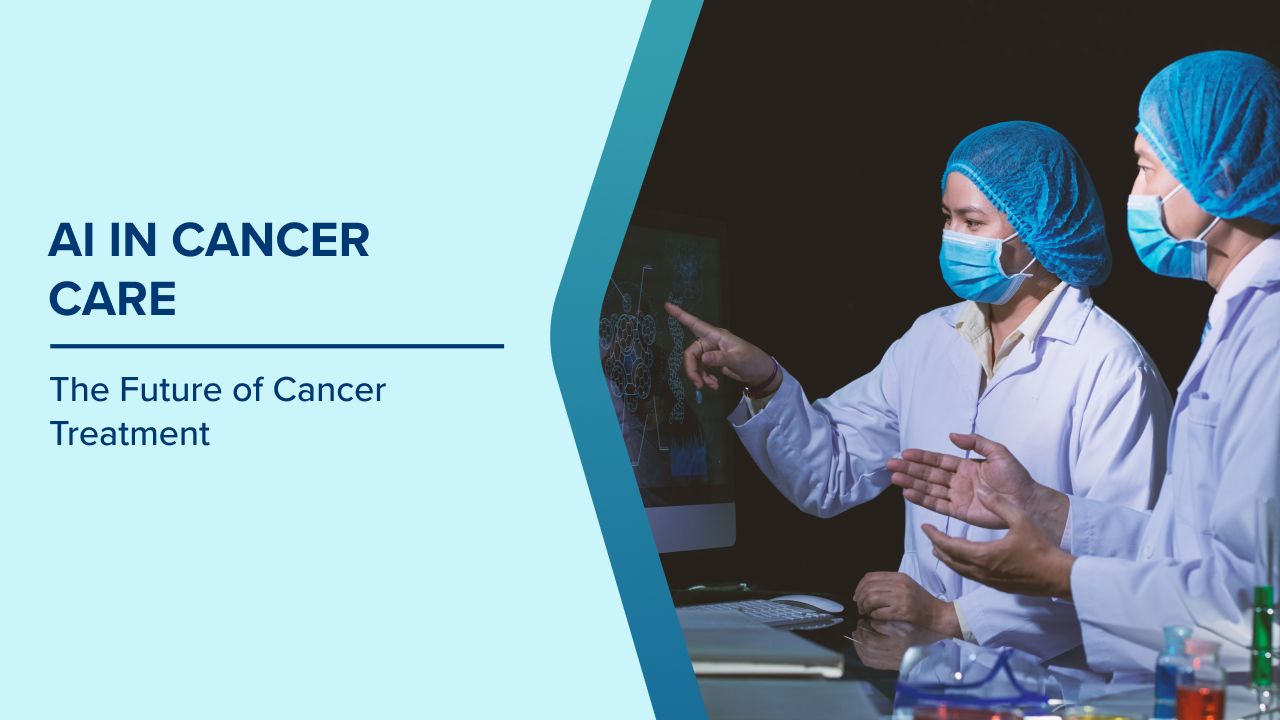
For most people, the word cancer still brings to mind long hospital stays, difficult chemotherapy sessions, and endless anxiety. But behind the scenes, cancer care is evolving rapidly. Today, it’s not just about stronger drugs, it’s about smarter decisions. At the centre of this transformation is Artificial Intelligence (AI), not replacing doctors, but working alongside their Natural Intelligence (NI). Together, this partnership is making cancer care more precise, personalised, and proactive.
Faster Diagnosis, Quicker Treatment
Cancer diagnosis usually begins with imaging tests such as X-rays, CT scans, MRIs, and PET scans. Traditionally, radiologists carefully analyse these images to identify suspicious areas. Now, AI systems trained on thousands, even millions, of scans can detect subtle patterns that the human eye might miss.
AI can match, and sometimes even outperform, expert radiologists in identifying small tumours while reducing false alarms.
But here’s the important part: AI doesn’t replace the radiologist. It acts as an intelligent assistant. The final decision always rests with the specialist, who adds clinical experience, patient history, and real-world judgment to the findings.
The result? Reduced diagnosis-to-treatment time and earlier intervention, which can make a life-saving difference.
Precision Oncology: Solving the Genetic Puzzle
Cancer is no longer treated only based on where it originates, the lung, breast, colon, or elsewhere. Modern oncology has entered the era of precision medicine, in which treatment is tailored to a tumour’s unique genetic makeup.
By analysing DNA, RNA, proteins, and tumour biology, doctors can design therapies specific to each patient. This shift from “one-size-fits-all” to “made-for-you” treatment is one of the biggest breakthroughs in oncology.
However, genetic testing generates enormous amounts of data, far more than any human can manually process alone. This is where AI becomes invaluable.
AI systems can:
- Detect hidden genetic patterns
- Correlate mutations with potential drug responses
- Identify the most evidence-based targeted therapies
The oncologist then interprets these insights and makes the final treatment decision. AI acts as a powerful sidekick, accelerating complex analysis while the doctor ensures it aligns with the patient’s overall health and goals.
Learning From Literature and Experience
Cancer treatment is expanding rapidly. New drugs, immunotherapies, and targeted therapies are approved every year. Even the most experienced oncologist may not be fully up to date on every emerging option and its toxicity profile.
AI can rapidly scan and learn from:
- Published clinical research
- Treatment guidelines
- Real-world patient outcomes
- Evolving global data
By analysing this information, AI can help predict potential side effects and identify early warning signs of complications. This allows doctors to prevent or manage adverse effects sooner, improving patient safety and comfort.
Preventing Errors and Saving Lives
Medication errors and delayed recognition of complications are serious concerns in hospital care. AI-driven systems integrated into hospital workflows can:
- Flag incorrect dosages
- Detect dangerous drug interactions
- Continuously monitor vital signs
- Predict clinical deterioration before it becomes critical
Instead of reacting after something goes wrong, AI enables early alerts and timely intervention. This proactive approach can significantly reduce complications and improve survival outcomes.
Reducing Doctor Fatigue, Improving Outcomes
Healthcare providers often work long hours under intense pressure. Physical and mental fatigue are linked to poorer outcomes in many medical settings.
AI reduces administrative burden by:
- Automating documentation
- Organising patient data
- Prioritising urgent cases
- Supporting clinical decision-making
When doctors are less overwhelmed by data overload and repetitive tasks, they can focus on what matters most, the patient sitting in front of them. And better-focused doctors mean better care.
What This Means for Patients
The message in modern cancer care is clear: Early detection still matters most. When cancer is caught early, treatment is often simpler, less expensive, and more successful.
Today’s hospitals increasingly use AI tools for:
- Imaging analysis
- Genetic profiling
- Treatment prediction
- Risk monitoring
As a patient, it’s reasonable to ask your healthcare centre:
- Do you use AI in scan interpretation?
- Do you offer gene-based tumour matching?
- Do you use predictive tools to anticipate treatment complications?
These technologies are not futuristic concepts; they are already part of daily practice in many advanced cancer centres.
The Future: Humans Lead, Technology Supports
AI is powerful, but it does not replace empathy, intuition, or human judgment.
The best cancer outcomes happen when:
- AI manages massive data streams
- Doctors interpret and personalise decisions
- Patients remain at the centre of care
Technology sharpens precision. Oncologists provide wisdom, compassion, and leadership. Artificial Intelligence is not replacing Natural Intelligence, it is amplifying it. And in cancer care, that partnership is quietly saving lives.
Written and Verified by:

Dr. Sandeep Batra Exp: 17 Yr
Medical Oncology, Cancer Care / Oncology, Uro-Oncology, Breast Cancer, Thoracic Oncology, Gynecologic Oncology, Gastrointestinal & Hepatobiliary Oncology, Musculoskeletal Oncology, Molecular Oncology & Cancer Genetics, Head & Neck Oncology, Neuro Oncology, Hematology Oncology
Meet the doctorRelated Blogs

Dr. Kanika Batra Modi In Cancer Care / Oncology
Nov 07 , 2020 | 3 min read

Dr. R.Ranga Rao In Medical Oncology , Cancer Care / Oncology , Thoracic Oncology
Nov 07 , 2020 | 2 min read
Blogs by Doctor

Leukemia - Types and Early Symptoms
Dr. Sandeep Batra In Medical Oncology , Cancer Care / Oncology , Hematology Oncology
Nov 08 , 2020 | 3 min read
Most read Blogs


Related Blogs
Dr. Kanika Batra Modi In Cancer Care / Oncology
Nov 07 , 2020 | 3 min read
Dr. R.Ranga Rao In Medical Oncology , Cancer Care / Oncology , Thoracic Oncology
Nov 07 , 2020 | 2 min read
Blogs by Doctor
Leukemia - Types and Early Symptoms
Dr. Sandeep Batra In Medical Oncology , Cancer Care / Oncology , Hematology Oncology
Nov 08 , 2020 | 3 min read
Most read Blogs