 WhatsApp Us (24/7)
 +91 926 888 0303 (24/7)


Best Oral cancer Hospital in Ghaziabad
-
 6+ specialist doctors
-
6+ specialist doctors
To Book an Appointment
Call Us+91 926 888 0303Located at - W-3, Ashok Marg, near Radisson Blu Hotel, Sector-1, Vaishali, Ghaziabad, Uttar Pradesh 201012
Why Choose Max Hospital, Ghaziabad for Oral Cancer
People from following locations visit Max Super Speciality Hospital, Ghaziabad: Indirapuram, Kaushambi, Vaishali, Vasundhara, Old Ghaziabad, Kavi Nagar, Raj Nagar, Raj Nagar Extension, Crossing Republik, Noida, Noida Extension, Gaur City
Located at - W-3, Ashok Marg, near Radisson Blu Hotel, Sector-1, Vaishali, Ghaziabad, Uttar Pradesh 201012

Filters
Doctors Available

Dr. Sowrabh Kumar Arora
Principal Director & Clinical Administrator - Surgical Oncology (Head & Neck)
Head & Neck Oncology, Cancer Care / Oncology, Surgical Oncology
Experience: 20+ Years
Gender: Male
{"FirstAvailable":"2026-06-30 11:00 AM","FirstInHospital":"2026-06-30 1:00 PM","FirstVC":"2026-06-30 11:00 AM","Hospital":{"max-super-speciality-hospital-patparganj":{"FirstAvailable":"2026-06-30 11:00 AM","FirstInHospital":"2026-06-30 9:10 AM","FirstVC":"2026-06-30 11:00 AM"},"max-super-speciality-hospital-vaishali":{"FirstAvailable":"2026-06-30 1:00 PM","FirstInHospital":"2026-06-30 1:00 PM","FirstVC":""},"max-multi-speciality-centre-noida":{"FirstAvailable":"2026-07-01 5:00 PM","FirstInHospital":"2026-07-01 5:00 PM","FirstVC":""},"undefined":{"FirstAvailable":"2026-07-13 3:00 PM","FirstInHospital":"2026-07-13 3:00 PM","FirstVC":""}}}

Prof. (Dr.) Pawan Gupta
Principal Director - M.Ch Surgical Oncology, Cancer Care / Oncology, Head & Neck Oncology
Cancer Care / Oncology, Head & Neck Oncology, Surgical Oncology
Experience: 29+ Years
Gender: Male
{"FirstAvailable":"2026-06-29 6:40 PM","FirstInHospital":"2026-06-29 6:40 PM","FirstVC":"","Hospital":{"max-super-speciality-hospital-patparganj":{"FirstAvailable":"2026-06-29 6:40 PM","FirstInHospital":"2026-06-29 6:40 PM","FirstVC":""},"max-super-speciality-hospital-vaishali":{"FirstAvailable":"2026-06-30 10:00 AM","FirstInHospital":"2026-06-30 10:00 AM","FirstVC":""}}}

Dr. Vikas Goswami
Senior Director - Medical Oncology (Breast & Gynaecological Cancers, Lung Cancer, Gastrointestinal (GI) Cancers, Head & Neck / Oral Cancers, Urology (Genitourinary) Cancers, Haematological (Blood) Cancers)
Medical Oncology, Cancer Care / Oncology, Breast Cancer, Gynecologic Oncology, Thoracic Oncology, Gastrointestinal & Hepatobiliary Oncology, Head & Neck Oncology, Uro-Oncology, Hematology Oncology
Experience: 23+ Years
Gender: Male
{"FirstAvailable":"2026-06-30 11:10 AM","FirstInHospital":"2026-06-30 11:10 AM","FirstVC":"","Hospital":{"max-super-speciality-hospital-vaishali":{"FirstAvailable":"2026-06-30 11:10 AM","FirstInHospital":"2026-06-30 11:10 AM","FirstVC":""},"max-super-speciality-hospital-patparganj":{"FirstAvailable":"2026-07-01 1:00 PM","FirstInHospital":"2026-07-01 1:00 PM","FirstVC":""},"max-multi-speciality-centre-noida":{"FirstAvailable":"2026-07-01 4:00 PM","FirstInHospital":"2026-07-01 4:00 PM","FirstVC":""}}}
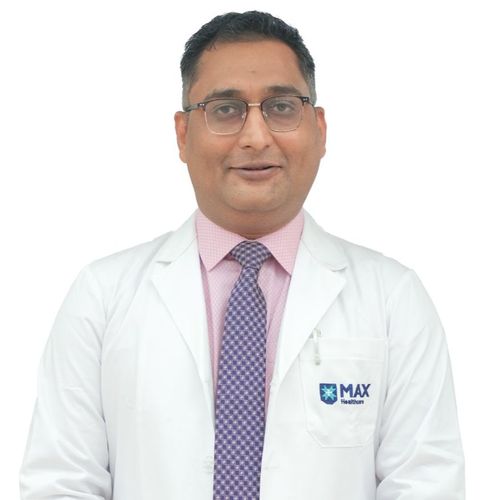
Dr. Chirag Jain
Principal Consultant - Surgical Oncology
Robotic Surgery, Head & Neck Oncology, Breast Cancer, Cancer Care / Oncology, Surgical Oncology
Experience: 11+ Years
Gender: Male
{"FirstAvailable":"2026-06-30 9:00 AM","FirstInHospital":"2026-06-30 9:00 AM","FirstVC":"","Hospital":{"max-super-speciality-hospital-vaishali":{"FirstAvailable":"2026-06-30 9:00 AM","FirstInHospital":"2026-06-30 9:00 AM","FirstVC":""},"max-multi-speciality-centre-noida":{"FirstAvailable":"2026-07-02 2:00 PM","FirstInHospital":"2026-07-02 2:00 PM","FirstVC":""}}}

Dr. Khyati Bhatia
Senior Consultant - Oncology and Oncosurgery
Head & Neck Oncology, Cancer Care / Oncology, Surgical Oncology
Gender: Female
{"FirstAvailable":"2026-06-30 10:00 AM","FirstInHospital":"2026-06-30 10:00 AM","FirstVC":"","Hospital":{"max-super-speciality-hospital-vaishali":{"FirstAvailable":"2026-06-30 10:00 AM","FirstInHospital":"2026-06-30 10:00 AM","FirstVC":""}}}

Dr. Ankit Vishwani
Associate Consultant - Head & Neck Surgical Oncology
Head & Neck Oncology, Cancer Care / Oncology, Surgical Oncology
Experience: 14+ Years
Gender: Male
{"FirstAvailable":"2026-06-30 11:00 PM","FirstInHospital":"2026-06-30 11:00 PM","FirstVC":"","Hospital":{"max-super-speciality-hospital-vaishali":{"FirstAvailable":"2026-06-30 11:00 PM","FirstInHospital":"2026-06-30 11:00 PM","FirstVC":""}}}
Can't find what you are looking for?
Types of Oral Cancer Treated at Max Hospitals, Vaishali, Ghaziabad
Oral cancer can arise in different tissues within the mouth, and each type may vary in terms of growth patterns, aggressiveness, and treatment response. At Max Hospitals, Vaishali, Ghaziabad, our team of specialists carefully assesses the nature of the tumour using advanced diagnostic tools before recommending the most appropriate treatment plan. The hospital manages a wide range of oral cancer types, ensuring that care is tailored to the specific characteristics of the disease.
Squamous Cell Carcinoma
Squamous cell carcinoma is the most common form of oral cancer, accounting for the majority of cases. It develops in the thin, flat cells that line the lips and the inside of the mouth. This type of cancer may appear as persistent sores, thickened areas, or white or red patches that do not heal. While some tumours grow slowly, others may spread to nearby tissues or lymph nodes if not detected early. Treatment typically involves surgery, radiation therapy, chemotherapy, or a combination of these approaches depending on the stage of the disease.
Verrucous Carcinoma
Verrucous carcinoma is a relatively rare and slow-growing form of oral cancer. It often appears as a thick, wart-like growth inside the mouth and is commonly associated with long-term tobacco use. Although this cancer tends to grow slowly and rarely spreads to distant organs, it can invade nearby tissues if left untreated. Surgical removal is usually the primary treatment, often providing good outcomes when diagnosed at an early stage.
Minor Salivary Gland Cancers
Minor salivary gland cancers develop in the small salivary glands located throughout the lining of the mouth and throat. These tumours may form in areas such as the palate, inner cheeks, or floor of the mouth. Because these glands are distributed widely within the oral cavity, symptoms can vary depending on the tumour’s location. Treatment usually involves surgical removal of the tumour and may be followed by radiation therapy to reduce the risk of recurrence.
Oral Melanoma
Oral melanoma is a rare but aggressive cancer that develops from pigment-producing cells known as melanocytes. It may appear as dark or irregularly coloured patches within the mouth, commonly affecting the palate or gums. Because oral melanoma can spread quickly, early detection and prompt treatment are crucial. Management often involves surgical removal of the tumour along with additional therapies depending on the stage of the disease.
Sarcomas and Other Rare Oral Tumours
In rare cases, oral cancer may originate from connective tissues such as muscles, nerves, blood vessels, or bone within the mouth. These cancers are classified as sarcomas and may behave differently from more common oral cancers. Due to their rarity, they often require specialised evaluation and a carefully planned treatment strategy. Treatment may include surgery, radiation therapy, chemotherapy, or a combination of these approaches depending on the characteristics of the tumour.
Diagnosis of Oral Cancer at Max Hospitals, Vaishali, Ghaziabad
Diagnosing oral cancer requires a thorough clinical evaluation and specialised diagnostic tests to confirm the presence of cancer and determine its stage. At Max Hospitals, specialists use advanced diagnostic tools and imaging technologies to identify the disease accurately and develop an appropriate treatment plan.
The diagnostic process typically begins with a detailed clinical examination, during which doctors inspect the mouth, throat, and neck for abnormal growths, ulcers, or swelling. If any suspicious lesion is identified, further investigations may be recommended.
Biopsy
A biopsy is the most definitive test for diagnosing oral cancer. During this procedure, a small sample of tissue is removed from the suspicious area and examined under a microscope by a pathologist. The biopsy helps confirm whether cancer cells are present and determines the specific type of cancer.
Imaging Tests
Imaging tests help doctors understand the size of the tumour and whether the cancer has spread to nearby tissues or lymph nodes. Common imaging studies used in oral cancer diagnosis include:
- CT (Computed Tomography) scans, which provide detailed images of the mouth, neck, and surrounding structures
- MRI (Magnetic Resonance Imaging), which helps evaluate soft tissues and detect tumour spread
- PET scans, which may be used to identify cancer activity in different parts of the body
Endoscopic Examination
In some cases, doctors may perform an endoscopic examination to inspect deeper areas of the throat and surrounding structures. A thin, flexible tube with a camera is inserted through the mouth or nose to provide a clearer view of areas that cannot be easily seen during a routine examination.
Staging of the Cancer
Once oral cancer is confirmed, doctors determine the stage of the disease. Staging describes how large the tumour is and whether it has spread to nearby lymph nodes or distant organs. This information is crucial for selecting the most appropriate treatment strategy and estimating treatment outcomes.
At Max Hospitals, accurate diagnosis and staging allow specialists to design a personalised treatment plan that addresses the specific characteristics of the cancer while prioritising patient safety and long-term recovery.
Oral Cancer Treatment at Max Hospitals, Vaishali, Ghaziabad
Treating oral cancer requires a carefully planned approach that considers the location of the tumour, the stage of the disease, and the patient’s overall health. At Max Hospitals, oral cancer treatment is guided by a multidisciplinary team of head and neck surgeons, surgical oncologists, medical oncologists, radiation oncologists, radiologists, and rehabilitation specialists. By combining clinical expertise with advanced treatment technologies, the team aims to remove or control the cancer while preserving essential functions such as speech, swallowing, and facial appearance whenever possible.
Depending on the characteristics of the tumour, doctors may recommend one or a combination of treatment options to achieve the best possible outcomes. The following therapies are commonly used in the management of oral cancer at Max Hospitals.
Surgical Treatment
Surgery is often the primary treatment for oral cancer, particularly when the tumour is confined to a specific area within the mouth. The procedure involves removing the cancerous tissue along with a margin of surrounding healthy tissue to ensure that all cancer cells are eliminated.
In some cases, nearby lymph nodes in the neck may also be removed if there is a risk that the cancer has spread. When surgery involves removing a larger portion of tissue, reconstructive procedures may be performed to restore the appearance and function of the affected area. Reconstructive surgery may involve tissue grafts or flaps taken from other parts of the body to rebuild the oral structures.
Radiation Therapy
Radiation therapy uses high-energy radiation beams to destroy cancer cells while minimising damage to nearby healthy tissues. It may be used as the primary treatment for certain early-stage oral cancers or after surgery to reduce the risk of recurrence.
Modern techniques such as intensity-modulated radiation therapy (IMRT) allow doctors to deliver highly precise radiation doses to the tumour while protecting surrounding structures such as the salivary glands and jawbone. In some cases, radiation therapy may also be combined with chemotherapy to improve treatment effectiveness.
Chemotherapy
Chemotherapy involves the use of anti-cancer medications that circulate through the bloodstream to destroy cancer cells throughout the body. It may be recommended in combination with radiation therapy for locally advanced oral cancers or when the disease has spread beyond the primary tumour site.
Chemotherapy can help shrink tumours before surgery, enhance the effectiveness of radiation therapy, or control the spread of cancer in advanced stages.
Targeted Therapy
Targeted therapy uses medications designed to interfere with specific molecular pathways that cancer cells rely on for growth and survival. These therapies focus on particular proteins or receptors found on cancer cells, helping to slow or stop tumour progression.
Targeted therapy may be used in combination with other treatments, particularly in advanced or recurrent oral cancers where conventional therapies alone may not be sufficient.
Immunotherapy
Immunotherapy works by stimulating the body’s immune system to recognise and attack cancer cells more effectively. Certain immunotherapy drugs can help the immune system detect cancer cells that would otherwise evade immune response.
This treatment option may be considered in selected patients with advanced or recurrent oral cancer, particularly when other treatments have limited effectiveness.
Review
Reviewed by Dr Sowrabh Kumar Arora, Principal Director & Clinical Administrator - Surgical Oncology (Head & Neck), on 24 March 2026.


Real Patient Stories


Frequently Asked Questions
Is oral cancer always painful?
Not always. In its early stages, oral cancer may not cause significant pain. Some individuals may only notice a small sore, patch, or lump that does not heal. This is why persistent changes in the mouth should always be evaluated by a doctor.
Can oral cancer develop in people who do not smoke or chew tobacco?
Yes. Although tobacco and alcohol use are major risk factors, oral cancer can also occur in people without these habits. Factors such as certain viral infections, prolonged sun exposure to the lips, or genetic predisposition may also play a role.
Does oral cancer only affect older adults?
While oral cancer is more common in older individuals, younger people can also develop the condition, especially when risk factors such as tobacco use, alcohol consumption, or viral infections are present.
Can oral cancer affect eating and speaking?
Depending on the location and stage of the cancer, it may interfere with chewing, swallowing, or speaking. Early treatment can help preserve these functions and reduce complications.
Can oral cancer be detected during a routine dental check-up?
Yes. Dentists are often able to identify unusual sores, patches, or lumps during routine oral examinations. This is one reason why regular dental check-ups are important.
What happens after oral cancer treatment is completed?
Patients usually require regular follow-up visits so doctors can monitor recovery, manage side effects, and check for any signs of recurrence.
How can people reduce their risk of oral cancer?
Avoiding tobacco in all forms, limiting alcohol intake, maintaining good oral hygiene, protecting the lips from excessive sun exposure, and attending regular dental check-ups can help lower the risk.
Where does oral cancer usually start?
Oral cancer can develop in several areas within the mouth, including the lips, tongue, gums, inner lining of the cheeks, floor of the mouth, and the roof of the mouth. It often begins as a small sore, patch, or lump that does not heal.
Can oral cancer spread to other parts of the body?
Yes. If not detected and treated early, oral cancer may spread to nearby tissues, lymph nodes in the neck, or other parts of the body. Early diagnosis significantly improves treatment outcomes.
How is oral cancer different from common mouth ulcers?
Most mouth ulcers heal within one to two weeks. In contrast, a suspicious lesion associated with oral cancer may persist for longer, grow in size, or change in appearance.
Can oral cancer return after treatment?
In some cases, oral cancer may recur after treatment. Regular follow-up visits and monitoring help detect any recurrence early so that appropriate care can be provided.
Are lifestyle habits important after oral cancer treatment?
Yes. Avoiding tobacco and alcohol, maintaining good oral hygiene, eating a balanced diet, and attending regular medical follow-ups can support recovery and reduce the risk of recurrence.
Does oral cancer treatment affect appearance?
Certain treatments, particularly surgery, may temporarily or permanently change the appearance of the mouth or face. Reconstructive procedures and rehabilitation therapies can help restore both function and appearance.
When should someone seek medical advice for a mouth problem?
Any sore, lump, patch, or unexplained change in the mouth that lasts longer than two weeks should be examined by a healthcare professional.
How can patients from nearby areas visit Max Hospitals, Vaishali, Ghaziabad for oral cancer treatment?
Patients from Ghaziabad, Delhi NCR, and nearby regions can easily reach Max Super Speciality Hospital, Vaishali using various transport options. The hospital is located at W-3, Sector 1, Vaishali, near Radisson Blu Hotel on Ashok Marg.
- By Metro: Vaishali Metro Station on the Delhi Metro Blue Line is about 2–3 km away, with taxis and auto-rickshaws available for the short commute.
- By Train: Anand Vihar Terminal and Ghaziabad Junction are the nearest railway stations and are within convenient driving distance.
- By Road: The hospital is well connected via major routes such as G.T. Road and Vasundhara Road, making it accessible by private vehicles, taxis, and app-based cab services.