 WhatsApp Us (24/7)
 +91 926 888 0303 (24/7)


Best Breast cancer Hospital in Ghaziabad
-
 7+ specialist doctors
-
7+ specialist doctors
To Book an Appointment
Call Us+91 926 888 0303Located at - W-3, Ashok Marg, near Radisson Blu Hotel, Sector-1, Vaishali, Ghaziabad, Uttar Pradesh 201012
Why Choose Max Hospital, Ghaziabad for Breast Cancer
People from following locations visit Max Super Speciality Hospital, Ghaziabad: Indirapuram, Kaushambi, Vaishali, Vasundhara, Old Ghaziabad, Kavi Nagar, Raj Nagar, Raj Nagar Extension, Crossing Republik, Noida, Noida Extension, Gaur City
Located at - W-3, Ashok Marg, near Radisson Blu Hotel, Sector-1, Vaishali, Ghaziabad, Uttar Pradesh 201012

Filters
Doctors Available

Dr. Meenu Walia
Chairman - Medical Oncology (Breast, Gynaecology, Thoracic, GI)
Medical Oncology, Cancer Care / Oncology, Breast Cancer, Thoracic Oncology, Gynecologic Oncology, Gastrointestinal & Hepatobiliary Oncology
Experience: 36+ Years
Gender: Female
{"FirstAvailable":"2026-06-30 10:00 AM","FirstInHospital":"2026-06-30 10:00 AM","FirstVC":"2026-06-30 5:15 PM","Hospital":{"max-super-speciality-hospital-patparganj":{"FirstAvailable":"2026-06-30 5:15 PM","FirstInHospital":"2026-07-06 10:40 AM","FirstVC":"2026-06-30 5:15 PM"},"max-super-speciality-hospital-vaishali":{"FirstAvailable":"2026-06-30 10:00 AM","FirstInHospital":"2026-06-30 10:00 AM","FirstVC":""},"max-multi-speciality-centre-noida":{"FirstAvailable":"2026-07-01 10:54 AM","FirstInHospital":"2026-07-01 10:54 AM","FirstVC":""},"undefined":{"FirstAvailable":"2026-07-08 1:00 PM","FirstInHospital":"2026-07-08 1:00 PM","FirstVC":""}}}
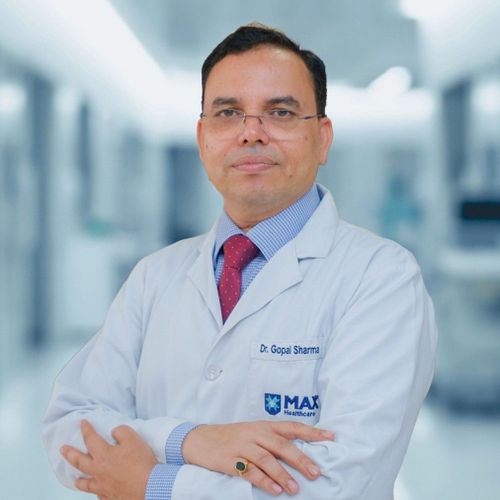
Dr. Gopal Sharma
Vice Chairman - Medical Oncology (Breast, Thoracic, Gynaecology)
Cancer Care / Oncology, Gynecologic Oncology, Thoracic Oncology, Breast Cancer, Medical Oncology
Experience: 26+ Years
Gender: Male
{"FirstAvailable":"2026-06-30 12:20 PM","FirstInHospital":"2026-06-30 12:20 PM","FirstVC":"","Hospital":{"max-super-speciality-hospital-vaishali":{"FirstAvailable":"2026-06-30 12:20 PM","FirstInHospital":"2026-06-30 12:20 PM","FirstVC":""},"max-super-speciality-hospital-patparganj":{"FirstAvailable":"2026-06-30 2:00 PM","FirstInHospital":"2026-06-30 2:00 PM","FirstVC":""},"max-multi-speciality-centre-noida":{"FirstAvailable":"2026-07-02 9:30 AM","FirstInHospital":"2026-07-02 9:30 AM","FirstVC":""}}}

Dr. Rashi Agrawal
Senior Director - Clinical Administrator & Program Coordinator, Radiation Oncology
Gastrointestinal & Hepatobiliary Oncology, Gynecologic Oncology, Thoracic Oncology, Breast Cancer, Cancer Care / Oncology, Radiation Oncology
Experience: 22+ Years
Gender: Female
{"FirstAvailable":"2026-06-29 6:40 PM","FirstInHospital":"2026-06-30 9:30 AM","FirstVC":"2026-06-29 6:40 PM","Hospital":{"max-super-speciality-hospital-vaishali":{"FirstAvailable":"2026-06-29 6:40 PM","FirstInHospital":"2026-06-30 9:30 AM","FirstVC":"2026-06-29 6:40 PM"}}}

Dr. Vikas Goswami
Senior Director - Medical Oncology (Breast & Gynaecological Cancers, Lung Cancer, Gastrointestinal (GI) Cancers, Head & Neck / Oral Cancers, Urology (Genitourinary) Cancers, Haematological (Blood) Cancers)
Medical Oncology, Cancer Care / Oncology, Breast Cancer, Gynecologic Oncology, Thoracic Oncology, Gastrointestinal & Hepatobiliary Oncology, Head & Neck Oncology, Uro-Oncology, Hematology Oncology
Experience: 23+ Years
Gender: Male
{"FirstAvailable":"2026-06-30 11:10 AM","FirstInHospital":"2026-06-30 11:10 AM","FirstVC":"","Hospital":{"max-super-speciality-hospital-vaishali":{"FirstAvailable":"2026-06-30 11:10 AM","FirstInHospital":"2026-06-30 11:10 AM","FirstVC":""},"max-super-speciality-hospital-patparganj":{"FirstAvailable":"2026-07-01 1:00 PM","FirstInHospital":"2026-07-01 1:00 PM","FirstVC":""},"max-multi-speciality-centre-noida":{"FirstAvailable":"2026-07-01 4:00 PM","FirstInHospital":"2026-07-01 4:00 PM","FirstVC":""}}}

Dr. Rajinder Kaur Saggu
Senior Director - Surgical Oncology (Breast)
Surgical Oncology, Cancer Care / Oncology, Molecular Oncology & Cancer Genetics, Breast Cancer
Experience: 24+ Years
Gender: Female
{"FirstAvailable":"2026-06-30 9:00 AM","FirstInHospital":"2026-06-30 9:00 AM","FirstVC":"","Hospital":{"max-super-speciality-hospital-vaishali":{"FirstAvailable":"2026-06-30 9:00 AM","FirstInHospital":"2026-06-30 9:00 AM","FirstVC":""}}}

Dr Seema Singh
Associate Director - Breast & Robotics Onco Surgery
Surgical Oncology, Cancer Care / Oncology, Breast Cancer, Robotic Surgery
Experience: 15+ Years
Gender: Female
{"FirstAvailable":"2026-06-30 9:00 AM","FirstInHospital":"2026-06-30 9:00 AM","FirstVC":"","Hospital":{"max-super-speciality-hospital-vaishali":{"FirstAvailable":"2026-06-30 9:00 AM","FirstInHospital":"2026-06-30 9:00 AM","FirstVC":""},"max-multi-speciality-centre-noida":{"FirstAvailable":"2026-07-01 10:00 AM","FirstInHospital":"2026-07-01 10:00 AM","FirstVC":""}}}
Can't find what you are looking for?
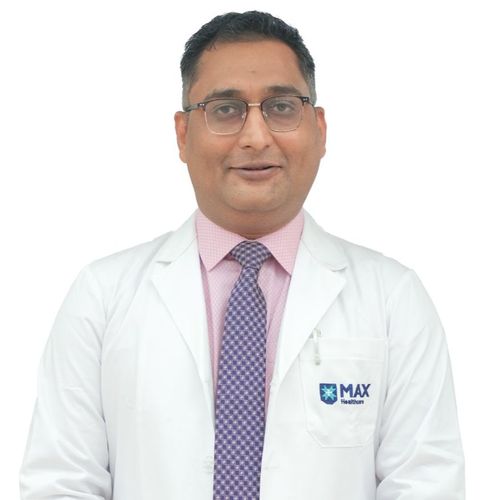
Dr. Chirag Jain
Principal Consultant - Surgical Oncology
Surgical Oncology, Cancer Care / Oncology, Breast Cancer, Head & Neck Oncology, Robotic Surgery
Experience: 11+ Years
Gender: Male
{"FirstAvailable":"2026-06-30 9:00 AM","FirstInHospital":"2026-06-30 9:00 AM","FirstVC":"","Hospital":{"max-super-speciality-hospital-vaishali":{"FirstAvailable":"2026-06-30 9:00 AM","FirstInHospital":"2026-06-30 9:00 AM","FirstVC":""},"max-multi-speciality-centre-noida":{"FirstAvailable":"2026-07-02 2:00 PM","FirstInHospital":"2026-07-02 2:00 PM","FirstVC":""}}}
Types of Breast Cancer Treated at Max Hospitals, Vaishali, Ghaziabad
At Max Hospitals, we provide diagnosis and treatment for a wide range of breast cancer types, including but not limited to:
Invasive Ductal Carcinoma (IDC)
The most frequently diagnosed form of breast cancer, invasive ductal carcinoma originates in the milk ducts and gradually infiltrates the surrounding breast tissue. If left untreated, it may travel to other parts of the body via the lymph nodes or bloodstream. Treatment typically involves a combination of surgery, chemotherapy, and radiation, tailored to the stage and grade of the disease.
Invasive Lobular Carcinoma (ILC)
This form develops in the milk-producing lobules of the breast and can silently spread to adjacent tissues before forming a detectable lump. As it is often harder to identify through physical examination alone, imaging and biopsy play a critical role in diagnosis. Treatment may include surgical removal, hormone therapy, and additional systemic treatments depending on how far the cancer has progressed.
Ductal Carcinoma In Situ (DCIS)
DCIS is an early-stage, non-invasive form of breast cancer where abnormal cells are confined within the milk ducts and have not spread beyond them. It is most commonly detected during routine mammography screenings. Since it is caught at an early stage, treatment outcomes are generally very positive and may involve localised surgery followed by radiation therapy.
Triple-Negative Breast Cancer
Among the more aggressive variants, triple-negative breast cancer lacks oestrogen receptors, progesterone receptors, and the HER2 protein, which means it does not respond to hormone therapy or HER2-targeted treatments. It tends to grow faster than other types and requires a chemotherapy-based approach. Research into newer treatment options for this variant is actively ongoing.
HER2-Positive Breast Cancer
Characterised by an overexpression of the HER2 protein, this type of breast cancer tends to grow more rapidly but responds well to targeted therapies designed specifically to block HER2. Treatment plans typically combine surgery and chemotherapy with HER2-targeted drugs for improved outcomes.
Hormone Receptor-Positive Breast Cancer
These cancers are fuelled by the presence of hormones such as oestrogen or progesterone in the body. Hormone-blocking medications form a central part of treatment, either used alone or in combination with surgery, chemotherapy, or radiation depending on the stage and extent of the disease.
Inflammatory Breast Cancer
A rare but fast-progressing form, inflammatory breast cancer presents with redness, swelling, and warmth in the breast rather than a distinct lump. The skin may appear dimpled or thickened. Given its aggressive nature, early and intensive treatment is essential, typically starting with chemotherapy before proceeding to surgery and radiation.
Paget's Disease of the Breast
This uncommon condition affects the skin around the nipple area and may present as itching, scaling, or nipple discharge. It is often associated with an underlying breast tumour. Diagnosis involves biopsy, and treatment is guided by the extent of involvement in the surrounding tissue.
Advanced Breast Cancer Diagnosis at Max Hospitals, Vaishali, Ghaziabad
An accurate and timely diagnosis is the most critical first step in the fight against breast cancer. At Max Hospitals, Vaishali, Ghaziabad, we have built a diagnostic framework that combines the latest imaging technology, molecular testing, and specialist interpretation, ensuring that every patient receives a precise, complete picture of their condition before any treatment decision is made. For patients in Vaishali, Ghaziabad, and the surrounding areas, this means access to world-class diagnostic capabilities without having to travel far from home.
Clinical Breast Examination
The diagnostic journey often begins with a thorough clinical breast examination conducted by a specialist. The doctor carefully examines both breasts for any unusual lumps, changes in size or shape, skin irregularities, or nipple abnormalities. While this is not a replacement for imaging, it provides valuable initial information and helps determine which further investigations are most appropriate.
Digital Mammography
Mammography remains the gold standard for breast cancer screening and early detection. At Max Hospitals, Vaishali, Ghaziabad, we use advanced digital mammography systems that produce high-resolution images of breast tissue, allowing radiologists to detect even very small abnormalities that may not be felt during a physical examination. Digital mammography is particularly effective for routine screening in women above the age of 40 and for those with a family history of breast cancer.
Breast Ultrasound
Ultrasound imaging is used alongside mammography to provide a more detailed view of specific areas of concern within the breast. It is particularly useful for evaluating lumps in younger women, who often have denser breast tissue that can be harder to assess through mammography alone. Ultrasound helps distinguish between solid masses and fluid-filled cysts, guiding the next steps in diagnosis.
Breast MRI
Magnetic Resonance Imaging (MRI) of the breast provides highly detailed, three-dimensional images and is recommended in specific situations, such as for patients with a high genetic risk, those with dense breast tissue, or when the extent of a known cancer needs to be assessed more precisely before surgery. Breast MRI does not use radiation and offers exceptional sensitivity in detecting abnormalities that other imaging methods may not capture.
Image-Guided Biopsy
When imaging reveals a suspicious area, a biopsy is performed to collect a small tissue sample for laboratory analysis. At Max Hospitals, Vaishali, Ghaziabad, biopsies are carried out using image guidance, either ultrasound or mammography, to ensure precise targeting of the abnormal area. This minimally invasive procedure causes minimal discomfort and provides the definitive confirmation needed to establish whether cancer is present.
Histopathology & Tumour Profiling
The tissue collected during biopsy is examined in detail by a pathologist to determine the type and grade of cancer. This analysis also includes hormone receptor testing, checking for the presence of oestrogen and progesterone receptors, as well as HER2 protein assessment. Together, these findings form a comprehensive tumour profile that directly informs the treatment approach.
Genetic Testing
For patients with a significant family history of breast or ovarian cancer, or those diagnosed at a relatively young age, genetic testing is recommended to identify mutations such as BRCA1 and BRCA2. A positive result does not only impact the patient's own treatment plan, it also carries important implications for other family members who may wish to assess their own risk. Genetic counselling is provided alongside testing to help patients and families understand and act on their results.
PET-CT Scan
In cases where cancer has already been confirmed, a PET-CT scan may be recommended to determine whether the disease has spread to other parts of the body. This combined imaging technique provides a full-body view, identifying any areas of abnormal cellular activity that may indicate metastasis. It plays a key role in accurate staging, which is essential for planning the most effective course of treatment.
Multidisciplinary Diagnostic Review
At Max Hospitals, Vaishali, Ghaziabad, no diagnosis is finalised in isolation. All findings, imaging, pathology, receptor testing, and genetic results, are brought together and reviewed in a multidisciplinary tumour board. This structured discussion involving oncologists, radiologists, pathologists, and surgeons ensures that the diagnosis is thorough, accurate, and translated into a treatment plan that is truly tailored to each patient.
Breast Cancer Treatment Options at Max Hospitals, Vaishali, Ghaziabad
Max Hospitals offers a full spectrum of evidence-based treatment options for breast cancer, delivered by a team of experienced specialists working in close coordination.
Surgery
Surgical intervention is often the primary step in breast cancer treatment. The goal is to remove the tumour effectively while preserving as much healthy tissue as possible. Procedures offered include:
- Lumpectomy (Breast-Conserving Surgery): The tumour and a small margin of surrounding tissue are removed, leaving the rest of the breast intact. This is generally followed by radiation therapy.
- Mastectomy: Complete removal of the breast is recommended when tumour size, location, or genetic risk factors make breast conservation unsuitable.
- Sentinel Lymph Node Biopsy: A targeted procedure to examine nearby lymph nodes for signs of cancer spread, helping determine whether further node removal is necessary.
- Axillary Lymph Node Dissection: Performed when cancer has already been confirmed in the underarm lymph nodes.
- Breast Reconstruction: For patients who undergo mastectomy, reconstructive surgery can restore the appearance of the breast, either at the time of cancer surgery or at a later stage.
Chemotherapy
Chemotherapy uses powerful medicines to destroy cancer cells or prevent them from multiplying. It may be administered:
- Before surgery (Neoadjuvant): To reduce the size of the tumour and improve surgical outcomes.
- After surgery (Adjuvant): To eliminate any remaining cancer cells and reduce the risk of recurrence.
Treatment is typically delivered intravenously in cycles over several weeks or months, with rest periods built in between.
Radiation Therapy
High-energy beams are used to target and destroy residual cancer cells in the breast or surrounding area. Radiation is most commonly recommended following a lumpectomy and in certain post-mastectomy cases. External beam radiation is the standard approach, painless, precise, and usually administered over a few weeks.
Hormone Therapy
For cancers that are driven by oestrogen or progesterone, hormone therapy works by either blocking these hormones or reducing their levels in the body. It may be used before surgery to shrink the tumour, after surgery to prevent recurrence, or as a long-term preventive measure. Hormone therapy is generally administered as a daily oral medication.
Targeted Therapy
Unlike chemotherapy, targeted therapy is designed to attack specific molecular features of cancer cells, minimising damage to healthy tissue. HER2-positive cancers, for instance, are treated with drugs that specifically block the HER2 protein. The choice of targeted therapy is guided by genetic testing and detailed tumour profiling.
Immunotherapy
Immunotherapy works by activating the body's own immune system to identify and attack cancer cells. It is primarily used in cases of triple-negative breast cancer that do not respond to hormone or HER2-targeted treatments. It is often combined with chemotherapy and delivered intravenously.
Genetic Testing & Counselling
For patients with a strong family history of breast or ovarian cancer, or for those diagnosed at a young age, genetic testing for mutations such as BRCA1 and BRCA2 is recommended. Understanding genetic risk not only informs individual treatment decisions but also helps family members assess their own risk. Pre- and post-test counselling is provided to ensure patients fully understand their results and the options available to them.
Supportive Care During Treatment
At Max Hospitals, treatment extends beyond the clinical. A range of support services are available to help patients manage the physical and emotional demands of cancer care:
- Counselling: Professional support to help patients and families navigate anxiety, fear, and emotional distress throughout the treatment journey.
- Nutritional Guidance: Personalised dietary advice from trained dietitians to support strength, immunity, and recovery during treatment.
- Pain & Symptom Management: Dedicated care for managing treatment-related side effects such as pain, nausea, and fatigue.
- Rehabilitation Services: Physiotherapy and post-surgical care to restore arm mobility, manage lymphoedema, and support overall physical recovery.
Review
Reviewed by Dr Seema Singh, Associate Director - Breast & Robotics Onco Surgery, Surgical Oncology, Cancer Care / Oncology, Breast Cancer, Robotic Surgery, on 13 March 2026.


Real Patient Stories

Frequently Asked Questions
How early should I come in if I notice a lump or change in my breast?
It is advisable to consult a specialist as soon as possible if you notice any unusual change, including a lump, skin dimpling, nipple discharge, or unexplained pain. Early evaluation does not always mean cancer, but early detection significantly improves treatment outcomes when it is.
Will I need to be admitted for the entire duration of treatment?
Not necessarily. While surgery requires a hospital stay, many treatments such as chemotherapy, radiation, and hormone therapy are administered on an outpatient or day-care basis. Your treatment plan will outline exactly what to expect in terms of visits and hospital stays.
Is breast-conserving surgery always an option?
Breast-conserving surgery is offered wherever it is medically appropriate. The suitability depends on factors such as tumour size, location, and type. Your surgical team will discuss all available options with you and recommend the approach best suited to your individual case.
What should I bring to my first consultation?
Bring any previous medical reports, scan results, biopsy reports, or prescriptions related to your condition. If you have had a mammogram or ultrasound done elsewhere, carry the original images and reports. This helps the specialist assess your case more accurately from the very first visit.
Does Max Hospitals offer support for patients who are anxious or emotionally overwhelmed?
Yes. Counselling and psychological support are available as part of our cancer care programme. Our team understands that a cancer diagnosis can be deeply distressing, and support is offered to both patients and their families throughout the treatment process.
Can I get a second opinion at Max Hospitals before deciding on treatment?
Absolutely. Seeking a second opinion is a completely reasonable and encouraged step. You can share your existing reports with our specialists for a review and recommendation before making any treatment decisions.
How do I book an appointment at Max Hospitals, Vaishali?
You can book an appointment by calling our helpline, visiting the hospital directly, or using the online appointment booking system on the Max Hospitals website. Our team will guide you to the right specialist based on your needs.
Is financial assistance or an EMI option available for treatment?
Max Hospitals offers guidance on insurance claims, cashless treatment, and available financial assistance options. Our patient services team can help you understand what is covered under your policy and what payment arrangements may be available.