WhatsApp Us (24/7)
 +91 926 888 0303 (24/7)



Bilateral Hand Transplantation from Female Donor to Male Recipient: Advancing the Boundaries of Vascularised Composite Allotransplantation

An 18-year-old male presented with bilateral traumatic hand amputation. He sustained a non-salvageable crush injury in a farm equipment accident in January 2024. The tissue damage required amputation of both hands and resulted in profound functional loss. After a comprehensive medical, psychological, and immunological evaluation, he was considered suitable for bilateral hand transplantation. Due to the rarity of appropriate donors and strict compatibility requirements, he remained on the transplant waitlist for 13 months.
In January 2026, a suitable cadaveric donor became available, a 50-year-old deceased female whose family consented to organ donation. Her upper limbs were allocated for transplantation, and her lungs, liver, and corneas were retrieved and transplanted across hospitals in Mumbai and Surat. The bilateral hand transplant was performed at Nanavati Max Super Speciality Hospital in Mumbai with the objective of restoring upper-limb continuity and functional potential in the young recipient.
Following the donor family’s consent, the limbs were retrieved in Surat and transported to Mumbai within a short window through coordinated efforts of teams and authorities in Maharashtra and Gujarat.
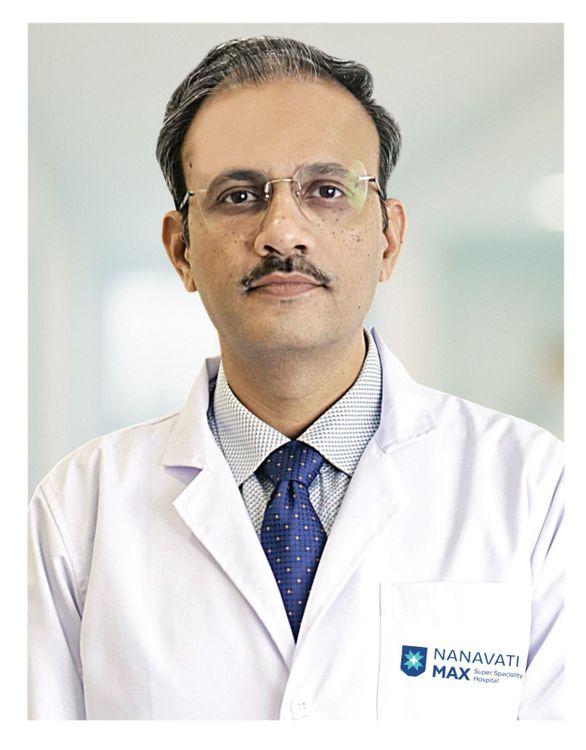
The transplant procedure was performed overnight on 9th–10th January 2026, under the direction of Dr. Nilesh Satbhai, Director of Plastic, Reconstructive Microsurgery and Hand Transplantation. Over 13 hours, the team completed skeletal fixation, arterial and venous anastomoses, tendon repairs, nerve coaptation, and soft-tissue reconstruction. Intraoperative planning focused on minimising warm ischaemia time and ensuring vascular patency. Immediate graft perfusion confirmed successful revascularisation.
Postoperatively, the patient was managed according to a structured, multidisciplinary protocol encompassing immunosuppression, vascular surveillance, infection prophylaxis, and early rehabilitation planning. Vigilant monitoring for vascular compromise and acute rejection was critical during the early postoperative period.
Unlike organ transplantation, vascularised composite allotransplantation (VCA) transfers tissues like skin, muscle, tendon, bone, vessels, and nerves, creating immune challenges because skin is highly antigenic. Yet when successful, hand transplantation can restore feeling, position sense, and coordinated movement beyond what prosthetics can offer.
This case underscores the extraordinary complexity of VCA and the immense team effort required to execute such a procedure successfully. Representing the pinnacle of surgical precision, meticulous planning, and sustained team effort, the procedure demanded seamless multidisciplinary coordination, endurance, and clinical judgement at every stage. It sets a new benchmark for collaborative surgical achievement and advances the frontier of functional restoration in complex reconstructive transplantation.
Treated by: