Delhi/NCR:

MOHALI:

Dehradun:

BATHINDA:

Mumbai:

NAGPUR:

LUCKNOW:

BHUBANESWAR:

Top Proctoscopy Doctors in Delhi

To Book an Appointment

Call Us+91 926 888 0303

Filters

Doctors Available

Dr Aamir Iqbal

Associate Consultant – Institute Of Minimal Access, Bariatric & Robotic Surgery


Laparoscopic / Minimal Access Surgery, Bariatric Surgery / Metabolic, Robotic Surgery

Gender: Male

Book an Appointment

{"FirstAvailable":"2026-06-30 12:00 PM","FirstInHospital":"2026-06-30 12:00 PM","FirstVC":"","Hospital":{"max-super-speciality-hospital-patparganj":{"FirstAvailable":"2026-06-30 12:00 PM","FirstInHospital":"2026-06-30 12:00 PM","FirstVC":""}}}
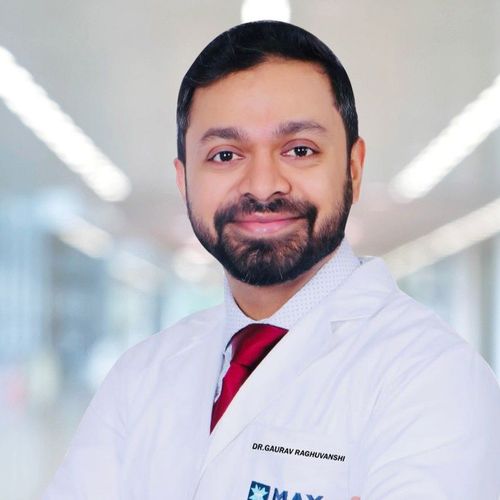
Dr Gaurav Raghuvanshi

Associate Consultant – Minimally Invasive & General Surgery


General Surgery, Laparoscopic / Minimal Access Surgery

Gender: Male

Languages Spoken: Hindi, English

Book an Appointment

{"FirstAvailable":"2026-06-30 9:00 AM","FirstInHospital":"2026-06-30 9:00 AM","FirstVC":"","Hospital":{"max-super-speciality-hospital-shalimar-bagh":{"FirstAvailable":"2026-06-30 9:00 AM","FirstInHospital":"2026-06-30 9:00 AM","FirstVC":""}}}

Can't find what you are looking for?

Max Hospital, Delhi houses some of the best specialists for Proctoscopy that are trained to provide best treatments available with the latest technology. The doctors can be consulted at Delhi through in-hospital appointments and video consultations. Learn more about Proctoscopy doctors’ qualification, background, specialization and experience. Book doctor appointments online, check OPD timings at one of the best hospitals in Delhi.

Frequently Asked Questions

Proctoscopy is a medical procedure that involves examining the rectum using a specialized instrument called a proctoscope.
Proctoscopy is performed to diagnose and treat conditions that affect the rectum, such as haemorrhoids, polyps, anal fissures, and colorectal cancer.
Proctoscopy may cause some discomfort or pressure, but it is generally not a painful procedure.
You may be asked a mild laxative a night before the examination.
Your doctor will give you instructions regarding eating before the procedure, but it is usually recommended to fast for a few hours before the exam.
You should be able to drive after a proctoscopy, as the procedure does not require sedation.
The frequency of proctoscopy depends on your individual medical history and risk factors.
The risks associated with proctoscopy are minimal, but they may include bleeding.
Most proctoscopies do not require anesthesia, but your doctor may use a local anesthetic to numb the area.
A proctoscopy is performed by inserting a proctoscope into the rectum and examining the rectal lining for any abnormalities.
You may feel some pressure or discomfort as the proctoscope is inserted, but the procedure is usually quick and painless.
After the procedure, you may experience some minor bleeding or discomfort, but these symptoms should resolve within a few hours.
Recovery time after a proctoscopy is usually minimal, and you should be able to resume your normal activities soon after the procedure.
You can resume light exercise after a proctoscopy, but you should avoid strenuous activity for at least a few days.
Yes, proctoscopy can be used to detect cancer of rectum and anal canal.
Proctoscopy can be used to diagnose a range of conditions that affect the rectum, including hemorrhoids, polyps, and anal fissures.
Proctoscopy is a less invasive procedure that examines only the rectum, while colonoscopy examines the entire colon and rectum.
Proctoscopy is a medical procedure that should be performed by a trained healthcare provider in a clinical setting.
You may experience some discomfort or bleeding after a proctoscopy. If the symptoms are severe or do not improve after a few days, you should contact your doctor.
If you have a family history of colorectal cancer, your doctor may recommend more frequent proctoscopy exams to monitor your risk.
Proctoscopy can be safely performed during pregnancy, but your doctor will weigh the benefits and risks before proceeding.
No, proctoscopy only examines the rectum and lower part of the colon, while colonoscopy examines the entire colon.
You should be able to resume normal activities after a proctoscopy, although your doctor may recommend avoiding strenuous activity for a day or two.

FAQs reviewed by Dr. Vishwas Sharma, Director Laparoscopic / Minimal Access Surgery, General Surgery, Department of General Surgery and Robotics