 WhatsApp Us (24/7)
 +91 926 888 0303 (24/7)


Abstract:
The case report aims to explore the role of the appendix as an interposition graft or flap for the reconstruction of right-sided ureteric stricture. We have used the appendix as a flap and as a complete interposition graft in two cases of right ureteric stricture, which are described in this paper. The appendiceal onlay flap was applied through robotic surgery, while an interposition graft was placed via a laparoscopic approach. Both cases resulted in good long-term surgical outcomes. The appendix, although a vestigial organ, can do wonders for the ureteric reconstruction in clinically complex cases.
Key words: Appendix, Flap, Ureteric Stricture, Interposition.
Introduction
Stricture of the ureters develops after endourological treatments such as retrograde intrarenal surgery (RIRS) or various gynaecological or surgical procedures. For long pelvic strictures, the Boari flap or psoas-hitch operation is performed. However, long strictures of the proximal ureter are a real challenge to reconstruct. In these cases, it is possible to perform an intestinal ureteroplasty, or the Yang–Monti principle can be applied. Nonetheless, surgical and metabolic complications are observed after intestinal plastic surgery. Over the past decade, onlay ureteroplasty using grafts from the buccal mucosa has been actively introduced.1 We have published a series of 12 patients who underwent buccal mucosal graft via ureteroplasty by robotic and laparoscopic approaches.1 In rare cases, in the presence of a long and wide appendix, it can be used to replace a long stricture of the ureter. The appendix can be used both as an interposition graft or in an onlay flap manner.
Case Report
We recently performed two such interesting cases in which the appendix was used in different ways to reconstruct ureteric strictures. We used the appendix as a total interposition in the first case via laparoscopy, and as an appendiceal flap in the second case via a robotic approach.
Case 1
A 35-year-old male with history of failed right laparoscopic pyeloplasty at a different hospital presented to us with a percutaneous nephrostomy (PCN) tube in situ. His right ureter was completely choked, and he was on PCN for the last three months. He was planned for the right retrograde pyelography with possible ureteric reconstruction.
Laparoscopic ports were placed, and ureteric dissection was performed. There was a 6 cm stricture in upper ureter starting from the pelviureteric junction. His appendix was quite healthy and long, so we transposed the appendix as a substitute for the lost ureteric segment. The appendix was detached from the caecum, but its blood supply was kept intact (Figure 1A). The appendix was anastomosed to both the ureteric ends with the help of 4-0 Vicryl sutures over a double J (DJ) stent. The stent was removed after 6 weeks, and the patient maintained a patent ureteric lumen. His PCN was removed ten days after surgery.
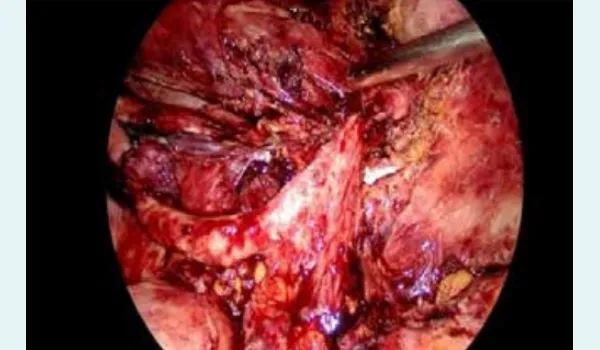
Figure 1A: Final picture after the appendix is anastomosed with the ureter as a tubular graft.
Case 2
A 47-year-old female presented with a history of open abdominal hysterectomy and left salpingo-oophorectomy for endometriosis , performed two years ago. She developed a right endometriotic cyst which engulfed the right ureter, forming a stricture and blockage of the right kidney. A computed tomography (CT) scan revealed right hydronephrosis with partial lower ureteric stricture of 6 cm in length. Right retrograde pyelography (RGP) confirmed 5 cm partial ureteric stricture on the lower ureter. A DJ stent was placed on the right side, and robotic ports were inserted. The right ovarian endometriotic cyst was found to be densely adherent to the ureter, which was dissected, and oophorectomy was performed. The right ureteric stricture segment was opened along its axis. Her appendix was opened longitudinally and converted into a vascularised pedicle. An appendiceal onlay flap was applied over the ureteric segment with a DJ stent in situ. The patient recovered well, and the stent was removed after 6 weeks (Figure 1B).
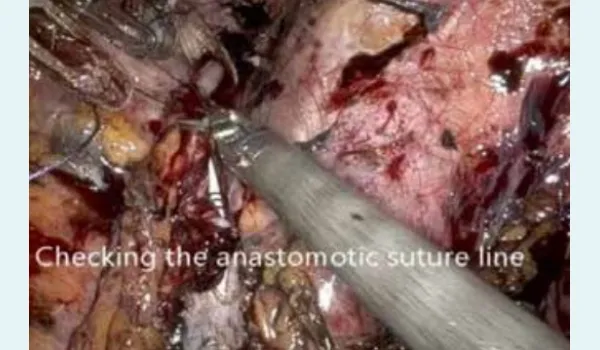
Figure 1B: Representation of an appendiceal onlay flap on the right ureter.
These two cases were pilot cases in which the appendix was used as a substitute, either as a tubular graft or an onlay flap. The appendix, although a vestigial organ, can be remarkably effective in ureteric reconstruction in complex cases.
Both cases resulted in good long-term surgical outcomes. At a follow-up of 24 to 30 months, neither patient showed any evidence of obstruction in the reconstructed ureter.
Discussion
Ureteral replacement is an important procedure for managing complex ureteral strictures in the field of ureteral reconstruction. Currently, autologous tissues can be used to repair ureteral strictures, including the intestines (ileum and colon), oral mucosa (lingual and buccal mucosa), and the appendix. Melnikoff first attempted to use the appendix to replace the ureter in 1912.2 For long proximal and middle ureteral strictures, the treatment options include downward nephropexy, renal autotransplantation, nephrectomy, and ureteral substitution. These interventions are rarely required for complex ureteral strictures and should be used only when the previously discussed repairs are not possible or are contraindicated.3 The alternative tissues that can be used for ureter reconstruction include the ileum, buccal or lingual mucosa grafts and the appendix.4
The concept of onlay grafts, initially developed for the management of urethral stricture disease, was first applied to ureteral reconstruction in 2009. Reggio et al. described laparoscopic appendiceal onlay flap ureteroplasty, which was successful with 8 months of follow-up.5 Yarlagadda et al. were the first to perform robotic-assisted laparoscopic appendiceal interposition for a 5 cm obliterative right ureteral stricture, and achieved a successful outcome.6 An appendiceal onlay flap is mainly suitable for the repair of right proximal and middle ureter strictures. Appendix interposition for left or right ureteral reconstruction in paediatric renal transplantation patients has been reported in several studies.7,8 The appendix interposition technique may be a viable solution for managing ureteral stricture in selected cases. However, fistula formation and anastomosis stenosis are the common complications that have been reported.9
The onlay graft concept was first used to treat urethral stricture disease in 1996.10 Appendiceal onlay ureteroplasty provides a solution for urologists to repair complex ureteral strictures. For 2-6 cm ureteral stenoses that are not suitable for direct anastomosis, especially in the proximal and middle ureters, an appendiceal onlay can be used as an alternative to an ileal ureter. To date, no cases of left ureteral stenosis repair using the appendiceal onlay have been reported, and this procedure warrants further exploration.
Robotic assistance offers several advantages such as a magnified view, three-dimensional (3D) visualisation, and better articulation, facilitating delicate suturing. Our study was limited by a small sample size and short follow-up period. We plan to continue monitoring these patients closely in subsequent followups and collect longer-term recovery data. Simultaneously, additional cases will be accumulated. We aim to summarise our comprehensive experience on robot-assisted laparoscopic and ureteral posterior wall reconstruction techniques in the future.
Conclusion
Appendiceal flap or interposition graft is a useful option for managing long-segment (3-6 cm) proximal and middle ureteral strictures on the right side. The outcomes at 24-months’ follow-up are satisfactory. A robotic or laparoscopic approach helps in achieving effective results of minimally invasive surgery.
Suresh Chandra Sahay, Pawan Kesarwani, Abhijeet Jha, Shashwat Singh, Shubhankar Powar. Vestigial to
Wonders: Appendicular Interposition in Complex Ureteric Strictures. MMJ. 2025, June. Vol 2 (2).
References
- Sahay SC, Kesarwani P, Sharma G, et al. Buccal mucosal graft ureteroplasty: The new normal in ureteric reconstructive surgery–Our initial experience with the laparoscopic and robotic approaches. J Minim Access Surg.2024;20(4):393-6.
- Duty BD, Kreshover JE, Richstone L, et al. Review of appendiceal onlay flap in the management of complex ureteric strictures in six patients. BJU Int. 2015;115:282-7.
- Knight RB, Hudak SJ, Morey AF. Strategies for open reconstruction of upper ureteral strictures. Urol Clin North Am. 2013;40:351-361.
- Agrawal V, Dassi V, Andankar MG. Buccal mucosal graft onlay repair for a ureteric ischemic injury following a pyeloplasty. Indian J Urol. 2010;26:120-122.
- Reggio E, Richstone L, Okeke Z, et al. Laparoscopic ureteroplasty using on-lay appendix graft. Urology. 2009;73:928.e7-10.
- Yarlagadda VK, Nix JW, Benson DG, et al. Feasibility of intracorporeal robotic-assisted laparoscopic appendiceal interposition for ureteral stricture disease: A case report. Urology. 2017;109:201-5.
- Corbetta JP, Weller S, Bortagaray JI, et al. Ureteral replacement with appendix in pediatric renal transplantation. Pediatr Transplant. 2012;16: 235-238.
- Martin S, Powell R, Ilyas M, et al. Use of appendix for renal transplant urinary diversion after complete transplant ureteral necrosis: a 12-year follow-up. Urology. 2015;85:674-675.
- Dagash H, Sen S, Chacko J, et al. The appendix as ureteral substitute: A report of 10 cases. J Pediatr Urol. 2008;4:14-19.
- Barbagli G, Selli C, Tosto A, et al. Dorsal free graft urethroplasty. J Urol. 1996;155:123-126.