 WhatsApp Us (24/7)
 +91 926 888 0303 (24/7)


Abstract:
Pregnancy associated with complete heart block (CHB) is an unusual scenario which has been managed in different ways—pacing vs non pacing, regional vs general anaesthesia, normal vs caesarean delivery—mostly with good maternal and neonatal outcome albeit lacking a structured approach.
A 34-year-old primigravida with CHB was posted for elective caesarean section. Her electrocardiogram (ECG) showed narrow QRS complexes, echocardiography showed lack of structural heart disease, while chronologic competence was proven on stress echocardiography before conception. During pregnancy she remained asymptomatic. On the day of surgery, intravenous atropine was administered pre-emptively before giving subarachnoid block while transcutaneous pacing pads were made available in the operating room. Intraoperatively, she remained stable a hemodynamically. Both baby and mother were doing well at 6 weeks follow-up.
Based on recent guidelines and a literature review, we adopted a minimalist approach with emphasis on appropriate counselling of the couple, strict monitoring of the patient, opting for an anaesthetic technique as per the obstetrical indication while avoiding undue invasive techniques. The emphasis was on evolving a structured approach which will be reproducible in similar cases.
Key words: Minimalist, Complete Heart Block, Temporary Pacemaker, Pacing.
Introduction
A pregnant patient with an asymptomatic complete heart block (CHB) presenting to the anaesthesiologist is rare. Such patients may present anytime—from the preconception period to labour. The sporadic case reports and case series on this topic have shown several different approaches.1
Based on evidence from guidelines, we propose that the perioperative multidisciplinary team can avoid invasive pacing if certain criteria— namely an asymptomatic patient, detailed preconceptional cardiology workup, evidence of chronologic competence, and a narrow QRS complex—along with availability of round-the-clock interventional cardiology backup are met.
Written patient consent for publication was obtained for this case report.
Case Report
A 34-year-old primigravida at 36 weeks, posted for elective caesarean section, revealed during her pre-anaesthetic checkup that she had a low pulse rate which she had known since her teenage years. She did not have any symptoms and had not undergone any evaluations until the preconception period, when she was evaluated by a cardiologist at our hospital and diagnosed with CHB. An echocardiogram showed no structural abnormalities, with a left ventricular ejection fraction of 55%. In the treadmill test, she achieved a heart rate (HR) of 153 beats per minute (bpm), which was 82% of her target heart rate, with no ventricular ectopic beats; the test was discontinued on account of patient fatigue (normal QTc and chronotropic competence demonstrated on treadmill stress test).
On the day of surgery, the anaesthetist noted her baseline electrocardiogram (ECG) showing narrow complex CHB (Figure 1), HR 48 bpm, and blood pressure (BP) 112/56 mmHg. After discussion with the cardiologist, it was decided to preemptively administer intravenous atropine 0.6 mg and proceed with a subarachnoid block for the caesarean section, with transcutaneous pacing pads available in the operating room.
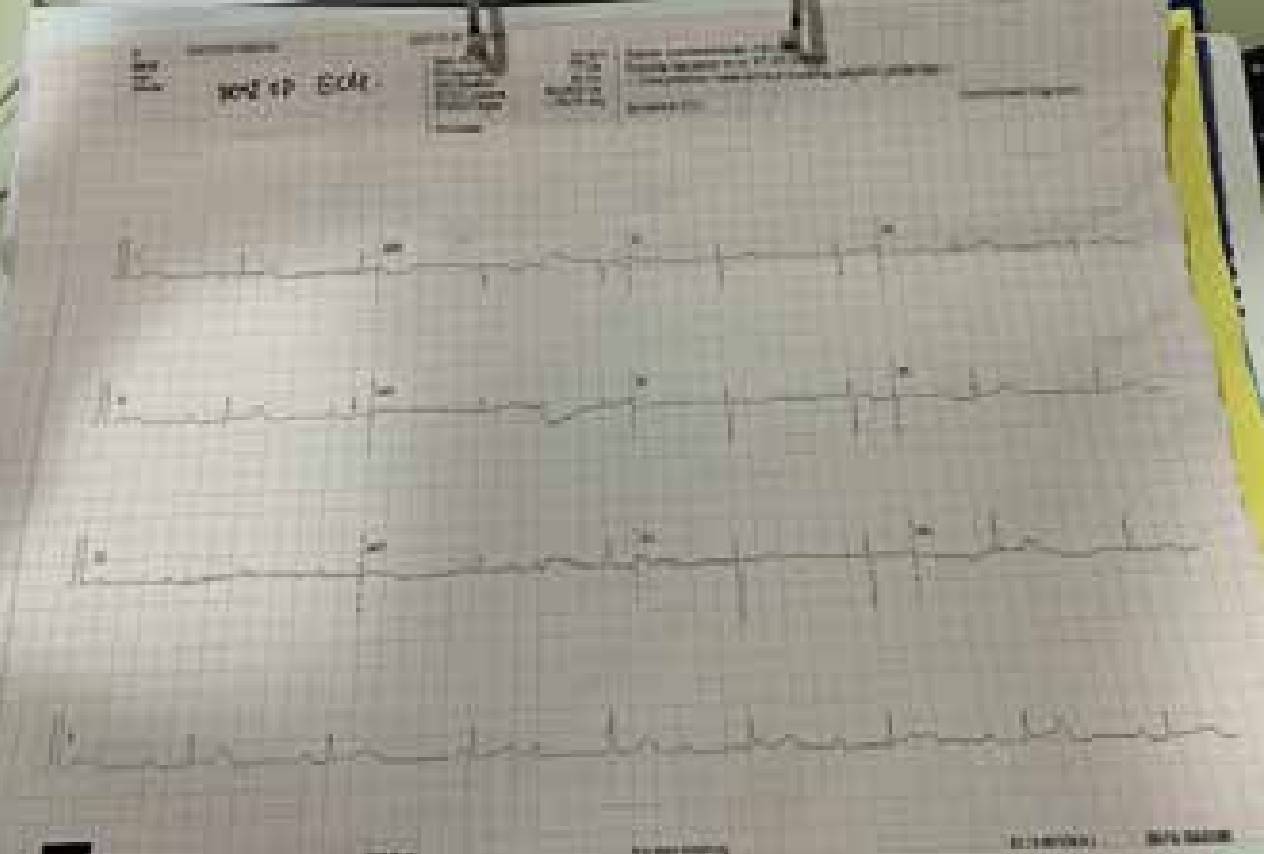
Figure 1: Preoperative electrocardiogram.
She was given a subarachnoid block with 8 mg 0.5% hyperbaric bupivacaine with 20 mcg fentanyl. Post-block, she showed no haemodynamic instability, with HR 64 bpm and BP 124/67 mmHg. By the end of the surgery, her HR was 49 bpm and BP 108/62 mmHg. She received 1200 mL of crystalloids intraoperatively with 700 mL of blood loss and 150 mL of urine output.
Her post-partum hospital stay was uneventful (Figure 2). She was advised to monitor her resting pulse rate at home using a pulse oximeter at regular intervals. On telephonic follow-up at six weeks, both mother and child were doing well.
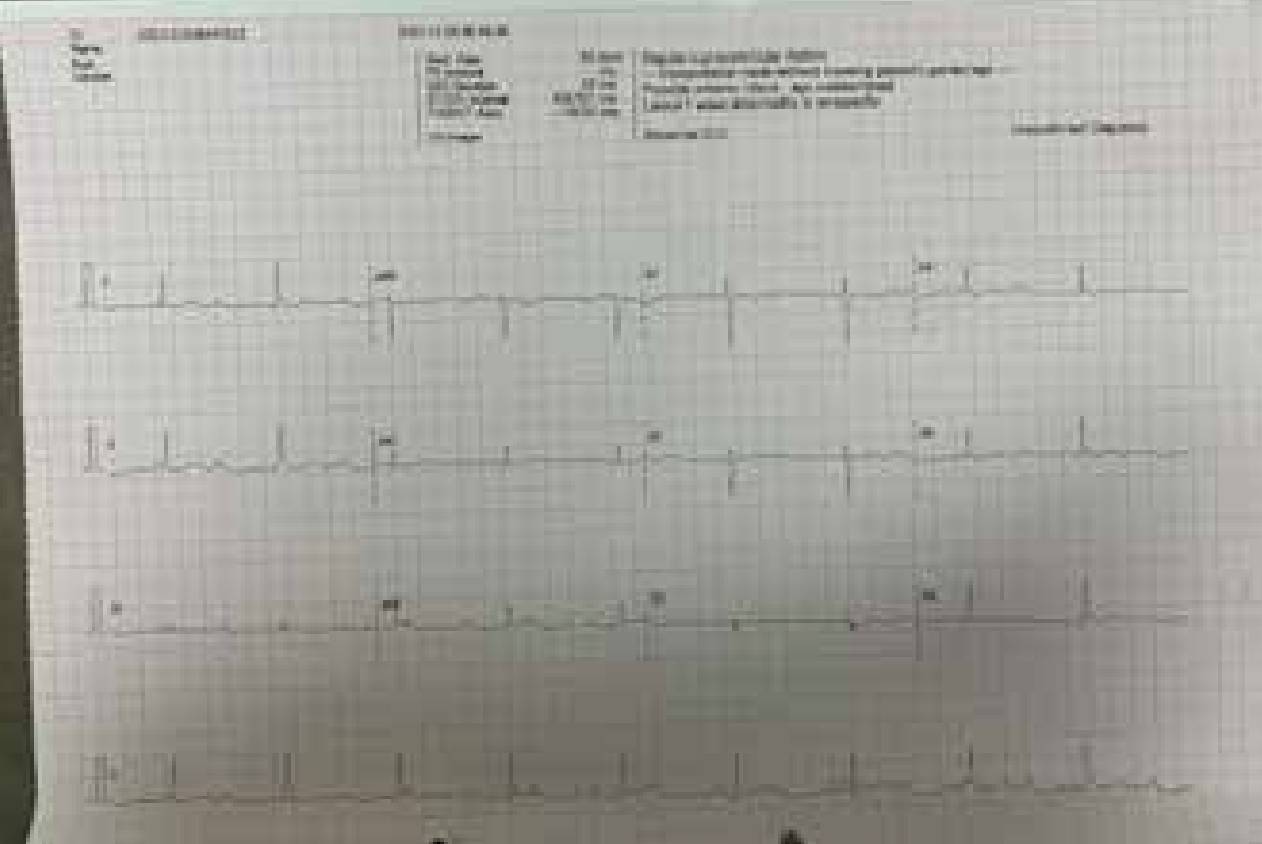
Figure 2: Postoperative electrocardiogram.
Discussion
Contemporary terminology defines atrioventricular block as congenital if it is diagnosed in utero or within the first month of life, while childhood atrioventricular block is diagnosed between 1 month and 18 years. Isolated CHB implies it is in the absence of structural heart disease.2
Permanent pacing is the rule for patients with CHB, but as with all rules, there are exceptions. The European Society of Cardiology (ESC) guidelines on cardiac pacing and cardiac resynchronisation therapy recommend prophylactic pacing in asymptomatic patients with any of the following risk factors: mean daytime heart rate <50 bpm, pauses greater than three times the cycle length of ventricular escape rhythm, a broad QRS escape rhythm, prolonged QT interval, complex ventricular ectopy, or if the patient is symptomatic.3
However, ESC guidelines on management of cardiovascular disease in pregnancy discourage temporary pacing in asymptomatic patients with CHB during delivery but support it for symptomatic patients; however, the evidence cited is limited to a single study.4
Previously, several case reports have described different approaches to pacing and anaesthesia type, with good maternal and neonatal outcomes.
Suri et al. reported four cases of CHB presenting during pregnancy, three of whom were nulliparous. Amongst them, two patients did not have any pacemaker inserted—one had structural heart disease that was corrected by surgery, while another presented during labour and did not have time. A third patient had a temporary pacemaker inserted prophylactically despite having previously given birth uneventfully. Two patients underwent caesarean section under general anaesthesia.1
The case series review by Hidaka et al.4 (2011) details how different management strategies compare. The authors tabulated a list of asymptomatic pregnancy cases with CHB from 1984-1997, in whom a temporary pacemaker was inserted; outcomes in such patients were good.5
In 1997, after implementing a new protocol at their institute, Hidaka et al.4 presented a case series where a temporary pacing lead was inserted before the induction of labour, but pacing was only initiated if the patient became symptomatic. All nine patients remained asymptomatic and had good outcomes, leading the authors to conclude that asymptomatic pregnant patients with CHB may be managed without pacing.5 Such an approach eliminates the risks associated with pacemaker insertion.
During pregnancy, the cardiac output (CO) increases due to an increase in both stroke volume (25%-30%) and HR (15%- 25%). Patients with CHB rely on a greater increase in stroke volume to increase CO; however, if they can increase their HR in response to exercise or pharmacologic agents, it provides them with a greater safety net.6
Despite Hidaka’s extensive case series in 2011 and the release of guidelines years later (2018), the approach to pregnant patients with isolated CHB remains uncertain and cautious.4,7,8 In contrast we propose a minimalist approach with clear principles:
- Availability of a comprehensive history from the patient (asymptomatic to date) followed by a thorough cardiological workup confirming the absence of structural heart disease
- Early assessment by the anaesthetist and regular follow-ups
- Demonstrated ability of patient to increase heart rate in response to exercise or certain drugs like atropine along with the persistence of narrow QRS complexes on ECG (suggesting that the block is not below the level of atrioventricular node)
- Choice of anaesthetic technique should be based on obstetric indications and patient requirements; pacing pads should be on standby
- Invasive procedures should only be undertaken in the event of haemodynamic instability
Sources of funding
Nil
Conflict of interest
The authors do not have any conflict of interest to declare.
Author contributions
Dr. Priyankar Sarkar and Dr. Saloni Paranjpe contributed equally to data acquisition, data analysis, and interpretation of data for this case report. Both have reviewed and revised the content and affirm the accuracy of this article.
Acknowledgements
We thank Dr. U. K. Valecha, Principal Director and Head of Department, Department of General Anaesthesia, BLK-Max hospital, and Dr. Neeraj Bhalla, Principal Director, Department of Cardiology, BLK-Max Hospital for their inputs during the case.
Conclusion
Provided the criteria for permanent pacemaker are not met, our minimalist approach to managing pregnant patients with a CHB is pragmatic. It is evidence-based, structured, integrates the expertise of various specialty teams during the perioperative period, and keeps patient safety at the core of its approach. Such cases are best managed in multispecialty hospitals with advanced cardiological setups.
Priyankar Sarkar, Saloni Vijay Paranjape. A Minimalist Approach to Managing a Patient with Complete Heart
Block for a Caesarean Section. MMJ. 2025, March. Vol 1 (5).
References
- Suri V, Keepanasseril A, Aggarwal N, et al. Maternal complete heart block in pregnancy: analysis of four cases and review of management. J Obstet Gynaecol Res. 2009;35(3):434-7.
- Brucato A, Jonzon A, Friedman D, et al. Proposal for a new definition of congenital complete atrioventricular block. Lupus. 2003;12(6):427-35.
- Glikson M, Nielsen JC, Kronborg MB, et al. 2021 ESC Guidelines on cardiac pacing and cardiac resynchronization therapy: Developed by the Task Force on cardiac pacing and cardiac resynchronization therapy of the European Society of Cardiology (ESC) With the special contribution of the European Heart Rhythm Association (EHRA). EP Europace. 2022;24(1):71-164.
- Regitz-Zagrosek V, Roos-Hesselink JW, et al. 2018 ESC guidelines for the management of cardiovascular diseases during pregnancy: the task force for the management of cardiovascular diseases during pregnancy of the European Society of Cardiology (ESC). Eur Heart J. 2018;39(34):3165-241.
- Hidaka N, Chiba Y, Fukushima K, et al. Pregnant women with complete atrioventricular block: perinatal risks and review of management. PACE. 2011;34(9):1161-76.
- Swain S, Routray S, Behera S, et al. Pregnancy with complete heart block. BMJ Case Rep. 2022;15(1):e244598.
- Adekanye O, Srinivas K, Collis RE. Bradyarrhythmias in pregnancy: a case report and review of management. International Journal of Obstetric Anesthesia. 2007;16(2):165- 70.
- Kumar AU, Sripriya R, Parthasarathy S, et al. Congenital complete heart block and spinal anaesthesia for caesarean section. Indian journal of anaesthesia. 2012;56(1):72-4.