 WhatsApp Us (24/7)
 +91 926 888 0303 (24/7)


Abstract:
In this report, we described a 55-year-old lady with a T-tube in situ, which had been used to achieve selective common bile duct cannulation and successfully complete the endoscopic retrograde cholangiopancreatography with common bile duct stone removal. We referred to this technique as ‘T-tube directed rendezvous endoscopic retrograde cholangiopancreatography.’
Key words: Cholangiopancreatography, Endoscopic Retrograde, Common Bile Duct Gall Stone, Cholecystectomy, Fluoroscopy.
Introduction
Endoscopic retrograde cholangiopancreatography (ERCP) and its advances have redefined the approach to pancreato-biliary diseases. Despite these advancements, ERCP remained a technically challenging procedure due to some of its associated adverse events.1 One of the most challenging aspects was the first step: selective biliary cannulation.1,2 The role of ERCP evolved from diagnostic to therapeutic, owing to improvements in imaging techniques such as endoscopic ultrasound and magnetic resonance cholangiopancreatography.
In this case report, a patient has been described in whom biliary access was achieved using T-tube access.
Case Report
A 55-year-old female presented with complaints of abdominal pain and was found to have gallstones and a common bile duct (CBD) stone on abdominal ultrasound. She underwent surgery at a center in Nepal, where a cholecystectomy was performed, and the CBD was explored. However, the CBD stone could not be removed, and a T-tube was placed in the bile duct.
For further management, the patient was brought to Department of Gastroenterology, Max Super Speciality Hospital, Lucknow, Uttar Pradesh. On attempting ERCP, the guidewire went in the pancreatic duct repeatedly; a pancreatic duct stent was placed to reduce the risk of post-ERCP pancreatitis. CBD could not be cannulated despite the access papillotomy. A 0.035-inch guidewire was passed through the T-tube (Figure 1) and passed across the papilla (Figure 2), it was grabbed and pulled using a snare and a sphincterotome was passed over it. Subsequently the procedure was completed with sphincterotomy, stone removal (Figure 3), with extraction balloon and stent passage in the bile duct, T-tube was removed. Patient developed mild pancreatitis, improved subsequently and later was discharged in a stable condition. She continues to do well on follow-up of six months.
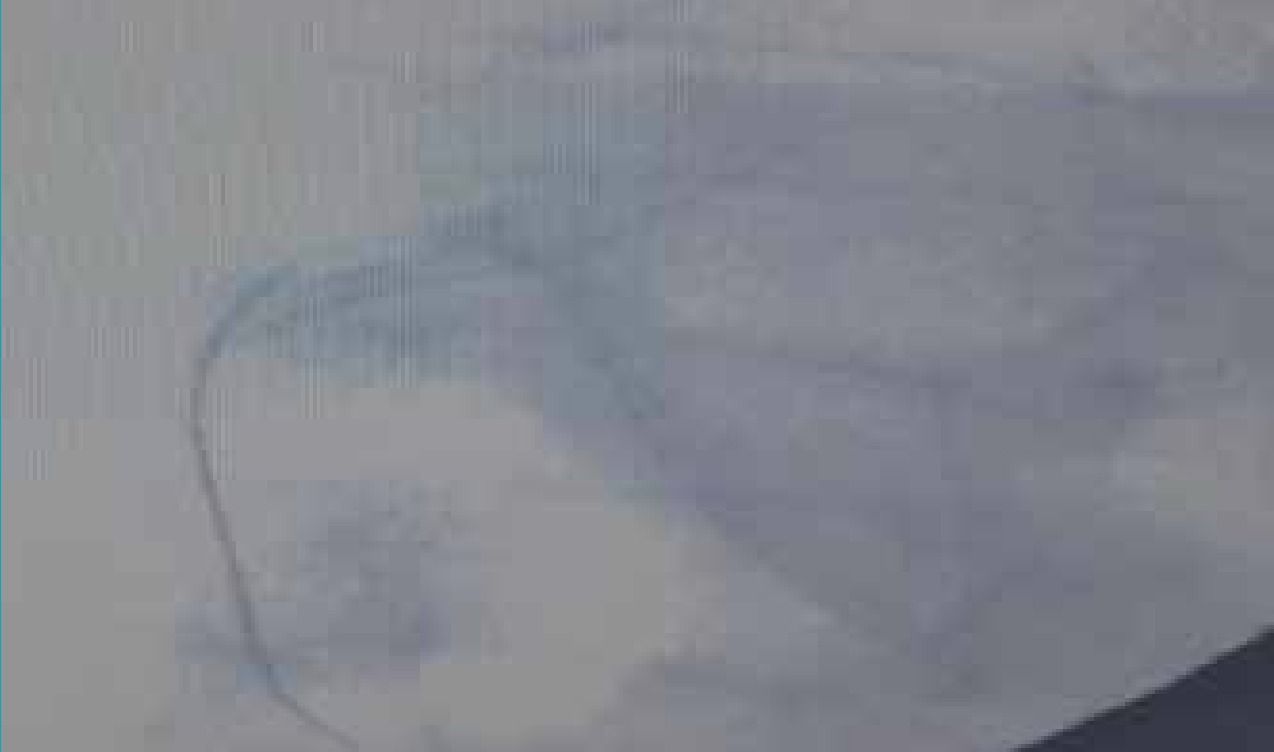
Figure 1: Fluoroscopy image of guidewire being passed through T-tube, in aboral direction.
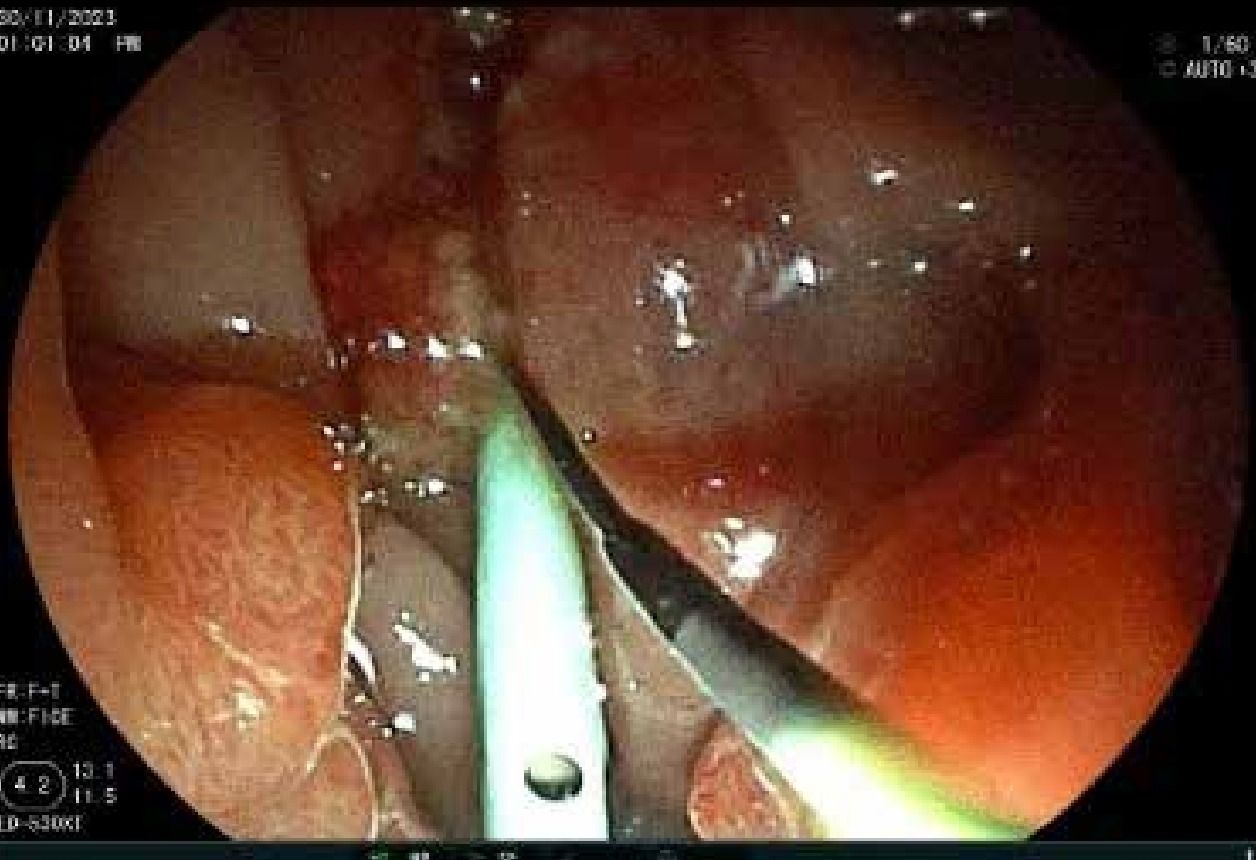
Figure 2: Guidewire seen at papilla, also seen in the endoscopic image is the pancreatic stent.
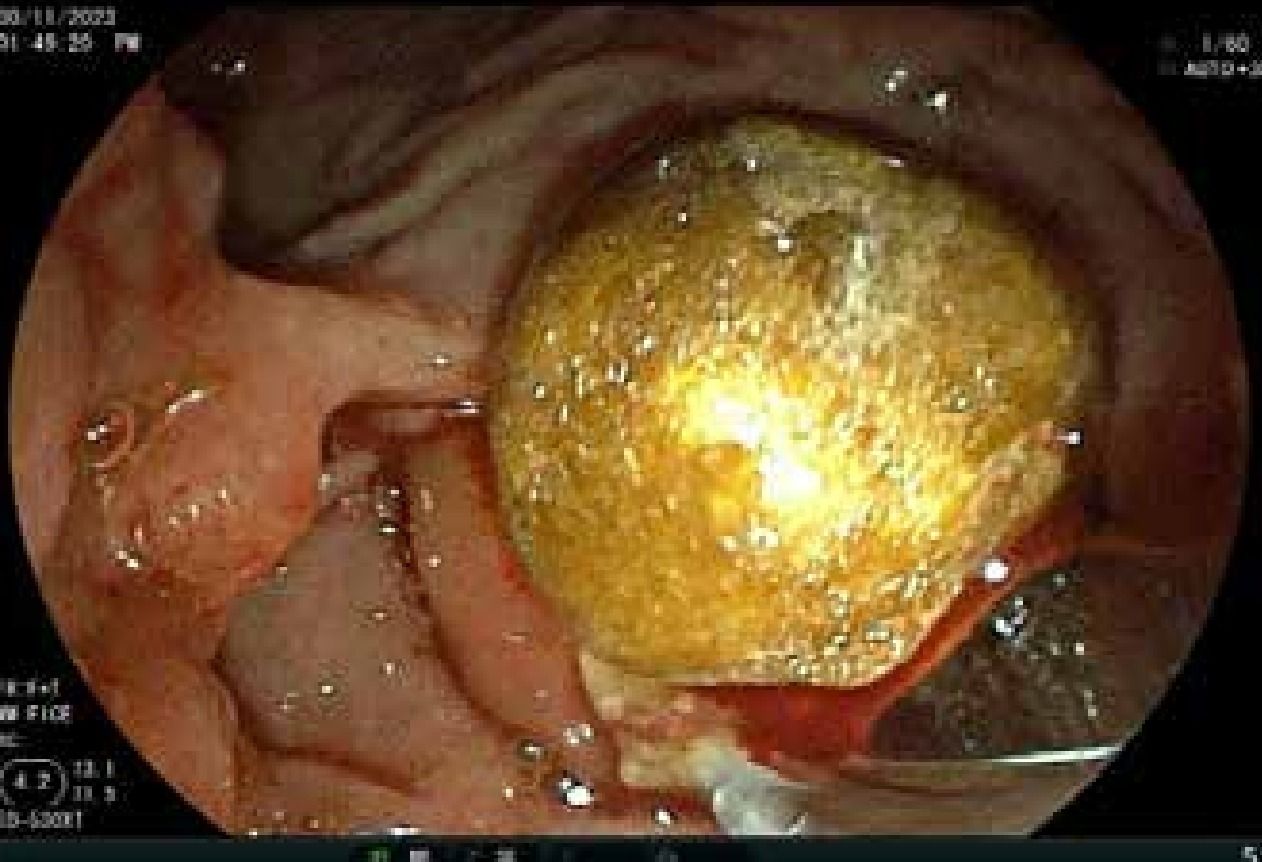
Figure 3: Common bile duct stone removed with balloon sweep.
Discussion
ERCP is highly effective in detecting and treating choledocholithiasis. However, there is a significant risk of short-term complications that must be considered when carrying out the procedure. Outside of the high-volume referral centres, failed biliary cannulation can occur in up to 10% of cases.
European Society of Gastrointestinal Endoscopy has defined difficult biliary cannulation as one of the following: more than five contacts with papilla when trying to cannulate, more than 5 minutes spent to cannulate after visualisation of papilla, or more than one inadvertent cannulation or opacification of pancreatic duct.3 Difficult biliary cannulation results in increased risk of post-ERCP pancreatitis. In instances of initial failure to achieve deep biliary access, alternative techniques may be employed. These include: access papillotomy, rendezvous technique or endoscopic ultrasound-based methods.4,5 Pavlides M. et al, in his study had suggested a role of repeat ERCP after a few days of failed initial precut sphincterotomy for biliary cannulation with success in 82% of such cases.
Rendezvous ERCP is a well-defined procedure with use of percutaneous transhepatic biliary drainage (PTBD), however we used T-tube as an access for the guidewire to complete the procedure. Hence, T-tube may be considered as additional, economical and less invasive option in patients who have undergone a surgery with T-tube placement.
Conclusion
Early diagnosis and treatment are essential for recovery for most gastrointestinal (GI) cases. The main goal of ERCP is to restore the natural flow of bile. ERCP minimal invasive detection and treatment of blockages and other complications of bile ducts, gall bladder, liver and pancreas. The high success rate of biliary cannulation on the second attempt during ERCP has shown positive results. But given the risk of adverse events that can occur, it should be carried out in centres with expertise in ERCP.
Ankur Gupta, Puneet Gupta, Chandan Mourya. Endoscopic Retrograde Cholangiopancreatography with T-Tube Directed Rendezvous Technique MMJ.
2025, March. Vol 1 (5).
References
- Ramirez FC, Dennert B, Sanowski RA. Success of repeat ERCP by the same endoscopist. Gastrointest Endosc. 1999;49(1):58- 61.
- Schlup MM, Williams SM, Barbezat GO. ERCP: a review of technical competency and workload in a small unit. Gastrointest Endosc. 1997;46(1):48-52.
- Testoni PA, Mariani A, Aabakken L, et al. Papillary cannulation and sphincterotomy techniques at ERCP: European Society of Gastrointestinal Endoscopy (ESGE) Clinical Guideline. Endoscopy. 2016;48(7):657-683.
- Chen Q, Jin P, Ji X, et al. Management of difficult or failed biliary access in initial ERCP: A review of current literature. Clin Res Hepatol Gastroenterol. 2019;43(4):365-372.
- Klair JS, Zafar Y, Ashat M, et al. Effectiveness and Safety of EUS Rendezvous After Failed Biliary Cannulation With ERCP: A Systematic Review and Proportion Meta-analysis. J Clin Gastroenterol. 2023;57(2):211-217.
- Pavlides M, Barnabas A, Fernandopulle N, et al. Repeat endoscopic retrograde cholangiopancreaticography after failed initial precut sphincterotomy for biliary cannulation. World J Gastroenterol. 2014;20(36):13153-8.