 WhatsApp Us (24/7)
 +91 926 888 0303 (24/7)


Abstract:
Metabolic dysfunction-associated steatotic liver disease (MASLD), which has replaced non-alcoholic fatty liver disease (NAFLD), is now the most prevalent chronic liver condition globally, driven by rising rates of obesity, type 2 diabetes, and metabolic dysfunction. This article reviews the diagnostic shift from NAFLD to MASLD, highlighting the inclusion of metabolic criteria and the associated risks of progression to fibrosis, cirrhosis, and hepatocellular carcinoma (HCC).
It discusses non-invasive diagnostic tools like liver stiffness measurement (LSM) and biomarkers, along with non-pharmacological therapies such as diet and exercise. Pharmacological treatments, including resmetirom and glucose-lowering drugs, are also explored. Additionally, the article addresses the management of endstage liver disease and liver transplantation in MASLD patients. This review emphasises addressing metabolic dysfunction in MASLD to prevent liver-related complications and improve outcomes.
Key words: Metabolic Dysfunction-Associated Steatotic Liver Disease (MASLD), Non-Alcoholic Fatty Liver Disease (NAFLD), Chronic Liver Diseases.
Introduction
India, the seventh-largest and second-most populous country globally, is facing a growing public health challenge in the form of fatty liver disease. This is largely driven by easy access to calorie-dense foods, sedentary lifestyles, and the rise of modern epidemics such as type 2 diabetes mellitus (T2DM) and obesity. As in other parts of the world, fatty liver disease is becoming increasingly prevalent in India.1
Metabolic dysfunction-associated steatotic liver disease (MASLD) is a newly adopted term set to replace non-alcoholic fatty liver disease (NAFLD). According to previous literature, NAFLD was diagnosed when hepatic steatosis affecting at least 5% of the liver was present, without other liver diseases, including significant alcohol use.2 However, MASLD refines this definition by requiring both hepatic steatosis and the presence of at least one of five cardiometabolic risk factors: impaired glucose regulation, type 2 diabetes, overweight or obesity, hypertension, or dyslipidemia.3
The rising prevalence of MASLD is largely attributed to the increase in sedentary behaviours, low physical activity levels, and excessive calorie consumption combined with poor nutrition. This trend parallels the high incidence of poor metabolic health in adults, particularly in affluent countries, even among individuals who maintain a normal weight.4
The shift from the term NAFLD to MASLD represents a change in diagnostic approach, moving from a diagnosis based on exclusion to one based on inclusion. MASLD focuses on identifying underlying metabolic dysfunctions, acknowledging that it can coexist with other health conditions, thus encouraging a more comprehensive approach to management.
MASLD is the most prevalent chronic liver disease, with its occurrence expected to increase further. MASLD is strongly associated with type 2 diabetes, obesity, and other cardiometabolic risk factors. It raises the risk of cardiovascular events, chronic kidney disease, hepatic and extrahepatic cancers, and adverse liver-related outcomes, including liver failure and hepatocellular carcinoma (HCC).
The term MASLD encompasses a range of conditions, including isolated liver steatosis, termed metabolic dysfunction-associated steatotic liver (MASL), as well as metabolic dysfunction-associated steatohepatitis (MASH), fibrosis, and cirrhosis. MASH is characterised by hepatocellular ballooning and lobular inflammation.
MASLD replaces the previous term NAFLD and forms part of the new consensus on steatotic liver disease (SLD). In addition to MASLD, SLD also includes MASLD with moderate alcohol intake (MetALD), alcohol-related liver disease (ALD), specific causes of SLD (such as drug-induced or monogenic diseases), and cryptogenic SLD.5
Diagnosis
In 2023, an international panel of experts initiated a consensus-driven process to establish a more appropriate term for NAFLD. Through a modified Delphi consensus, the term MASLD was recommended.3
Along with the name change, the panel proposed a set of straightforward, positive criteria to diagnose and assess individuals for MASLD. These diagnostic criteria emphasise the role of systemic metabolic dysregulation as a key factor driving liver steatosis and the progression of the disease.3.
An analysis of a large tertiary care NAFLD cohort and data from the population-based National Health and Nutrition Examination Survey (NHANES III) revealed an almost complete overlap between the NAFLD and MASLD populations. Longterm follow-up data indicated similar mortality rates, with slightly higher mortality observed in the MASLD group compared to NAFLD. As a result, the existing evidence on NAFLD can be effectively applied to the MASLD population.6
The diagnostic criteria for MASLD maintain the same standard for hepatic steatosis (Figure 1), which can be identified through imaging or biopsy, but emphasise the presence of cardiometabolic factors as a prerequisite for diagnosis. Along with hepatic steatosis, a patient must meet at least one of the following five cardiometabolic criteria for adults:
- Body mass index (BMI):
- BMI >25 kg/m² (or >23 kg/m² in Asians)
- OR waist circumference >94 cm for males and >80 cm for females (or adjusted ethnically)
- Glucose levels/T2DM:
- Fasting serum glucose ≥5.6 mmol/L (100 mg/dL)
- OR 2-hour post-load glucose levels ≥7.8 mmol/L (140 mg/dL)
- OR HbA1c ≥ 5.7
- OR a diagnosed case of T2DM
- OR ongoing treatment for T2DM
- Blood pressure:
- Blood pressure ≥130/85 mmHg
- OR specific antihypertensive drug treatment
- Plasma triglycerides:
- Plasma triglycerides ≥1.70 mmol/L (150 mg/dL)
- OR ongoing lipid-lowering treatment
- Plasma high-density lipoprotein (HDL)-cholesterol:
- Plasma HDL-cholesterol ≤1.0 mmol/L (40 mg/dL) in males
- OR ≤1.3 mmol/L (50 mg/dL) in females
- OR ongoing lipid-lowering treatment
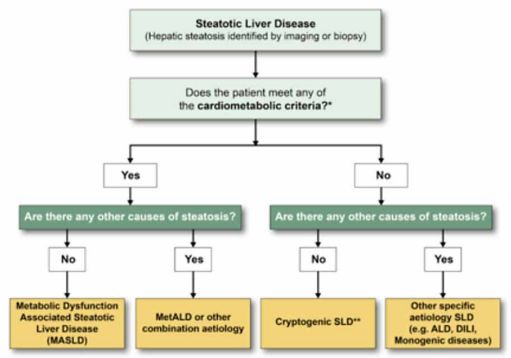
Figure 1: A simplified diagnostic approach to steatotic liver disease (SLD).
The introduction of a separate subcategory, MetALD, recognises the coexistence of metabolic and alcohol-related risk factors (Figure 2). This classification lies outside the scope of NAFLD, presenting an opportunity to develop new insights for this dualaetiology group of patients.
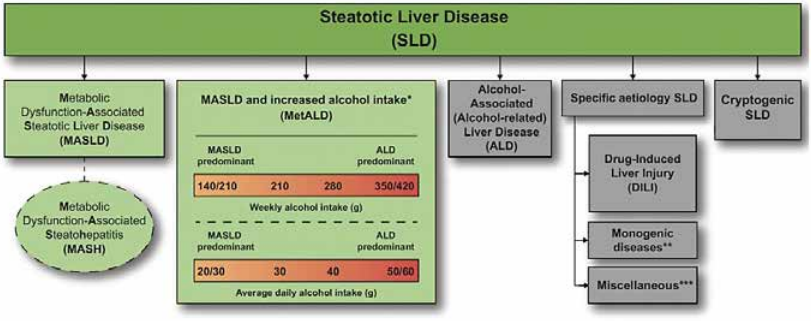
Figure 2: Spectrum of steatotic liver disease (SLD).
The incidental finding of hepatic steatosis should trigger an assessment of the potential aetiology of SLD, as well as tests for advanced fibrosis, as this could influence the risk of liver-related and/or cardiovascular outcomes and inform appropriate care.
MASLD, ALD, and MetALD are the primary causes of SLD. However, other causes such as drug-induced liver disease (DILI), monogenic diseases, and miscellaneous factors should also be considered depending on the clinical context.
Risk factors and comorbidities impacting liver injury in MASLD
- T2DM and obesity, particularly abdominal obesity, are the metabolic diseases that exert the most significant influence on the natural progression of MASLD. This includes the potential progression to advanced fibrosis, cirrhosis, and HCC.
- Men over the age of 50, postmenopausal women, and individuals with multiple cardiometabolic risk factors are at heightened risk for progressive fibrosis and the development of cirrhosis and its associated complications (Level of Evidence 2 [LOE], strong consensus).
- Alcohol consumption: There is accumulating evidence that both alcohol consumption and metabolic risk factors independently influence the onset and progression of chronic liver disease, and their effects can be synergistic. The assumed health benefits of moderate alcohol consumption are inconsistent across studies, and emerging evidence does not support a protective effect of light to moderate alcohol intake, especially in individuals with cardiometabolic risk factors. It is strongly recommended to document the amount, pattern, and history of alcohol consumption in all individuals with SLD. Individuals with SLD, particularly those with moderate to high alcohol intake, should be strongly discouraged from consuming alcohol. All alcohol consumption should be completely and permanently forbidden in individuals with advanced fibrosis or cirrhosis.
When to look for MASLD with liver fibrosis?
Providers are encouraged to screen for MASLD with liver fibrosis in individuals who meet one of the following criteria: (1) those with T2DM; (2) those with abdominal obesity and at least one additional metabolic risk factor; or (3) individuals with abnormal liver function tests.
Early identification of fibrosis and appropriate management may help prevent the progression and its complications, thereby justifying screening for these at-risk populations.
Modalities for detecting MASLD with/without liver fibrosis
Non-invasive scores that combine blood tests or integrate blood tests with imaging methods assessing mechanical properties and/or hepatic fat content should be utilised for fibrosis detection, as their diagnostic accuracy surpasses that of standard liver enzyme tests (aspartate aminotransferase [AST], and alanine aminotransferase [ALT]).
A multi-step approach is recommended for adults with MASLD: initially, a blood-based score, such as the fibrosis-4 index (FIB-4), should be employed. If fibrosis is still suspected or the individual is in a high-risk group, established imaging techniques, such as liver elastography, should be used as a follow-up (Figure 3).
There is good evidence that specific tests for collagen-related blood constituents (e.g., enhanced liver fibrosis [ELF]) may serve as alternatives to imaging for identifying advanced liver fibrosis, but they are seldom available.7
Clinical care pathways based on the sequential application of non-invasive scores and imaging tests can be utilised for adults with MASLD or those at risk, as most individuals with MASLD are typically seen in non-hepatology settings.
None of these non-invasive methods can evaluate significant microscopic features of MASLD, such as ballooning or lobular inflammation, as blood-based scores are useful in excluding fibrosis rather than diagnosing it (with high negative predictive values and low positive predictive values.3
Blood biomarker-derived scores (such as FIB-4 and ELF) and elastography (using vibration-controlled transient elastography [VCTE] or magnetic resonance elastography [MRE]) should be used for risk stratification for clinical outcomes (Figure 3), however, definitive diagnosis still requires a liver biopsy.7 In most cases, liver biopsy is not necessary for the clinical management of individuals with MASLD; however, it remains essential for the definitive diagnosis of steatohepatitis and for ruling out other causes of liver disease.
Non-invasive blood-based biomarkers and liver stiffness measurements are effective for reliably detecting advanced fibrosis (but not early fibrosis), with positive and negative predictive values highly dependent on the chosen cut-off values and the prevalence of different fibrosis stages in the studied population.
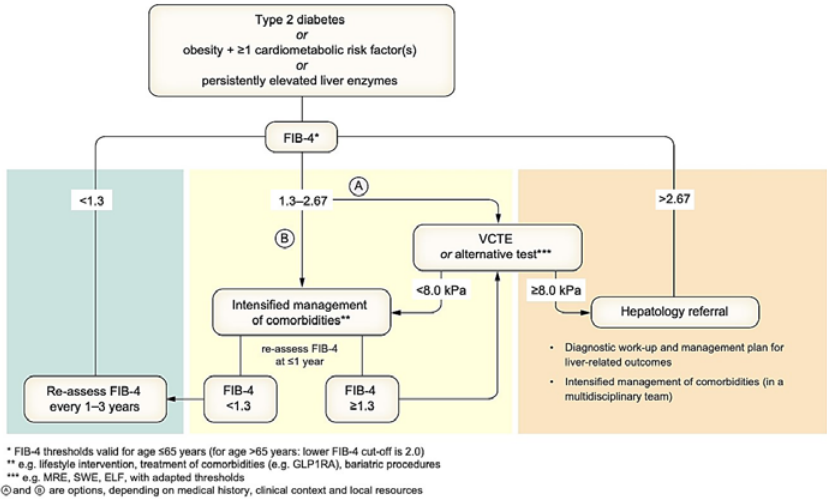
Figure 3: Algorithm for non-invasive assessment of the risk for advanced fibrosis and liver-related outcomes.
Abbreviations ELF: enhanced liver fibrosis; FIB-4: fibrosis-4 index; MRE: magnetic resonance elastography; VCTE: vibrationcontrolled transient elastography; SWE: shear wave elastography.
Screening for concomitant comorbidities in patients with MASLD
- There is strong evidence for evaluating associated comorbidities (such as T2DM, dyslipidaemia, hypertension, kidney disease, sleep apnoea, and polycystic ovary syndrome) along with cardiovascular risk in adults with MASLD.
- At the initial diagnosis of MASLD and during regular followup visits, laboratory tests and physical examinations for related comorbidities should be conducted.
- Adults with MASLD should be encouraged to undergo screening for extrahepatic cancers as per the prevailing guidelines, given their increased risk due to obesity and T2DM.
- For adults with non-cirrhotic MASLD or MASH, in the absence of severe fibrosis (i.e., those with fibrosis stage.
- In adults with non-cirrhotic MASLD or MASH who have severe fibrosis (F3) assessed by non-invasive markers or liver biopsy, surveillance may be considered based on an individual risk assessment.
Management of MASLD: Primary Considerations
- Therapeutic targets: In adults with MASLD, the most relevant therapeutic goals include regression of fibrosis, resolution of steatohepatitis, and reduction of steatosis to improve liver-related outcomes. Regression of fibrosis is associated with lower risks of liver-related complications, while improvements in disease activity also support fibrosis regression. However, long-term studies are needed to confirm whether these changes lead to reduced mortality
- Monitoring with non-invasive tests: Non-invasive tests are linked to treatment responses, though their effectiveness may vary based on the intervention type and patient factors. In clinical settings, liver biopsy is considered too invasive for routine monitoring. Non-invasive methods can be repeatedly used to track fibrosis progression but may offer limited insights into treatment responses.
- Multidisciplinary approach: Managing liver disease and related comorbidities through a multidisciplinary team, including hepatologists and other specialists, is recommended to address the complex interactions between MASLD and cardiometabolic conditions, ultimately improving both liver and extrahepatic outcomes.
Management of MASLD: Non-Pharmacological Therapy
- Weight loss: Dietary and behavioural therapy-induced weight loss is recommended for adults with MASLD to improve liver injury. For overweight individuals, weight loss goals should include a reduction of ≥5% to decrease liver fat, 7-10% to improve liver inflammation, and ≥10% to improve fibrosis. Long-term studies are needed to confirm the effects of weight loss on liver-related outcomes.
- Diet quality: Improving diet quality by adopting a Mediterranean dietary pattern, limiting ultra-processed foods, and avoiding sugary beverages is recommended.
- Physical activity: Regular physical activity and exercise are recommended to reduce steatosis, with a suggested target of >150 minutes/week of moderate or 75 minutes/week of vigorous-intensity activity. While beneficial for cardiometabolic health, evidence for physical activity's direct impact on liver histology and clinical outcomes is less established.
- Normal-weight adults: Diet and exercise interventions should still be recommended for normal-weight adults with MASLD to help reduce liver fat. However, there is currently no evidence showing that these interventions benefit liver histology or clinical outcomes in this group.
- Nutraceuticals: Nutraceuticals (including food supplements and herbal products) are not recommended due to insufficient evidence of their effectiveness and safety in reducing liver damage or fibrosis.
- Coffee: Coffee consumption may be associated with improved liver outcomes, according to observational studies.
Management of MASLD: Pharmacotherapy (Figure 4)
- MASH-targeted therapies:
- Resmetirom: Resmetirom is recommended for adults with non-cirrhotic MASH who have significant liver fibrosis (stage ≥2). This recommendation is based on its demonstrated histological efficacy in reducing steatohepatitis and fibrosis in a large Phase III registrational trial, which also reported an acceptable safety and tolerability profile. Additionally, resmetirom may be considered for individuals with advanced fibrosis, at-risk steatohepatitis with significant fibrosis (verified by liver biopsy or validated non-invasive panels), or those at risk of adverse liver-related outcomes (e.g., assessed through elastography or biomarker thresholds).
- Vitamin E: Vitamin E cannot be recommended as a MASHtargeted therapy. While it has been previously used, there is a lack of robust evidence from large Phase III trials demonstrating its effectiveness in improving histological outcomes related to steatohepatitis and liver fibrosis. Moreover, concerns regarding potential long-term risks further hinder its recommendation.
- Glucose-lowering drugs:
- GLP-1 receptor agonists (GLP1RAs): Currently, GLP1RAs cannot be recommended as targeted therapies for MASH, as there is no formal demonstration of histological improvement from well-conducted Phase III trials. However, these agents are safe for use in MASH, including in individuals with compensated cirrhosis, and are beneficial for managing T2DM and obesity, thus improving cardiometabolic outcomes. It is noted that while substantial weight loss from GLP1RAs could lead to hepatic histological benefits, this has not been extensively documented.
- Pioglitazone: Pioglitazone is deemed safe for adults with non-cirrhotic MASH; however, it cannot be recommended as a targeted therapy due to the lack of substantial evidence from large clinical trials showing histological efficacy on steatohepatitis and liver fibrosis.
- Sodium-glucose cotransporter-2 (SGLT2) inhibitors and metformin: These medications currently lack sufficient evidence to support their use as targeted therapies for MASH. Nevertheless, both SGLT2 inhibitors and metformin are safe for use in MASLD and should be prescribed for their respective indications.
- Weight-loss agents: Non-incretin-based weight-loss agents are not recommended as therapies for MASH.
- Dual peroxisome proliferator-activated receptor (PPAR) agonism: Saroglitazar is approved by the Drugs Controller General of India (DCGI) for MASH and MASLD for use in patients with NAFLD accompanied by co-morbidities like obesity, T2DM, dyslipidaemia, or metabolic syndrome.
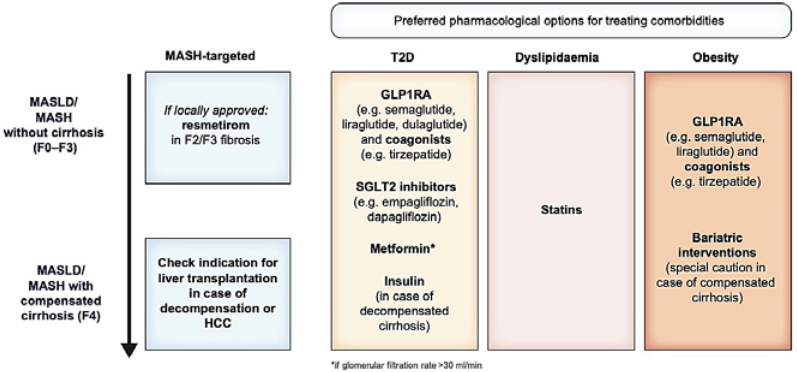
Figure 4: Pharmacological treatment.
Abbreviations: GLP1RA: glucagon-like peptide-1 receptor agonist; HCC: hepatocellular carcinoma; MASH; metabolic dysfunctionassociated steatohepatitis; MASLD: metabolic dysfunction-associated steatotic liver disease; SGLT2i: sodium-glucose cotransporter-2 inhibitors; T2D: type 2 diabetes.
Surgical and Endoscopic Therapy for MASLD
Bariatric Surgery:
- Non-cirrhotic MASLD: Recommended for adults with MASLD and obesity if they meet approved indications. It can induce long-term benefits for liver health and contribute to the remission of T2DM and improvements in cardiometabolic risk.
- Compensated advanced chronic liver disease/ cirrhosis: May be considered in patients with MASLDrelated compensated cirrhosis, but requires a thorough evaluation by a multidisciplinary team, especially concerning portal hypertension and surgery type (LOE 4, weak recommendation).
Endoscopic procedures: Currently, metabolic/bariatric endoscopic procedures are not recommended as a treatment for MASH.
End-Stage Liver Disease and Liver Transplantation in MASLD
- Dietary and lifestyle adjustments in mash-related cirrhosis:
- Adaptations: Diet and lifestyle should be tailored to the severity of liver disease, nutritional status, and presence of sarcopenia or sarcopenic obesity.
- High-protein diet: Recommended for adults with sarcopenia, sarcopenic obesity, or decompensated cirrhosis, along with a late-evening snack to improve nutritional status.
- Moderate weight reduction: Suggested for compensated cirrhosis and obesity, with a focus on protein intake and physical activity to reduce sarcopenia risk.
- Nutritional interventions: Typically involve a caloric intake of at least 35 kcal/kg/day and protein intake of 1.2-1.5 g/kg/day.
- Pharmacologic interventions in MASH-related cirrhosis: Metformin: Can be used in patients with compensated cirrhosis and preserved renal function, though it should be avoided in those with severe liver disease.
- Liver stiffness measurement (LSM) and portal hypertension in MASLD:
- LSM and platelet count for clinically significant portal hypertension (CSPH): LSM ≤15 kPa along with a platelet count ≥150×109/L can be used to rule out CSPH in adults with MASLD.
- Management of CSPH: If CSPH is confirmed, nonselective beta-blockers may be prescribed unless contraindicated.
- Screening for varices: For adults with compensated advanced chronic liver disease, upper gastrointestinal endoscopy is recommended to check for varices if LSM is ≥20 kPa and/or platelet count <150×109/L.
- Threshold for ruling in CSPH: LSM ≥25 kPa can be used to confirm CSPH in non-obese adults (BMI <30 kg/m²), but the evidence is insufficient to establish an optimal non-invasive test for CSPH in obese MASLD patients.
- Liver transplantation:
- Risk of recurrence: Adults transplanted for MASLDrelated end-stage liver disease are at high risk of MASLD recurrence post-transplant, especially if they have multiple metabolic risk factors
- Comorbidities: Cardiovascular events and kidney disease are common after transplantation and can negatively impact long-term survival.
- Weight control and comorbidity management: Effective control of weight (reducing BMI <40 kg/m2 and ideally <35 kg/m2) and cardiometabolic factors is recommended to reduce the recurrence of MASLD and improve long-term outcomes, though further studies are needed to confirm the benefits.
- Post-transplantation interventions: Standard nonpharmacological interventions for diet and lifestyle should be applied, alongside pharmacological management of conditions like hypertension, diabetes, and dyslipidaemia.
Meghna Arora, Meenakshi Jain, Amrit Singh Matharu, Mayank Anand, Sunil Goel. The Rise of Metabolic
Dysfunction-Associated Steatotic Liver Disease: Diagnosis, Management, and Therapeutic Approaches.
MMJ. 2025, March. Vol 1 (5).
References
- Sinha A, Bankura B. Prevalence of nonalcoholic fatty liver disease in type 2 diabetes mellitus patients from the Eastern region of India. Diabet Epidemiol Manag. 2023;12:100161.
- Hagström H, Vessby J, Ekstedt M, et al. 99% of patients with NAFLD meet MASLD criteria and natural history is therefore identical. J Hepatol. 2024;80(2):e76-e77.
- Rinella ME, Lazarus JV, Ratziu V, et al. A multisociety Delphi consensus statement on new fatty liver disease nomenclature. Ann Hepatol. 20241;29(1):101133.
- Tacke F, Horn P, Wong VWS, et al. EASL–EASD–EASO Clinical Practice Guidelines on the management of metabolic dysfunction-associated steatotic liver disease (MASLD): Executive Summary. Diabetologia. 2024;67(11):2375-2392. Erratum in: Diabetologia. 2024;67(11):2608.
- Younossi ZM, Paik JM, Stepanova M, et al. Clinical profiles and mortality rates are similar for metabolic dysfunction-associated steatotic liver disease and non-alcoholic fatty liver disease. J Hepatol. 2024;80(5):694-701.
- Mosaad A, Elalfy H, Amer T, et al. Transient Elastography and its Correlation with Biochemical Scores in patients with Metabolic associated fatty liver disease. Med J Viral Hepat. 2022;6.3(3):22-8.