 WhatsApp Us (24/7)
 +91 926 888 0303 (24/7)


Abstract:
Respiratory syncytial virus (RSV) is the leading cause of lower respiratory tract infections (LRTIs) such as bronchiolitis and pneumonia in infants and young children worldwide, with the highest burden occurring during the first six months of life. Infants are particularly susceptible because of their narrow airways, immature immune responses, developing lungs, and decline in maternally derived antibodies, resulting in a high risk of severe bronchiolitis, hypoxia, respiratory failure, hospitalisation, and mortality. India contributes substantially to the global RSV burden, with a significant proportion of RSV-related deaths occurring in community settings before timely access to healthcare. In addition to acute illness, severe RSV infection in infancy is associated with long-term respiratory sequelae, including recurrent wheezing, asthma, and impaired pulmonary function. As effective antiviral therapies remain limited, prevention has become the cornerstone of RSV control. Recent advances in RSV prevention, including long-acting monoclonal antibodies and maternal immunisation, have transformed the preventive landscape. Nirsevimab, a long-acting monoclonal antibody targeting the prefusion F protein of RSV, provides rapid and sustained protection with a single intramuscular dose and has demonstrated substantial reductions in medically attended RSV-LRTIs and RSV-related hospitalisations in both clinical trials and real-world studies. International health organisations and national paediatric bodies now recognise RSV prevention as a major public health priority. These advances represent a paradigm shift in infant RSV prevention with the potential to significantly reduce RSV-associated morbidity, hospitalisation, mortality, and long-term respiratory complications, particularly in high-burden settings such as India.
Key words: Respiratory Syncytial Virus (RSV), Bronchiolitis, Infant Pneumonia, Nirsevimab, Maternal Immunisation, Monoclonal Antibody, RSV Prevention, Infant Respiratory Infection.
Introduction
Respiratory syncytial virus (RSV) is the leading cause of lower respiratory tract infection (LRTI), bronchiolitis, and pneumonia in infants and young children globally.1,2 Despite decades of recognition, RSV continues to impose a substantial and often underestimated burden of disease, particularly during the first year of life, when infants are biologically most vulnerable.2,3 The absence of effective antiviral therapy and the early age at which severe disease occurs make prevention the cornerstone of RSV control. 3,4 The advent of maternal vaccines and long-acting monoclonal antibodies against RSV marks a turning point in RSV prevention.4,5
Why Does RSV Cause Disproportionately Severe Disease in Infants?
Infants are uniquely susceptible to RSV due to anatomical, physiological, and immunological immaturity. 3,6,7 Infant bronchioles are narrow, and even minimal mucosal oedema can critically impair airflow. A reduction in bronchiolar diameter from 4 mm to 2 mm due to circumferential oedema results in an approximately 75% reduction in airway cross-sectional area in infants, compared with nearly 43% in adults.3,6 This explains the rapid progression from mild upper respiratory symptoms to severe bronchiolitis, hypoxia, and respiratory failure.3,6
In parallel, infants have immature innate and adaptive immune responses, developing lungs, and declining transplacentally acquired maternal antibodies. 5 Very preterm neonates have a further disadvantage as they have immature lungs, altered airway mechanics, and lower levels of maternal antibodies.
RSV bronchiolitis is most common between 30–90 days of age, and chronological age is the single strongest predictor of severe disease.2 Approximately 65%–70% of RSV-related hospitalisations and nearly 50% of RSV-associated deaths occur within the first five months of life.4,5
Mortality and Disease Burden: Global and Indian Perspective
Globally, RSV is recognised as the leading respiratory infectious cause of death in infants.1,2 Mortality in children under one year accounts for more than 70% of all RSVrelated deaths among children under five years of age, highlighting the extreme vulnerability of early infancy.4,5 Importantly, most RSV-related deaths occur in the community, before infants can access timely medical care.7 In infancy, mortality attributable to RSV is approximately equivalent to the combined mortality from rotavirus and Streptococcus pneumoniae.
India carries a disproportionately high share of the global RSV burden. 2,4 Large prospective surveillance studies from the Indian subcontinent demonstrate that RSV is a major contributor to community-acquired serious infections in young infants.2 Approximately 93% of RSVrelated deaths in India occur in community settings, with reported case fatality rates of 7%–9% in infants under six months of age, compared with approximately 3% among hospitalised infants.4 Indian clinical studies further confirm that previously healthy, full-term infants constitute a substantial proportion of severe RSV cases, with many requiring respiratory support, mechanical ventilation, and prolonged hospitalisation.4 Under-reporting is common, so the true burden may be higher than documented.4
RSV Transmissibility and Inevitable Exposure
RSV is among the most contagious respiratory viruses, with a mean basic reproduction number (R₀) of approximately 4.5, exceeding that of influenza and Coronavirus disease 2019 (COVID-19). 4 As a result, nearly 70% of infants are infected within the first year of life, irrespective of socioeconomic or geographic background.3,4 RSV therefore represents an almost inevitable early-life exposure, with the greatest risk of severe disease concentrated in the first few months of life.
Clinically, RSV accounts for:
- Up to 4 in 5 cases of infant bronchiolitis3,6
- Approximately 1 in 3 cases of infant pneumonia2,6
- Bacterial coinfection in 26%–43% of cases, amplifying disease severity, antibiotic exposure, and healthcare utilisation3,4
Long-Term Sequelae: Beyond Acute Infection
The impact of RSV extends well beyond the acute episode. Severe RSV infection in infancy is associated with:
- Recurrent wheezing in approximately 40% of affected children8
- Up to an eight-fold increased risk of asthma later in childhood9
- Evidence of long-term pulmonary impairment and adverse neurodevelopmental outcomes following severe RSV requiring intensive care8
These sequelae underline that RSV not only drives the acute hospital burden but may also alter long-term respiratory health trajectories.8,9
Treatment Limitations
Management remains supportive, including oxygen therapy, hydration, and ventilatory support when required. There is no routinely recommended antiviral therapy for RSV in infants. Aerosolised ribavirin approved for use in severely immunocompromised infants remains controversial and is not routinely used due to cost, delivery challenges, high toxicity, and teratogenicity.3,4 A newer antiviral, ziresovir, which is still under investigation, has shown promise in reducing viral loads in hospitalised children.
Preventive Strategies Against RSV
Given the early age at which severe RSV disease occurs, its high transmissibility, the predominance of community-based mortality, and the lack of durable immunity following natural infection, prevention remains the most effective strategy for reducing RSV-associated morbidity and mortality.
Palivizumab: Passive immunisation for high-risk infants
Palivizumab is a short-acting monoclonal antibody requiring monthly injections during the RSV season and is indicated for a limited subset of high-risk infants such as those with extreme prematurity, chronic lung disease (CLD), and congenital heart disease (CHD). Its impact has been limited by repeated dosing requirements, cost, and restricted eligibility.
India’s ill-defined RSV seasonality, typical of many tropical countries, further limits the practicality of seasonal, multidose preventive strategies and supports the need for simpler, longer-acting approaches.4
Nirsevimab: A new paradigm in RSV prevention
Nirsevimab is a fully human, long-acting immunoglobulin G1 (IgG1) monoclonal antibody targeting the prefusion F protein of RSV. It is a passive immunoprophylactic agent designed to provide immediate and sustained protection during the period of greatest vulnerability.
Key attributes
- Extended half-life through fragment crystallisable (Fc) region modification
- Onset of protection within 24–48 hours
- Single intramuscular dose providing season-long protection
- Weight-banded dosing: 50 mg for infants < 5 kg and 100 mg for infants ≥ 5 kg
- Approved for use from birth, including term and preterm infants
Recommended use of nirsevimab
Based on current evidence and international guidelines:
- First year of life: A single dose of nirsevimab is recommended for all infants to protect against RSV during their first RSV season.5,11
- Second year of life: Nirsevimab is recommended only for infants and young children at high risk of severe RSV disease (e.g., prematurity, CLD, CHD, significant comorbidities). The recommended dosage is 200 mg, administered for high-risk children entering their second RSV season.
Evidence from pivotal clinical trials of nirsevimab is summarised in Table 1.
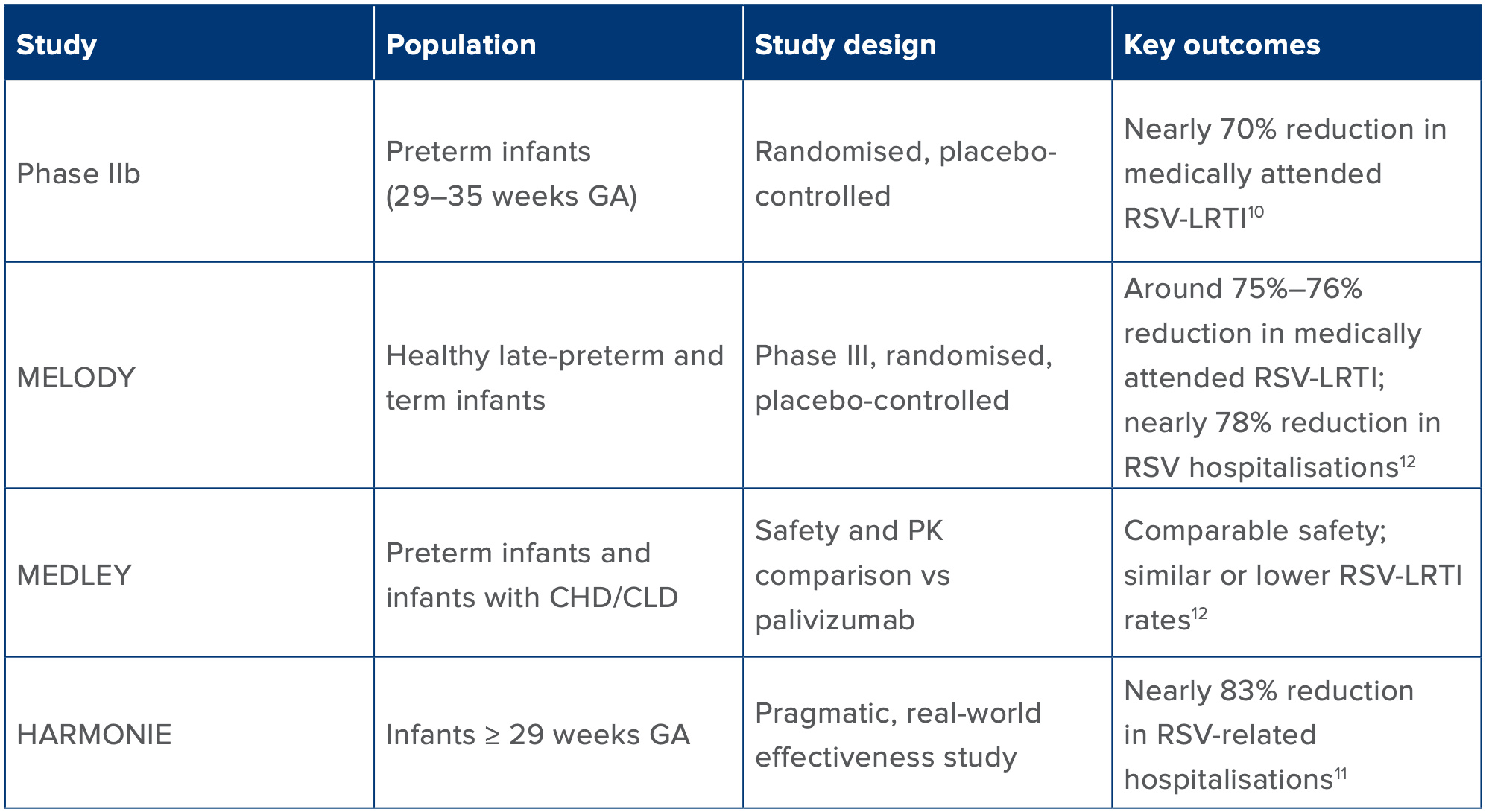
Table 1: SClinical trial evidence of nirsevimab.
Abbreviations: CHD: Congenital Heart Disease, CLD: Chronic Lung Disease, GA: Gestational Age, PK: Pharmacokinetic, RSV-LRTI: Respiratory Syncytial Virus-Lower Respiratory Tract Infection.
Across all trials, no serious adverse events were attributed to nirsevimab, including in preterm and highrisk populations. Neutralising antibody levels remained substantially higher than those in the placebo for up to 12 months, supporting sustained protection.
Nirsevimab real-world evidence: Journal of the American Medical Association (JAMA) Pediatrics meta-analysis
Beyond controlled trials, nirsevimab effectiveness has been validated in routine clinical practice. A large postlicensure meta-analysis published in JAMA Pediatrics evaluated real-world data from over 260,000 infants across multiple countries and healthcare systems.
Key findings included:
- Nearly 83% reduction in RSV-related hospitalisations
- Nearly 62% reduction in all-cause LRTI hospitalisations
- Significant reductions in RSV-related and all-cause emergency department visits
This real-world evidence confirms that benefits observed in clinical trials are replicated in routine practice, with substantial reductions in disease burden and healthcare utilisation.
Policy and guideline alignment
Global and national public health bodies recognise the importance of early RSV prevention:
- The World Health Organization (WHO) recommends the introduction of RSV preventive products such as nirsevimab, with year-round strategies preferred in tropical countries. 5
- The Centers for Disease Control and Prevention (CDC) recommends nirsevimab for all infants entering their first RSV season, and for high-risk infants entering their second season. 5
- The National Neonatology Forum (NNF) of India supports RSV prevention (with nirsevimab) in young infants below six months of age and recommends it in high-risk groups — including prematurity with bronchopulmonary dysplasia, CHD, post-tracheostomy, cystic fibrosis, congenital immunodeficiencies and neuromuscular disorders — within the Indian context. 5
RSV vaccine ABRYSVO-maternal immunisation
ABRYSVO is an RSV vaccine recommended for individuals aged 18 years and older. It is bivalent (targeting both major RSV subgroups A and B) and contains stabilised prefusion F proteins from the virus. 5 A single intramuscular dose administered to pregnant individuals between approximately 32–36 weeks’ gestation helps protect infants from RSV-related LRTI disease from birth through about 6 months of age via transplacental antibody transfer. It is also approved for the prevention of RSV in older adults (≥ 60 years) and adults 18–59 years at increased risk of LRTI. 5
Conclusion
RSV remains the single greatest respiratory infectious threat in the first year of life, driving high hospitalisation rates, substantial community mortality, and long-term respiratory sequelae.1,9 In the absence of effective treatment, early prevention is critical. Long-acting immunoprophylaxis with nirsevimab represents a transformational advance, enabling early, single-dose protection during the period of highest vulnerability.5,10 Its integration into clinical practice offers the potential to significantly reduce hospitalisations, prevent community deaths, and improve long-term respiratory outcomes — particularly in high-burden settings such as India. 5
Ashu Sawhney. A Paradigm Shift in Respiratory Syncytial Virus Prevention in Infants. MMJ. 2026, June. Vol 3 (2).
DOI: XXXX-XXXX
References
- Lozano R, Naghavi M, Foreman K, et al. Global and regional mortality from 235 causes of death for 20 age groups in 1990 and 2010: A systematic analysis for the Global Burden of Disease Study 2010. Lancet. 2012;380:2095–128.
- PERCH Study Group. Causes of severe pneumonia requiring hospital admission in children without HIV infection from Africa and Asia: The PERCH multi-country case-control study. Lancet. 2019;394:757–79.
- Meissner HC. Viral bronchiolitis in children. N Engl J Med. 2016;374:62–72.
- Simões EAF, Bont L, Manzoni P, et al. Past, Present and Future Approaches to the Prevention and Treatment of Respiratory Syncytial Virus Infection in Children. Infect Dis Ther. 2018;7(1):87–120.
- World Health Organization. WHO position paper on immunization to protect infants against respiratory syncytial virus disease, May 2025. Wkly Epidemiol Rec. 2025;100(22):193–218. Available at: https://www.who.int/publications/i/item/who-wer-10022-193-218. Accessed on: 12th April 2026.
- Piedimonte G, Perez MK. Respiratory syncytial virus infection and bronchiolitis. Pediatr Rev. 2014;35:519–30.
- Simon AK, Hollander GA, McMichael A. Evolution of the immune system in humans from infancy to old age. Proc Biol Sci. 2015;282:20143085.
- Riccò M, Corrado S, Palmieri S, et al. Respiratory Syncytial Virus: A Systematic Review and Meta-Analysis of Tomographic Findings (2000–2022). Children (Basel). 2023;10(7):1169.
- Sigurs N, Gustafsson PM, Bjarnason R, et al. Severe respiratory syncytial virus bronchiolitis in infancy and asthma/allergy at age 13. Am J Respir Crit Care Med. 2005;171:137–41.
- Griffin MP, Yuan Y, Takas T, et al. Single-dose nirsevimab for prevention of RSV in preterm infants. N Engl J Med. 2020;383:415–25.
- Drysdale SB, Cathie K, Flamein F, et al. Nirsevimab for prevention of hospitalization due to RSV in infants. N Engl J Med. 2023;389:2425–35.
- Hammitt LL, Dagan R, Yuan Y, et al. Nirsevimab for prevention of RSV in healthy late-preterm and term infants. N Engl J Med. 2022;386:837–46.