 WhatsApp Us (24/7)
 +91 926 888 0303 (24/7)


Abstract:
Total skin electron therapy (TSET) is a radiotherapy technique used to treat cutaneous lymphomas like mycosis fungoides. The aim was to analyse the treatment outcome and technical aspects of implementation. TSET is a specialised radiotherapy technique used to treat cutaneous T-cell lymphoma (CTCL) and other skin malignancies. It delivers a uniform dose of low-energy electrons (4–10 MeV) to the entire skin surface, minimising dose to underlying tissues. The treatment involves positioning the patient (often standing or lying down) at a distance from the linear accelerator to achieve large field size 36×36cm. Multiple beam angles are used to ensure uniform dose distribution. Dosimetry is complex, with careful planning required to achieve optimal coverage and minimise hot/cold spots. Common doses range from 30–40 Gy, delivered in fractions over several weeks. Treatment duration is typically several minutes per session. The goal of TSET is to provide effective palliation and disease control for patients with extensive skin involvement. It can help alleviate symptoms like itching, redness, and skin lesions. Common side effects include skin erythema, dryness, and potential temporary hair loss. Careful patient setup and monitoring are crucial for treatment success. TSET is often used in conjunction with other treatments like topical therapies or systemic agents. For patients with localised disease, other radiotherapy techniques like superficial X-rays or electron beams may be more suitable. However, TSET's ability to treat large areas makes it a valuable option for patients with widespread skin involvement. Patient selection is key for TSET. Those with early-stage CTCL or other skin cancers may benefit from localised treatments. Patients with more extensive disease or those who have failed other therapies may be candidates for TSET.
Key words: Mycosis Fungoides, Electron Radiation, Total Skin Electron Irradiation, Basic Technical Aspects.
Introduction
Total skin electron therapy (TSET) is a specialised radiation therapy technique used for treating cutaneous T-cell lymphoma (CTCL), specifically mycosis fungoides. 1-3 It aims to deliver a uniform dose of radiation to the entire skin surface while minimising exposure to underlying tissues and organs. Mycosis fungoides is the most common type of CTCL. 3 TSET was developed at Stanford initially in 1960. 1 A four- field technique was used, which was later modified to a six-field technique. 1,2
Case Report
In 2014, we retrospectively reported one patient treated with TSET. The case involved a 53-year-old man with a known case of CTCL (mycosis fungoides) who presented with generalised lichenoid dermatitis, which later progressed to ulcerated nodules (Figure 1). The patient underwent a skin punch biopsy and immunochemistry. Microscopic examination revealed a completely eroded epidermis with overlying crusted exudate and marked irregular acanthosis, with apoptotic cells noted at all levels of the epidermis. For treatment, the prescribed dose was 30 Gy in 20 fractions using 6 MeV high-dose total electron (HDTe) mode with a modified sixfield technique. Multiple beams were employed to achieve a uniform dose distribution around the patient (Table 1).
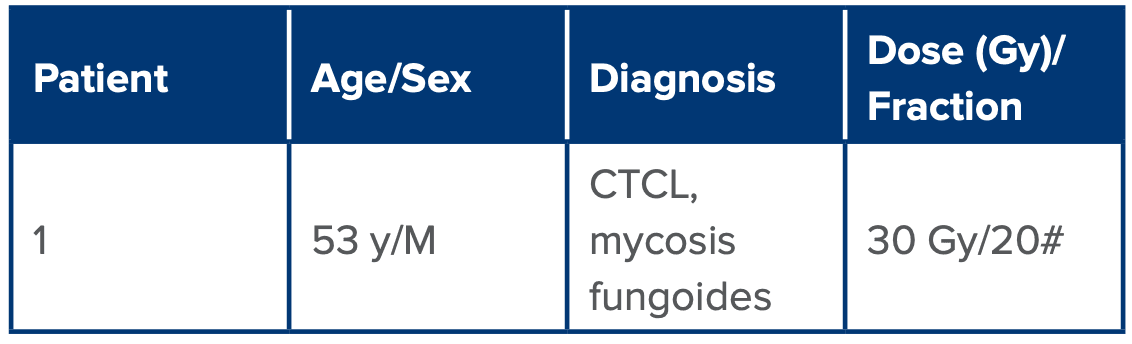
Prescription and treatment delivery
The patient was treated with TSET using a Varian Trilogy Linear Accelerator in 6 MeV high-dose electron mode, with a prescribed dose of 30 Gy delivered over 20 fractions.
First, the patient’s skin was marked. The patient stood on a rotating platform at a source-to-skin (SSD) distance of 380 cm, and the frame position on the floor was marked. When positioned on the frame, the central axis was verified to pass through the patient’s midline both vertically and horizontally at the level of the umbilicus, after which the patient was adjusted on the frame.
A modified six-field Stanford technique was employed using a 6 MeV modern linear accelerator in HDTe mode (Figure 2).1,2 The patient stood on the TSET frame at a standard distance of 380 cm from the linear accelerator (LINAC) head. A 5 mm Perspex sheet was placed in front of the patient to attenuate and scatter the incident electrons. Dualangle six fields were delivered with two gantry angles: 72° above and 108° below during each treatment cycle. Six treatment positions were used to maximise skin exposure and improve dose.
- Day 1: Anteroposterior (AP), right posterior oblique (RPO), left posterior oblique (LPO)
- Day 2: Posteroanterior (PA), right anterior oblique (RAO), left anterior oblique (LAO)
Following completion of 30 Gy in 20 fractions, a boost dose of 20 Gy in 10 fractions was delivered to self-shielded regions such as the soles, scalp, and perineum.
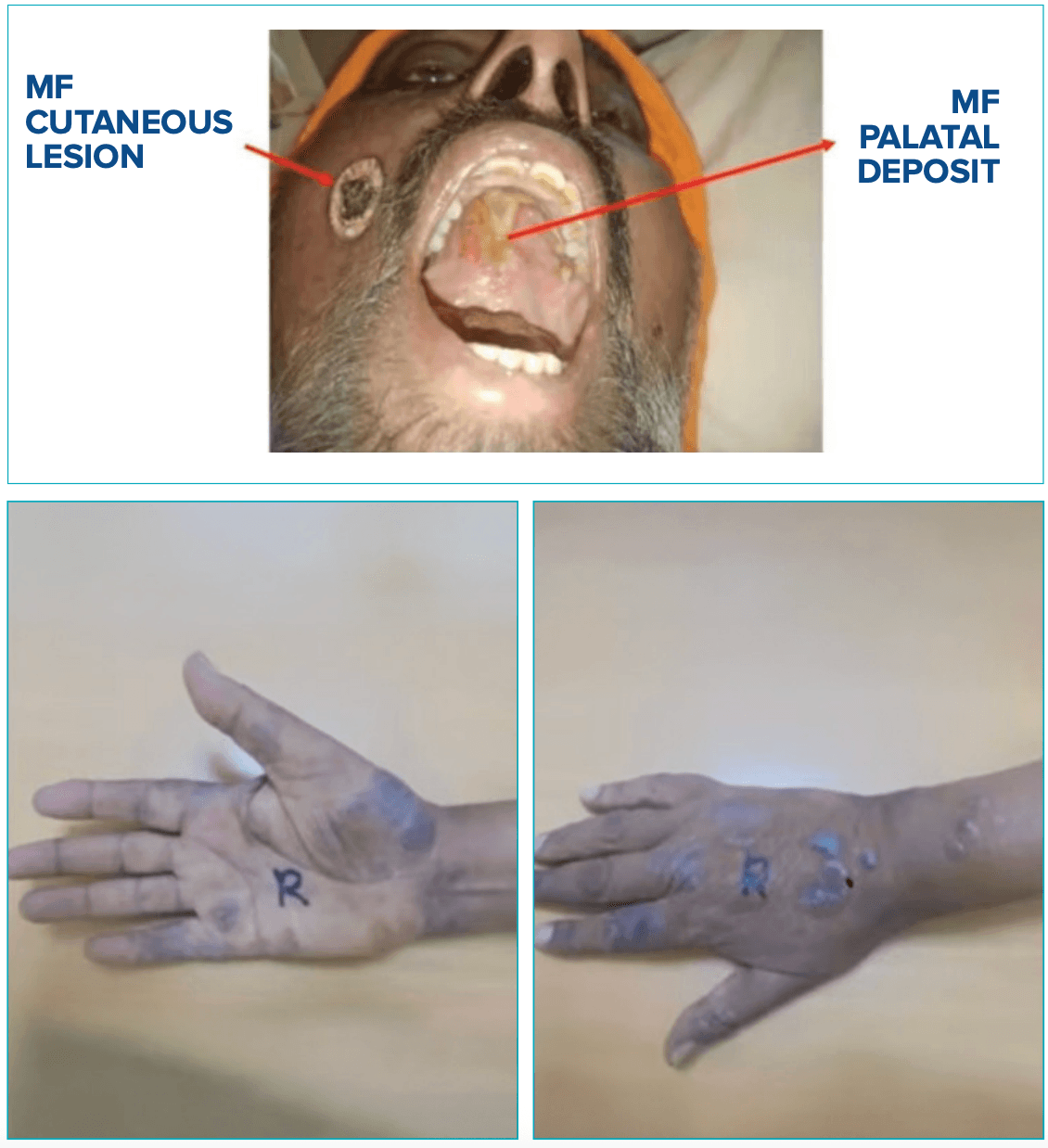
Figure 1: Figure 1: Clinical pictures of patients with mycosis fungoides. Abbreviation: MF: Mycosis Fungoides.
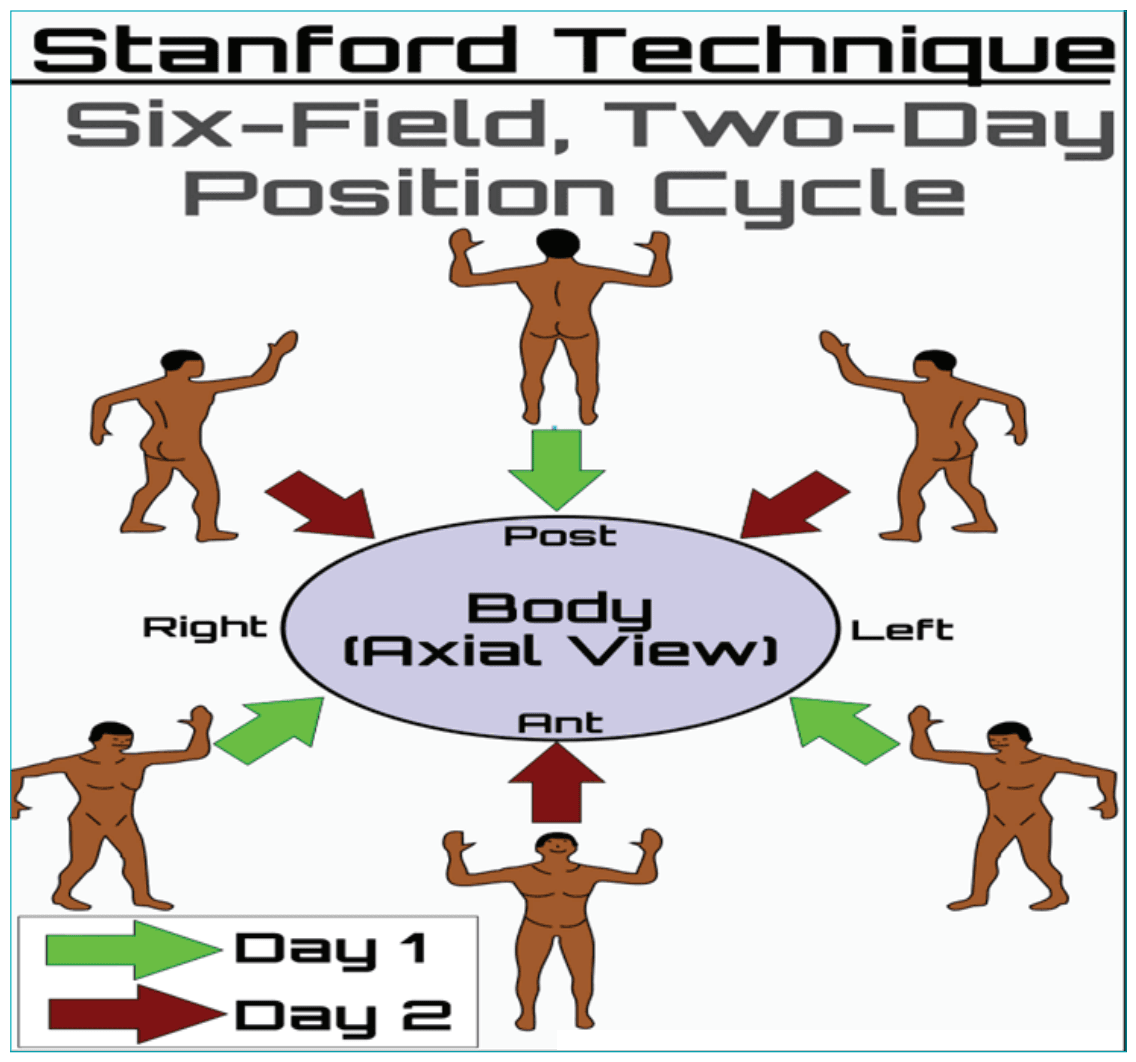
Figure 2: Clinical sketch of six treatment positions used for delivering total skin electron beam therapy (TSET). Abbreviations: Ant: Anterior; Post: Posterior.
Discussion
TSET provides superior dose uniformity, ensuring complete exposure of the entire body surface while effectively irradiating self-shielding regions. Acute effects include generalised erythema, itching, oedema, moist desquamation and alopecia. Late effects may involve hyperpigmentation, dry skin, and necrosis of nails. Patient care during TSET should focus on hydration and skin moisturisation, wearing light clothing and soft shoes, monitoring for infection, managing brittle or slow-growing nails, preventing hyperuricaemia, sun avoidance with a hat, weekly blood tests, and prompt treatment of skin infections in consultation with a dermatologist. (Figure 3.)
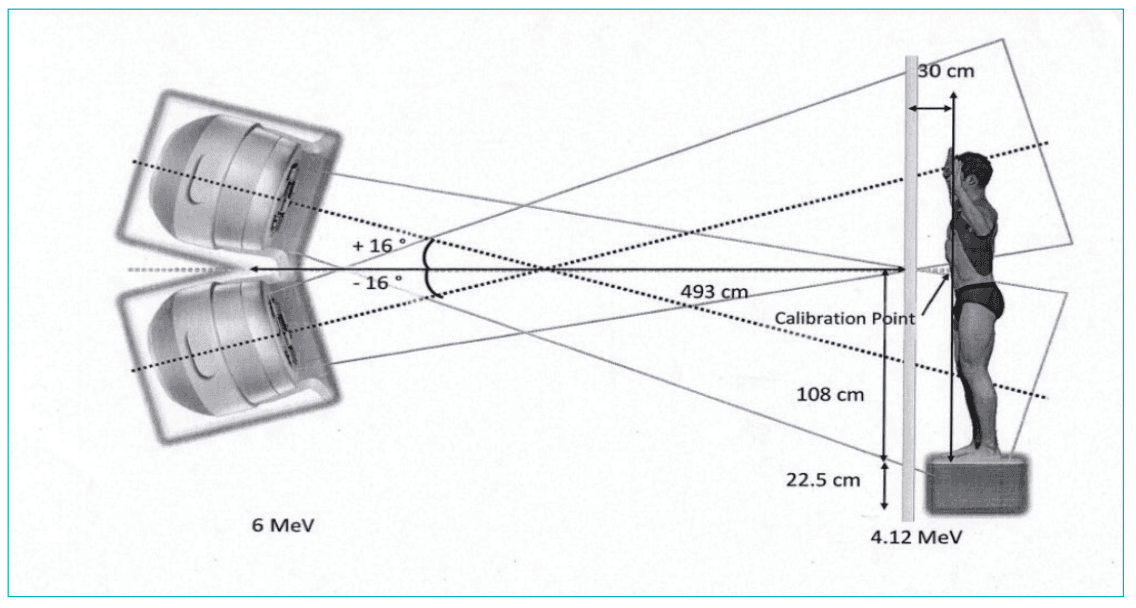
Dose distribution around the patient is maintained uniformly, requiring multiple beams to ensure adequate penetration. The HDTe mode has an interlock to ensure that the collimator jaws are fully opened to 36 × 36 cm after insertion of a specific accessory tray with no electron applicator used, producing a nominal 6 MeV electron beam.
The dose is delivered at the isocentre with high dose rate of 888 monitor units (MU)/min displayed on the control screen. The patient is positioning is at 380cm distance for 6 dual field technique. A degrader sheet measuring 203 × 111 × 0.5 cm is used.
Dose distribution is designed to be homogeneous within ± 10% across both vertical and horizontal planes.
Conclusion
TSET provides superior dose uniformity, ensuring complete exposure of the entire body surface while effectively irradiating self-shielding regions. Acute effects include generalised erythema, itching, oedema, moist desquamation and alopecia. Late effects may involve hyperpigmentation, dry skin, and necrosis of nails. Patient care during TSET should focus on hydration and skin moisturisation, wearing light clothing and soft shoes, monitoring for infection, managing brittle or slow-growing nails, preventing hyperuricaemia, sun avoidance with a hat, weekly blood tests, and prompt treatment of skin infections in consultation with a dermatologist.
Priyanka Kumari, Manish Mangal, Anusheel Munshi, Akash Goyal. Total Skin Electron
Therapy: Basic Technical Aspects for Radiotherapy Technologists. MMJ. 2026, June. Vol 3 (2).
References
- Karzmark CJ. Large-field superficial electron therapy with linear accelerators. Br J Radiol. 1964;37:302–5.
- Piotrowski T, Malicki J. The rotary dual technique for total skin irradiation in the treatment of mycosis fungoides–a description of the applied method. Rep Pract Oncol Radiother. 2006;11(1):29–37.
- Willemze R. Primary cutaneous lymphoma. Curr Opin Oncol. 2000;12:419–25.
- BRAAMS R. Superficial radiation therapy of large skin areas. Dermatologica. 1958;117(4):204–14.
- Kumar PP, Patel IS. Rotation technique for superficial total body electron beam irradiation. J Natl Med Assoc. 1978;70(7):507–09.