 WhatsApp Us (24/7)
 +91 926 888 0303 (24/7)


Abstract:
Acute appendicitis remains one of the most common surgical emergencies, requiring prompt and accurate diagnosis to prevent potentially serious or even fatal complications. This study evaluates the diagnostic accuracy of different scoring systems for acute appendicitis in relation to the negative appendicectomy rate (NAR). Particular emphasis is placed on Nigam’s Scoring System (NSS), which relies solely on clinical history, physical examination, and basic laboratory investigations, making it especially suitable for use in resource-limited and primary care settings. Conducted at a single primary care hospital, the study is limited by its single-centre design. The findings demonstrate that NSS achieves very high diagnostic accuracy, with a reported NAR of zero, in contrast to other scoring systems that show higher NAR values, reaching up to 7.5% in some cases. Histopathological examination of all removed appendices confirmed acute appendicitis at varying stages of inflammation. Overall, NSS emerges as a highly sensitive and practical diagnostic tool that outperforms other systems in minimising unnecessary appendicectomies.
Key words: Acute Appendicitis, Appendicectomy, Negative Appendicectomy Rate (NAR), Diagnostic Accuracy, Nigam’s Scoring System (NSS).
Introduction
Acute appendicitis is a surgical emergency requiring appendicectomy. Urgent attention and prompt treatment are essential to prevent complications which sometimes become serious and even fatal. Acute appendicitis usually starts with pain near the umbilicus, which migrates to the right iliac fossa. Nausea and vomiting follow the pain with loss of appetite and mild fever. Acute appendicitis is most commonly caused by obstruction of the lumen of appendix by hard faecal matter called faecolith, or by lymphoid hyperplasia. 1 Acute appendicitis can occur at any age, but tends to be highest in the 10–20 age group. 2
Obstruction of the lumen of the appendix leads to congestion within the appendix, resulting in increased luminal pressure due to the secretion of inflammatory exudate and mucus. This obstructs lymphatic drainage, leading to further oedema, ulceration, bacterial growth and formation of pus. 3 Acute appendicitis is one of the most common causes of acute abdominal pain in adults and children, with a lifetime risk of 8.6% in males and 6.7% in females. 4 In the United States alone, approximately 300,000 hospital visits are reported annually related to appendicitis. 5
The negative appendicectomy rate (NAR) validates the diagnostic accuracy of scoring systems for acute appendicitis. The lower the NAR, the higher the accuracy of a scoring system. NAR indicates the capability of a scoring system to accurately diagnose acute appendicitis and differentiate it from other causes of abdominal pain.
An NAR of 0% by Nigam's Scoring System (NSS) surpasses all other scoring systems in diagnostic accuracy. In this study, we compared three important scoring systems for acute appendicitis i.e. Alvarado, Raja Isteri Pengiran Anak Saleha Appendicitis (RIPASA), and NSS, with respect to their diagnostic accuracy as measured by NAR. NAR of 5%–10% is usually accepted as normal by any scoring system, but in this study, high NAR values are not accepted. NAR should be as low as possible, as it directly reflects the ability of a scoring system to diagnose acute appendicitis accurately. A low NAR helps to avoid unnecessary appendicectomies and potential complications such as ileus, incisional hernias and increased cost to the patient. 6 Negative explorations can lead to longer hospital stays, higher costs, and increased morbidity and mortality as well. 7
Materials and Methods
This study was conducted at Max Hospital, Gurgaon, Haryana, India, which is a primary healthcare hospital. The study was performed from April 2014 to April 2026. A total of 85 cases were included in this research work. All cases of acute abdominal pain with suspicion of acute appendicitis were included in this single-centre study. Patients with abdominal pain without suspicion of acute appendicitis were not included in this study. All patients were treated on the basis of the score obtained by NSS. Demographics of all patients were recorded. A proper history and detailed physical examination were carried out for all patients along with basic laboratory tests. Scoring was done according to the variables in Table 1 and diagnosed as per Table 2.
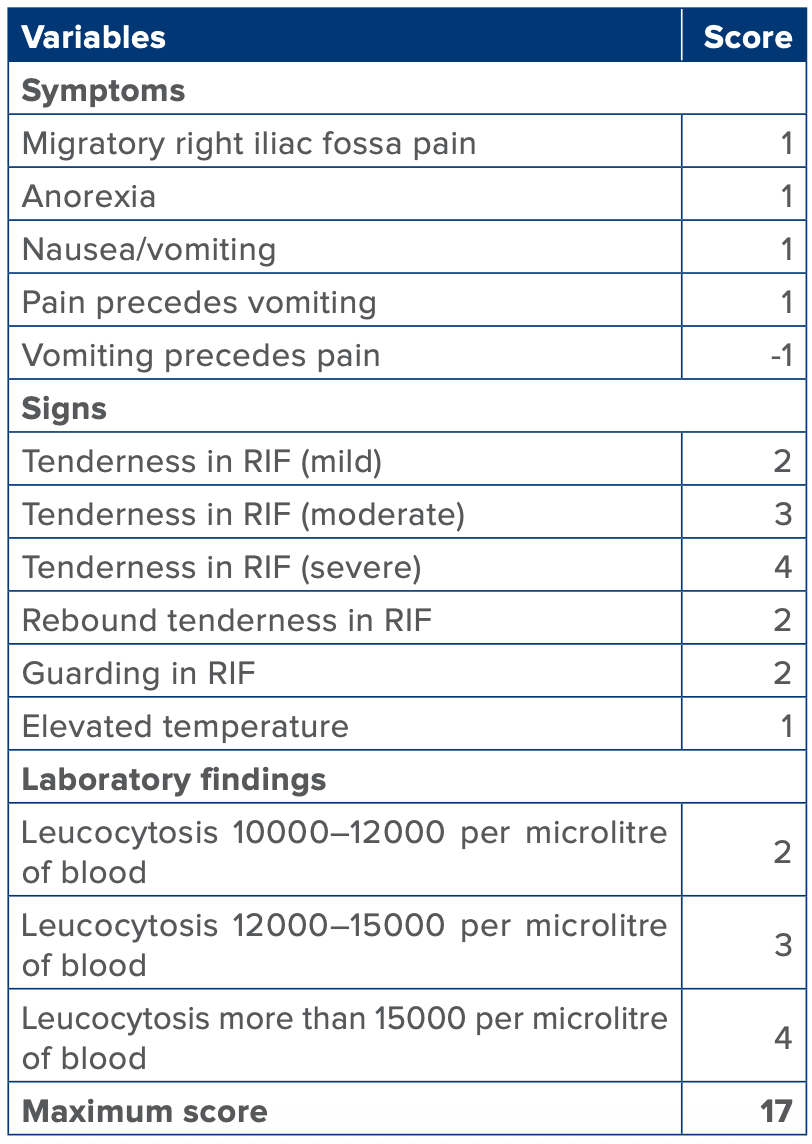
Table 1: Nigam’s Scoring System (NSS)-distribution of points.
Abbreviation: RIF: Right Iliac Fossa
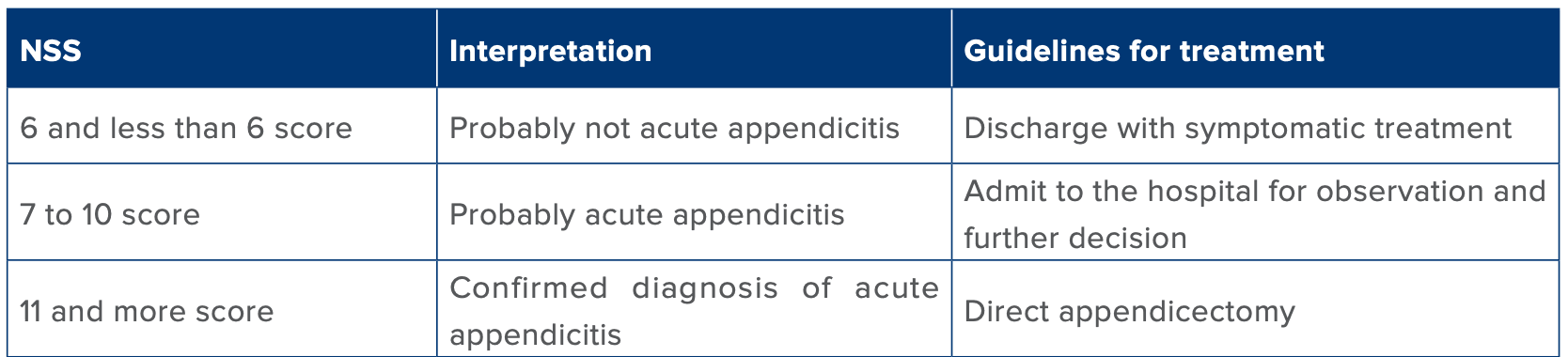
Table 2: Interpretation of NSS and guidelines for treatment.
Abbreviation: NSS: Nigam’s Scoring System.
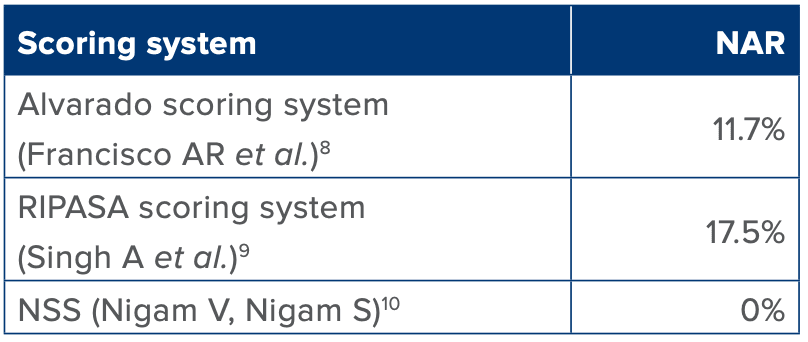
Table 3: Comparative study of NAR with various scoring systems.
Abbreviation: NAR: Negative Appendectomy Rate; RIPASA: Raja Isteri Pengiran Anak Saleha Appendicitis; NSS: Nigam’s Scoring System.
After scoring, the patients were treated according to NSS guidelines.
Results
Out of 85 patients, 68 (80%) were male and 17 (20%) were female. The age of the patients varied from 15 to 72 years. Most of the patients had a normal body mass index (BMI). There were 6 (7.1%) patients who scored 6 or less than 6, 11 (12.9%) patients scored between 7–10, and 68 (80%) patients scored 11 and above. The patients who scored 6 or less were discharged with symptomatic treatment. Patients who scored 7–10 points were admitted for observation in the hospital and were operated on with laparoscopic appendicectomy when they did not improve. Sixty-eight patients who earned 11 and above were admitted, prepared for surgery and underwent appendicectomy without a period of observation in the ward. All samples of the excised appendix were sent for histopathological examination. All histopathology reports confirmed the diagnosis of acute appendicitis with various stages of inflammation. Thus, the NAR was 0% (Table 3).
Discussion
Christian GP et al. suggested that NAR is accepted as the measure of diagnostic accuracy of a scoring system for appendicitis. Clinical scoring systems to aid diagnosis have been described for acute appendicitis, but the cited studies are either computer-based or retrospective.11–13 Now, NSS has addressed this concern, as NSS diagnoses acute appendicitis with a high degree of accuracy rate without NAR (Figures 1 and 2).
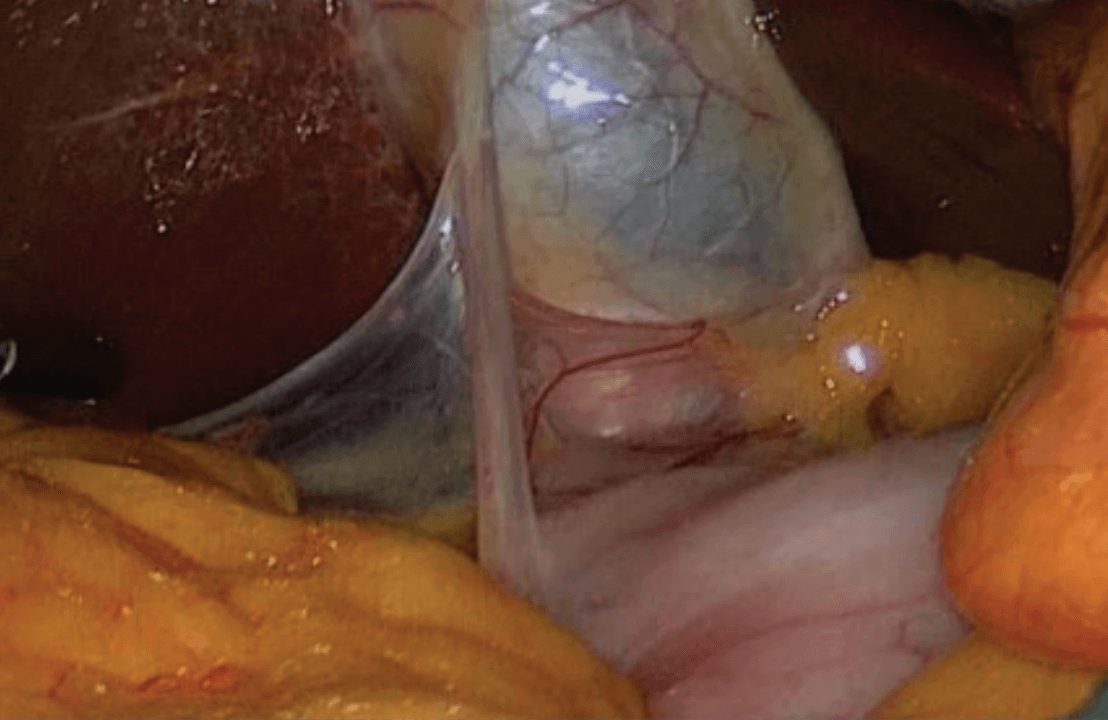
Figure 1: PNigam's Scoring System (NSS) Point 9, probably acute appendicitis.
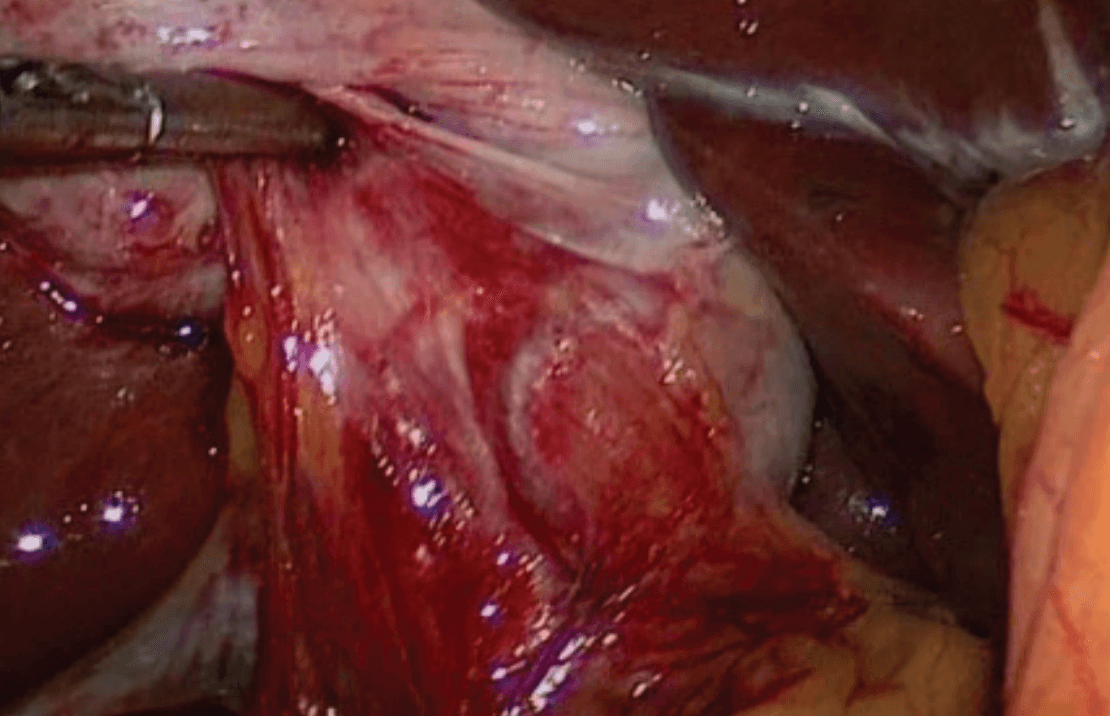
Figure 2: Nigam's Scoring System (NSS) Point 15, confirmed diagnosis of acute appendicitis.
Among the 249 patients from Australia (M = 113 and F = 136), the NAR was 9.7% in males and 3.9% in females.14 Another study from Bangalore reported NAR of 9% among 230 specimens. 15 The NAR was 8.7% in a Finnish study. 16 These rates of NAR are considered to be high and therefore, the diagnostic criteria or scoring systems used may need to be reconsidered and, if required, replaced with more effective methods. NSS has zero NAR, which should be the aim of all clinicians, even if more investigations and imaging techniques are used.
NAR is a key quality metric and parameter for evaluating the diagnostic accuracy of appendicitis scoring systems. A lower NAR indicates higher accuracy, with ideal systems aiming for < 15% or even lower with imaging. An ideal scoring system should aim for zero NAR, like NSS.
Low scores in various scoring systems where surgeries are performed due to fear of delay leading to perforation, are one of the main causes of high NAR. However, if these scoring systems are used cautiously and properly, then NAR can be reduced. Scoring systems are developed to diagnose acute appendicitis correctly and reduce the NAR or unnecessary appendectomies. Newer scoring systems have higher accuracy and lower NAR.17
The annual appendicectomy volume cited in the United States in 1997 was 250,000 cases with a negative NAR of 15%.18 In 2007 there were 3,26,000 appendicectomies.19 Several recent papers have reported a declining NAR, including large database studies and meta-analyses with NAR as low as 6%–8%,20,21 and single-institution studies with NARs as low as 1.7%–7%,22,23 coinciding with increased use of computed tomography (CT) and laparoscopy.24
NAR is the best parameter for assessing the diagnostic accuracy of a scoring system in acute appendicitis:
- A high NAR is commonly due to diagnostic errors.
- NAR clearly indicates the efficacy of a scoring system.
- A high NAR is usually due to the use of an imperfect scoring system.
- A high NAR is also due to over-cautious practice or fear of complications, such as perforation of the appendix.
- A high NAR is also due to the fact that many surgeons accept a higher NAR than risk complications. They should devote more time and re-examine the patient after a few hours while the patient is kept under observation in hospital.
- Appendicectomy in suspected cases without diagnostic confirmation is one of the reasons for a high NAR.
Declarations
Acknowledgements
The authors would like to thank Dr. Charvi Chawla for her efforts in arranging data and other information required for this research work. We are also thankful to Mr. Vipin Sharma for the preparation of the manuscript and transcription.
Declaration of patient consent
Informed consent was taken from the patients.
Financial support and sponsorship
None.
Conflicts of interest
The authors declare no conflicts of interest.
Conclusion
NAR is a key factor in analysing the diagnostic accuracy of a scoring system for acute appendicitis. It should be the goal of every surgeon to keep the NAR as low as possible to maintain the diagnostic accuracy of scoring system used. In this study, NSS achieved a zero NAR, which should be the aim of every surgeon. A low NAR improves the diagnostic accuracy of a scoring system.
Vinod Kumar Nigam, Siddharth Nigam. Is Negative Appendicectomy Rate a Key Factor for Diagnostic Accuracy of Various Scoring Systems? MMJ. 2026, June. Vol 3 (2).
References
- Fitz RH. Perforating inflammation of the vermiform appendix with special reference to its early diagnosis and treatment. Am J Med Sci. 1886;92:321–
- Konstantakos AK, Zollinger RM. Repair of McBurney incisional hernias after open appendectomy. Curr Surg. 2000;57(1):79–
- Chandrasekharan TV, Johnson N. Acute appendicitis Surgery. Oxford. 2014;32(8):413–
- Snyder MJ, Guthrie M, Cagle S. Acute Appendicitis: Efficient Diagnosis and Management. Am Fam Physician. 2018;98(1):25–
- Addiss DG, Shaffer N, Fowler BS, et al. The epidemiology of appendicitis and appendectomy in the United States. Am J Epidemiol. 1990;132(5):910–
- Schover KWB, Wichtrup B, Rothmund M, et al. Ultrasonography in the diagnosis of acute appendicitis: a prospective study. Gastroenterology. 1989;97:630–
- Christhi MM, Surendran A, Narayanan JT. RIPASA and AIR scoring systems are superior to Alvarado scoring in acute appendicitis: Diagnostic accuracy study. Ann Med Surg (Lond). 2020;59:138–
- Rodriguez-Garcia FA, Rodríguez-Sánchez CE, Naranjo-Chávez JC, et al. Assessment of negative appendectomy in acute appendicitis diagnoses. Surg Pract Sci. 2025;21:100281.
- Singh A, Parihar US, Kumwat G, et al. To determine validation of RIPASA score in diagnosis of suspected acute appendicitis and histopathological correlation with applicability in Indian population: A single institute study. Indian J Surg. 2018;80(2):113–
- Nigam VK, Nigam S. Nigam’s Scoring System for acute appendicitis with high accuracy surpassing Alvarado Scoring System. Int Surg J. 2022;9(4):835–
- Teicher I, Landa B, Cohen M, et al. Scoring system to aid in diagnoses of appendicitis. Ann Surg. 1983;198(6):753–
- Van Way CW, Murphy JR, Dunne L, et al. A feasibility study of computer aided diagnosis in appendicitis. Surg Gynecol Obstet. 1982;155(5):685–
- Christian F, Christian GP. A simple scoring system to reduce the negative appendicectomy rate. Ann R Coll Surg Engl. 1992;74(4):281–
- Chin KC, Arad A, Chen KC, et al. The clinical value of pathology tests and imaging study in the diagnosis of acute appendicitis. Postgrad Med J. 2016;92:611.
- Siyatha R, Anushree CN, Singh N. Histopathological spectrum of appendectomy specimens - a prospective study. Indian J Pathol Oncol. 2017;4:638–
- Sammalkorpi HE, Mentula P, Savolainen H, et al. The introduction of adult appendicitis score reduced negative appendicectomy rate. Scand J Surg. 2017;106:196–201.
- Nigam VK, Nigam S. Negative Appendicectomy - Relevance of Scoring Systems - Alvarado, Modified Alvarado, RIPASA, AIR and Nigam’s Scoring System (NSS). Int J Gastro. 2025;9(2):148.
- Flum DR, Koepsell T. The clinical and economic correlates of misdiagnosed appendicitis and appendectomy in the United States. Am J Epidemiol. 1990;132:910–
- Hall MJ, DeFrances CJ, Williams SN, et al. National Hospital Discharge Survey: 2007 summary. Natl Health Stat Report. 2010;(29):1–
- Cuschieri J, Florence M, Flum DR, et al. Negative appendectomy and imaging accuracy in the Washington State Surgical Care and Outcomes Assessment Program. Ann Surg. 2008;248:557–
- Guller U, Rosella L, McCall J, et al. Negative appendicectomy and perforation rates in patients undergoing laparoscopic surgery for suspected appendicitis. Br J Surg. 2011;98(4):589–
- Rao PM, Rhea JT, Rattner DW, et al. Introduction of appendiceal CT: impact on negative appendectomy and appendiceal perforation rates. Ann Surg. 1999;229:344–
- Rhea JT, Halpern EF, Ptak T, et al. The status of appendiceal CT in an urban medical center 5 years after its introduction: experience with 753 patients. AJR Am J Roentgenol. 2005;184:1802–
- Mariadason JG, Wang WN, Wallack MK, et al. Negative appendectomy rate as a quality metric in the management of appendicitis: impact of computed tomography, Alvarado score and the definition of negative appendicectomy. Ann R Coll Surg Engl. 2012;94(6):395–401.