 WhatsApp Us (24/7)
 +91 926 888 0303 (24/7)


Abstract:
Colorectal cancer in elderly patients poses significant management challenges due to age-related physiological decline and associated comorbidities. We report the case of an 85-year-old female who presented with sub-acute intestinal obstruction and was diagnosed with carcinoma of the colon. Her medical history was significant for hypertension, atrial fibrillation, and two prior cerebrovascular accidents with residual bulbar palsy, placing her at high perioperative risk. Considering the potential morbidity of open surgery, a robotic-assisted colorectal resection was performed. The procedure was completed without complications, and the patient demonstrated accelerated postoperative recovery with early mobilisation on Day one, initiation of oral intake on postoperative Day two, and discharge on postoperative Day three. This case highlights the feasibility and potential benefits of robotic surgery in carefully selected elderly patients with significant comorbidities.
Key words: Robotic Surgery, Colorectal Cancer, Elderly Patient, Minimally Invasive Surgery, Case Report.
Introduction
Colorectal cancer (CRC) is predominantly a disease of the elderly, with a significant proportion of cases occurring in patients above 70 years of age. With increasing life expectancy, the number of elderly patients requiring surgical management for CRC is steadily rising. However, advancing age is often associated with reduced physiological reserve, frailty, and multiple comorbidities, which increase the risk of postoperative morbidity and mortality. 1
Traditionally, elderly patients have been considered high-risk candidates for major abdominal surgery, particularly open colorectal resections, which are associated with increased postoperative pain, pulmonary complications, prolonged ileus, and extended hospital stay. However, emerging evidence suggests that chronological age alone should not be the sole determinant of surgical candidacy, and that outcomes are more closely related to physiological status and comorbidity burden. 2
Minimally invasive approaches, including laparoscopic colorectal surgery, have demonstrated improved short-term outcomes compared to open surgery, with reduced postoperative pain, earlier recovery, and shorter hospitalisation, while maintaining oncological equivalence. More recently, robotic-assisted surgery has further refined minimally invasive techniques by offering enhanced three-dimensional visualisation, improved ergonomics, tremor filtration, and greater instrument articulation, which may be particularly advantageous in technically challenging cases and high-risk patients.
Despite these advances, data on the use of robotic colorectal surgery in very elderly patients with significant cardiovascular and neurological comorbidities remain limited. We present a case of successful robotic-assisted colorectal resection in an elderly high-risk patient, highlighting its feasibility and potential benefits in this challenging population.
Case Report
An 84-year-old female presented with complaints of abdominal pain, distension, intermittent vomiting, and reduced oral intake for one week. Clinical examination and initial investigations were suggestive of sub-acute intestinal obstruction. Contrast-enhanced computed tomography of the abdomen revealed a colonic mass consistent with carcinoma of the colon. There was no evidence of distant metastasis.
The patient had significant comorbidities, including long-standing hypertension, atrial fibrillation on medical management, and two prior cerebrovascular accidents, resulting in residual bulbar palsy. Given her age and comorbid status, she was considered a high- risk surgical candidate. After a multidisciplinary team discussion involving oncology, anaesthesiology, and critical care teams, the decision was made to proceed with robotic-assisted colorectal resection to minimise surgical stress and facilitate early postoperative recovery.
Robotic-assisted rectal resection using the da Vinci Xi system is typically performed with a standardised port placement strategy to optimise access to the pelvis and facilitate multi-quadrant surgery. The patient is positioned in modified lithotomy with steep Trendelenburg and slight right tilt. A four-arm technique is commonly employed. The camera port is placed just above or at the level of the umbilicus, slightly to the right of midline. Three additional robotic ports are positioned in a linear or gently curving configuration along a line extending from the right lower quadrant to the left upper quadrant, maintaining an inter-port distance of approximately 6–8 cm to avoid arm collision. A 12 mm assistant port is placed between the camera port and right-sided working port (Figure 1). This configuration allows optimal reach for medial-to-lateral mobilisation, vascular control, splenic flexure mobilisation, and precise pelvic dissection, thereby maximising the advantages of the Xi platform in rectal cancer surgery.
The procedure was completed successfully without intraoperative complications. Adequate oncological resection was achieved with acceptable operative time and minimal blood loss. Postoperatively, the patient was electively monitored in the Intensive Care Unit (ICU) for 24 hours. She remained haemodynamically stable and was mobilised out of bed on postoperative Day one. Postoperative wound appeared clean, well-approximated, and healing satisfactorily with no signs of infection or dehiscence (Figure 2). Oral intake was initiated on postoperative Day two, which she tolerated well. The postoperative course was uneventful, and she was discharged in stable condition on postoperative Day three (Figure 3).
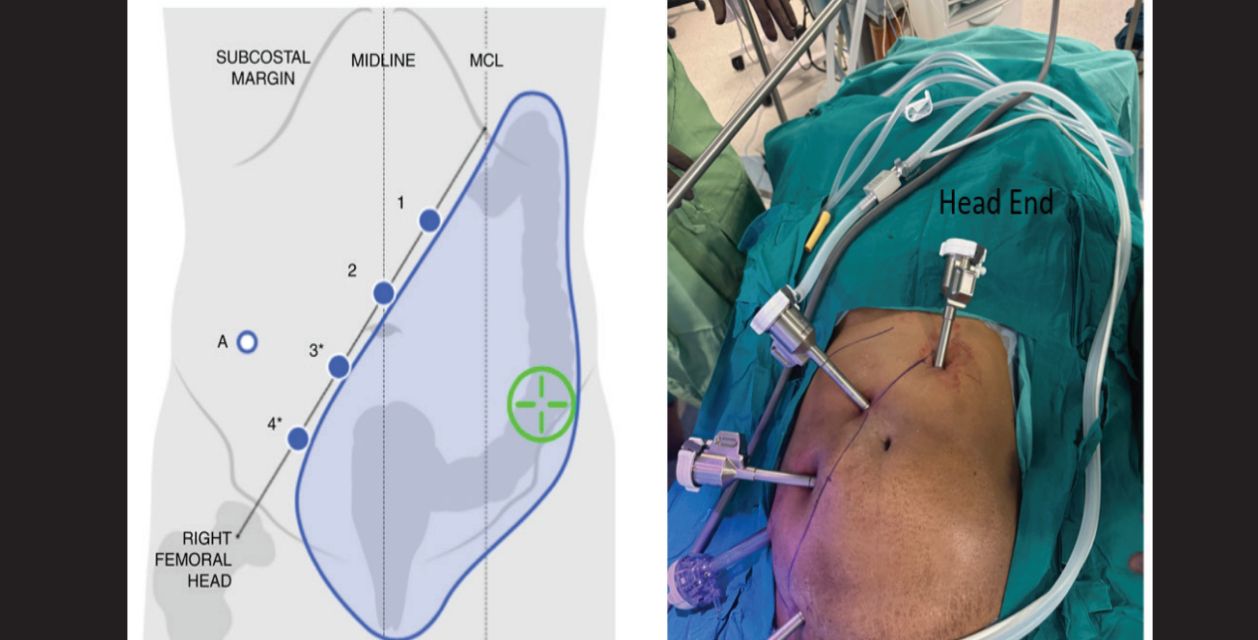
Figure 1: Conventional port positioning for the Da Vinci Xi System.
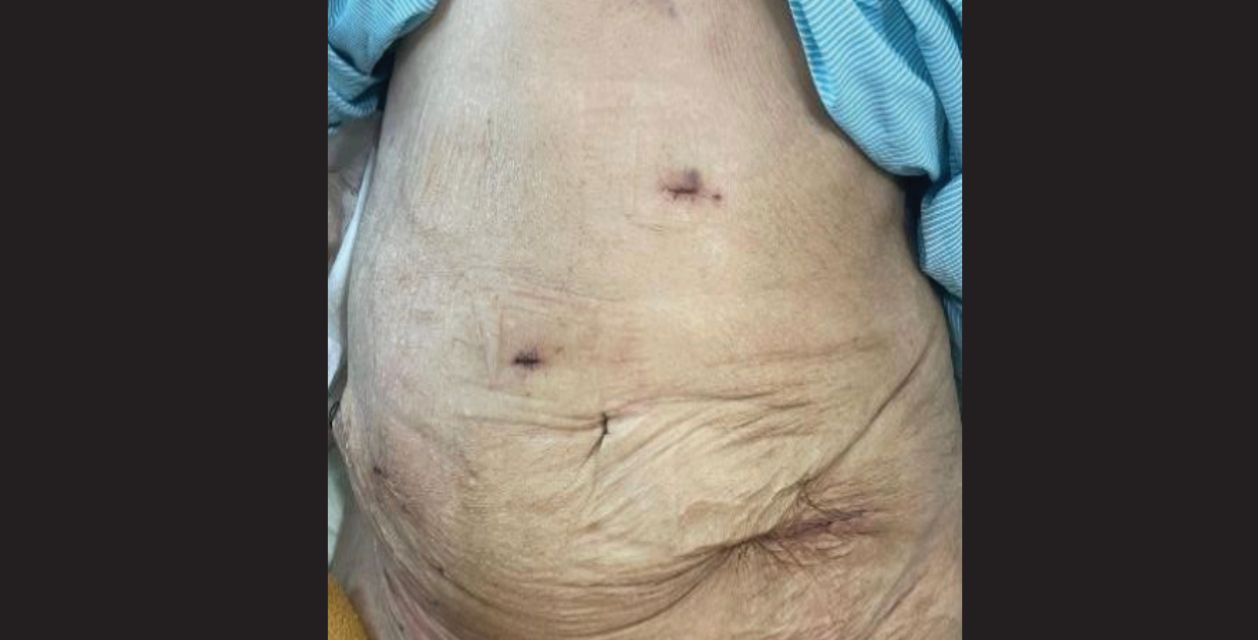
Figure 2: Post-operative wound at the time of discharge.

Figure 3: Clinical status of the patient at discharge following robotic colorectal resection
Discussion
The management of CRC in elderly patients requires careful consideration of both oncological outcomes and perioperative risk. Advanced age is frequently associated with frailty, sarcopenia, and multiple comorbidities, all of which contribute to increased postoperative complications. 3,4 However, several studies have demonstrated that chronological age alone is a poor predictor of surgical outcomes and that appropriately selected elderly patients can safely undergo curative resection. 5,6
Large randomised controlled trials such as the Conventional versus Laparoscopic-Assisted Surgery in Colorectal Cancer (CLASICC), COlorectal cancer Laparoscopic or Open Resection (COLOR), and Clinical Outcomes of Surgical Therapy (COST) trials have established the safety and oncological equivalence of laparoscopic colorectal surgery compared to open surgery. 7–9 These studies have consistently shown reduced postoperative pain, shorter hospital stay, and faster recovery in the minimally invasive group, benefits that are particularly relevant in elderly populations. 7–9
Robotic-assisted colorectal surgery represents a further evolution of minimally invasive techniques. The RObotic versus LAparoscopic Resection for Rectal cancer (ROLARR) trial demonstrated comparable oncological outcomes between robotic and laparoscopic approaches, with potential advantages in terms of conversion rates in selected patient groups. 10 Additionally, multiple meta-analyses have suggested that robotic surgery may offer improved precision, reduced blood loss, and better preservation of autonomic nerves, although these benefits must be balanced against increased operative time and cost. 11
In elderly and high-risk patients, minimising surgical stress is crucial. Robotic surgery, with its enhanced dexterity and visualisation, may facilitate meticulous dissection and reduce tissue trauma, thereby contributing to improved postoperative recovery. 11 In the present case, despite significant cardiovascular and neurological comorbidities, the patient underwent successful robotic-assisted resection with minimal complications and rapid recovery, including early mobilisation and discharge.
This case adds to the growing body of evidence supporting the feasibility of robotic colorectal surgery in elderly patients and reinforces the concept that surgical decision-making should be individualised, taking into account functional status rather than age alone. 11
Learning Points
- Advanced age alone is not a contraindication to CRC surgery.
- Robotic-assisted surgery may reduce perioperative morbidity in high-risk elderly patients.
- Careful multidisciplinary planning is essential for optimal outcomes.
Declarations
Patient consent: Written informed consent was obtained from the patient for publication of this case report and accompanying clinical details.
Conflicts of interest: The authors declare no conflicts of interest.
Conclusion
Robotic-assisted colorectal resection is feasible and safe in selected elderly patients with significant comorbidities. With careful patient selection and multidisciplinary perioperative management, favourable surgical and functional outcomes can be achieved. Advanced age should not be the sole determinant in deciding surgical eligibility.
Abhinav Deshpande, Kawadu Jawade, Kapilnath, Nimish Ganvir. Safe Application of Robotic
Colorectal Surgery in an Elderly High-Risk Patient: A Case Report. MMJ. 2026, June. Vol 3 (2).
References
- Teo NZ, Ngu JCY. Robotic surgery in elderly patients with colorectal cancer: Review of the current literature. World J Gastrointest Surg. 2023;15(6):1040–7.
- Crucitti A, Di Flumeri G, Mazzari A. Robotic Colorectal Cancer in the Elderly. In: Ceccarelli G, Coratti A, editors. Robotic Surgery of Colon and Rectum. Cham: Springer; 2024. p. 171–8.
- Mosquera C, Spaniolas K, Fitzgerald TL. Impact of frailty on approach to colonic resection: Laparoscopy vs open surgery. World J Gastroenterol. 2016;22(43):9544–53.
- Itatani Y, Kawada K, Sakai Y. Treatment of Elderly Patients with Colorectal Cancer. Biomed Res Int. 2018;2018:2176056.
- Roscio F, Bertoglio C, De Luca A, et al. Outcomes of laparoscopic surgery for colorectal cancer in elderly patients. JSLS. 2011;15(3):315–21.
- Franklyn J, Poole A, Lindsey I. Colon cancer survival in the elderly without curative surgery. Ann R Coll Surg Engl. 2024;106(7):592–5.
- Guillou PJ, Quirke P, Thorpe H, et al. Short-term endpoints of conventional versus laparoscopic-assisted surgery in patients with colorectal cancer (MRC CLASICC trial): multicentre, randomised controlled trial. Lancet. 2005;365(9472):1718–26.
- Clinical Outcomes of Surgical Therapy Study Group, Nelson H, Sargent DJ, et al. A comparison of laparoscopically assisted and open colectomy for colon cancer. N Engl J Med. 2004;350(20):2050–9.
- van der Pas MH, Haglind E, Cuesta MA, et al. Laparoscopic versus open surgery for rectal cancer (COLOR II): short-term outcomes of a randomised, phase 3 trial. Lancet Oncol. 2013;14(3):210–8.
- Jayne D, Pigazzi A, Marshall H, et al. Effect of Robotic-Assisted vs Conventional Laparoscopic Surgery on Risk of Conversion to Open Laparotomy Among Patients Undergoing Resection for Rectal Cancer: The ROLARR Randomized Clinical Trial. JAMA. 2017;318(16):1569–80.
- Lund CM, Vistisen KK, Dehlendorff C, et al. The effect of geriatric intervention in frail elderly patients receiving chemotherapy for colorectal cancer: a randomized trial (GERICO). BMC Cancer. 2017;17(1):448.