 WhatsApp Us (24/7)
 +91 926 888 0303 (24/7)


Abstract: Clinical symptoms due to elongated styloid process or calcified stylohyoid ligament is also known as ‘Eagle Syndrome’. This can present as recurrent pain in the neck, foreign body sensation, facial pain, throat pain or dysphagia. The pain in the neck may radiate to the ear. Diagnosis can become challenging as the patient may present with myriad symptoms. Elongated styloid process related disease is diagnosed radiologically along with appropriate history and directed physical examination. Definitive treatment is surgical. In this Case Study we discuss Eagle Syndrome presenting with recurrent ischemic stroke.
Key words: Eagle Syndrome, Styloid Process, Recurrent Ischemic Stroke, Young Stroke
Introduction
‘Eagle Syndrome’ is caused by a pointed bony projection of styloid process. The elongation might be bilateral or unilateral. It was first described in 1937 by an otorhinolaryngologist named Eagle.1 The prevalence of Eagle syndrome is 4% in general population with 4-10% patients of these becoming symptomatic.2 Prevalence in women is more as compared to men3 with patients usually presenting at 40 years of age. Advancing age causing loss of elasticity of soft tissue, thus putting pressure on adjoining tissue, is thought to be the underlying pathogenesis.4 Presenting symptoms incude recurrent neck or throat pain, foreign body sensation and symptoms mimicking maxillofacial, oropharyngeal disorder and/or neuralgias.3 We present a case of Eagle Syndrome in a young male who presented with recurrent stroke.
Case report
A 34-year-old gentleman presented with left sided weakness in left upper limb and left lower limb, power 4/5 with gait imbalance since 5 days. He had a history of acute ischemic stroke in right middle cerebral artery (MCA) territory with suspected atherogenic right internal carotid artery (ICA) occlusion (40- 50%) with hypoplastic right A1 anterior cerebral artery (ACA) segment 3 months prior to this admission [Fig1a, b]. At this time, patient presented with gait ataxia, left upper limb and lower limb power 3/5 and facial asymmetry. On examination he was conscious, oriented, following commands. He had significant left hemiparesis. Exhaustive Young Stroke workup and evaluation for cardioembolic stroke was negative. The vascular imaging was reviewed, and a diagnosis of Eagle Syndrome was made with focal tortuosity and stenosis in right mid cervical ICA, closely abutting right elongated styloid process (Fig2). There was a suspicion of dissection because of which ear nose and throat surgeon’s (ENT) opinion was then taken, and patient was suggested styloidectomy as a definitive management.
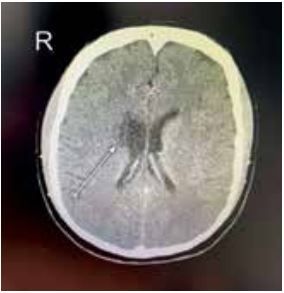
Figure 1(A): Sub acute infarcts in corona radiata
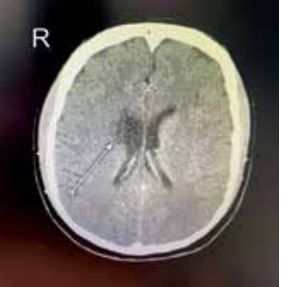
Figure 1(B): Peri-Insular region
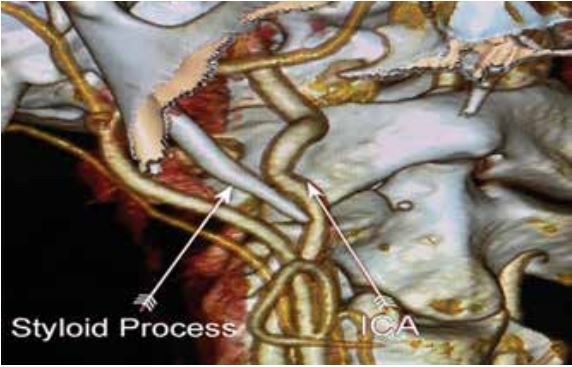
Figure 2: Elongated styloid process abutting the right internal carotid artery with a small kink at the same location
Discussion
There is an increased risk of cerebral infarction in young adults particularly in developing countries thought to be due to increased incidence of smoking and other risk factor.5 There are many causes and risk factors of stroke in children and young adults as illustrated in Table 1. The common causes such as cardioembolic stroke, arterial dissection, migraine and certain ethnicity is also seen in Young Stroke5,6 along with oral contraceptive users and drug abusers. Diseases such as Anti-phospholipid syndrome, inherited coagulopathy, Veno arterial shunting, rheumatic heart disease is also a known etiology. Structural etiology can be ruled out in the young by echocardiography. Coagulopathy and vascular disease including Moya-Moya, reversible cerebral vasoconstriction (RCVS), systemic lupus erythematosus (SLE), mitochondrial myopathy, mitochondrial encephalopathy, lactic acidosis, and stroke like episodes (MELAS) and leukoencephalopathy require extensive testing and imaging. In our case, the coagulation profile was normal eliminating various etiologies. Twenty-five percent of the population have a Patient Foramen Ovale5 which is also speculated in Young Stroke according to several studies. Although the evidence is unclear, migraine particularly migraine with aura, is associated with increased risk of stroke in young population as well. The mechanism and pathophysiology remain unclear.7
Hyper-homocysteinemia, a genetic mutation, is thought to cause abnormal blood clotting as well as deficiencies of folate and vitamins B6 and B12. This is thought to be related to coagulopathies and small vessel disease and is an emerging cause of stroke in young. Hyper-homocysteinemia is seen more in young men with stroke, four times more often than females.5 Hypercoagulable workup also includes investigation of protein C and S levels. Even though it concurs with less percentage of stroke in young, even mild deficiency of these proteins is responsible for about 4-12% of stroke in young
In this case study, we diagnosed recurrent ischemic stroke due to Eagle Syndrome. Stroke in Young itself is a diagnostic dilemma. Anatomical variations like elongated styloid process are considered even more rarely as the etiology. Our patient had a presenting complaint of left sided weakness along with gait imbalance with recurrent right sided neck pain. CT angiography was normal but in the same sequence bony elongation of styloid process was seen, dissection was suspected, and surgical intervention was recommended. Even though with thorough investigation, in as many as in 35% of cases, the etiology of stroke remains unclear.8
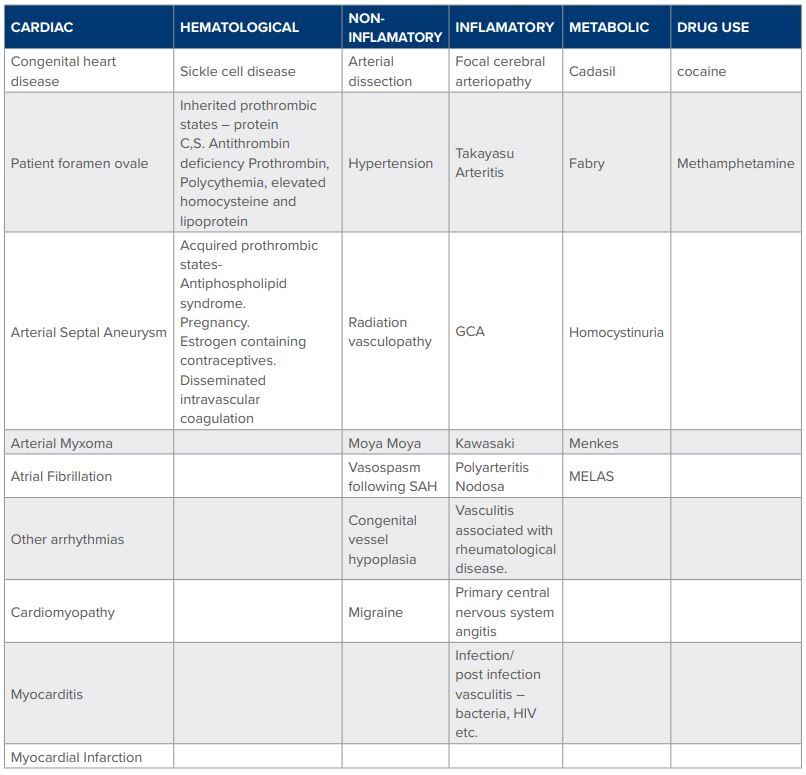
Table 1: Causes and risk factors for ischemic stroke in children and young adults
MELAS: Mitochondrial encephalopathy, lactic acidosis and stroke like episodes
CONCLUSION:
Eagle Syndrome presenting with recurrent stroke is a rare occurrence. In patient with Young stroke, eliciting a detailed history and directed investigation is essential. Anatomical variation should be suspected with recurrent stroke in the same hemisphere. Subtle symptoms like recurrent neck pain should raise a suspicion of dissection. Eagle syndrome causing dissection specifically in young age with recurrent stroke must be included in the diagnostic workup of stroke in young.
References
- Moon CS, Lee BS, Kwon YD, Choi BJ, Lee JW, Lee HW et al. Eagle’s syndrome: a case report. J Korean Assoc Oral Maxillofac Surg. 2014 Feb;40(1):43-7. doi: 10.5125/jkaoms.2014.40.1.43. Epub 2014 Feb 25. PMID: 24627843; PMCID: PMC3949492.
- Ilgüy M, Ilgüy D, Güler N, Bayirli G. Incidence of the type and calcification patterns in patients with elongated styloid process. J Int Med Res. 2005 Jan-Feb;33(1):96-102. doi: 10.1177/147323000503300110. PMID: 15651721.
- Warrier S A, Kc N, K S, Harini DM. Eagle’s Syndrome: A Case Report of a Unilateral Elongated Styloid Process. Cureus. 2019 Apr 10;11(4):e4430. doi: 10.7759/cureus.4430. PMID: 31245217; PMCID: PMC6559395.
- Camarda AJ, Deschamps C, Forest D. I. Stylohyoid chain ossification: a discussion of etiology. Oral Surg Oral Med Oral Pathol. 1989 May;67(5):508-14. doi: 10.1016/0030- 4220(89)90264-8. PMID: 2497419.
- George MG. Risk Factors for Ischemic Stroke in Younger Adults: A Focused Update. Stroke. 2020 Mar;51(3):729-735. doi: 10.1161/STROKEAHA.119.024156. Epub 2020 Feb 12. PMID: 32078487; PMCID: PMC7112557.
- Putaala J, Metso AJ, Metso TM, Konkola N, Kraemer Y, Haapaniemi E, Kaste M, Tatlisumak T. Analysis of 1008 consecutive patients aged 15 to 49 with first-ever ischemic stroke: the Helsinki young stroke registry. Stroke. 2009 Apr;40(4):1195-203. doi: 10.1161/STROKEAHA.108.529883. Epub 2009 Feb 26. PMID: 19246709.
- Bousser MG. Estrogens, migraine, and stroke. Stroke. 2004 Nov;35(11 Suppl 1):2652-6. doi: 10.1161/01. STR.0000143223.25843.36. Epub 2004 Sep 30. PMID: 15459439.
- Griffiths D, Sturm J. Epidemiology and etiology of young stroke. Stroke Res Treat. 2011;2011:209370. doi: 10.4061/2011/209370. Epub 2011 Jul 18. PMID: 21789269; PMCID: PMC3140048.