 WhatsApp Us (24/7)
 +91 926 888 0303 (24/7)


Abstract: This review article explores the intricate link between Poly Cystic Ovarian Syndrome (PCOS) and gynaecological cancers, primarily focusing on endometrial, breast, and ovarian cancers. PCOS, marked by hormonal imbalances and metabolic disruptions, sets a milieu conducive to cancer development. The link between PCOS and endometrial cancer is particularly strong due to chronic anovulation causing an oestrogen-driven endometrial hyperplasia. Strategies to mitigate endometrial cancer risk in PCOS encompass weight management, physical activity, insulin resistance reversal, progesterone withdrawal bleeds, breastfeeding, and pregnancy.
Although no definitive link is established between PCOS and breast cancer, the impact of oral contraceptive pill use on breast cancer risk in PCOS treatment requires further inquiry. Similarly, the association between PCOS and ovarian cancer is intricate, with some evidence suggesting genetic and epigenetic connections, while others indicating reduced risks. Notably, a potential link between PCOS and serous borderline tumours exists, necessitating additional research for clarity.
This article highlights the importance of understanding PCOS-related cancer risks and management strategies. It underlines the need for interdisciplinary efforts to advance knowledge regarding PCOS-associated cancer risks, risk prediction models, and targeted interventions.
Key words: Poly Cyctic Ovarian Syndrome (PCOS), Uterine Cancer, Ovarian Cancer, Endometrial Cancer (EC)
Introduction
PCOS is an endocrinopathy affecting women in age-groups starting from adolescence, through the reproductive years and to effects lasting in the post-menopausal age-group as well.1 The incidence varies across populations in India from 3.7 to 22.5 percent depending upon the criterion being used Rotterdam or Androgen Excess Society.2,3 There are varying manifestations of hyperandrogenism, menstrual irregularities, insulin resistance and altered metabolic profile in women with PCOS.4 This altered hormonal and metabolic milieu over long-term provides a nidus for cancers to develop.
Association of PCOS with gynaecologic cancers was first reported over 70 years ago.5 Chronic anovulation, a hallmark feature of PCOS, causes prolonged exposure of oestrogen to endometrial cells unopposed by progesterone leading to endometrial hyperplasia, which has a potential to develop into carcinoma. Many women with PCOS have hyperinsulinism due to insulin resistance. High insulin levels cause an increase in levels of many hormones including testosterone and have been implicated as an alternative pathway for tumorigenesis.6 On the same note, cancer breast and ovary have aslo been associated with hormonal disorders affection ovulation.7
PCOS and Endometrial Cancer (EC)
EC is the sixth most common cancer in women worldwide and the 15th most common cancer overall. There were over 380,000 new cases of endometrial cancer reported in 2018.8 In India, there were over 13000 cases in 2018, the incidence is increasing with the adoption of Western lifestyles in the urban areas and has a differential pattern across states.8,9 One of the early landmark published paper by Mayo Clinic in 1953, cited association of EC with PCOS and advised for dilation and curettage of the endometrial cavity to rule out cancer before proceeding to ovarian surgery.10 Ever since there have been many studies, multiple reviews and 3 metanalysis so far that reveals an increased risk of up to 3 fold-higher EC in patients with PCOS.11
Historically, EC is subdivided into two pathogenetic types, which have differences in metabolic and endocrine associations, namely Type 1 and Type 2 tumours.
With many other risk-stratification systems including European and French systems incorporating various features over the last two decades, there is a paradigm shift to molecular classification due to the limitations of these systems.12
Pathogenesis
Historically, hyperestrogenism induced proliferation unopposed by progesterone associated with anovulation in PCOS, had been considered the sole reason for neoplastic conversion. Now, there is a redefinition of the pathogenesis with multiple components.
1. Hyperandrogenism
Hyperandrogenism is one of the diagnostic components of PCOS. Excess production of androgens occurs due to disruption of the normal hypothalamic-pituitary-ovarian axis. The pulsatile production of gonadotropin-releasing hormone (GnRH) by the hypothalamus is disrupted and there is excessive production of gonadotropins. High levels of GnRH favours the production of beta-subunit of Luteinising Hormone (LH) over Follicle Stimulating Hormone (FSH) resulting in elevated LH/FSH ratio. Increased levels of LH leads to theca cells hyperplasia which leads to increased androgen synthesis. Also, an important component for the development of hyperandrogenic state is increased levels of insulin caused by insulin resistance. Increased insulin levels mimic the activity of LH on theca cells in ovary causal pathway that links hyperinsulinism with ovarian hyperandrogenism and infertility in obesity.13 This association is strengthened by observations of a decline in hyperandrogenism upon improvement of insulin resistance.14 This complex pathway has been simplified in Figure 1, which depicts the action of insulin-sensitizers on the liver and ovary leading to decrease in endometrial cancer risk.15
2. Hyperestrogenism unopposed by progesterone
The role of hormones in development of neoplasia is dualistic, firstly in mutagenesis and then as promoters.16 Unopposed oestrogen is a risk factor for endometrial cancer and it is based on facts that it causes endometrial cell proliferation in the follicular phase. The basic mechanism of action of oestrogen is that it’s binding to endometrial cell DNA, activates the proliferative PI3K/AKT/mTOR signaling and also leads to positive modulation of other genes associated with endometrial proliferation like cMyc and cyclin A, which in turn leads to piling up of replication errors, predisposing to malignancy.17 Also, the proliferative effects of estradiol on endometrial tissue is caused by increase in production of Insulin-like growth factor (IGF-1) by the stromal tissues locally.17
Progesterone, on the other hand mitigates the effects of oestrogen by genomic and non-genomic pathways to modulate cell proliferation.18 It reduces estrogenic activity by increasing 17β-hydroxysteroid dehydrogenase and estrogen sulfo transferase which covert estradiol into estrone, which has reduced activity and, into estrogen sulfates which are excreted rapidly.18 Progesterone also induces the gene-expression and synthesis of insulin-like growth factor binding protein-1 (IGFBP-1), which inhibits IGF-1 activity on endometrium.19
This complex association between estrogen, progesterone and obesity has been depicted by a simple line-diagram in figure 2.
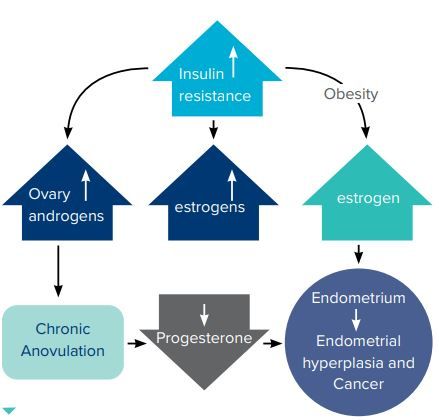
Figure 2: PCOS, obesity and the resulting hormonal mileu leading to endometrial cancer.
3. Insulin resistance and obesity
The prevalence of IR in PCOS is of paramount significance, to the tune of 50-70% and occurs independent of obesity.20 Hyperinsulinemia induced by IR predisposes the body to many cancers including endometrial cancer. The exact mechanism by which hyperinsulinemia predisposes to EC is uncertain, but it is proposed to be linked to the effects of insulin and IGF on endometrial cells by altering the P13K-PTEN-AKT signaling pathway.21 There have been studies confirming that insulin and IGF have proliferative effects on endometrial cells in-vitro, which is thought to be caused by overexpression of IGF type-1 receptors. This is thought to be via protein kinase pathway, causing an increase in expression of vascular endothelial growth factor or perhaps, by inhibiting apoptosis.22
There is also a case for indirect mechanism of action by alteration of hormone milieu caused by hyperinsulinemia which causes stimulation of theca cell androgen activity, increased free testosterone levels as there is decreased hepatic sex hormone binding globulin (SHBG) levels, increased LH and IGF-1 stimulated androgen production and sustained IGF-1 activity.23
Obesity is frequently seen in association with PCOS, and obesity and IR together act synergistically for the development of EC.16 For every 5 kg/m2 increase in BMI, there is a proportionate 60% increased risk of EC.24 Insulin acts as a growth factor for adipose tissue and causes both hypertrophy and hyperplasia of adipocytes.20 In obese women with PCOS, these hormonal changes act synergistically to increase the activity of free estrogens for the development of EC.25
Prevention
The lifetime risk in patients with PCOS for development of EC is around 9%.26 With other risk factors like obesity, insulin resistance and reproductive history of nulliparity often being present alongside PCOS, the risk become even higher and it becomes imperative to recognize women at-risk for the development of EC. This would help us select the sub-group at risk in whom appropriate risk-reducing measures can be taken to prevent development of EC.
1. Weight management and physical activity
Maintaining a normal range BMI helps reduce risk of EC. There can be various methods to achieve the desired weight like lifestyle modifications, anti-obesity medications, bariatric surgery, which usually result in loss of about 4-6%, 7-10% and 15% weight loss respectively, but the key remains sustaining the weight-loss.27 There is evidence suggesting that women who are able to maintain weight-loss have a lower risk of EC compared to those who don’t.28
Physical activity has an association with a lowered risk of EC, with possible biological mechanisms of weight loss, decrease in adipocytes, which changes the internal hormonal milieu, body metabolism and immunity.16 In a meta-analysis by Schmid et al., recreational physical activity, occupational physical activity, and walking/biking for transportation have been associated with a lowered risk of EC.29
2. Insulin resistance reversal
There exists a linkage at a molecular level between EC and PCOS with respect to hyperinsulinaemia, which is of paramount importance. Metformin is an insulin sensitizer as it reduces the gluconeogenesis in the presence of insulin. Metformin is known to exert anti-proliferative effects by decreased circulating insulin and insulin-like growth factor levels and by inhibition of mammalian target of rapamycin signalling.30
Although metformin use has been linked with a good survival outcome with EC in diabetes patients in a meta-analysis, the chemoprotective role of metformin is debatable.31 A 2017 Cochrane analysis reported insufficient evidence to encourage or confute the use of metformin alone or in combination with standard therapy - specifically, megestrol acetate - versus megestrol acetate alone, for management of endometrial hyperplasia to prevent EC.32 There is a lacuna of good-quality evidence for evaluating benefits of metformin in risk-reduction of EC in women with PCOS and IR and is a concept that needs to be explored more
4. Breast feeding and pregnancy
Chronic anovulation in PCOS makes the endometrium susceptible to the unopposed proliferative action of estrogen. Progesterone induced withdrawal bleeding of endometrium allows for the proliferation to be temporarily suspended and helps reducing risk of developing atypical hyperplasia and EC.16
3. Progesterone withdrawal bleeds
Breast-feeding provides protection against EC.33,34 In a meta-analysis by Jordan et al., ever breastfeeding was associated with an 11% reduction in risk of endometrial cancer (pooled OR 0.89, 95% CI 0.81-0.98) and longer average duration of breastfeeding per child was associated with lower risk of endometrial cancer.33 Another meta-analysis, found a linear relationship of breast-feeding with EC, and estimated that EC risk decreased by 1.2% for one-month increment of breastfeeding.34
Parity is associated with a decreased risk of EC. In a meta-analysis, not only was a reduced risk found with pregnancy but also the dose-response analysis suggested a nonlinear relationship between the number of parity and endometrial cancer risk.35 The Relative Risk decreased with each increased parity.
Screening
Women with PCOS fall under the intermediate risk-group for endometrial cancer due to effect of unopposed action of oestrogen, for which there are no screening guidelines at present.36 Currently, American Cancer Society recommends that women at average and increased risk be informed about the risks involved and symptoms (in particular, abnormal bleeding) of endometrial cancer at the onset of menopause and to promptly report these symptoms to their physicians.37
Screening strategies needs a revamp given the increasing incidence of EC. There is line-of work and research aimed to take action in this segment of Intermediate-risk women to offer them screening or risk-reducing strategies like intrauterine device with progesterone, which reduces EC risk by 19%.38
Various studies have been aimed at development of predictive models for risk association with various parameters including epidemiological, reproductive and genetic factors, with serum biomarkers, imaging features and symptoms included in some.39
Areas of future research
1. PCOS and EC, both are complex diseases with an extensive interplay of genetic and environmental factors playing their part in pathogenesis. A deep understanding of the molecular pathways might not be possible given the heterogeneity and complexity involved. Recently, molecular –omics have been used to unravel these complexities by using bioinformatics analysis and mathematical modelling using genomics, proteomic and metabolomics approaches and is known as network biology. High-quality data based on computational modelling with multi-disciplinary collaborations needs to come forth to help understand these complex interactions between EC and PCOS.
2. Risk stratification models based approaches utilizing epidemiological and genetic factors for identifying those possibly at a higher risk and evolving utilizable and cost-effective screening methods for them.
PCOS and breast cancer
Breast cancer is the most common cancer-affecting women globally.8 The association between breast cancer and PCOS is multiplex and with many confounders. In animal model studies, androgen-induced PCOS rats reported benign tumours too had a mixed pattern of fibroadenoma/fibroma and cysts.40 In a recent meta-analysis, there was no increased risk of breast cancer found with an association between PCOS and the breast cancer risk in case-control studies 0.87 (95% CI, 0.44 to 1.31) and that of cohort studies was estimated 1.18 (95% CI, 0.93 to 1.43).41 Similarly, in a long-term Danish registry from 1977-2012, found no association between PCOS and breast cancer (N = 59, SIR = 1.1; 95% CI = 0.8-1.4) and concluded that women with PCOS have the same risk of breast cancer as that of the general population.42 Another aspect in that management of PCOS is oral contraceptive (OC) pills and it’s important to understand the link between OC pills and breast cancer development. A recent Danish prospective cohort study found an increased risk of breast cancer amongst women using OC pills, with the risk increasing with increased duration of use, however, the absolute increase in risks was small.43 Thus, PCOS doesn’t have an association with breast cancer risk, but more studies are needed for evaluation of OC use with breast cancer risk as they are used in PCOS treatment.
PCOS and ovarian cancer
Ovarian cancer is the seventh most common cancer amongst women and has low 5-year survival rates.44 In a study, incorporating whole-exom study, irregular menstruation ascribed from PCOS was associated with the development of ovarian cancer.45 Ovarian tissue of patients with irregular menstruation showed DNA hypomethylation and shared miRNA and mRNA forms like that seen in ovarian cancer. The study thus provided genetic and epigenetic changes in irregular cycles, which confer increased risk of ovarian cancer.
However, in a study with over 16,000 women with invasive or borderline ovarian cancer and 17,000 controls, both irregular and longer (>35 days) menstrual cycles were associated with reduced risks of ovarian cancer.46 Also, in overweight women who reported irregular cycles, serous borderline histology was found at a higher frequency. In a meta-analysis by Barry et al., in 2014, no increased risk of ovarian cancer was found in women with PCOS.11 Thus, we have no definitive evidence of increased risk of ovarian cancer in PCOS as confirmed by various studies and a suggestive association exists between serous borderline tumors and PCOS, which needs to be confirmed by further research led in the same.11,46
Key points
- The altered hormonal and metabolic milieu in patients with PCOS over long-term provides a nidus for cancers to develop.
- An increased risk of up to 3 fold-higher EC incidence in patients with PCOS.
- Risk stratification models based approaches for identifying those at a higher risk of EC, evolving utilizable and cost-effective screening methods for prevention.
- PCOS doesn’t have an association with increased breast cancer risk.
- No definitive evidence of increased risk of ovarian cancer in PCOS.
- Suggestive association exists between serous borderline tumors and PCOS.
Acknowledgements:
None
Conflict of interest:
None
Funding support:
None
References
- Ganie MA, Vasudevan V, Wani IA, Baba MS, Arif T, Rashid A. Epidemiology, pathogenesis, genetics & management of polycystic ovary syndrome in India. The Indian Journal of Medical Research. 2019 Oct;150(4):333.
- Joseph N, Reddy AG, Joy D, Patel V, Santhosh P, Das S et al. Study on the proportion and determinants of polycystic ovarian syndrome among health sciences students in South India. Journal of natural science, biology, and medicine. 2016 Jul;7(2):166.
- Bharathi RV, Swetha S, Neerajaa J, Madhavica JV, Janani DM, Rekha SN et al. An epidemiological survey: Effect of predisposing factors for PCOS in Indian urban and rural population. Middle East Fertility Society Journal. 2017 Dec 1;22(4):313-6.
- Azziz R, Carmina E, Dewailly D, Diamanti-Kandarakis E, Escobar-Morreale HF, Futterweit W et al. Criteria for defining polycystic ovary syndrome as a predominantly hyperandrogenic syndrome: an androgen excess society guideline. The Journal of Clinical Endocrinology & Metabolism. 2006 Nov 1;91(11):4237-45.
- Speert H. Carcinoma of the endometrium in young women. Surgery, gynecology & obstetrics. 1949 Mar;88(3):332.
- Lauretta R, Lanzolla G, Vici P, Mariani L, Moretti C, Appetecchia M. Insulin-sensitizers, polycystic ovary syndrome and gynaecological cancer risk. International journal of endocrinology. 2016 Jan 1;2016.
- Hunn J, Rodriguez GC. Ovarian cancer: etiology, risk factors, and epidemiology. Clinical obstetrics and gynecology. 2012 Mar 1;55(1):3-23.
- Bray F, Ferlay J, Soerjomataram I, Siegel RL, Torre LA, Jemal A. Global cancer statistics 2018: GLOBOCAN estimates of incidence and mortality worldwide for 36 cancers in 185 countries. CA: a cancer journal for clinicians. 2018 Nov;68(6):394-424.
- Dhillon PK, Mathur P, Nandakumar A, Fitzmaurice C, Kumar GA, Mehrotra R et al. The burden of cancers and their variations across the states of India: the Global Burden of Disease Study 1990–2016. The Lancet Oncology. 2018 Oct 1;19(10):1289-306.
- Jackson RL, Dockerty MB. The Stein-Leventhal syndrome: analysis of 43 cases with special reference to association with endometrial carcinoma. Obstetrical & Gynecological Survey. 1957 Aug 1;12(4):574-6.
- Barry JA, Azizia MM, Hardiman PJ. Risk of endometrial, ovarian and breast cancer in women with polycystic ovary syndrome: a systematic review and meta-analysis. Human reproduction update. 2014 Sep 1;20(5):748-58.
- Mog B, Shaw E, Hwang M, Pearlman A, Dinapoli S, Paul S, et al. Chimeric Autoantigen-T Cell Receptor (CATCR)-T Cell Therapies to Selectively Target Autoreactive B Cells. Arthritis Rheumatol. 2022;74(9).
- Talhouk A, McAlpine JN. New classification of endometrial cancers: the development and potential applications of genomic-based classification in research and clinical care. Gynecologic oncology research and practice. 2016 Dec 1;3(1):14
- Wu S, Divall S, Nwaopara A, Radovick S, Wondisford F, Ko C, Wolfe A. Obesity-induced infertility and hyperandrogenism are corrected by deletion of the insulin receptor in the ovarian theca cell. Diabetes. 2014 Apr 1;63(4):1270-82.
- Baillargeon JP, Jakubowicz DJ, Iuorno MJ, Jakubowicz S, Nestler JE. Effects of metformin and rosiglitazone, alone and in combination, in nonobese women with polycystic ovary syndrome and normal indices of insulin sensitivity. Fertility and sterility. 2004 Oct 1;82(4):893-902.
- Tokmak A, Kokanali MK, Guzel AI, Kara A, Topcu HO, Cavkaytar S. Polycystic Ovary Syndrome and Risk of Endometrial Cancer: a Mini-Review. Asian Pacific Journal of Cancer Prevention. 2014;15(17):7011-4.
- MacKintosh ML, Crosbie EJ. Prevention strategies in endometrial carcinoma. Current oncology reports. 2018 Dec 1;20(12):101.
- Matias-Guiu X, Prat J. Molecular pathology of endometrial carcinoma. Histopathology 2013;62(1):111e23.
- Sinreih M, Hevir N, Rižner TL. Altered expression of genes involved in progesterone biosynthesis, metabolism and action in endometrial cancer. Chemico-biological interactions. 2013 Feb 25;202(1-3):210-7
- Kim JJ, Chapman-Davis E. Role of progesterone in endometrial cancer. InSeminars in reproductive medicine 2010 Jan (Vol. 28, No. 1, p. 81). NIH Public Access.
- Tokmak A, Kokanali MK, Guzel AI, Kara A, Topcu HO, Cavkaytar S. Polycystic Ovary Syndrome and Risk of Endometrial Cancer: a Mini-Review. Asian Pacific Journal of Cancer Prevention. 2014;15(17):7011-4.
- Subramaniam KS, Tham ST, Mohamed Z, Woo YL, Adenan NA, Chung I. Cancer-associated fibroblasts promote proliferation of endometrial cancer cells. PloS one. 2013 Jul 26;8(7):e68923.
- Cheung LW, Hennessy BT, Li J, Yu S, Myers AP, Djordjevic B et al. High frequency of PIK3R1 and PIK3R2 mutations in endometrial cancer elucidates a novel mechanism for regulation of PTEN protein stability. Cancer discovery. 2011 Jul 1;1(2):170-85.
- Goodarzi MO, Dumesic DA, Chazenbalk G, Azziz R. Polycystic ovary syndrome: etiology, pathogenesis and diagnosis. Nature reviews endocrinology. 2011 Apr;7(4):219-31.
- Renehan AG, Tyson M, Egger M, Heller RF, Zwahlen M. Body-mass index and incidence of cancer: a systematic review and meta-analysis of prospective observational studies. The Lancet. 2008 Feb 16;371(9612):569-78.
- Li X, Shao R. PCOS and obesity: insulin resistance might be a common etiology for the development of type I endometrial carcinoma. American journal of cancer research. 2014;4(1):73.
- Haoula Z, Salman M, Atiomo W. Evaluating the association between endometrial cancer and polycystic ovary syndrome. Human reproduction. 2012 May 1;27(5):1327-31.
- Upala S, Sanguankeo A. Bariatric surgery and risk of postoperative endometrial cancer: a systematic review and meta-analysis. Surgery for Obesity and Related Diseases. 2015 Jul 1;11(4):949-55.
- Ward KK, Roncancio AM, Shah NR, Davis MA, Saenz CC, McHale MT et al. Bariatric surgery decreases the risk of uterine malignancy. Gynecologic oncology. 2014 Apr 1;133(1):63-6.
- Schmid D, Behrens G, Keimling M, Jochem C, Ricci C, Leitzmann M. A systematic review and meta-analysis of physical activity and endometrial cancer risk. European Journal of Epidemiology. 2015;5(30):397-412.
- Engelman JA, Cantley LC. Chemoprevention meets glucose control. Cancer prevention research. 2010 Sep 1;3(9):1049-52.
- Gong H, Chen Y, Zhou D. Prognostic significance of metformin treatment in endometrial cancer: a meta-analysis. Die Pharmazie-An International Journal of Pharmaceutical Sciences. 2020 Aug 1;75(8):401-6.
- Crosbie EJ, Zwahlen M, Kitchener HC, Egger M, Renehan AG. Body mass index, hormone replacement therapy, and endometrial cancer risk: a meta-analysis. Cancer Epidemiology and Prevention Biomarkers. 2010 Dec 1;19(12):3119-30.
- Jordan SJ, Na R, Johnatty SE, Wise LA, Adami HO, Brinton LA et al. Breastfeeding and endometrial cancer risk: an analysis from the epidemiology of endometrial cancer consortium. Obstetrics and gynecology. 2017 Jun;129(6):1059.
- Zhan B, Liu X, Li F, Zhang D. Breastfeeding and the incidence of endometrial cancer: a meta-analysis. Oncotarget. 2015 Nov 10;6(35):38398.
- Wu QJ, Li YY, Tu C, Zhu J, Qian KQ, Feng TB et al. Parity and endometrial cancer risk: a meta-analysis of epidemiological studies. Scientific reports. 2015 Sep 16;5:14243.
- Colombo N, Creutzberg C, Amant F, Bosse T, González-Martín A, Ledermann J et al. ESMO-ESGO-ESTRO consensus conference on endometrial cancer: diagnosis, treatment and follow-up. International Journal of Gynecologic Cancer. 2016 Jan 1;26(1).
- Smith RA, Andrews KS, Brooks D, Fedewa SA, Manassaram-Baptiste D, Saslow D et al. Cancer screening in the United States, 2019: A review of current American Cancer Society guidelines and current issues in cancer screening. CA: a cancer journal for clinicians. 2019 May;69(3):184-210.
- Felix AS, Gaudet MM, Vecchia CL, Nagle CM, Shu XO, Weiderpass E et al. Intrauterine devices and endometrial cancer risk: A pooled analysis of the E pidemiology of E ndometrial C ancer C onsortium. International journal of cancer. 2015 Mar 1;136(5):E410-22.
- Alblas M, Velt KB, Pashayan N, Widschwendter M, Steyerberg EW, Vergouwe Y. Prediction models for endometrial cancer for the general population or symptomatic women: A systematic review. Critical reviews in oncology/hematology. 2018 Jun 1;126:92-9.
- Noroozzadeh M, Behboudi-Gandevani S, Mosaffa N, Tohidi M, Ramezani Tehrani F. High prevalence of benign mammary tumors in a rat model of polycystic ovary syndrome during postmenopausal period. Gynecological Endocrinology. 2019 Aug 3;35(8):679-84.
- Shobeiri F, Jenabi E. The association between polycystic ovary syndrome and breast cancer: a meta-analysis. Obstetrics & gynecology science. 2016 Sep 1;59(5):367-72
- Gottschau M, Kjaer SK, Jensen A, Munk C, Mellemkjaer L. Risk of cancer among women with polycystic ovary syndrome: a Danish cohort study. Gynecologic oncology. 2015 Jan 1;136(1):99-103.
- Mørch LS, Skovlund CW, Hannaford PC, Iversen L, Fielding S, Lidegaard Ø. Contemporary hormonal contraception and the risk of breast cancer. New England Journal of Medicine. 2017 Dec 7;377(23):2228-39.
- American Cancer Society. Cancer Facts & Figures 2018. Atlanta: American Cancer Society; 2018.
- Jiao J, Sagnelli M, Shi B, Fang Y, Shen Z, Tang T, Dong B, Li D, Wang X. Genetic and epigenetic characteristics in ovarian tissues from polycystic ovary syndrome patients with irregular menstruation resemble those of ovarian cancer. BMC endocrine disorders. 2019 Dec;19(1):1-0.
- Harris HR, Babic A, Webb PM, Nagle CM, Jordan SJ, Risch HA et al. Polycystic ovary syndrome, oligomenorrhea, and risk of ovarian cancer histotypes: evidence from the Ovarian Cancer Association Consortium. Cancer epidemiology, biomarkers & prevention. 2018 Feb 1;27(2):174-82.