 WhatsApp Us (24/7)
 +91 926 888 0303 (24/7)


Abstract:
Background and objectives: Drugs Controller General of India (DCGI) mandates screening all donated blood for Transfusion transmissible infections (TTI) viz. Human immunodeficiency virus (HIV) I and II, Hepatitis B surface antigen (HBsAg), Hepatitis C virus (HCV), syphilis and malaria. Blood centres are required to make appropriate efforts to contact the reactive donors and recall them for post-donation counselling followed by referral to an assigned centre for confirmatory testing and management. Donor notification figures are lower in India compared to Western studies. This study aimed to look at impact of dual notification protocol compared to a single notification and its impact on TTI reactive donor return rate.
Materials and methods: This was a retrospective single centre-based study. Donors reactive for any TTI by CLIA in duplicate, were notified and called for counselling and referral.
Study population was divided into two group based on notification protocol
Group 1- (1st January 2022 to 31st December 2022): three telephonic notification attempts made and letter dispatched only to those donors who could not be contacted.
Group 2- (1st January 2023 to 31st December 2023): To increase donor recall, a recall letter was dispatched through speed post to all reactive donors along with three telephonic attempts to notify and recall the donor.
Results: Out of total 25,115 donors, 300 donors in group 1 and 242 in group 2 were reactive for either of TTIs. Group 2 showed a high return rate (61.67%) compared to group 1 (35.3%). Most common reason for non-response was out-station donors (40%)
Conclusion: Our study highlights the importance of dual notification system and repeated follow-ups to improve donor recall.
Key words: Donor Notification, Donor Referral, Counselling, ICTC, NVHc
Introduction
The main goal of blood transfusion services (BTS) is to ensure the availability of adequate and safe supply of blood and blood products. The Drugs and Cosmetics Act, 1945 amendments thereof mandate that all blood donations are to be screened for Transfusion transmissible infections (TTI) viz. HIV I and II, HBsAg, HCV, syphilis and malaria.1 To ensure safe blood supply in the country, the Government of India adopted the National Blood Policy “An action plan for blood safety” in 2002.2 National AIDS control organization (NACO) recommended 3rd and 4th generation enzyme linked immuno- sorbent assay (ELISA) testing kits which have ≥99.5 % sensitivity and ≥98 % specificity should be preferred for use in blood centres for screening donated blood.3 If during the process of screening of the donated blood the TTI markers are found to be reactive, blood collected from such donors has to be discarded and the donor is deferred as per Drugs and Cosmetic Act.2 A very important and efficient method of curtailing TTI is notifying and counselling the TTI reactive donors. Till 2002, disclosure of TTI-reactive status to the blood donors was not permitted. Under the National Blood Policy provision for notification, counselling and referral of TTI-reactive blood donors, to ensure safety of the blood supplies was included.2 In 2017, National Blood Transfusion Council (NBTC) and NACO under the Ministry of Health and Family Welfare released the Guidelines for Blood Donor Selection and Blood Donor Referral. Blood centres are required to obtain written consent from donors prior to blood donation for donor notification in case of reactive screening tests. All consenting donors are notified after repeat testing and requested to report back to the blood centre for further counselling and referral to appropriate facilities.4 The blood collection centre is required to make appropriate efforts to contact the reactive blood donors either on phone or by sending a letter and the process has to be documented on record. This process informs donors about their status as to TTI, modes of transmission of such infections, and helps prevent secondary transmission of these infections in the community. For HIV reactive donors, if the initial seroreactivity donor does not return to blood centre despite three consecutive weekly attempts, the list of HIV seroreactive blood donors has to be shared with the linked (Integrated Counselling and Testing Centre) ICTC under shared confidentiality. All HBsAg and anti-HCV reactive donors have to be referred to the nearest treatment centre under National Viral Vector Control Program (NvHCP) and Syphilis to sexually transmitted diseases (STD) clinics and malaria reactive donors referred to a physician.5 Although donor notification process is now mandatory, reports regarding the donor notification rates or donor return to the blood centres are highly variable.6 A sizable number of these donors who are TTI reactive are either first-time donors or are unaware of their infectious status at the time of donation and impacts their return for counselling.7 Referral guidelines have defined three attempts for HIV donor notification but number of attempts for other TTIs has not been defined. Aim of this study was to evaluate impact of dual notification protocol for reactive donor notification in terms of response to notifications and donors returning for counselling.
Materials and methods
This was a retrospective single centre-based study carried out at the Department of Transfusion Medicine, BLK-Max Super Speciality Hospital, New Delhi. An approximate 12,000 -13000 blood units were collected at our centre per annum from voluntary as well as replacement blood donors. Data was retrieved from the blood-center information system and manual records for a period of two years, from 1st January 2022 to 31st December 2023. Blood donors’ acceptance or deferral was based on for donor selection as per Drugs and Cosmetics Drugs and Cosmetics Act (the rules thereunder)1 and supplemented by the National Blood Transfusion Council (NBTC) guidelines, including their amendments.4 Pre-donation counselling included information to increase the donor awareness regarding TTI and their prevention, decrease in anxiety and process to obtain donor consent for notification in case of any abnormal testing results. The donor questionnaire also included questions eliciting specific high-risk behaviour and option for self-exclusion or self-deferral. The donor was explained that donated blood would be screened for HIV, HBsAg, HCV, syphilis and malaria. Confidentiality of the donor was maintained at each step. Chemiluminescent immunoassays (CLIA) approved by CDSCO were used for testing Hepatitis B surface antigen, anti-HCV, test for syphilis and anti-HIV 1 & 2 and p24 Ag (4th generation). All blood units were screened by CLIA using fourth generation HIV and third generation CLIA kits for HBsAg, HCV, HIV & syphilis and malaria by Immunochromatographic card test. Duplicate test using same CLIA kits was carried out with the same sample and from a third sample from the blood bag for units which were reactive for any of the TTIs. All blood components derived from the reactive tested unit were immediately segregated and discarded and confidential letters were sent to these donors after verifying their consent for notification from the Donor Registration and Screening Form.
Study design and setting
Our blood centre has a policy to contact the donors who test reactive for any TTI and advise them to report to the blood centre for face-to-face counselling and referral to appropriate facilities for confirmatory testing and further management.
The Study population was divided into two group based on notification strategy
Group 1
(1st January 2022 to 31st December 2022): where notification attempts over telephone were provided thrice (on 3 consecutive days and for HIV thrice at weekly gaps) and letter dispatched once to only those donors who could not be contacted on phone thrice. The donors who did not respond to these notifications were considered non-responders.
Group 2
(1st January 2023 to 31st December 2023): In 2023 in an attempt to increase donor recall, a change in the donor notification protocol was made and a recall letter was dispatched through speed post on the next working day when the testing results were available and attempts to notify the donor over telephone were provided thrice (on 3 consecutive days and for HIV thrice at weekly gaps). Donors who did not respond were considered non-responders.
Once the donor visited the blood centre doctor/counsellor counselled the donor and informed about their test results in a separate room maintaining complete confidentiality. Most donors were found to be anxious about their test results and usually they thought of HIV reactivity at first instance. The limitations of the screening test results and need for confirmatory testing were explained before disclosing of test results. During the counselling session, donors were encouraged to talk about their life style and consent for referral obtained. Donors were also advised on strategies to reduce TTI transmission to others. Donors were then referred to respective referral centres, HIV reactive donors were referred to assigned ICTC, HBsAg and HCV donors to assigned centre under NvHCP, Syphilis reactive donors were referred to STD clinics.
Ethical approval
The institutional ethical clearance was obtained from the Institutional ethics committee. As a blood donation screening and registration protocol of the blood centre, all blood donors gave an informed consent prior to blood donation for any additional testing on the blood collected and its subsequent use for study/research purposes and the same are in place. In view of retrospective study design and no risk of disclosure of donor identity involved in this study, the requirement to obtain the blood donors’ consent to review the donor records was waived off by the institutional ethical committee.
Statistical analysis
The data available were collected and entered Microsoft Excel (MS Office 365). This was followed by quantitative analysis of the common variables across the included studies using percentage applicable.
Results
A total of 25,115, including 81.35 % (n = 20428) voluntary and voluntary family/friend non-remunerated whole blood donors and 18.65 % (n=4687) replacement donors were included in the study. Out of total 25,115 blood donors, 300 blood donors in group 1 and 242 in group 2 were reactive for either of TTIs. Two donor showed concomitant HIV and syphilis reactivity so for the 242 reactive results the number of TTI reactive donors were 240. Test-wise distribution with notification and counselling rate of reactive blood donors in Group 1 and Group 2 are shown in Table 1.
Group 1
(1st January 2023 to 31st December 2023): In 2023 in an attempt to increase donor recall, a change in the donor notification protocol was made and a recall letter was dispatched through speed post on the next working day when the testing results were available and attempts to notify the donor over telephone were provided thrice (on 3 consecutive days and for HIV thrice at weekly gaps). Donors who did not respond were considered non-responders.
The donor return and counselling rate was 35.3% (n = 106). Among donors who tested reactive for different TTI for HBsAg, anti HCV, anti-HIV and syphilis, only 39.3%, 18.7%, 44.4% and 41.46 % responded to the call attended counselling respectively.
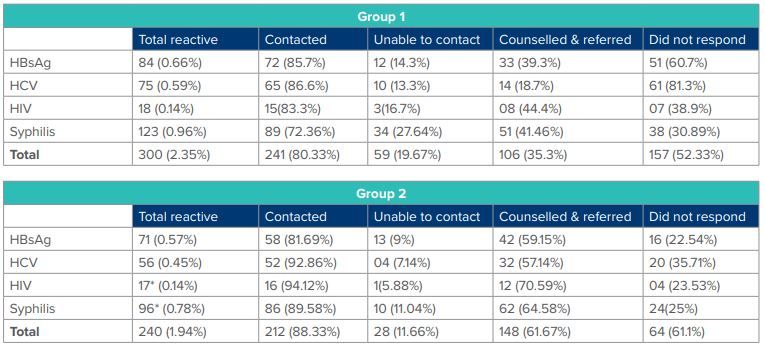
Table 1: Disease wise distribution, notification and counselling rate Group 1 & Group 2
*Two donors were simultaneous reactive for anti-HIV and Syphilis
Group 2
The donor return and counselling rate was 61.67% (n = 148). Among donors who tested reactive for different TTI for HBsAg, anti HCV, anti-HIV and syphilis, 59.15%, 57.14%, 70.59% and 64.58 % responded to the call attended counselling respectively.
Reactive donors were divided into six age groups: very young (18-25 years), young (26-35 years), early middle age (36-45 years), and middle age (46-55 years), late middle age (56-60 years) and elderly (61-65 years). Comparison of the ages of responders and nonresponders showed significant differences. About 35-60 years age group showed maximum response average 59.87% while average 43.44% and 47.5% responded in 18-25 and 26-35 years age group, respectively (Figure 1).
The most common reason why the TTI reactive donors did not return for counselling was the were out-station donors (40%), followed by donors getting themselves re-tested from an outside laboratory (24%), 14% were already aware of their TTI status but did not disclose during pre-donation screening and counselling and 11% cases had provided wrong contact numbers and another 11% did not want to know their test results and come for counselling for lack of time and no leave (Figure 2)
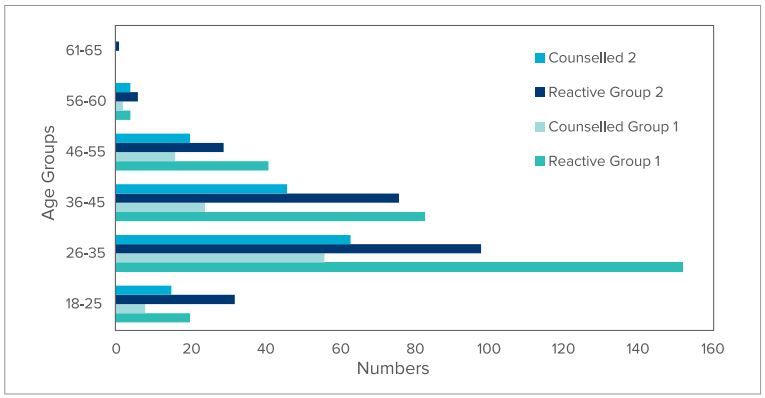
Figure 1: Age distribution of TTI reactive donors and donors counselled and referred
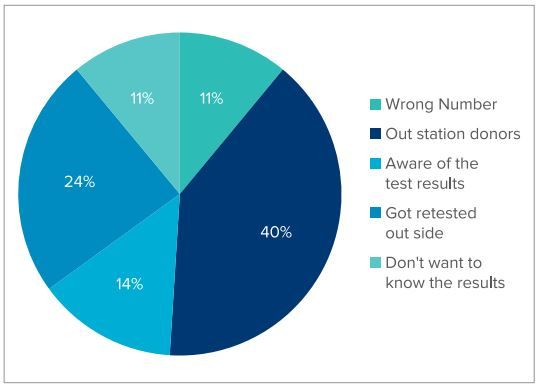
Figure 2: Pie Chart showing reasons why TTI reactive donors could not be counselled
Discussion
In India, prevalence for TTI reactivity amongst blood donors comes under intermediate endemicity rates when compared with the developed countries.8 Blood donors are individuals with social concern come to donate blood with altruistic intentions and hence consider themselves as healthy. The notification of blood donors represents a setting in which asymptomatic individuals are informed of abnormal test results. The response of reactive donors to the notification of abnormal test results depends largely on the donors understanding, long incubation period of TTIs, modes of transmission and about the TTI protocol adopted for donor notification. In 2022, where major thrust was on telephonic attempts to contact the reactive donors and letters sent only to those who did not respond even once to any telephonic calls, only 35.3% of donors responded and were eventually counselled. In contrast in 2023, 61.67% of the blood donor returned for post-test counselling as recall letters were sent to all donors the next working day of the testing irrespective of response received during the telephonic attempts, re-enforcing the benefits of adopting a dual notification protocol. Lower response rate in 2022 suggest poor healthcare knowledge in blood donors, poor understanding of screening results and as letters were not being sent to those who received the phone call might have possibly resulted in the some of the donors ignoring the phone call for return for counselling. Lower response rate (35.34%) was also reported by other studies like a study by Kumari, Sonam9 Similar low responses to the reactive donors’ notifications were also observed by A Kotwal et al. (50.6%) and 48.27% by Sayal N et al.10,11 Patel et al. have reported comparable higher response rate12 similar to the second group in our study.
Outstation donors (40%) was the main reason behind failed donor return in both the groups. This implies the need for pertinent pre-donation counselling of outstation donors emphasizing the need to respond to calls made by the Blood centre for return for post-donation counselling and referral in case the centre attempts to contact them. A study conducted by Kaur et al. reported that about 10.5% donors could not be contacted due to an invalid address or mobile phones switched off at the time communication.13 This finding re-enforces the importance of written communication in conjunction to telephonic attempts to contact a donor. To circumvent this problem is to ask the donor their identity card issued by regulatory system or authority at the time of registration. The most crucial goal of notification process is to ensure that donors should receive their test results.
A study from Sweden by Tynell et al. reported a very high response rate of 88% in contacted donors. The prospective donors were provided with basic information and a relevant history was obtained to rule out any medical problems. Their blood samples were screened for TTIs prior to blood donation. The higher response rate reflects the importance and awareness of this issue among Swedish blood donors.14 However, situation is different in India. We are testing blood post donation on samples collected at the time of donation. Donor notification figures are lower in India in comparison to Western studies. Fragmented transfusion service could possibly explain the difficulties and challenges in maintaining uniform donor notification practices across India.
The limitation of this study was our inability to assess to results of confirmatory tests conducted by the assigned referral centre. So, we cannot be sure that the donors counselled and referred actually reported to the referral centre. Blood donation other than altruism, in case of replacement donors may increase likelihood of non-disclosure of personal risk factors during health screening. 14% donors being already aware of their TTI status indicate that these donors had only come to donate for testing purpose. Hence, a blood donor without any underlying motive is the cornerstone to maintaining safety of blood.
Our experience and challenges
- Most donors who come for counselling are in denial and it is hard for them to believe that they were reactive for TTI as they had no apparent risk factors and yet tougher in case of repeat donors who donated elsewhere earlier but were not informed of test results.
- Inability to perform confirmatory tests at our own center and asking donors to go to some other facility is one of the very important limiting steps in the process of post-donation counselling and referral. Majority of donors were reluctant to go to another unknown center for confirmatory testing and management.
- Donors with low positive test results owing to highly sensitive screening kits resulting in false positive reactions and negative results on subsequent testing to lead arguments and loss of faith. Despite explaining sensitivity and specificity of screening kits, biological false reactivity and need for further confirmatory test results, leads to unnecessary confrontations.
CONCLUSION:
In India, though most blood centres discard TTI reactive units but donor notification and referral is not uniform due to lack of resources and trained counsellors. Our study highlights importance of dual notification system and repeated follow-ups to improve donor recall. Although the response rate among blood donors improved in group 2 (61.67%) in comparison to group 1(35.3%), we aspire to achieve 100% donor notification and counselling. This can be good pre-donation counselling and sensitization and double notification system and repeated attempts to improve donor recall.
Credit authorship contribution statement
Conceptualization: RS, V, B. Methodology: RS. Statistical analyses and interpretation: RS. Resources: PP, V, B, KK. Writing- Original Draft: RS, V. Writing- Review & Editing: RS, AH.
Acknowledgements
None
Funding
None
Conflicts of interest
None
References
- Department of Health and Family Welfare, Ministry of Health and Family Welfare. Government of India. Gazette of India. https:// cdsco.gov.in/opencms/opencms/en/Notifications/Gazette-Notifications/ Accessed on 24 April 2024.
- The National Blood Policy (India) New Delhi: National AIDS Control Organization, Ministry of Health and Family Welfare; 2002. https://www.naco.gov.in/sites/default/files/National%20 Blood%20Policy_0.pdf/ Accessed on 24 April 2024.
- Central Drugs Standard Control Organisation (Medical Devices and Diagnostic Division) https://cdsco.gov.in/opencms/export/ sites/CDSCO_WEB/Pdf-documents/IVD/FAQs/Final-FAQS-IVDnew3.pdf/ Accessed on 24 April 2024
- Department of Health and Family Welfare, Ministry of Health and Family Welfare. Government of India. Guidelines for Blood Donor selection & Blood Donor Referral;2017. https://naco.gov. in/sites/default/files/Letter%20reg.%20%20guidelines%20 for%20blood%20donor%20selection%20%26%20referral%20 -2017.pdf/ Accessed on 24 April 2024.
- Doda V, Arora S, Doda A. Blood collection. Transfusion Medicine Technical Manual. 3rded. Delhi. Directorate General of Health Services; 2022. p 37.
- Shrivastava M, Mishra S, Navaid S. Time trend and prevalence analysis of transfusion transmitted infections among blood donors: a retrospective study from 2001 to 2016. Indian J Community Med. 2023; 48: 274-280.
- Bhasker PMB, Aluri A. Donor notification and counseling: Experiences and challenges from a private multi-specialty hospital in South India. Asian J Transfus Sci. 2021 Jul-Dec;15(2):166-171. doi: 10.4103/ajts.AJTS_123_19. Epub 2021 Nov 1. PMID: 34908749; PMCID: PMC8628240.
- Chandekar SA, Amonkar GP, Desai HM, Valvi N, Puranik GV. Seroprevalence of transfusion transmitted infections in healthy blood donors: A 5-year Tertiary Care Hospital experience. J Lab Physicians. 2017 Oct-Dec;9(4):283-287. doi: 10.4103/0974- 2727.214246. PMID: 28966492; PMCID: PMC5607759.
- Kumari S. Reactive donor notification and counseling: Reveals concealed risk factors. Indian Journal of Social Psychiatry. 2017 Jan 1;33(1):38-43.
- Kotwal U, Doda V, Arora S, Bhardwaj S. Blood donor notification and counseling: Our experience from a tertiary care hospital in India. Asian journal of transfusion science. 2015 Jan 1;9(1):18- 22.
- Syal, N., & Kukar, N. (2022). Impact of notification and counselling of reactive blood donors at a super-speciality hospital. International Journal Of Community Medicine And Public Health, 9(2), 853–857. https://doi.org/10.18203/2394- 6040.ijcmph20220251.
- Patel P, Patel S, Bhatt J, Bhatnagar N, Gajjar M, Shah M. Evaluation of response to donor notification of reactive transfusion transmitted infections (TTIs) result. National Journal of Integrated Research in Medicine. 2012 Apr 1;3(2).
- Kaur G, Kaur P, Basu S, Kaur R, Sharma S. Donor notification and counseling–Experience and challenges. Transfusion and Apheresis Science. 2013 Oct 1;49(2):291-4.
- Tynell E, Norda R, Ekermo B, Sanner M, Andersson S, Björkman A. False-reactive microbiologic screening test results in Swedish blood donors—how big is the problem? A survey among blood centers and deferred donors. Transfusion. 2007 Jan;47(1):80-9