 WhatsApp Us (24/7)
 +91 926 888 0303 (24/7)


Abstract:
Type 1 diabetes mellitus (T1DM) is a major contributor to chronic kidney disease (CKD) and end-stage renal disease (ESRD). Despite significant advances in therapeutic strategies, managing T1DM remains challenging for clinicians worldwide — particularly when complicated by CKD or ESRD. The onset and progression of CKD in T1DM patients lead to considerable increases in morbidity, mortality, healthcare costs, and a diminished quality of life. Simultaneous pancreas–kidney transplantation (SPKT) offers a promising and potentially curative option for individuals with advanced CKD/ESRD secondary to T1DM, addressing both the underlying disease and its associated complications. The pancreas restores insulin production, and the kidney replaces dialysis, improving survival and quality of life. Nonetheless, limited organ availability, lifelong immunosuppressive therapy, the risks of peri- and postoperative complications, scarcity of expertise and resources in many centres, and substantial surgical and postoperative costs remain formidable challenges. The reported 5-year and 10-year patient survival ranges from 87%–93% and 70%–79% respectively. There are very few cases of SPKT reported from India. We report a case of a 25-year-old young adult with T1DM and ESRD who underwent a successful SPKT and is currently living an insulin and dialysis-free life.
Key words: Diabetes Mellitus, Pancreas Transplant, Kidney Transplant, Chronic Kidney Disease.
Introduction
Simultaneous pancreas–kidney transplant (SPKT) is a surgical procedure offered primarily to patients with type 1 diabetes mellitus (T1DM) who have developed end-stage renal disease (ESRD) as a result of diabetic nephropathy.1,2 In SPKT, both the pancreas and kidney are transplanted at the same time, from the same deceased donor. This approach aims to restore insulin production and renal function, offering the potential for patients to be insulin-independent and free from dialysis.1,3,4
In India, cadaver donations have increased significantly from 340 in 2013 to 1,128 in 2024. The annual number of pancreas transplants alone (PTA) was around 44, and SPKT was 37 cases in 2024, with very few centres having dedicated pancreas transplant programs.5 Our institute is one of those that developed a pancreas transplantation program.
There is only one study reported from India on outcomes of SPKT.6 We would like to contribute to the Indian literature of SPKT by reporting a case of a 25-year-old male suffering from T1DM and ESRD who successfully underwent SPKT.
Case Report
We report a case of a 25-year-old male patient with T1DM and chronic kidney disease (CKD) referred to us for consideration of a SPKT. He was diagnosed with T1DM at the age of 5 years and has been on insulin therapy since then. He was diagnosed with ESRD at the age of 19 years and was on haemodialysis three times a week. He was advised a SPKT. and was listed under the Zonal Transplant Coordination Committee (ZTCC) and put on waiting list for the same in 2024. After a waiting period of one year, a cadaveric pancreas and kidney was allocated to him.
The deceased donor was a 41-year-old male with a body mass index (BMI) of 24 kg/m2. He was on minimal inotropic support. His HbA1c, fasting blood sugar, serum amylase, serum lipase, and serum creatinine were within normal range. He was a standard criteria donor. Once the quality of the pancreas and kidney was deemed healthy by the organ retrieval team, both organs were retrieved from the deceased donor. Both the kidney and pancreas were perfused with University of Wisconsin (UW) solution. Bench preparation of the pancreas with duodenum and kidney was done. A 'Y' graft was anastomosed to the splenic and superior mesenteric artery, following which the organs were transplanted with the duodenum anastomosed to the ileum. Postoperatively, hourly monitoring of blood glucose and urine output was done. The procedure and the postoperative course were uneventful. Our patient was off insulin and dialysis from postoperative Day (POD) 1. He was started on a normal diet since POD 3 and was discharged on POD 15. Presently, he is four months postSPKT and is under regular follow-up every three months leading an insulin-free and dialysis-free life.
Discussion
Patients considered for SPKT usually have to meet the following criteria:1,2,5
-
Confirmed T1DM on insulin therapy with low or absent C-peptide.
-
CKD stage 4/5 (creatinine clearance < 15mL/min) or already on dialysis.
-
Good compliance with prior therapies and ability to tolerate surgery and immunosuppression.
-
There is increasing evidence about the role of SPKT in patients with type 2 diabetes mellitus (T2DM) based on retrospective studies and transplant registrybased studies.
-
Proposed indications of SPKT in T2DM include: age < 55 years, BMI < 30 kg/m2, insulin dependence, total insulin requirements < 1 U/kg of ideal bodyweight/ day (IBW/d), presence of renal failure (dialysisdependent or pre-dialysis advanced diabetic nephropathy with glomerular filtration rate [GFR] ≤ 20 mL/min/1.73 m2), fasting C-peptide < 10 ng/mL, low cardiac and vascular disease risk, and history of medical and dietary compliance.
-
Patients with chronic pancreatitis, cystic fibrosis, benign pancreatic tumours, or patients with other exocrine disorders of the pancreas can also be candidates for a pancreas transplant in combination with a kidney, liver or lung or for a pancreas transplant alone.
Contraindications
Absolute:
-
Significant, non-correctable cardiovascular disease
-
Active infection, malignancy, or sepsis
-
Severe comorbidities making surgery or immunosuppression unsafe1,6
Relative:
-
Age > 60 years, BMI > 30kg/m2
-
History of stroke or severe vascular disease
-
Persistent substance abuse
Surgical procedure
SPKT typically takes about 4–8 hours and usually involves two surgical teams:7,8
-
Organ retrieval: The pancreas (with duodenum and often spleen) and kidney are harvested en bloc from a brain-dead donor (Figure 1).
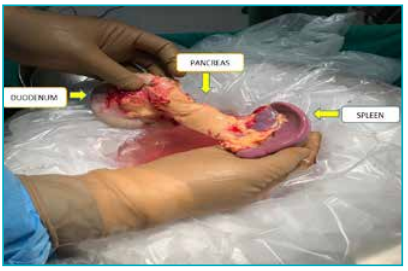
Figure 1: The pancreas (with duodenum and often spleen) is harvested en bloc from a brain-dead donor.
-
Pancreas transplantation: The pancreas is placed intra-abdominally, generally in the right iliac fossa. Its arteries are reconstructed using a 'Y' graft from the donor's iliac vessels and anastomosed to the recipient's iliac artery (Figure 2). The donor portal vein is connected to the recipient's iliac vein or inferior vena cava. The donor duodenum is attached to either the recipient’s small bowel (enteric drainage) or bladder (bladder drainage).
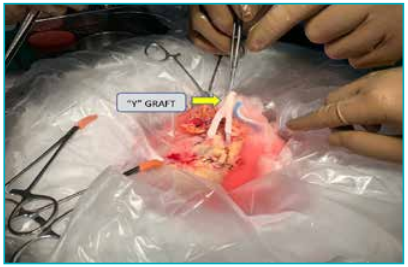
Figure 2: Superior mesenteric artery and splenic arteries are reconstructed using a ‘Y’ graft from the donor’s iliac vessels and anastomosed to the recipient’s iliac artery.
-
Kidney transplantation: The kidney is placed in the left iliac fossa, with its vessels and ureter attached to the recipient’s vessels and bladder.
-
The recipient’s native pancreas and kidney are usually left in place.9,10
-
Patients are put under general anaesthesia and monitored closely during and after surgery.
Outcomes and benefitsSurvival and graft function:
-
Survival and graft function: Five-year patient survival after SPKT is approximately 85%–88%; kidney graft survival 77%; pancreas graft survival 69%11-13
-
Complications: Graft thrombosis, rejection, infection, delayed graft function, and surgical complications such as haemorrhage or leakage at anastomosis sites12,14
-
Benefits:
-
Normalisation of blood glucose, eliminating the need for insulin injections
-
Prevention or stabilisation of diabetes-related complications (neuropathy, retinopathy, cardiovascular disease)
-
Improved quality of life and survival compared to dialysis or kidney transplant alone4,16
-
Patient selection and pre-emptive transplant
-
Careful patient selection is essential, as SPKT is a complex surgery requiring lifelong immunosuppression and compliance.
-
Pre-emptive SPKT (before dialysis initiation) is associated with better outcomes, while prolonged time on dialysis prior to transplant may negatively impact results.1,17
Conclusion
SPKT is considered the gold standard for patients with T1DM and ESRD. It offers significant improvements in glycaemic control and renal function, thereby reducing the risk and progression of diabetes-related complications. Due to its complexity and potential risks, careful evaluation by a multidisciplinary transplant team is essential to determine candidacy and ensure optimal outcomes.1,3,11
Gaurav Chaubal, Aditya Nanavati, Rashmi Algeri, Jatin Kothari, Hunaid Hatimi, Amith Kumar Pakkala, Amith Sreekant, Harshit Chaksota, Premal Narkhede, Blossom Dsouza, Radhika Ruhatiya, Abdul Ansari, Wasim Khot, Samir Shah. Simultaneous Pancreas and Kidney Transplant: From Insulin and Dialysis to Living Again – One Surgery, Two Miracles, Restoring Balance of Pancreas and Kidney Together. MMJ. 2025, December. Vol 2 (4).
References
-
Nagendra L, Fernandez CJ, Pappachan JM. Simultaneous pancreas-kidney transplantation for end-stage renal failure in type 1 diabetes mellitus: Current perspectives. World J Transplant. 2023;13(5):208–20.
-
Redfield RR, Scalea JR, Odorico JS. Simultaneous pancreas and kidney transplantation: current trends and future directions. Curr Opin Organ Transplant. 2015;20(1):94–102.
-
Speight J, Reaney MD, Woodcock AJ, et al. Patient-reported outcomes following islet cell or pancreas transplantation (alone or after kidney) in Type 1 diabetes: a systematic review. Diabet Med. 2010;27(7):812–22.
-
Fourtounas C. Transplant options for patients with type 2 diabetes and chronic kidney disease. World J Transplant. 2014;4(2):102.
-
Data for Organ Donation and Transplantation (2013-2024). Available at: https://notto.mohfw.gov.in/WriteReadData/ Portal/News/924_1_2013_to_2024.pdf. Accessed on: 10th September 2025.
-
Durairaj P, Senthil M, Bharathan A. Simultaneous Pancreas and Kidney Transplantation: An Initial Experience in Southern India. Indian J. Transplant. 2024;18(3):290–5.
-
Sollinger HW, Odorico JS, Becker YT, et al. One Thousand Simultaneous Pancreas-Kidney Transplants at a Single Center With 22-Year Follow-Up. Ann Surg. 2009;250(4):618–30.
-
van Dellen D, Worthington J, Mitu-Pretorian OM, et al. Mortality in diabetes: pancreas transplantation is associated with significant survival benefit. Nephrol Dial Transplant. 2013;28(5):1315–22.
-
Israni AK, Skeans MA, Gustafson SK, et al. OPTN/SRTR 2012 Annual Data Report: pancreas. Am J Transplant. 2014;14 Suppl 1:45–68.
-
Hampson FA, Freeman SJ, Ertner J, et al. Pancreatic transplantation: surgical technique, normal radiological appearances and complications. Insights into Imaging [Internet]. 2010;1(5-6):339–47.
-
White SA, Shaw JA, Sutherland DE. Pancreas transplantation. The Lancet. 2009;373(9677):1808–17.
-
Sampaio MS, Kuo HT, Bunnapradist S. Outcomes of simultaneous pancreas-kidney transplantation in type 2 diabetic recipients. Clin J Am Soc Nephrol. 2011;6(5):1198– 206.
-
Kim SM, Youn WY, Kim DJ, et al. Simultaneous pancreaskidney transplantation: lessons learned from the initial experience of a single center in Korea. Ann Surg Treat Res. 2015;88(1):41–7.
-
Kim JM, Ko Y, Choi M, et al. Comparison of long-term outcomes in simultaneous pancreas-kidney transplant versus simultaneous deceased donor pancreas and living donor kidney transplant. Sci Rep. 2023;13(1):49.
-
Cao Y, Zhao J, Feng G, et al. Clinical outcomes of simultaneous pancreas-kidney transplantation in elderly type II diabetic recipients. Diabetol Metab Syndr. 2024;16(1):55.
-
Ojo AO, Herwig Ulf Meier-Kriesche, Hanson JA, et al. The impact of simultaneous pancreas-kidney transplantation on long-term patient survival. Transplantation. 2001;71(1):82–90.
-
Parajuli S, Swanson KJ, Patel R, et al. Outcomes of simultaneous pancreas and kidney transplants based on pre-emptive transplant compared to those who were on dialysis before transplant - a retrospective study. Transpl Int. 2020;33(9):1106–15.