 WhatsApp Us (24/7)
 +91 926 888 0303 (24/7)


Abstract:
Despite the growing volume of liver transplantation (LT) over the past decade, there remains a shortage of donor livers. In addition to the increased use of expanded-criteria donors, an alternative option is the use of paediatric-donor livers. Although paediatric grafts should ideally be used for paediatric recipients, they may be allocated to adult recipients in certain situations when declined by the paediatric recipient pool. Paediatricto-adult deceased donor liver transplantation involves the use of liver grafts taken from paediatric donors (typically children under 12 years) and transplanted into adult recipients. Although this practice is relatively rare, it is increasingly considered due to the ongoing shortage of donor organs. Paediatric-to-adult deceased donor liver transplantation is a valuable strategy in selected adult recipients with appropriate size and clinical matching. When conducted with careful donor-recipient selection and technical expertise, outcomes are comparable to standard adult-to-adult transplants. As there is limited evidence regarding the effectiveness of paediatric liver grafts in adult recipients, more data is needed to understand the outcomes of paediatric-toadult liver transplantation. We report a successful case of deceased donor liver transplant from a 12-year-old girl to a 70-year-old female suffering from decompensated chronic liver disease.
Key words: Liver Transplant, Paediatric Donor, Hepatic Artery Thrombosis.
Introduction
Transplanting organs from paediatric donors to adults is uncommon. It is a technically challenging procedure as the paediatric vessels are small in size. Successful outcomes require centres with substantial experience in paediatric liver transplantation to minimise the risk of major vascular complications.1
Outcomes of paediatric-to-adult deceased donor liver transplants show comparable graft and patient survival rates to those receiving grafts from adult donors, particularly when appropriate recipient selection and careful surgical management are ensured.1,2
Multiple studies demonstrate equivalent patient and graft survival rates at one, three and five years for adult recipients of paediatric donor livers compared with matched adult donor livers.3 The incidence of major complications, including vascular and biliary issues, is similar, with no significant differences in length of intensive care unit (ICU) and hospital stay, with good long-term outcomes.1,2,4
Patient selection remains the Achilles’ heel in such clinical scenarios. Good outcomes are most consistently reported in smaller adult recipients (often females with lower body mass index [BMI]), as careful size matching minimises technical challenges and postoperative risks.3 If the donor liver is too small with a graft-to-recipient weight ratio (GRWR) of less than 0.8, complications like early allograft dysfunction and small-for-size syndrome may occur.5
Case Report
We report a case of a 70-year-old female who presented to us with jaundice, ascites, and altered liver function tests three years ago. She had been a known case of diabetes mellitus (DM) for the past 20 years. On further evaluation, she was diagnosed with decompensated liver disease secondary to non-alcoholic steatohepatitis (NASH). She had hepatorenal syndrome with a serum creatinine level of 3.64 mg/dL, which responded to medical management. Her model for end-stage liver disease (MELD) score was 26. She had multiple hospital admissions for largevolume paracentesis due to recurrent ascites, which was not responding to the maximum dose of diuretics. In view of refractory ascites, she underwent transjugular intrahepatic portosystemic shunt (TIPSS) in 2023. Due to the non-availability of a living donor in the family, she was registered with the zonal transplant coordination committee (ZTCC) and placed on the waiting list for a deceased donor liver transplant in January 2023. She was further evaluated by contrast computed tomography (CT) of the abdomen, which showed a shrunken liver with nodularity with no evidence of liver lesions, portal vein thrombosis or any major porto-systemic collaterals. She was kept under regular follow-up and medical management. After being on the waiting list for more than two years, she finally received a deceased donor liver allotted to her, but it was a 12-year-old paediatric brain-dead donor from Kolkata. Initially, the liver was allocated to a paediatric patient from Mumbai. However, the paediatric recipient tested positive for COVID-19 and was deemed unfit for surgery. There was no other paediatric recipient active on the list, due to which the Regional Organ and Tissue Transplant Organisation (ROTTO) and National Organ and Tissue Transplant Organisation (NOTTO) allotted the liver to the adult pool. After a multidisciplinary meeting, we decided to accept the liver for our adult recipient, as the recipient's BMI (22.4 kg/m2) was matching with the paediatric donor's BMI (18 kg/m2). The surgery was uneventful (Figure 1). The cold ischaemia time was 5 hours 45 minutes. Our recipient recovered well and was discharged in one week. She is currently under regular follow-up 3 months post-transplant and is leading a normal life.
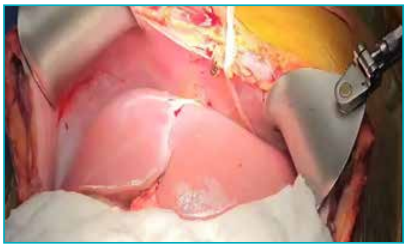
Figure 1: Paediatric deceased donor healthy liver at the time of organ retrieval.
Discussion
The outcomes of adult liver transplantation using grafts from deceased paediatric donors remain inadequately characterised. Given the ongoing organ shortage and the high mortality rates among patients on the liver transplant waiting list, transplant teams are compelled to explore alternative strategies to mitigate this supply–demand gap.6 Utilising paediatric donor livers for adult recipients represents one such option, typically when these grafts are declined by paediatric candidates.7 Nevertheless, recent data from the Organ Procurement and Transplantation Network (OPTN)/Scientific Registry of Transplant Recipients (SRTR) indicate a decline in the use of paediatric livers for adult transplants from 11.7% to 7.7% without a corresponding rise in their use within the paediatric population.8
Our donor was a 12-year-old female whose liver was initially allocated to a paediatric recipient. However, as the recipient tested positive for COVID-19 and was deemed unfit for surgery, the paediatric liver was then offered to our adult recipient. As it was a paediatric donor, we had to be careful when selecting our recipient, who was lean and had a low BMI. The liver was offered to a female recipient with a BMI of 22.4 kg/m2, which was close to the paediatric donor BMI (18 kg/m2). Our patient had an uneventful recovery without any complications.
Previous studies in the literature have found comparable graft survival and overall complication rates between paediatric-to-adult and adult-to-adult liver transplantation.6-9 However, paediatric-donor grafts have been associated with an increased risk of vascular complications, particularly hepatic artery thrombosis (HAT).8,9 Paediatric grafts are thought to be associated with a higher risk of vascular complications due to various factors, including small vessel calibre and graft size.8
Of note, Croome et al. found no differences in graft survival at the same intervals but noted that 90-day graft survival was lower in the paediatric donor group.4 In the same cohort, an additional subgroup analysis found that 90-day graft survival was significantly lower among patients with a GRWR less than 0.8% compared to those with a GRWR greater than or equal to 0.8%.4 Similarly, patient survival, re-transplantation, and length of hospital stay (LOS) were not significantly different between the paediatric- and adult-donor groups.4,8,9 Nevertheless, achieving acceptable outcomes largely depends on an optimal recipient selection. In our practice, consideration to use paediatric (≤ 12 years) grafts in adults is based on the absence of a suitable paediatric recipient, availability of well-selected recipients shown to be favourable to these types of grafts (smaller, leaner individuals with lower BMI and no previous abdominal surgery), and the surgeon's discernment.9
It is important to highlight that our centre has an established paediatric liver transplant programme, as well as an active living donor liver transplant programme. Therefore, beyond careful patient selection, our excellent results could be strongly related to the fact that having such programmes implies a certain degree of expertise and surgical proficiency with challenging procedures, with small vessels and management of associated complications.
Conclusion
Hence, in properly selected patients, paediatric-to-adult cadaveric transplant can be successfully conducted at high volume centres with surgical expert.
Gaurav Chaubal, Aditya Nanavati, Hunaid Hatimi, Amith Kumar Pakkala, Amith Sreekant, Harshit Chaksota, Premal Narkhede, Blossom Dsouza, Uday Sanglodkar, Alisha Chaubal, Hardik Shah, Tejas Joshi, Radhika Ruhatiya, Abdul Ansari, Wasim Khot, Samir Shah. "A Girl of Twelve, Bravery True – She Gave Her Liver, Gave Life Anew." Can a Paediatric Deceased Donor Liver Be Transplanted to an Adult Patient? MMJ. 2025, December. Vol 2 (4).
References
-
Kirchner VA, Goldaracena N, Sapisochin G, et al. Current status of liver transplantation in North America. Int J Surg. 2020;82S:9–13.
-
Emre S, Soejima Y, Altaca G, et al. Safety and risk of using pediatric donor livers in adult liver transplantation. Liver Transpl. 2001;7:41–7.
-
Lan C, Song JL, Yan LN, et al. Pediatric donor to adult recipients in donation after cardiac death liver transplantation: a single-center experience. Transplant Proc. 2017;49:1383–7.
-
Croome KP, Lee DD, Burns JM, et al. Mayo Clinic Collaborative in Transplant Research and Outcomes. Outcomes of liver transplantation with liver grafts from pediatric donors used in adult recipients. Liver Transpl. 2016;22:1099–106.
-
Ju W, Li C, Zhang C, et al. Outcome of the use of paediatric donor livers in adult recipients: a single Chinese centre experience. Clin Res Hepatol Gastroenterol. 2019;43:148–54.
-
Ghabril M, Dickson RC, Krishna M, et al. Liver transplantation using young pediatric donor grafts in adults with hepatitis C infection. Transplantation. 2009;87:1174–9.
-
Fortunato AC, Pinheiro RS, Nacif LS, et al. Hepatic artery thrombosis in liver transplantation in adult recipients using pediatric deceased donors. Transplant Proc. 2020;52:1332–5.
-
Horvat N, Marcelino ASZ, Horvat JV, et al. Pediatric liver transplant: techniques and complications. Radiographics. 2017;37:1612–31.
-
Orlandini M, Feier FH, Jaeger B, et al. Frequency of and factors associated with vascular complications after pediatric liver transplantation. J Pediatr (Rio J). 2014;90:169–75.