 WhatsApp Us (24/7)
 +91 926 888 0303 (24/7)


Abstract:
Stereotactic body radiotherapy (SBRT) is an advanced form of cancer treatment that uses precisely targeted, high-dose radiation to destroy tumours while minimising damage to surrounding healthy tissue. It is commonly used to treat small tumours in organs such as the prostate, lung, and kidney, and serves as a non-surgical alternative for patients who may not be suitable for surgery. Unlike conventional radiation therapy, which can take several weeks, SBRT is typically completed in just one to five treatment sessions.
Key words: Stereotactic Body Radiotherapy (SBRT), Stereotactic Ablative Radiotherapy, Cancer Treatment, Radiotherapy, Metastatic Disease, Oligometastases, Precision Radiotherapy.
Introduction
Stereotactic body radiotherapy (SBRT), also referred to as stereotactic ablative radiotherapy (SABR), is a high-precision radiation therapy technique.1 This technique enables the delivery of large doses per fraction to small, well-defined extracranial targets over a limited number of treatment sessions.2 Stereotactic radiotherapy was initially developed for treating intracranial conditions in a single or multiple sessions, which is known as stereotactic radiosurgery (SRS) or fractionated stereotactic radiotherapy (SRT). The integration of advanced imaging techniques for target localisation and tracking software, along with robust immobilisation devices and sophisticated delivery systems, allows SBRT to achieve steep dose gradients, effectively sparing adjacent normal tissues (organs at risk - OAR) (Figure 1). This precision has expanded the curative potential of radiotherapy to clinical situations that were previously deemed inoperable.3,4 With its outstanding results, SBRT has become a non-invasive and highly effective ablative treatment with little to no toxicity. Moreover, it can be repeated and sequentially combined with other systemic therapies.
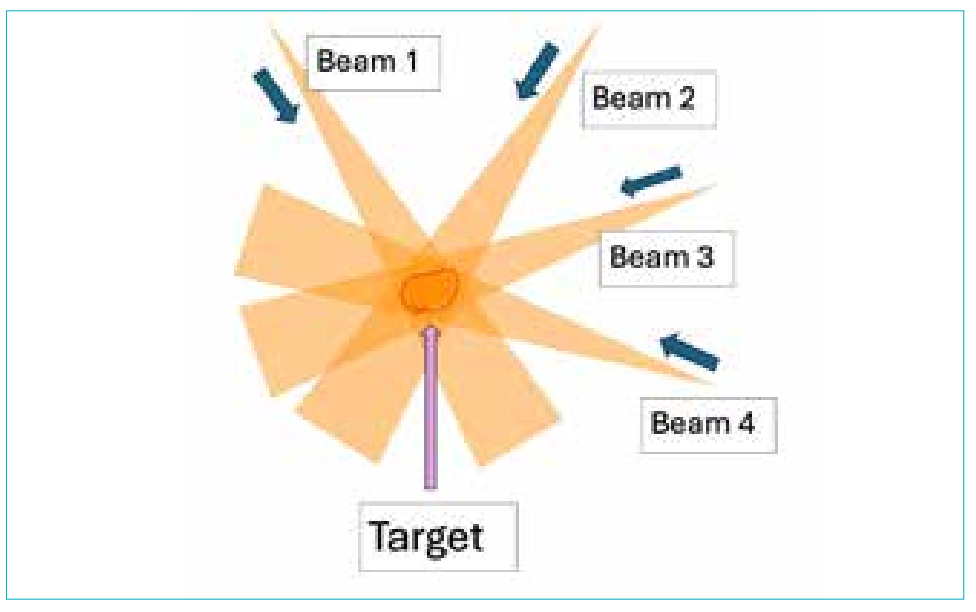
Figure 1: FDG avid mass with spiculated margins measuring 1.7x1.5cm, left breast lower outer quadrant, suggestive of new lesion.
In the modern era, SBRT has become a cornerstone modality in managing early-stage non-small cell lung cancer (NSCLC), hepatocellular carcinoma (HCC), and pancreatic tumours. Furthermore, it is increasingly utilised for treating limited metastatic disease, known as metastasis-directed therapy, to delay systemic progression and improve survival outcomes.5 Due to its ability to achieve high local control with minimal toxicity, SBRT is now regarded as a vital component of modern precision radiotherapy.
Radiobiological Rationale
The biological effectiveness of SBRT stems from its ability to deliver high doses per fraction, resulting in a biologically effective dose (BED) substantially greater than that achieved with conventional fractionation.6 The mechanisms of tumour eradication extend beyond direct deoxyribonucleic acid (DNA) double-strand breakage and include damage to the tumour vasculature and stimulation of antitumour immune responses. These processes involve endothelial apoptosis, vascular compromise, and induction of immunogenic cell death, which collectively enhance tumour control.7
Clinical Applications
Early-stage non–small cell lung cancer (NSCLC) and lung metastasis
SBRT is established as the standard treatment for patients with medically inoperable, early-stage NSCLC. Prospective clinical trials have reported local control rates exceeding 90% at three years, with overall survival outcomes approaching those of surgical resection.8 Standard dosing regimens commonly involve 48–60 Gy delivered over three to five fractions, providing both efficacy and safety in this patient group.
Similarly, lung metastasis has become an important indication for using SBRT (Figure 2).
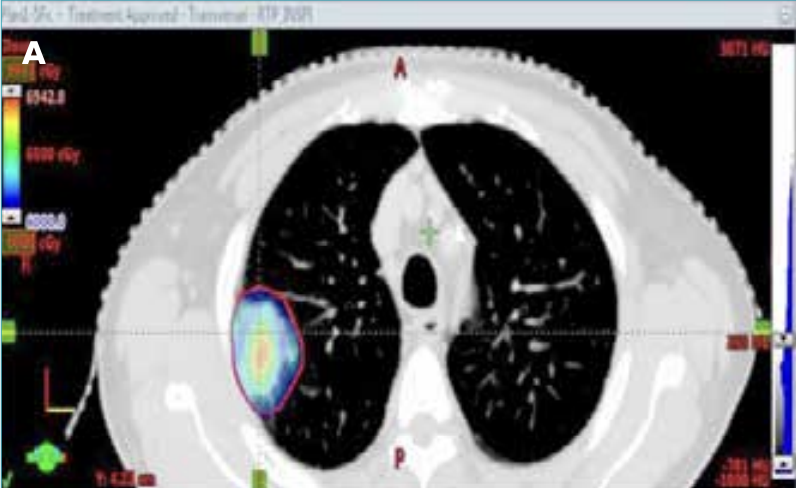
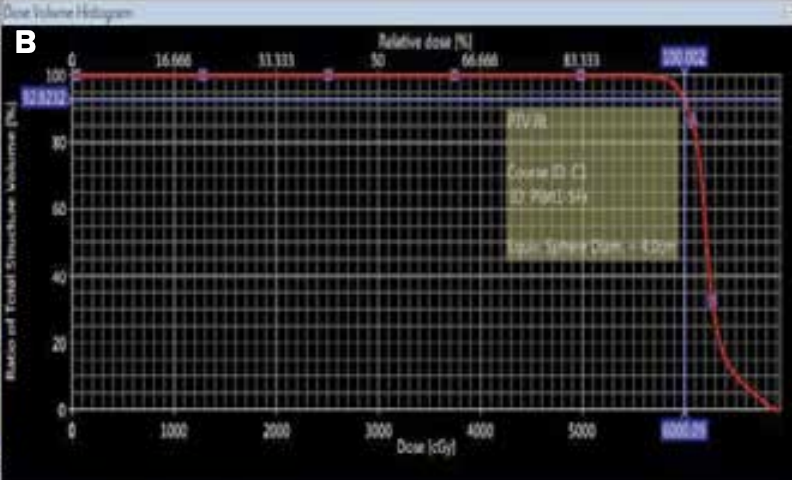
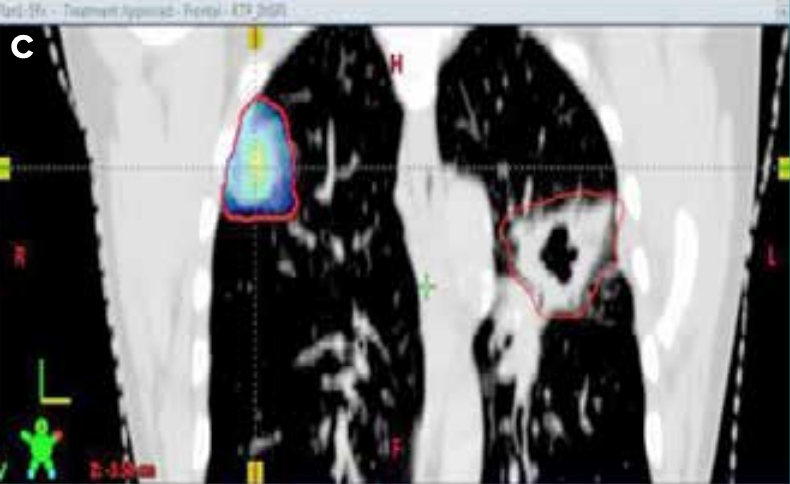
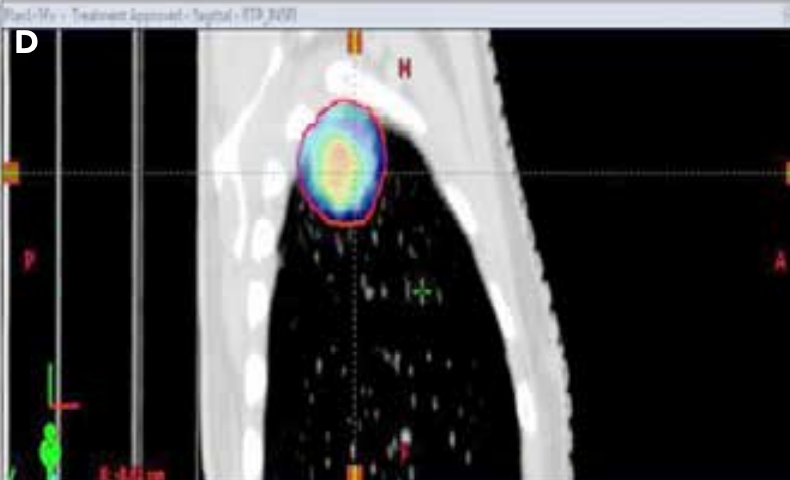
Figure 1: Figure 2: A 74-year-old male patient with metastatic carcinoma of the urinary bladder presented with progressive disease in both lungs after multiple lines of chemotherapy. He received stereotactic body radiotherapy (SBRT) to lesions in both lungs — right planning target volume (PTV) 60 Gy in 5 fractions and left PTV 40 Gy in 5 fractions — delivered using the deep inspiratory breath hold technique. The patient tolerated the treatment well and remains on regular follow-up. The multiple images show the dose wash of right-sided lesion in axial view (A), the dose volume histogram (B), coronal view (C), and sagittal view (D).
Hepatocellular carcinoma (HCC)
For patients with primary liver tumours, SBRT provides excellent local control while maintaining hepatic function. Because the liver is sensitive to radiation, motion management and dose optimisation remain crucial for effective treatment. Reported two-year local control rates range between 70% and 90%, even among patients who are unsuitable for surgery or radiofrequency ablation (RFA).9
Spinal lesions and bone metastasis
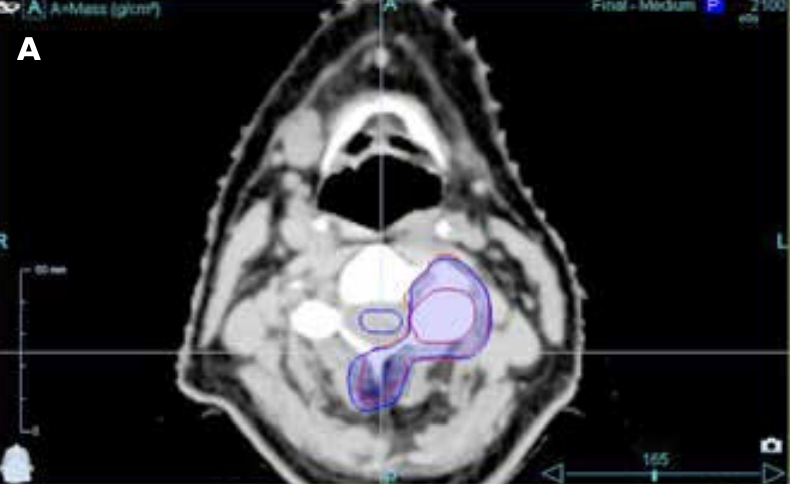
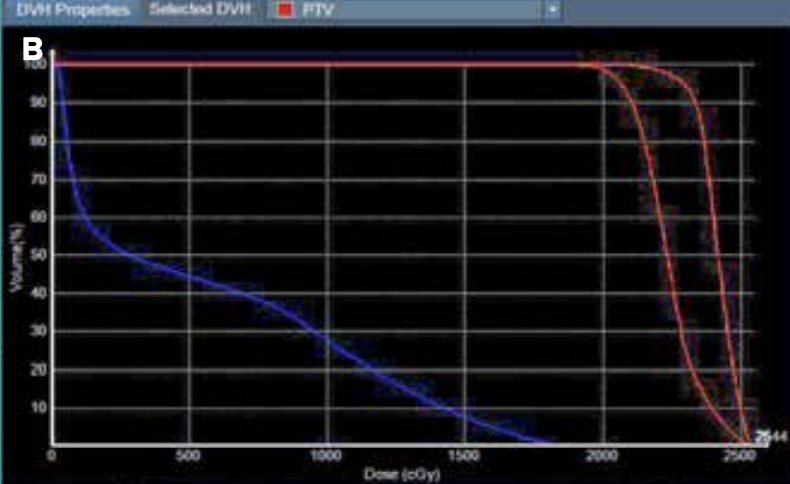
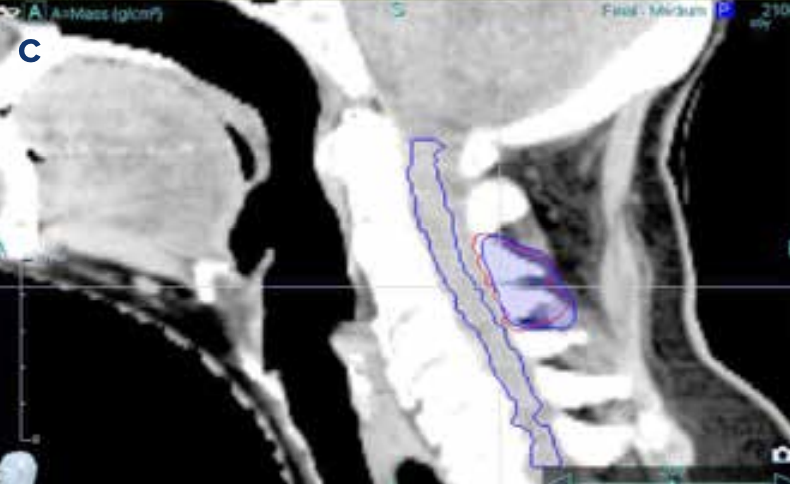
SBRT has emerged as a highly effective treatment for spinal and bone metastases, offering durable pain relief and local disease control. Standard protocols deliver 16–24 Gy in a single session or 27–30 Gy over three fractions (Figure 3). Image-guided delivery ensures sub-millimetre precision, minimising radiation exposure to the spinal cord.10
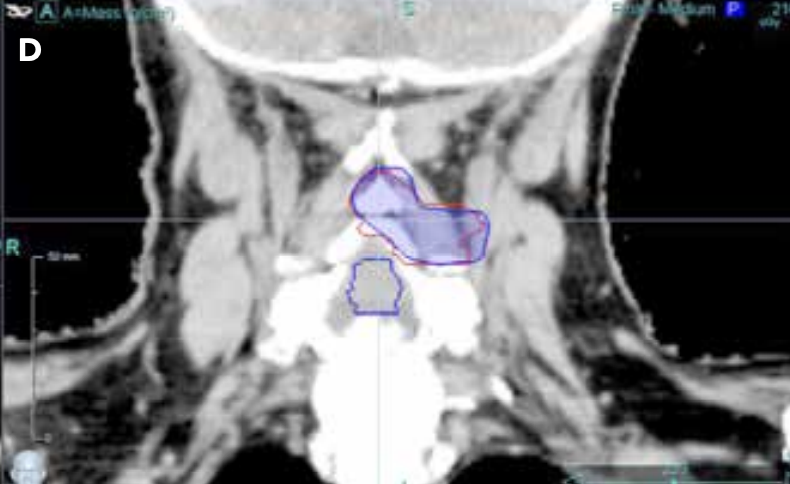
Pancreatic malignancies
In the management of locally advanced or unresectable pancreatic cancer, SBRT offers significant local control and palliation of symptoms. When combined with systemic therapy, it provides a feasible treatment option for patients who are not suitable candidates for surgical resection.
Renal cancer
Surgery remains the standard of care for patients with primary renal cell carcinoma (RCC). However, SBRT is a novel alternative for patients who are medically inoperable, technically high-risk, or who decline surgery. Evidence supporting SBRT in primary RCC setting is growing. Optimal dose fractionation typically comprises 25–26 Gy in one fraction, or 42–48 Gy in three fractions for larger tumours. Routine posttreatment biopsy is not recommended, as it does not predict patient outcomes. Also, SBRT for primary RCC in a solitary kidney is safe and effective. Post-treatment follow-up guidelines include cross-axial imaging of the abdomen, including both kidneys and adrenals, along with chest surveillance initially every 6 months.
Advantages and Limitations of SBRT
SBRT presents several advantages: it is non-invasive, completed within a short time frame (typically one to two weeks), and provides high local control rates comparable to those of surgery. The technique preserves organ function and the patient's quality of life. Moreover, SBRT has demonstrated efficacy in tumours traditionally considered radioresistant, such as melanoma and RCC and may enhance the effectiveness of immune-checkpoint blockade through immunomodulatory effects.11
Despite these benefits, several limitations exist. Motion management, particularly in thoracic and abdominal sites, remains challenging. Dosimetric uncertainties can lead to toxicity if planning or dose constraints are inadequate. In addition, long-term outcome data are limited for specific tumour types and re-irradiation scenarios. The procedure requires specialised technology and a coordinated multidisciplinary team, which increases treatment costs and complexity.12 Therefore, rigorous patient selection, meticulous planning, and quality assurance are essential for optimal outcomes.
New Advancements in SBRT
Rapid technological and biological innovations are shaping the future of SBRT, with several emerging strategies designed to enhance precision and personalisation:
- Radio genomics and biomarker-guided SBRT: integrates genomic and imaging biomarkers to individualise fractionation and dosing strategies.
- Combination with immunotherapy: clinical trials are investigating SBRT in conjunction with programmed death-1/programmed death-ligand 1 (PD-1/PD-L1) inhibitors to augment systemic antitumour immune responses.13
These innovations collectively represent the next phase of biologically optimised, image-guided radiotherapy
Conclusion
One of the most significant barriers to successful cancer treatment is the failure to achieve adequate local control. SBRT exemplifies the synthesis of technological advancement and clinical efficacy in radiation oncology. By delivering ablative doses with microscopic precision, SBRT achieves durable tumour control while preserving normal organ function and minimising toxicity. Ongoing research into adaptive imaging, radiogenomic integration, and immunotherapeutic combinations is expected to refine its therapeutic potential further. As evidence continues to evolve, SBRT is positioned to remain a pivotal modality in both curative and metastasis-directed oncologic treatment paradigms.
Nidhi Sharma, Varshu Goel, Garima Singh, Khushboo Rastogi, Anusheel Munshi. High Precision Stereotactic
Body Radiotherapy (SBRT) for Treatment of Malignant Tumours: An Overview. MMJ. 2025, December. Vol 2 (4).
DOI: XXXXX
References
- Munshi A, Ganesh T, Sarkar B, Sharma A, Mallick I, Janaki MG, Mohanti BK, editors. Radiation Oncology – Principles, Precepts and Practice: Volume 1–Technical Aspects. 2nd Edition. New Delhi: Springer Nature; 2025.
- Guckenberger M, Andratschke N, Alheit H, et al. Definition of stereotactic body radiotherapy: principles and practice for the treatment of stage I non-small cell lung cancer. Strahlenther Onkol. 2014;190:26–33.
- Timmerman RD, Hu C, Michalski JM, et al. Stereotactic body radiation therapy for early-stage non-small-cell lung carcinoma: four-year results of the NRG Oncology/RTOG 0236 phase II trial. N Engl J Med. 2010;362(6):568–75.
- Potters L, Gaspar LE, Kavanagh B, et al. American Society for Therapeutic Radiology and Oncology (ASTRO) and American College of Radiology (ACR) practice guidelines for the performance of SBRT. Int J Radiat Oncol Biol Phys. 2010;76(2):326–32.
- Palma DA, Olson R, Harrow S, et al. Stereotactic ablative radiotherapy for oligometastatic cancer: a systematic review. J Clin Oncol. 2020;38(25):2830–8.
- Park HJ, Lee YJ, Kim YJ, et al. Stereotactic body radiotherapy for hepatocellular carcinoma: a systematic review and metaanalysis. Int J Radiat Oncol Biol Phys. 2015;93(3 Suppl):S9–15.
- Demaria S, Formenti SC. Radiation as an immunological adjuvant: current evidence and future strategies. Nat Rev Clin Oncol. 2017;14(6):365–79.
- Chang JY, Senan S, Paul MA, et al. Stereotactic ablative radiotherapy: current status and future perspectives. JAMA. 2015;313(11):1070–7.
- Bujold A, Massey CA, Kim JJ, et al. Sequential phase I and II trials of SBRT for locally advanced hepatocellular carcinoma. J Clin Oncol. 2013;31(13):1631–9.
- Sahgal A, Atenafu EG, Louie AV, et al. Stereotactic body radiotherapy for spinal metastases: a phase I/II trial. Lancet Oncol. 2021;22(9):1231–42.
- Postow MA, Sidlow R, Hellmann MD. Immune-related adverse events associated with immune checkpoint blockade. N Engl J Med. 2018;378(2):158–68.
- Kavanagh BD, Timmerman RD, Papiez L, et al. Stereotactic body radiation therapy: current status and future directions. Semin Radiat Oncol. 2014;24(3):151–7.
- Welsh JW, Cengel KA, McBride S, et al. Stereotactic body radiotherapy for oligometastases: current evidence and future directions. Lancet Oncol. 2022;23(2):193–204.