 WhatsApp Us (24/7)
 +91 926 888 0303 (24/7)


Abstract:
Trismus is the most common yet debilitating problem for oral cancer patients who undergo surgery with or without radiotherapy. Radiotherapy increases trismus for these patients. Underlying factors associated with tobacco and areca nut use in these patients complicate the situation.
Traditionally, ice cream sticks and metallic mouth openers have been used for these patients, which have their own limitation including lack of compliance, injury to teeth, clumsiness of use. Consequently, these patients have to live with trismus throughout their lives, with doctors also accepting the poor outcome for these patients.
We present excellent result with TRISCaRe® mouth opener device in 26 patients who had undergone surgery for oral cavity over the past year, with a 6-month follow-up. Twenty six patients included patients who had composite resection with local, pectoralis major myocutaneous (PMMC), free radial and fibula flaps. The protocol for intervention with TrisCaRe® was designed following its earlier use in our patients. We describe the TrisCaRe® use method and protocol for achieving optimal results in patients with trismus.
TrisCaRe® the innovative mouth opener ergonomically designed, simple to use, with measurement scale, portable and made of polyoxymethylene (POM) has shown to have good patient compliance resulting increased mouth opening by 5mm to 16mm.
Based on this pilot study, we plan to initiate a multicentric trial to validate our finding.
This study will establish a much-needed protocol for interventions to improve mouth opening in oral cancer patients, which will have a huge impact on these large number of patients.
Key words: Mouth Opening Device, Oral Cancer, Trismus, TrisCaRe®, Radiation to Oral Cavity, Mouth Exercise.
Introduction
Trismus, a debilitating problem for oral cancer patients, has been addressed in various ways. Trismus effects quality of life negatively and has serious implications in speech, swallowing, and in oncological follow-up.1,2 Mechanical stretching is the mainstay for such patients, and various methods and instruments have been used traditionally.2,3,4 We describe the impact of an indigenously made trismus care management tool, the innovative TrisCaRe® device, for these patients. The TrisCaRe® device is innovated and developed by the author himself.
Objectives
We present a study on mechanical stretching techniques with TrisCaRe®, an innovative, ergonomical, non-traumatic mouth opening device in the management of trismus, as compared to the traditional instruments.
Traditionally, ice cream sticks and metallic mouth openers were used for these patients, which have their own limitations, including lack of compliance, injury to teeth, and clumsiness of use. As a result, these patients have to live with trismus throughout their lives, with doctors often accepting this outcome.
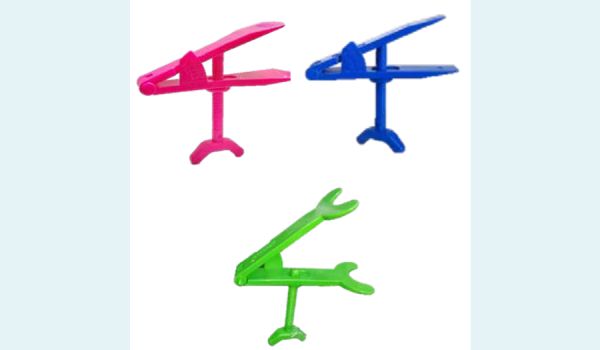
Figure 1: TRISCaRe® Devices – 3 Models – Indigenously designed by Dr. Pawan Gupta.
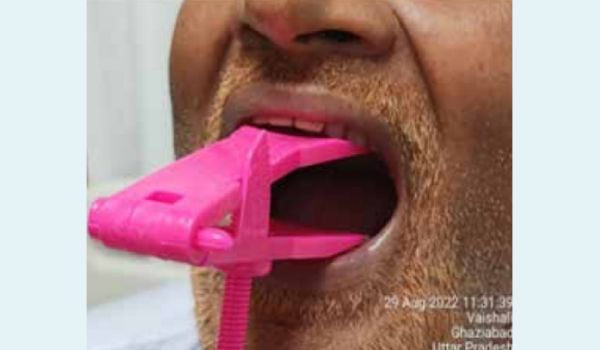
Figure 2: Mouth opening device with measurement scale being used by patient.
Methods
The effect of mouth-opening exercise by TrisCaRe® device was evaluated in 30 cases. Patient demography details, tumour and treatment characters were analysed. Mouth opening measurements were recorded with TrisCaRe® device in millimetres (mm). Oral prophylaxis and mouth opening exercises were started in the first visit and serial measurements were recorded during the immediate post-operative period (range2nd day to 7th day) and after radiotherapy. Univariate variables affecting the outcomes was analysed in log regression model.
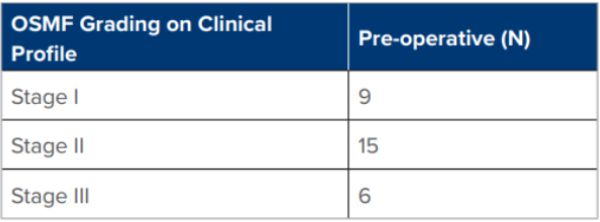
Table 1: Grades of Oral Submucous Fibrosis (OSMF) Changes (N=30).
Abbreviations: N: Number of patients.
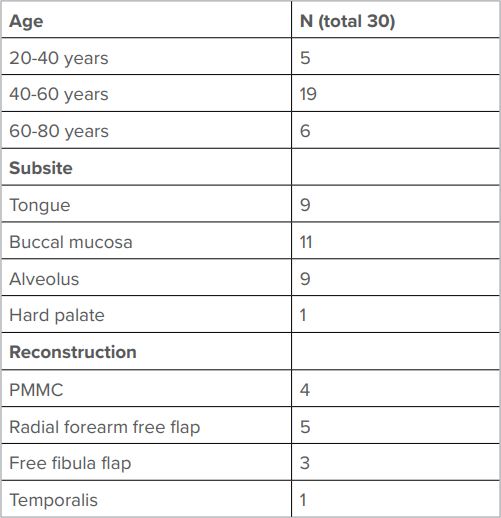
Table 2: Demographic Details.
Abbreviations: N: Number of patients; PMMC: Pectoralis major myocutaneous.
Results
TrisCaRe®, a low-cost device with its inbuilt measurement scale, is easy to use and gives an estimate of mouth opening to the patient at home itself.
Initial mouth opening ranged from 18mm to 32mm. The mean initial mouth opening was 25.28 (SD=3.9). There were transient changes/minimal changes in serial mouth opening measured during the immediate post-operative period and at the end of radiotherapy. After an average follow up of 3 to 12 months, the mean increase in mouth opening after TrisCaRe®-assisted exercises was 10.8mm (range from 2mm to 18mm). In one of the patients who reported a decrease in mouth opening, and was found to have recurrence, could be managed early.
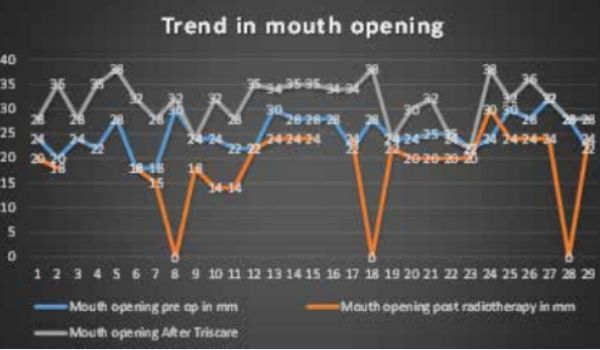
Figure 3: Trends in mouth opening pre-operative, post-operative and post-radiotherapy.
Results
Initial mouth opening ranged from 18mm to 32mm. The mean initial mouth opening was 25.28 (SD=3.9).
There were transient changes/minimal changes in serial mouth opening measured during the immediate postoperative period and at the end of radiotherapy.
After an average follow up of 3 to 12 months, the mean increase in mouth opening after TrisCaRe®-assisted exercises was 10.8mm (range from 2 to 18 mm).
Discussion
TrisCaRe® was found to be patient-friendly, simple, portable, easy to use, and quantitative benefit could be measured by the patient himself, which increased the patient compliance. A significant improvement in mouth opening was observed with TrisCaRe® device. An average of 10mm differences of mouth opening was seen in pre- and post-rehabilitation phases. A positive correlation, but statistically non-significant relation was observed between the length of rehabilitation and mouth opening. In a patient who had a decrease in mouth opening which could be noted early, patient was found to have a recurrence.
TrisCaRe®, the innovative mouth opener, is ergonomically designed, simple to use, equipped with a measurement scale, portable, and made of polyoxymethylene (POM). It has shown good patient compliance, resulting in increased mouth opening by 2mm to 18mm. Interim results of the ongoing study is promising, which can be expanded to multicentric study to validate our findings.
This study will establish a much-needed protocol for intervention for improving mouth opening in the oral cancer patients, which will have a huge impact on the quality of life on these large number of patients.
Pawan Gupta, Sumanth Bollu, Akhil Garg, Harshita Pandey, Deeksha Sharma. Indigenous TrisCaRe® and Its
Outcome in the Management of Trismus in Oral Cavity Cancer Patients: A Preliminary Report. MMJ. 2024,
DOI: XXXX
References
- Dijkstra PU, Huisman PM, Roodenburg JLN. Criteria for trismus in head and neck oncology. Int J Oral Maxillofac Surg. 2006;35:337–42.
- Kamstra JI, Roodenburg JL, Beurskens CH, et al. TheraBite exercises to treat trismus secondary to head and neck cancer. Support Care Cancer. 2013;21(4):951-7.
- Kamstra JI, van Leeuwen M, Roodenburg JLN, et al. Exercise therapy for trismus secondary to head and neck cancer: A systematic review. Head Neck. 2017;39:160-169.
- Ranganathan K, Mishra G. An overview of classification schemes for oral submucous fibrosis. J Oral Maxillofac Pathol. 2006;10:55 8.