 WhatsApp Us (24/7)
 +91 926 888 0303 (24/7)


Abstract:
Breast cancer holds the dubious distinction of being the most prevalent malignant tumour among women worldwide. The 5-year survival rate for patients with advanced or metastatic forms of the disease is estimated at a mere 23%, with approximately 20% of cases exhibiting an amplification of the human epidermal growth factor receptor 2 (HER2). HER2 overexpression was linked to a dismal prognosis prior to the advent of targeted HER2 therapies. The introduction of ado-trastuzumab emtansine (T-DM1) has emerged as one of the standard treatment options for HER2-positive breast cancer patients who experience a recurrence or progression of the disease. This case concerns a patient with recurrent metastatic breast cancer who achieved an unusually extended period of time without the disease progressing while on T-DM1 treatment. After experiencing disease progression on multiple treatment lines involving trastuzumab, the patient achieved a nearly complete clinical remission (cCR) with T-DM1 therapy. The availability of cost-effective biosimilars has expanded access to advanced biologic therapies, which were previously limited to a small segment of the population due to the cost barrier.
Key words: Breast Cancer, Human Epidermal Growth Factor Receptor 2 (HER2), ado-trastuzumab emtansine (T-DM1)
Introduction
Breast cancer is the most prevalent form of cancer among women, and the five-year survival rate for patients with metastatic disease is estimated to be 23%.1 It has the highest incidence among malignant tumours affecting women worldwide, with approximately 20% of patients showing amplification of the human epidermal growth factor receptor 2 (HER2). Historically, HER2 overexpression in breast cancer was associated with a poor prognosis prior to the development of HER2 targeted therapies.2
The introduction of targeted therapies has led to a significant transformation in the prognosis for HER2-positive metastatic breast cancer (MBC).3 Ado-Trastuzumab emtansine (T-DM1) emerged as one of the standard therapy options for HER2-positive breast cancer patients who experience disease recurrence or progression after receiving taxane and trastuzumab-based treatments.4 T-DM1 is an antibody drug conjugate (ADC) that combines trastuzumab with the microtubule-inhibitory agent emtansine (DM1). It was the first ADC agent approved for the treatment of HER2-positive breast cancer.4
In this report, we present a case of recurrent MBC in which the patient achieved an unusually lengthy progression-free survival (PFS) on T-DM1 chemotherapy. After experiencing disease progression on multiple lines of trastuzumab-containing regimens, the patient attained nearly complete clinical remission (cCR) with T-DM1 therapy.
Case report
The patient is a 73-year-old female with metastatic left breast cancer, multiple bone metastases, and a fungating breast mass. She had a history of lump in her left breast for a year and was initially on alternative therapy.
The patient presented in August 2017 with pain in her right hip and was diagnosed with a pathological subtrochanteric fracture of the right hip. She underwent closed reduction internal fixation (CRIF) with a proximal femoral nail (PFN) and biopsy, which confirmed the diagnosis of invasive ductal carcinoma, grade 2, with a Modified Bloom-Richardson (MBR) score of 7. The immunohistochemistry (IHC) results showed oestrogen receptor (ER) (2/8), progesterone receptor (PR) (1/8), and HER2- positive (3+) disease and a Ki67 proliferation index of 20%-24%.
In October 2017, the patient was started on palliative chemotherapy with paclitaxel and trastuzumab on a weekly basis. After completing four cycles of this regimen, a post-chemotherapy positron emission tomography-computed tomography (PET-CT) scan was done which showed a near-complete metabolic response.
She continued further with a total of six cycles of paclitaxel and trastuzumab till January 2018.
Considering the advanced nature of the disease and poor prognosis, with limited survival benefit from palliative treatment, the patient was then continued with maintenance trastuzumab monotherapy (3-weekly) along with 3-weekly zoledronic acid and letrozole due to weak ER and PR positivity. The patient received nearly 19 cycles of trastuzumab along with zoledronic acid till September 2018. During the treatment course, PET-CT scan in November 2018 revealed that there was increased fluorodeoxyglucose (FDG) activity in the left parieto-temporal lobe region with perilesional oedema and midline shift towards the right, as well as skeletal metastases. A subsequent Magnetic Resonance Imaging (MRI) of the brain confirmed a metastatic lesion measuring approximately 2.3x2.2cm in the left posterior temporal region.
The patient subsequently received cranial radiation therapy with stereotactic radiosurgery (SRS) from November 2018 to December 2018. Following this, treatment with trastuzumab and letrozole continued until January 2019. The option of adding pertuzumab was discussed with the patient and her relatives but was not pursued due to personal reasons.
Capecitabine and zoledronic acid-based therapy was planned as the next treatment option. Zoledronic acid was started and continued in view of bone metastases. The patient completed seven cycles of capecitabine until June 2019 and continued it until March 2020, when it was discontinued due to severe hand-foot syndrome. Trastuzumab at a dose of 262mg monotherapy was continued. Treatment with monthly denosumab at a dose of 120mg was introduced due to rising creatinine level.
Patient had a pathological fracture in the right femur, which was operated in July 2020, and ipsilateral iliac crest bone grafting was done. A PET-CT scan in November 2020 showed metabolically active lesion along segment-IV of the liver, which had not been appreciated previously, along with metabolically active mediastinal and hilar lymph nodes. The same therapy was continued as there was no evidence of abnormal activity elsewhere in the body, and there was also a good overall response in terms of therapy.
A PET-CT scan in September 2021 indicated a resolved liver lesion and a new lesion in the left breast which was tested further. An ultrasound-guided biopsy of the left breast mass in April 2021 confirmed it as mucinous carcinoma, grade-2, with an MBR Score of 7/9. Carcinoma in situ was absent, but lymphovascular invasion was present (score 2). Immunohistochemistry results showed ER-negative (0/8), PR-positive (5/8), and HER2-strongly positive (3+) status, with a Ki67 proliferation index of 30%-35%. (Figure 1)
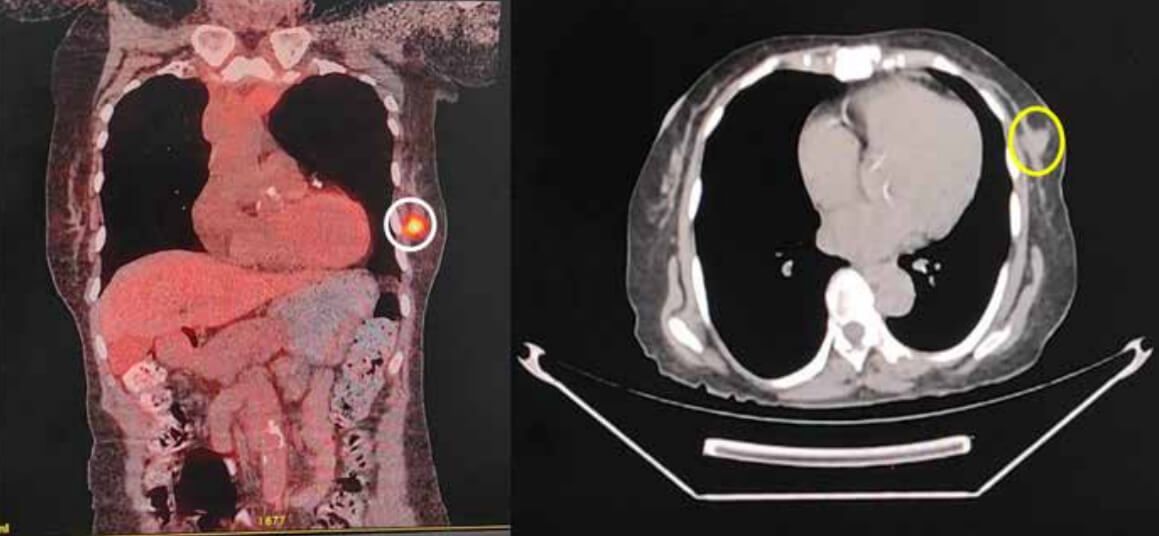
Figure 1: FDG avid mass with spiculated margins measuring 1.7x1.5cm, left breast lower outer quadrant, suggestive of new lesion.
A contrast-enhanced (CE-MRI) of the brain in October 2021 showed almost complete resolution of the left temporal lesion, with a possible development of a gliotic area in this region. The patient had received multiple doses of trastuzumab up to that point, and due to disease progression, she was started on T-DM1 as the next line of therapy. As the patient had access to an approved biosimilar option available in our country, the biosimilar was selected, and the 1st dose of T-DM1 biosimilar (160mg) was infused on October 2021.
Various PET-CT scans were performed at a regular duration of six to eight months to monitor the treatment response, which revealed a good response with no significant interval changes observed. A 2D echocardiogram was also performed regularly, every four to six cycles to monitor the left ventricular ejection fraction (LVEF) percentage and track potential toxicity from the continued T-DM1 therapy (Figure 2). Based on the positive treatment response, the patient was continued on long-term therapy with T-DM1. As of May 2023, the patient was due for the 28th dose of T-DM1. The latest PET-CT scan indicated a good treatment response and stable disease. (Figure 3)
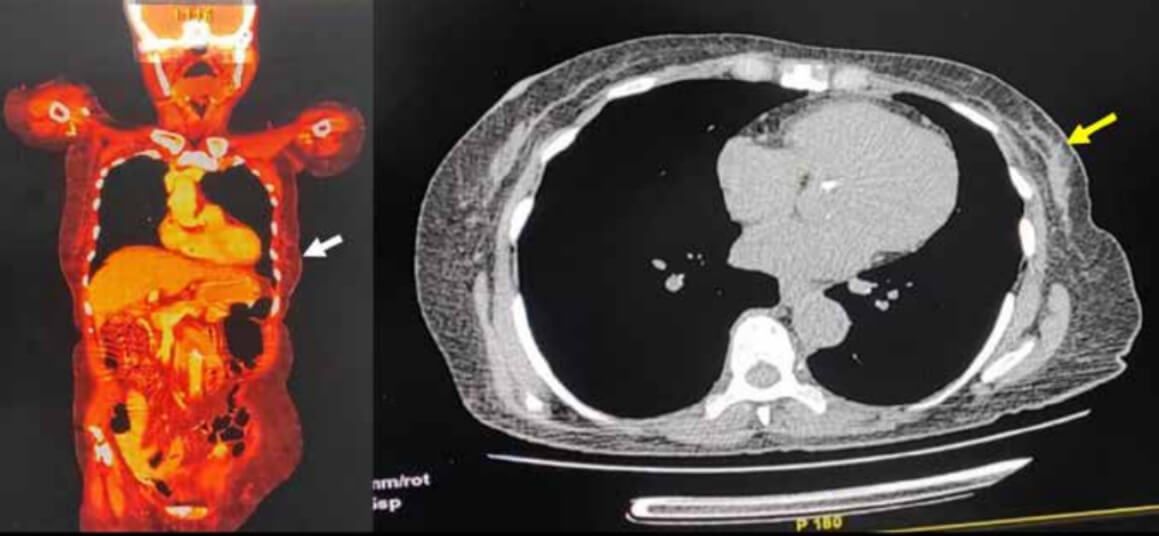
Figure 2: No active breast lesion was seen in PETCT and was suggestive of good response to T-DM1.
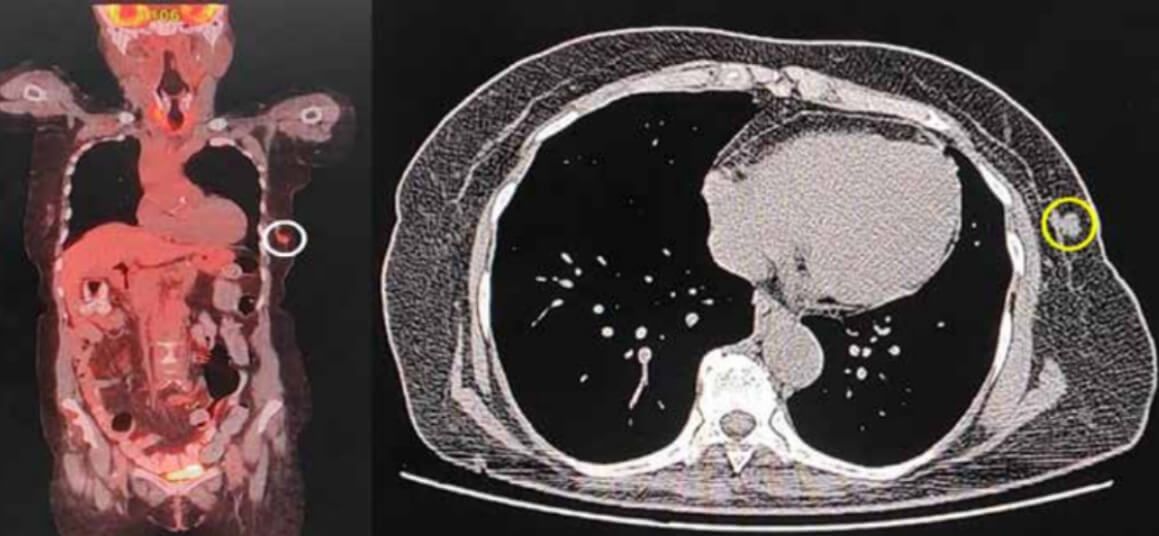
Figure 3: Left breast nodular lesion showed mild increased metabolic activity. No definite evidence of abnormal metabolic activity noted elsewhere, suggestive of maintained response overall.
Discussion
T-DM1, an ADC, received the Food and Drug Administration (FDA) approval in 2013 for the treatment of HER2-positive, MBC based on data from the EMILIA trial.5 The trial showed that T-DM1 resulted in better progression-free survival (PFS) of 9.6 months compared to 6.4 months for lapatinib plus capecitabine (P<0.001), as well as improved overall survival (OS) of 30.9 months compared to 25.1 months (P<0.001) after the failure of first-line anti-HER2 therapy.5,6
The efficacy of T-DM1 has also been supported by the THERESA trial, a multicentre phase III study.7,8 This trial demonstrated significantly improved median PFS (6.2 vs. 3.3 months, P<0.001) and OS (22.7 vs. 15.8 months, P=0.0007) with T-DM1 compared to physician's choice in patients who had progressed after at least two lines of HER2-targeted regimens for advanced breast cancer.7,8
It is important to note that the data on T-DM1 efficacy and longterm responses after previous lines of treatment are derived from retrospective studies, which vary in terms of design, patient characteristics, prior treatments, and prognostic factors. Therefore, caution should be exercised when interpreting these findings due to the potential for heterogeneity and bias.
Approximately 30%-55% of patients with HER2-positive breast cancer are estimated to develop brain metastases (BMs) during their disease course. Traditionally, loco-regional therapies such as whole brain radiotherapy (WBRT), SRS, and surgery have been the mainstay of treatment for brain metastases. However, the role of systemic therapies in this setting is still unclear due to limited penetration of the bloodbrain barrier (BBB) by these treatments and the exclusion of patients with BMs from many clinical trials.9
Nevertheless, T-DM1 has shown promise in improving OS in patients with trastuzumab-resistant advanced MBC and asymptomatic BMs who have previously undergone radiotherapy, compared to lapatinib plus capecitabine.10 Some case reports and small case series have also suggested favourable intracranial activity of T-DM1 in patients with asymptomatic BMs, with intracranial objective response rates ranging from 44%-100%.9,10 Additionally, a study by de Vries et al. in 2018 reported central nervous system (CNS) activity against symptomatic BMs.9
The results of the EMILIA trial’s exploratory analysis in patients with baseline CNS metastasis observed a PFS of 5.9 months, while in the Kamilla analysis the median PFS was 5.5 months (95% CI 5.3-5.6) in patients with baseline BMs suggesting that the PFS did not appear to be affected by treatment with T-DM1.10,11 The results of the present case suggest a better long-term PFS compared to clinical trials, along with a favourable toxicity profile observed during long-term therapy with T-DM1. Multiple randomised clinical trials provide evidence for the survival benefit of continuing HER2 blockade in MBC patients who experience disease progression during or after anti-HER2 targeted therapies.2 Current guidelines from the European Society for Medical Oncology and the American Society of Clinical Oncology recommend continuing HER2-targeted therapy until disease progression or the development of side effects.3 However, there is no strong consensus on the duration of treatment after achieving a complete response in HER2-positive MBC patients.
There is no doubt that targeted therapy has a profound impact on the treatment of HER2-amplified MBC, leading to improved outcomes for women. However, it is important to recognize that HER2-positive breast cancer is a heterogeneous disease with diverse behaviour patterns. It remains uncertain whether a specific subset of HER2-positive breast cancer patients derives the maximum benefit from targeted therapies. Nonetheless, based on existing literature, if patients respond well to therapy and maintain a favourable clinical response, treatment with the targeted agent should be continued until disease progression.
It is crucial to consider individual patient characteristics, treatment response, and the overall clinical picture when making decisions about the duration of targeted therapy. The goal is to optimise the balance between treatment effectiveness and potential side effects. Ongoing monitoring of disease status, regular assessments, and close collaboration between the patient and healthcare team are essential to guide treatment decisions and ensure the best possible outcomes for HER2-positive breast cancer patients.
Conclusion
This case report represents the first documented instance from India of a patient experiencing a prolonged PFS benefit while receiving T-DM1 biosimilar treatment. The introduction of cost-effective biosimilar agents in India has made them the standard of care for patients who have exhausted early lines of treatment and for those who require longterm targeted therapy. It provides an opportunity to expand access to effective treatments and improve outcomes for HER2-positive breast cancer patients with CNS involvement. It also offers a more affordable option without compromising therapeutic efficacy, enabling patients to continue targeted therapy for extended periods. This not only enhances the potential for improved disease control but also contributes to maintaining a favourable quality of life for patients. By leveraging the benefits of cost-effective biosimilar agents, healthcare providers can optimise treatment options and ensure that patients receive the most appropriate and beneficial care available.
Praneet Singh Bedi, Meenu Walia, Shaik Maheboob Hussain. A Case Report on Prolonged Response with
T-DM1 in Recurrent Advanced Breast Cancer Setting. MMJ. 2024, Dec. Vol 1 (4).
DOI: XXXXX
References
- Manthri S, Singal S, Youssef B, et al. Long-time response with ado-trastuzumab emtansine in a recurrent metastatic breast cancer. Cureus. 2019;11(10):e6036.
- Sun L, Gan L, Wang T. T-DM1 for advanced breast cancer after multi-anti-HER2-target therapy: a case report. Transl Breast Cancer Res. 2021;2:15.
- Cantini L, Pistelli M, Savini A, et al. Long-responders to antiHER2 therapies: A case report and review of the literature. Mol Clin Oncol. 2018;8(1):147-52.
- Zimmer AS, Van Swearingen AED, Anders CK. HER2-positive breast cancer brain metastasis: A new and exciting landscape. Cancer Rep (Hoboken). 2022;5(4):e1274.
- Verma S, Miles D, Gianni L, et al. Trastuzumab emtansine for HER2-positive advanced breast cancer. N Engl J Med. 2012;367:1783-91. Correction in: N Engl J Med. 2013;368:2442.
- Diéras V, Miles D, Verma S, et al. Trastuzumab emtansine versus capecitabine plus lapatinib in patients with previously treated HER2-positive advanced breast cancer (EMILIA): a descriptive analysis of final overall survival results from a randomised, open-label, phase 3 trial. Lancet Oncol. 2017;18:732-42. Erratum in: Lancet Oncol Erratum in 2018;19: e667. 2017;18: e433.
- Krop IE, Kim SB, González-Martín A, LoRusso PM, Ferrero JM, Smitt M, et al. Trastuzumab emtansine versus treatment of physician’s choice for pretreated HER2-positive advanced breast cancer (TH3RESA): a randomised, open-label, phase 3 trial. Lancet Oncol. 2014;15(7):689-99.
- Krop IE, Kim SB, Martin AG, et al. Trastuzumab emtansine versus treatment of physician’s choice in patients with previously treated HER2-positive metastatic breast cancer (TH3RESA): final overall survival results from a randomised open-label phase 3 trial. Lancet Oncol. 2017;18(6):743-54.
- Ricciardi GRR, Russo A, Franchina T. et al. Efficacy of T-DM1 for leptomeningeal and brain metastases in a HER2 positive metastatic breast cancer patient: new directions for systemic therapy - a case report and literature review. BMC Cancer. 2018;18(1):97
- Montemurro F, Delaloge S, Barrios CH, et al. Trastuzumab emtansine (T-DM1) in patients with HER2-positive metastatic breast cancer and brain metastases: exploratory final analysis of cohort 1 from KAMILLA, a single-arm phase IIIb clinical trial. Ann Oncol. 2020;31(10):1350.
- Krop IE, Lin NU, Blackwell K, et al. Trastuzumab emtansine (T-DM1) versus lapatinib plus capecitabine in patients with HER2-positive metastatic breast cancer and central nervous system metastases: a retrospective, exploratory analysis in EMILIA. Ann Oncol. 2015;26(1):113-9.