 WhatsApp Us (24/7)
 +91 926 888 0303 (24/7)


Definition
Pharmacogenomics is the study of how an individual’s genetic makeup influences their response to drugs. It involves analysing the interplay between an individual’s genetic variations and their response to medications, aiming to personalise drug treatment for enhanced efficacy and reduced adverse effects
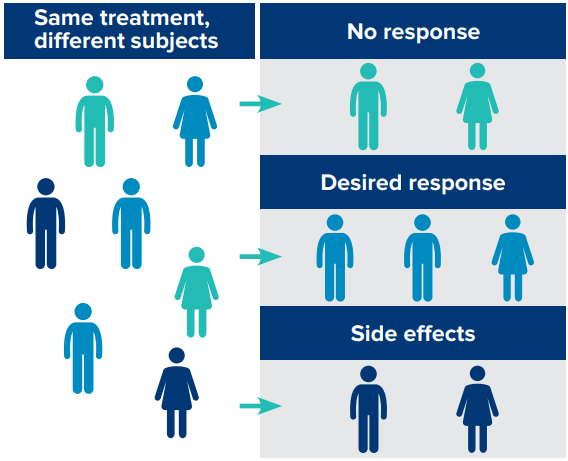
Figure 1: Effect of drug on different subjects
Significance
- Personalised medicine: Pharmacogenomics facilitates the tailoring of drug treatments based on an individual’s genetic profile, leading to more effective and personalised medical interventions.
- Optimising drug efficacy: Understanding genetic variations helps identify patients who may require different drug dosages or alternative medications to achieve optimal therapeutic outcomes.
- Minimising adverse drug reactions: By considering genetic factors, healthcare providers can predict and prevent adverse drug reactions, improving patient safety.
- Treatment decision support: Pharmacogenomic data can serve as a valuable tool for healthcare providers in making informed decisions about drug selection and dosage adjustments.
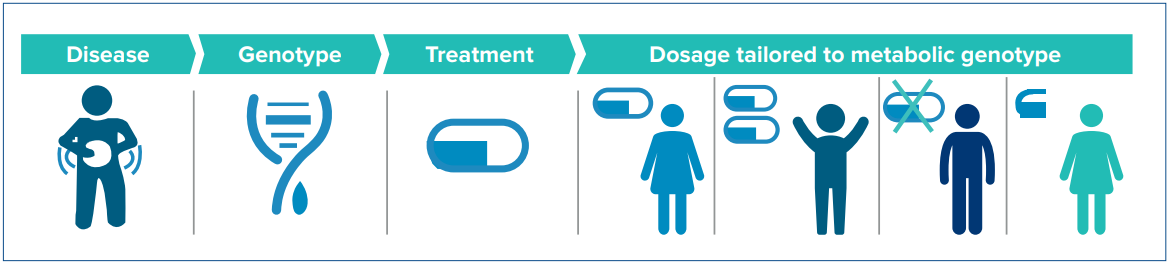
Figure 2: Pharmacogenomics can help tailor treatment and dosage requirements
Challenges
- Limited Evidence for All Drugs: Comprehensive pharmacogenomic data is not available for all drugs, making it challenging to implement personalized medicine across all medical conditions.
- Inter-individual Variability: Individuals may respond differently to drugs, and other factors such as environmental influences and drug-drug interactions also play a role.
- Integration into Clinical Practice: The integration of pharmacogenomics into routine clinical practice faces challenges, including the need for standardized guidelines, education for healthcare professionals, and infrastructure for genetic testing.
- Ethical and Privacy Concerns: The use of genetic information raises ethical concerns related to informed consent, privacy, and potential misuse of sensitive data.
Guidelines from CPIC and FDA
Clinical Pharmacogenetics Implementation Consortium(CPIC)
- Provides evidence-based guidelines for specific gene-drug pairs.
- Classifies recommendations based on the strength of evidence.
- Regularly update guidelines to incorporate new evidence.
U.S. Food and Drug Administration (FDA)
- Requires drug manufacturers to include pharmacogenomic information in drug labels when relevant.
- Encourages consideration of pharmacogenomic data in drug development.
- Collaborates with organisations like CPIC to ensure consistency in translating pharmacogenomic information into clinical practice.
Considerations for implementation of a pharmacogenomics programme
- Pre-emptive Genetic Testing: Consider genetic testing before prescribing certain drugs for personalised treatment.
- Communication and Education: Educate healthcare professionals and patients about the role of genetics in drug response.
- Integration into EHR and CDSS: Integrate pharmacogenomic data into electronic health records and implement clinical decision support systems.
- Continued Research and Updates: Stay informed about the latest research and updates in pharmacogenomics.
- Collaboration and Interdisciplinary Care: Foster collaboration among healthcare professionals for comprehensive patient care.
- Patient Consent and Privacy: Obtain informed consent for genetic testing and ensure patient privacy.
- Post-Marketing Surveillance: Continuously monitor patients for drug efficacy and adverse effects.
- Education for Patients: Encourage patient understanding and involvement in healthcare decisions.
Some examples of pharmacogenomics
| S.no. | Drug name | Drug type | Gene | Clinical relevance/CPIC guidelines |
|---|---|---|---|---|
| 1 | Warfarin | Anticoagulant | CYP2C9, VKORC1 | CPIC provides recommendations for warfarin dosing based on CYP2C9 and VKORC1 genotypes, ensuring optimal anticoagulation with minimized bleeding risk. |
| 2 | Clopidogrel | Antiplatelet | CYP2C19 | CPIC offers guidance on antiplatelet therapy with clopidogrel based on CYP2C19 genotypes, suggesting alternative medications or adjusted dosages. |
| 3 | Codeine | Pain Relief | CYP2D6 | CPIC provides recommendations for codeine therapy based on CYP2D6 genotypes. Poor metabolizers may require alternative pain medications to avoid inadequate relief. |
| 4 | Abacavir | Antiretroviral for HIV | HLA-B*5701 | CPIC recommends HLA-B*5701 testing before abacavir therapy, as positive individuals are at an increased risk of hypersensitivity reactions. |
| 5 | Tamoxifen | Breast Cancer Treatment | CYP2D6 | CPIC provides guidance on tamoxifen therapy based on CYP2D6 genotypes, considering the impact on drug metabolism and efficacy. |
| 6 | Tacrolimus | Immunosuppressant | CYP3A5, CYP3A4 | CPIC provides recommendations for tacrolimus dosing based on CYP3A5 and CYP3A4 genotypes to optimize immunosuppression after organ transplantation. |
| 7 | Fluoropyrimidines | 5-Fluorouracil, Capecitabine | DPD (Dihydropyrimidine Dehydrogenase) | Individuals with DPD deficiency may experience severe toxicity with fluoropyrimidine chemotherapy. Dosing adjustments or alternative therapies are warranted. |
| 8 | Irinotecan | Anticancer Agent | UGT1A1 (UDP Glucuronosyltransferase 1A1) | CPIC provides guidelines for adjusting irinotecan dosages based on UGT1A1 genotypes to manage toxicity. |
| 9 | Azathioprine | Thiopurines | TPMT (Thiopurine S-Methyltransferase) | TPMT genotyping helps guide the dosing of thiopurines, preventing excessive myelosuppression in individuals with low TPMT activity. |
| 10 | Mercaptopurine | Thiopurines | NUDT15 | NUDT15 genotyping aids in determining optimal dosages for thiopurines, reducing the risk of hematologic toxicity. |
Reports can be generated for a particular drug, a particular class of drug, or a comprehensive report covering all major drugs.
Test Requested: UGT1A1 GENE POLYMORHISM
| Method Used | ||
| PCR, Fragment Analysis | ||
| Results | ||
| TA Repeats | UGT1A1 Genotype | |
| 7/7 | UGT1A1*28/*28 | |
| Interpretation | ||
| TA Repeats | UGT1A1 Genotype | Remarks |
| Nomenclature | Recommendation | |
| UGT1A1*1/1 | 6/6 Recommendation: Normal Dosage Indicated | Patients who are homozygous for 6 thymine-adenine (TA) repeats demonstrate full enzyme activity and are associated with minimal toxicity with standard Irinotecan dosage. It is the wild-type allele associated with normal enzyme activity. |
| UGT1A1*1/*28 | 6/7 Recommendation: Increase risk of Neutropenia | This allele represents 7 thymine-adenine (TA) repeats within the promoter region as opposed to 6 that characterizes the wild-type allele. It leads to impairment of gene transcription and a decrease in transcriptional activity by approximately 70%. Patients who carry this genotype in UGT1A1 are at increased risk for neutropenia following initiation of irinotecan treatment. |
| UGT1A1*28/-28 | 7/7 Recommendation: Increase risk of Bone marrow toxicity. Associated with Gilbert Syndrome | Patients with 7 thymine-adenine (TA) repeat (7/7 homozygous) demonstrate severely reduced glucuronidation activity. The presence of this genotype in UGT1A1 may indicate an increased risk of bone marrow toxicity when treated with irinotecan. |
| UGT1A1-28/-37 | 7/8 Recommendation: Increase risk of neutropenia | Patients with 7 thymine-adenine (TA) repeats in one allele and one 8 thymine-adenine (TA) repeats in other allele (7/8 heterozygous) demonstrate reduced transcription rate and a lower enzyme level. |
| UGT1A1-37/-37 | 8/8 Recommendation: Increase risk of Neutropenia | Patient with (UGT1A1 37, deficien allele) has thymine- adenine (TA) repeats within the promoter region of UGT1A1, results in decreased promoter activity |
| UGT1A1*1/*36 | 5/6 Recommendation: Reduced risk of neonatal hyperbilirubinemia | Patient with five thymine-adenine (TA) repeats, and is associated with increased promoter activity of the gene and a reduced risk of neonatal hyperbilirubinemia, a common and typically benign condition. |
Figure 3: Report of irinotecan dosage
Test Results
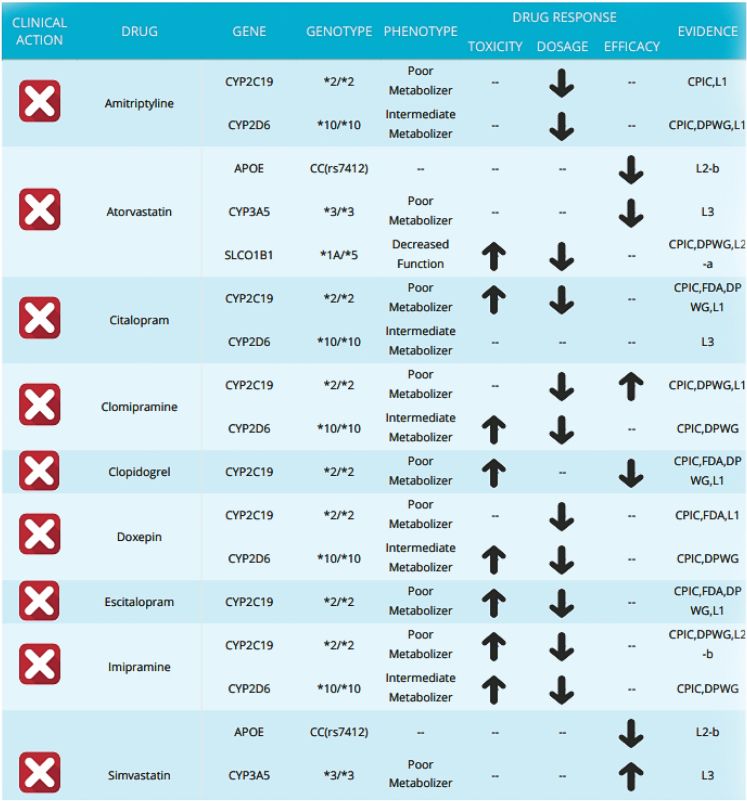
Figure 4: Comprehensive report