Delhi/NCR:

MOHALI:

Dehradun:

BATHINDA:

Mumbai:

NAGPUR:

LUCKNOW:

BHUBANESWAR:

Top Chancroid Doctors in India

To Book an Appointment

Call Us+91 926 888 0303

Filters

Doctors Available

Dr. Gurinder Bir Singh Kang

Visiting Consultant


Internal Medicine

Gender: Male

Book an Appointment

{"FirstAvailable":"2026-06-30 11:00 PM","FirstInHospital":"2026-06-30 11:00 PM","FirstVC":"","Hospital":{"max-super-speciality-hospital-mohali":{"FirstAvailable":"2026-06-30 11:00 PM","FirstInHospital":"2026-06-30 11:00 PM","FirstVC":""}}}

Dr. Shiveta Mattoo

Attending Consultant - Max Institute of Internal Medicine


Internal Medicine

Gender: Female

Book an Appointment

{"FirstAvailable":"2026-06-30 10:00 AM","FirstInHospital":"2026-06-30 4:00 PM","FirstVC":"2026-06-30 10:00 AM","Hospital":{"max-super-speciality-hospital-saket":{"FirstAvailable":"2026-06-30 10:00 AM","FirstInHospital":"2026-06-30 4:00 PM","FirstVC":"2026-06-30 10:00 AM"}}}

Dr. Shubham Mishra

Attending Consultant - Internal Medicine


Internal Medicine

Gender: Male

Book an Appointment

{"FirstAvailable":"2026-06-29 6:40 PM","FirstInHospital":"2026-06-29 6:40 PM","FirstVC":"2026-06-29 6:40 PM","Hospital":{"max-super-speciality-hospital-saket":{"FirstAvailable":"2026-06-29 6:40 PM","FirstInHospital":"2026-06-29 6:40 PM","FirstVC":"2026-06-29 6:40 PM"},"max-multi-speciality-centre-panchsheel-park":{"FirstAvailable":"2026-07-04 5:00 PM","FirstInHospital":"2026-07-04 5:00 PM","FirstVC":""}}}

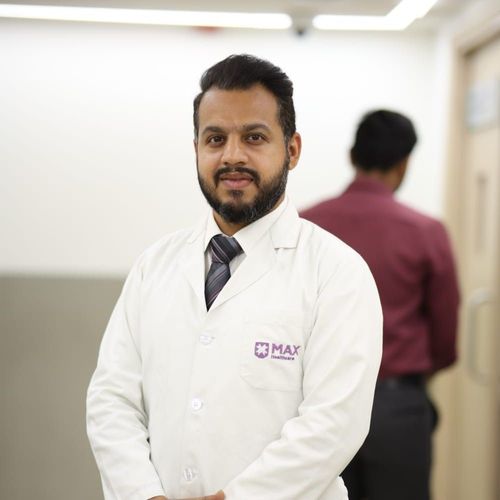
Dr. Shabir Raja

Visiting Consultant


Urology

Gender: Male

Dr Vishal Rajput

Attending Consultant-Internal Medicine


Internal Medicine

Gender: Male

Languages Spoken: Hindi, English

Book an Appointment

{"FirstAvailable":"2026-06-30 9:00 AM","FirstInHospital":"2026-06-30 9:00 AM","FirstVC":"2026-06-30 9:00 AM","Hospital":{"max-super-speciality-hospital-dwarka":{"FirstAvailable":"2026-06-30 9:00 AM","FirstInHospital":"2026-06-30 9:00 AM","FirstVC":"2026-06-30 9:00 AM"}}}

Can't find what you are looking for?

At Max Hospital India, expert care is available for a wide range of conditions, including Chancroid. Our top specialists provide advanced treatments using cutting-edge technology, ensuring the best possible care for Chancroid. Whether through video consultations or in-person visits, patients receive personalised treatment tailored to their needs. Explore our doctors' qualifications, experience, and areas of expertise. Our seamless online booking system makes scheduling appointments and checking OPD timings quick and hassle-free. Visit Max Hospital India for trusted, high-quality healthcare.

Frequently Asked Questions

Chancroid, also known as soft chancre or ulcus molle, is a sexually transmitted infection (STI) caused by the bacterium Haemophilus ducreyi.
Chancroid is relatively rare in many developed countries but more prevalent in certain regions with limited access to healthcare and high rates of other STIs.
The primary symptom of chancroid is the formation of painful genital ulcers or sores. These ulcers are typically soft, irregularly shaped, and have a tendency to bleed easily.
The incubation period for chancroid is typically between 3 to 7 days, but it can range from 1 to 14 days.
Diagnosis of chancroid involves a combination of clinical evaluation, physical examination of ulcers and lymph nodes, and laboratory tests such as Gram stain, culture, or nucleic acid amplification tests (NAATs) to identify Haemophilus ducreyi.
Yes, chancroid can be mistaken for other STIs such as syphilis, genital herpes, or lymphogranuloma venereum (LGV). Proper diagnosis is crucial to ensure appropriate treatment.
Untreated chancroid can lead to severe complications, including the development of large, deep ulcers, abscesses, and the spread of infection to nearby tissues or organs.
Chancroid affects both men and women, but men are more frequently affected. However, women may have milder symptoms, making diagnosis more challenging.
Yes, chancroid can be treated with certain antibiotics such as azithromycin, ceftriaxone, or erythromycin. Treatment should also include management of pain, wound care, and prevention of further transmission.
With appropriate antibiotic treatment, chancroid ulcers usually heal within 7 to 14 days. It is important to complete the full course of antibiotics as prescribed by a healthcare provider.
Chancroid can recur if reinfection occurs or if the initial infection was not adequately treated. It is essential to complete the full course of antibiotics and follow up with healthcare providers as recommended.
Currently, there is no commercially available vaccine for chancroid. Preventive measures primarily focus on safe sexual practices, including condom use and reducing the number of sexual partners.
Practicing safe sex, using condoms consistently and correctly, and limiting sexual partners can help reduce the risk of chancroid. Prompt treatment of infected individuals and their partners is crucial to prevent transmission.
Chancroid primarily affects populations with limited access to healthcare and is more prevalent in certain regions of Africa, Asia, and the Caribbean. Accurate global statistics are challenging due to underreporting and lack of diagnostic facilities in affected areas.
Yes, chancroid can increase the risk of HIV transmission both for the infected individual and their sexual partners. The presence of genital ulcers can provide an entry point for the HIV virus.
While chancroid itself does not typically cause long-term consequences, the presence of genital ulcers and inflammation can increase the risk of other STIs and may lead to scarring in some cases.
Chancroid can be diagnosed during pregnancy, but the treatment options may be limited due to potential risks to the fetus. Close consultation with a healthcare provider is necessary to balance risks and benefits.
Chancroid is primarily a sexually transmitted infection, but in rare cases, it can be transmitted through non-sexual contact with open sores or ulcerated skin of an infected individual.
If you suspect you have chancroid or have been exposed to it, it is important to seek medical attention from a healthcare provider experienced in the diagnosis and management of STIs. Prompt diagnosis and treatment are crucial for your health and to prevent further transmission.
FAQs reviewed by Dr. Amit Kumar, Associate Consultant, Urology.
