 WhatsApp Us (24/7)
 +91 926 888 0303 (24/7)


To Book an Appointment
Call Us+91 926 888 0303Winter Cough in Kids: Causes, Types & Home Care Tips
By Dr. P. S. Narang in Paediatrics (Ped)
Jan 30 , 2026

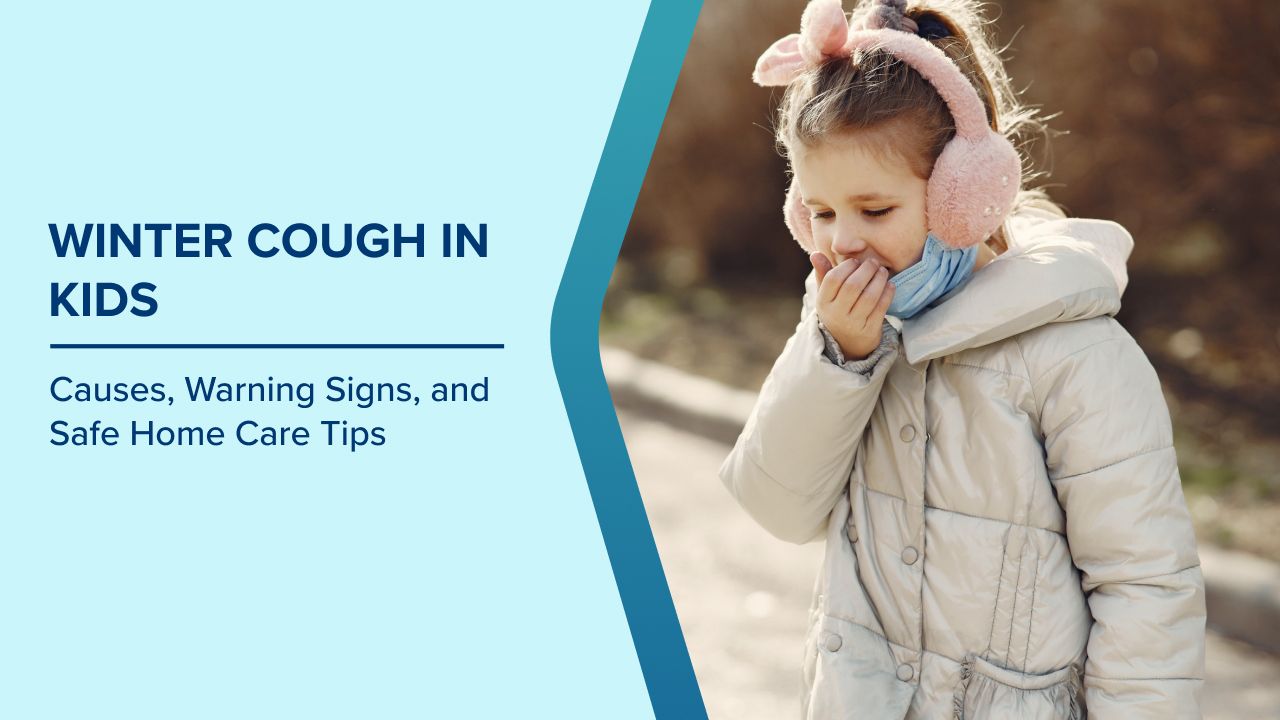
Winter is often a season that children enjoy, with cooler weather, festive holidays, and time spent indoors with family. For many parents, however, winter also brings a familiar concern. Children begin to cough more often, especially early in the morning or at night. A winter cough can make a child uncomfortable, disturb sleep, and worry parents who are unsure whether it is harmless or a sign of something more serious. Understanding why cough is common in colder months and knowing how to respond calmly can make a real difference to a child’s comfort and recovery.
Why Cough is More Frequent in Children During Winter
Children experience cough more often in winter for several practical reasons linked to weather, lifestyle changes, and developing immunity. Cold air is drier and can irritate the airways. Indoor heating also reduces moisture in the air. Dry air makes the throat and breathing passages more sensitive, which can trigger coughing.
Children also spend more time indoors during the winter months. Close contact in classrooms, buses, and play areas increases exposure to infections that circulate easily in enclosed spaces. A child’s immune defences are still developing, so their body reacts quickly to any irritation or infection of the airways.
Another important reason is that children have smaller air passages compared to adults. Even mild swelling or mucus production can make them cough more frequently. This is the body’s natural way of clearing the airways and keeping breathing passages open.
Types of Winter Cough in Children
Dry cough: This type of cough produces no mucus. It may be caused by throat irritation, cold air exposure, or an allergy. Children often complain of itching or scratchiness in the throat.
Wet or productive cough: This is a cough with mucus. It suggests the body is trying to clear secretions from the airways. The sound is heavier or rattling.
Nocturnal cough: Some children cough mainly at night. Cold air, lying flat, or indoor triggers such as dust can worsen nighttime symptoms and disturb sleep.
Cough associated with wheeze: A few children may have a cough accompanied by a whistling sound while breathing. This may indicate airway sensitivity and requires medical assessment.
Each type of cough has a different cause and needs appropriate attention. Observing when the cough is worse, how long it lasts, and whether it is dry or wet helps doctors make better decisions.
Common Winter Triggers in Daily Life
Winter cough in kids often worsens due to small but repeated triggers in the environment. Some examples include:
- Breathing very cold air directly while playing outdoors
- Sudden shifts between cold outdoor air and warm indoor rooms
- Strong room fresheners or incense smoke
- Dust from carpets, heaters, or blankets stored for months
- Exposure to someone who is already coughing or unwell
- Inadequate hydration during winter due to reduced thirst
Parents may not always notice these triggers because they are part of a daily routine. Reducing exposure to them can help prevent repeated coughing episodes.
Read More: Looking for Instant Relief from Dry Cough? Try these Home Remedies
Early Warning Signs Parents Should Not Ignore
Mild coughs are common and often improve with simple care. However, parents should watch for signs that suggest the child needs timely medical help. These include:
- Fast or difficult breathing
- Persistent high fever
- Bluish lips or face
- Refusal to eat or drink
- Unusual sleepiness or irritability
- Continuous vomiting with cough
- Cough lasting more than two weeks
Trust your instincts as a parent. If a child seems unusually unwell or their behaviour changes significantly, medical advice should be sought without delay.
When Winter Cough May Indicate an Underlying Condition
A repeated or severe winter cough can sometimes point to an underlying health issue. Examples may include airway allergies, asthma tendencies, chronic sinus congestion, or recurrent infections. Children with a family history of allergy, breathing problems, or frequent respiratory illness may be more likely to experience repeated cough during cold weather.
Safe Home Comfort Measures for Winter Cough
Parents can try gentle care methods at home to provide relief and comfort. These are supportive measures and not substitutes for medical treatment when needed.
- Keep your child well hydrated with warm fluids.
- Allow adequate rest and proper sleep.
- Ensure clean, moist air and avoid smoke exposure.
- Provide soft, easy-to-swallow foods.
- Never give cough syrups without medical advice.
If symptoms return frequently or medicines are needed repeatedly, consult a paediatrician for proper evaluation.
Everyday Habits that Reduce Winter Cough Frequency
- Teach children to cover their mouth when coughing
- Encourage regular hand washing
- Dress children in layers
- Keep rooms clean and ventilated
- Avoid smoke and strong perfumes
- Encourage regular water intake
Read More: Chronic Cough (More Than 2 Weeks): Causes, Warning Signs & Care
When to Consult a Doctor Without Delay
- Noisy or laboured breathing
- Chest pain while coughing
- Signs of dehydration
- Blood in mucus
- High fever not settling
- Persistent symptoms in very young children
Conclusion
A winter cough in kids is common, but it does not have to be frightening. With patient observation, supportive home care, and timely medical guidance, most children recover well. Paying attention to early symptoms and encouraging healthy routines help children breathe easier through the colder months.
Frequently Asked Questions
1. Can teething cause a cough in infants during winter?
Teething does not directly cause a cough, but increased saliva may cause mild throat irritation.
2. Is it safe for a child with a winter cough to attend school?
If there is fever, breathing difficulty, or weakness, rest at home is advised.
3. Does using room heaters worsen cough?
Heaters may dry the air. Proper ventilation and moisture help reduce irritation.
4. Can certain foods increase coughing?
Very cold drinks or oily foods may worsen throat irritation in some children.
5. Is a winter cough contagious?
If caused by infection, it can spread through coughing or sneezing.
Written and Verified by:

Related Blogs

Dr. Nidhi Rawal In Paediatrics (Ped)
Nov 13 , 2020 | 2 min read

Most read Blogs


Related Blogs
Dr. Nidhi Rawal In Paediatrics (Ped)
Nov 13 , 2020 | 2 min read
Most read Blogs