 WhatsApp Us (24/7)
 +91 926 888 0303 (24/7)


To Book an Appointment
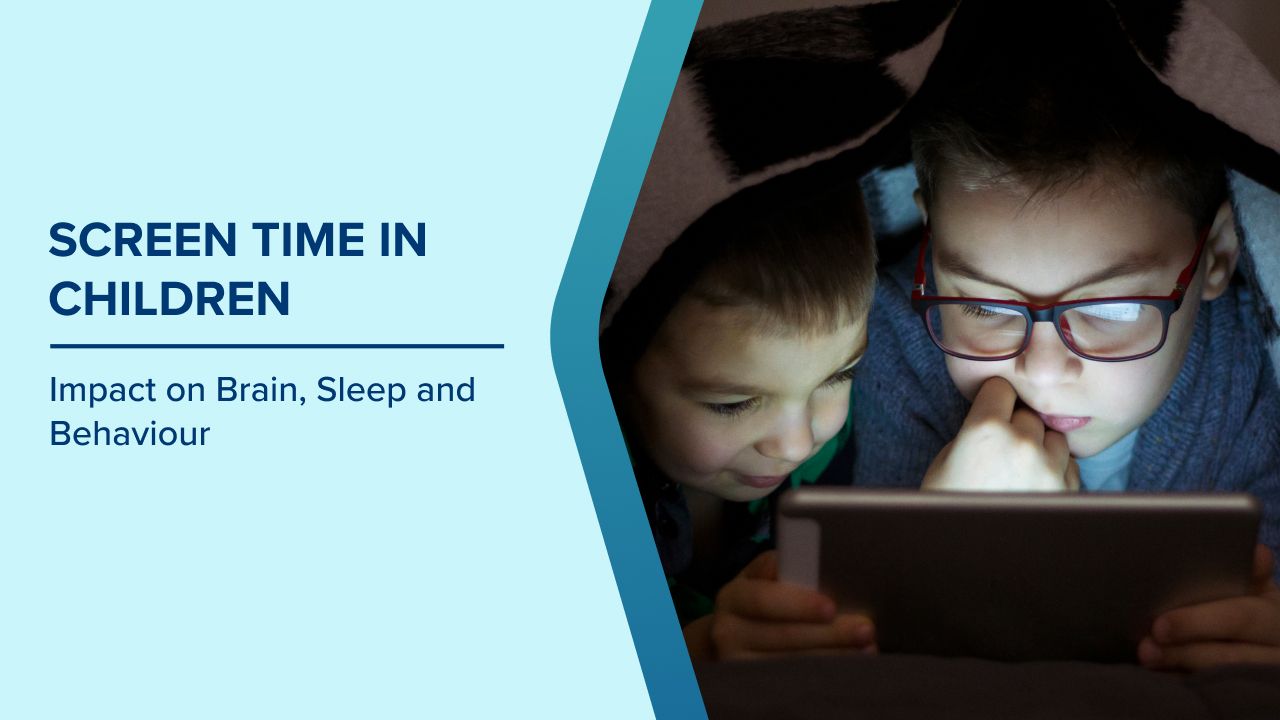
Call Us+91 926 888 0303Screen Time in Children: Impact on Brain, Sleep and Behaviour
By Medical Expert Team
Feb 23 , 2026

Screens are now part of everyday life. Mobile phones, tablets, televisions and laptops are easily accessible, even for very young children. While technology has its benefits, excessive screen exposure during childhood can quietly affect physical, emotional and cognitive development.
Keeping children away from screens is not about strict rules or fear. It is about protecting their growing brains, bodies and social skills during the most important years of development. Understanding why screen limits matter helps parents make informed and balanced choices.
How Screen Exposure Has Increased in Childhood
Children today are introduced to screens at a very early age. Screens are often used for entertainment, learning, calming tantrums or keeping children occupied.
Common situations include:
- Watching videos during meals
- Using phones to manage boredom
- Online learning replacing active play
- Screen time before bedtime
Over time, this frequent exposure becomes a routine rather than an occasional activity.
Impact of Screens on Brain Development
A child’s brain develops rapidly in the early years. Experiences during this period shape attention, memory, language and emotional control.
Excessive screen use can affect brain development in the following ways:
- Reduced ability to focus for long periods
- Difficulty processing real-world information
- Lower engagement in imaginative thinking
- Reduced problem-solving through hands-on play
Children learn best through interaction, movement and exploration, not passive viewing.
Effect on Attention and Concentration
Many digital platforms are designed to deliver fast-changing visuals and instant stimulation. This can make it harder for children to tolerate slower-paced activities.
Possible effects include:
- Shorter attention span
- Difficulty sitting through classroom lessons
- Reduced patience during reading or homework
- Constant need for stimulation
Over time, children may struggle with tasks that require sustained focus.
Read More:- Digital Eye Strain (Computer Vision Syndrome) in Children: Signs, Effects and Solutions
Delayed Language and Communication Skills
Language development depends on listening, responding and face-to-face interaction. Screens do not replace real conversations.
Too much screen exposure may lead to:
- Delayed speech development in young children
- Limited vocabulary growth
- Reduced ability to express emotions verbally
- Difficulty understanding social cues
Children need active communication, not one-way interaction from a screen.
Reduced Physical Activity and Motor Skills
Screen time often replaces physical movement. This can affect both gross and fine motor development.
Concerns include:
- Reduced outdoor play
- Poor posture habits
- Delayed coordination skills
- Increased risk of unhealthy weight gain
Physical activity supports muscle strength, balance and overall health, which screens cannot provide.
Impact on Sleep Quality
Screen use before bedtime can interfere with healthy sleep patterns.
Possible sleep-related effects include:
- Difficulty falling asleep
- Irregular sleep schedules
- Reduced sleep quality
- Daytime tiredness and irritability
Good sleep is essential for learning, emotional regulation and physical growth.
Emotional and Behavioural Effects of Screen Overuse
Children may not always express emotional distress clearly. Behavioural changes often provide early signs.
Excessive screen exposure can contribute to:
- Increased irritability or mood swings
- Difficulty managing frustration
- Reduced emotional regulation
- Lower tolerance for boredom
When screens become the primary source of comfort, children may struggle to self-soothe naturally.
Impact on Social Skills and Relationships
Social skills develop through play, interaction and shared experiences. Screens limit opportunities for real-world connection.
Potential effects include:
- Difficulty making friends
- Reduced empathy and emotional awareness
- Limited conflict resolution skills
- Preference for digital interaction over real conversations
Children learn social behaviour by observing and participating, not by watching.
Screen Time and Academic Performance
While some digital tools support learning, excessive or unstructured screen use can interfere with academic development.
Possible academic challenges include:
- Reduced interest in reading
- Difficulty completing tasks independently
- Lower engagement in classroom activities
- Reduced creativity and imagination
Balanced learning involves books, discussions, hands-on activities and exploration.
Why Early Habits Matter for the Future
Childhood habits often continue into adolescence and adulthood. Early dependence on screens can shape long-term behaviour patterns.
Long-term concerns include:
- Difficulty managing screen boundaries later in life
- Reduced self-discipline
- Preference for passive entertainment
- Challenges with real-world problem-solving
Teaching balance early helps children develop healthier digital habits.
Benefits of Reducing Screen Time
Limiting screen exposure offers several positive outcomes.
Children with reduced screen time often show:
- Better focus and concentration
- Improved communication skills
- Stronger emotional regulation
- Increased creativity
- Better physical health
Small changes can lead to meaningful improvements over time.
Healthy Alternatives to Screen Time
Reducing screens does not mean removing enjoyment. Replacing screens with engaging activities supports development.
Helpful alternatives include:
- Outdoor play and sports
- Reading together
- Creative activities like drawing or music
- Board games and puzzles
- Family conversations and shared meals
These activities strengthen bonds while supporting learning.
Role of Parents and Caregivers
Children learn by observing adults. Parental behaviour plays a powerful role in shaping habits.
Supportive strategies include:
- Setting clear screen boundaries
- Creating screen-free zones at home
- Encouraging active play
- Being mindful of personal screen use
Creating a Balanced Approach to Technology
The goal is not complete restriction but a healthy balance.
A balanced approach focuses on:
- Age-appropriate screen use
- Purposeful rather than passive viewing
- Limiting screen time duration
- Encouraging offline activities
Technology should support development, not replace it.
Read More:- Brain Fog from Screen Time: How Gaming Affects Your Mind
Conclusion
Keeping children away from excessive screen exposure protects their physical, emotional and cognitive development. Screens cannot replace real-world experiences, human interaction or active play.
By setting healthy boundaries early, parents help children build focus, resilience, communication skills and emotional strength. Balanced screen habits support healthier growth today and better well-being in the future.
Frequently Asked Questions
1. At what age should children first be introduced to screens?
There is no fixed age that suits every child. Screen exposure should depend on developmental readiness, family routines and purpose. Introducing screens later, in a controlled and limited manner, helps children develop stronger attention and social skills first.
2. Are educational apps and videos safe for young children?
Educational content can be helpful when used occasionally and with adult involvement. Watching or using apps together allows parents to explain concepts and ask questions, which makes screen time more meaningful than passive viewing.
3. How can parents reduce screen time without causing resistance or tantrums?
Gradual reduction works better than sudden restrictions. Setting predictable routines, offering engaging alternatives and explaining rules calmly helps children adjust without feeling punished.
4. Does screen time affect children differently based on personality or temperament?
Yes, some children are more sensitive to stimulation and may become overactive or irritable after screen use, while others may withdraw.
5. Should screen time rules be the same on weekdays and weekends?
Flexibility is acceptable as long as limits are clear. Weekends may allow slightly more screen use, but maintaining structure prevents screen habits from becoming excessive or disruptive.
6. Can background television affect children even if they are not actively watching?
Yes, background screens can reduce concentration, interrupt play and limit parent-child interaction, even when children appear to ignore them.
Related Blogs

Dr. Prashant Gupta In Mental Health And Behavioural Sciences , Psychiatry
Nov 08 , 2020 | 5 min read

Blogs by Doctor

Most read Blogs


Related Blogs
Dr. Prashant Gupta In Mental Health And Behavioural Sciences , Psychiatry
Nov 08 , 2020 | 5 min read
Blogs by Doctor
Most read Blogs