 WhatsApp Us (24/7)
 +91 926 888 0303 (24/7)


To Book an Appointment
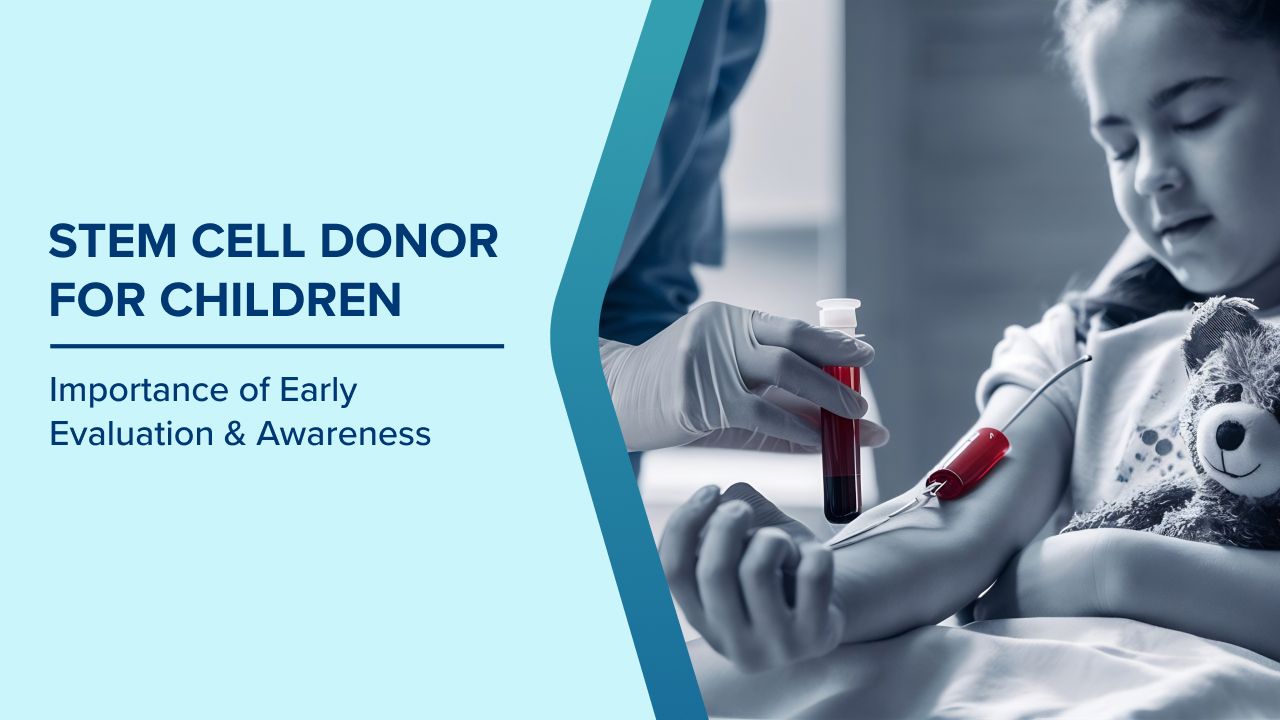
Call Us+91 926 888 0303Stem Cell Donor for Children: Importance of Early Evaluation & Awareness
By Dr Satyendra Katewa in Paediatric (Ped) Oncology , Cancer Care / Oncology , Bone Marrow Transplant , Haematology , Hematology Oncology
Jun 01 , 2026

Hearing that a child may need a stem cell transplant can feel overwhelming for any family. Along with concerns about treatment, one of the biggest questions parents often face is: Where will the donor come from?
Finding a suitable stem cell donor is one of the most important steps in the transplant journey. The process involves medical testing, donor matching, and careful coordination to ensure the child receives healthy stem cells that are as compatible as possible.
While the search may feel complex, understanding how donor matching works and what options are available can help families feel more informed and prepared during this phase of treatment.
Why a Stem Cell Donor Match Matters
In many paediatric stem cell transplants, the donated stem cells must closely match the child's immune system. This reduces the risk of complications and helps the transplanted cells grow and function properly inside the body.
Doctors look at specific proteins on the surface of cells called human leukocyte antigens (HLA markers). These markers act like the body's identification system.
A closer HLA match generally improves:
- Transplant success
- Stem cell acceptance
- Recovery of healthy blood cells
- Reduction in transplant-related complications
However, with advancements in transplant medicine a perfect donor match is no longer necessary in every situation. Even if a fully matched donor is available, transplantation is still possible due to significant progress in the field.
Conditions That May Require a Stem Cell Donor
Children may need a stem cell transplant for several serious conditions, including:
- Certain blood cancers (leukemia / lymphoma)
- Bone marrow failure disorders
- Genetic blood disorders
- Immune system disorders
- Some inherited metabolic conditions
In these situations, healthy donor stem cells help replace damaged or non-functioning bone marrow.
The First Step: Testing Family Members
The donor search usually begins within the immediate family.
Siblings Are Often Tested First
Brothers and sisters may have the highest chance of being a close genetic match because HLA markers are inherited from parents.
Not every sibling will match, but when a fully matched sibling donor is available, it is often considered an ideal option.
Parents May Also Be Evaluated
In some situations, one parent may be considered a partial match donor. This is known as a haploidentical transplant, where the donor shares half of the child's HLA markers.
Advances in transplant techniques have made these procedures increasingly successful in many cases.
Read More: Bone Marrow Donation: Who Can Donate & Eligibility
When a Family Match Is Not Available
Many families worry that treatment options end if no sibling match is found. Fortunately, that is no longer the case.
Doctors may expand the search to:
- National donor registries (Datri, National Marrow Donor Programe)
- International stem cell registries (DKMS)
- Umbilical cord blood banks
- Partially matched family donors
Modern transplant medicine has significantly improved access to alternative donor options.
Understanding Stem Cell Donor Registries
Stem cell donor registries are databases of healthy volunteers willing to donate stem cells if matched with a patient.
When a child needs a transplant:
- The child's HLA type is entered into registry systems
- Potential matches are searched nationally and internationally
- Matching donors are contacted for confirmatory testing
Sometimes a suitable donor is found quickly, while other searches may take longer depending on the child's genetic background and HLA type.
Why Ethnicity and Genetics Influence Matching
Stem cell matching is strongly linked to inherited genetic patterns. This means patients are more likely to find matches among donors with similar ethnic or ancestral backgrounds.
For some families, especially from underrepresented populations, finding a fully matched unrelated donor may be more challenging due to limited donor diversity in registries.
This is one reason why increasing stem cell donor awareness and registration remains important globally.
Umbilical Cord Blood as a Donor Source
In some paediatric cases, doctors may consider umbilical cord blood transplantation. Cord blood contains stem cells collected after a baby is born and stored in specialised banks.
Advantages may include:
- Faster availability
- Less strict matching requirements
- Lower risk of certain immune complications in some situations
Because children generally require a smaller stem cell volume than adults, cord blood can sometimes be a suitable option for paediatric transplantation.
What Families Should Expect During the Donor Search
The donor identification process can take time and often involves multiple stages.
HLA Typing
The child undergoes specialised blood testing to identify HLA markers.
Registry Search
Doctors search donor databases for compatible matches.
Confirmatory Testing
Potential donors undergo additional testing to confirm compatibility and overall health.
Treatment Planning
Once a donor is identified, the transplant team coordinates timelines for stem cell collection and transplant preparation.
Throughout this process, families remain in close communication with transplant specialists.
Emotional Challenges Families Commonly Experience
Waiting for a donor match can be emotionally difficult for parents and caregivers.
Common concerns include:
- Fear of not finding a match
- Anxiety about treatment timelines
- Stress during prolonged uncertainty
- Worry about transplant complications
These feelings are completely understandable. Many transplant centres provide counselling, psychological support, and patient coordinators to help families navigate the process.
The Importance of Early Evaluation
In conditions where a stem cell transplant may become necessary, early referral to a transplant team is important.
Starting the donor search early allows:
- More time for registry matching
- Better treatment planning
- Faster coordination if transplantation becomes urgent
Early evaluation also helps families understand available options before the condition progresses further.
Read More: Hematopoietic Stem Cell Transplantation: Advances & Care
Why Awareness About Stem Cell Donation Matters
Many children waiting for transplants depend on unrelated volunteer donors. Increasing awareness about stem cell donation can improve registry diversity and help more patients find life-saving matches.
A larger donor pool:
- Improves matching chances
- Reduces waiting time
- Expands options for children from diverse genetic backgrounds
Public awareness continues to play an important role in supporting paediatric transplant care worldwide.
Conclusion
Finding a stem cell donor for a child can feel uncertain and emotionally demanding, but modern transplant medicine has created more possibilities than ever before. From matched siblings and parent donors to international registries and cord blood banks, multiple pathways now exist to help children access potentially life-saving treatment.
Understanding how donor matching works and what options are available can help families approach the transplant process with greater clarity and confidence. With early evaluation, specialised care, and ongoing advances in transplantation, many children today are able to move forward with successful donor-supported treatment.
Frequently Asked Questions
1. Does a child always need a fully matched donor for a stem cell transplant?
No, in some cases, partially matched family donors or cord blood donors may also be suitable.
2. How long does it take to find a donor?
The timeline varies. Some matches are found quickly, while others may require broader registry searches.
3. Can parents donate stem cells to their child?
Yes, in certain situations, parents may serve as partially matched donors through haploidentical transplantation.
4. Are unrelated donor transplants successful?
Yes, advances in transplant medicine have significantly improved outcomes with unrelated donor transplants.
5. Why are stem cell donor registries important?
Registries help connect patients with compatible volunteer donors, especially when no family match is available.
Written and Verified by:

Related Blogs

Dr. Ramandeep Singh Arora (Paed Onco) In Paediatric (Ped) Oncology , Cancer Care / Oncology
Oct 25 , 2016 | 2 min read

Dr. Ramandeep Singh Arora (Paed Onco) In Paediatric (Ped) Oncology , Cancer Care / Oncology
Sep 04 , 2017 | 3 min read
Blogs by Doctor

Most read Blogs


Related Blogs
Dr. Ramandeep Singh Arora (Paed Onco) In Paediatric (Ped) Oncology , Cancer Care / Oncology
Oct 25 , 2016 | 2 min read
Dr. Ramandeep Singh Arora (Paed Onco) In Paediatric (Ped) Oncology , Cancer Care / Oncology
Sep 04 , 2017 | 3 min read
Blogs by Doctor
Most read Blogs