 WhatsApp Us (24/7)
 +91 926 888 0303 (24/7)


To Book an Appointment
Call Us+91 926 888 0303Summer Food Poisoning: Causes, Symptoms & Prevention Tips
By Dr. Sehba Asim Nehal in Internal Medicine
Jun 11 , 2026

Summer season with longer days, vacation times, travel and lots of food options creates conditions for food to spoil faster than expected. The combination of high temperatures, humidity, and frequent handling increases the risk of contamination and spoilage of food, even in foods that appear fresh.
What makes summer food poisoning particularly concerning is not just its frequency, but how easily it can happen in everyday situations, such as packed lunches, street food, leftovers, or even home-cooked meals left out for a little too long.
Understanding how heat impacts food safety, recognising early warning signs, and making small but effective changes can significantly reduce the risk.
Why Summer Increases the Risk of Food Poisoning
Warm temperatures act as a catalyst for microbial growth. When food is exposed to heat for extended periods, harmful organisms multiply rapidly, often without visible signs such as smell or texture changes.
Faster Food Spoilage
Perishable foods like dairy, cooked rice, cut fruits, salads, and meat deteriorate quickly in hot weather. Even a short delay in refrigeration can allow microorganisms to grow to unsafe levels.
Increased Outdoor Eating
Summer often means picnics, travel, and street food consumption. These environments may lack proper temperature control, refrigeration, or hygiene practices.
Power Cuts and Storage Issues
In many regions, frequent power outages can disrupt refrigeration, leading to unnoticed food spoilage at home.
Dehydration and Lower Immunity
High temperatures can lead to dehydration, which affects digestion and the body’s ability to respond to infections, making symptoms feel more severe.
Common Summer Food Mistakes That Raise Risk
Many cases of food poisoning are linked not to what you eat, but how it is handled. In summer, small lapses can have bigger consequences.
- Leaving cooked food at room temperature for too long
- Consuming leftovers without proper reheating
- Eating cut fruits and salads that have been exposed to air and heat
- Drinking beverages with contaminated ice
- Using the same utensils for raw and cooked food
- Buying food from vendors without proper storage facilities
These little everyday habits may seem harmless, but they can significantly increase the risk when temperatures are high.
How Food Gets Contaminated in Hot Weather
Contamination during summer often happens silently and quickly. It can occur at multiple points:
- During preparation: Unclean surfaces or hands can transfer microorganisms
- During storage: Improper refrigeration allows rapid growth
- During transport: Packed food without cooling can spoil within hours
- During serving: Exposure to flies, dust, or repeated handling increases contamination
What makes this more challenging is that contaminated food does not always look or smell spoiled, making it difficult to identify risk early.
Early Warning Signs to Watch For
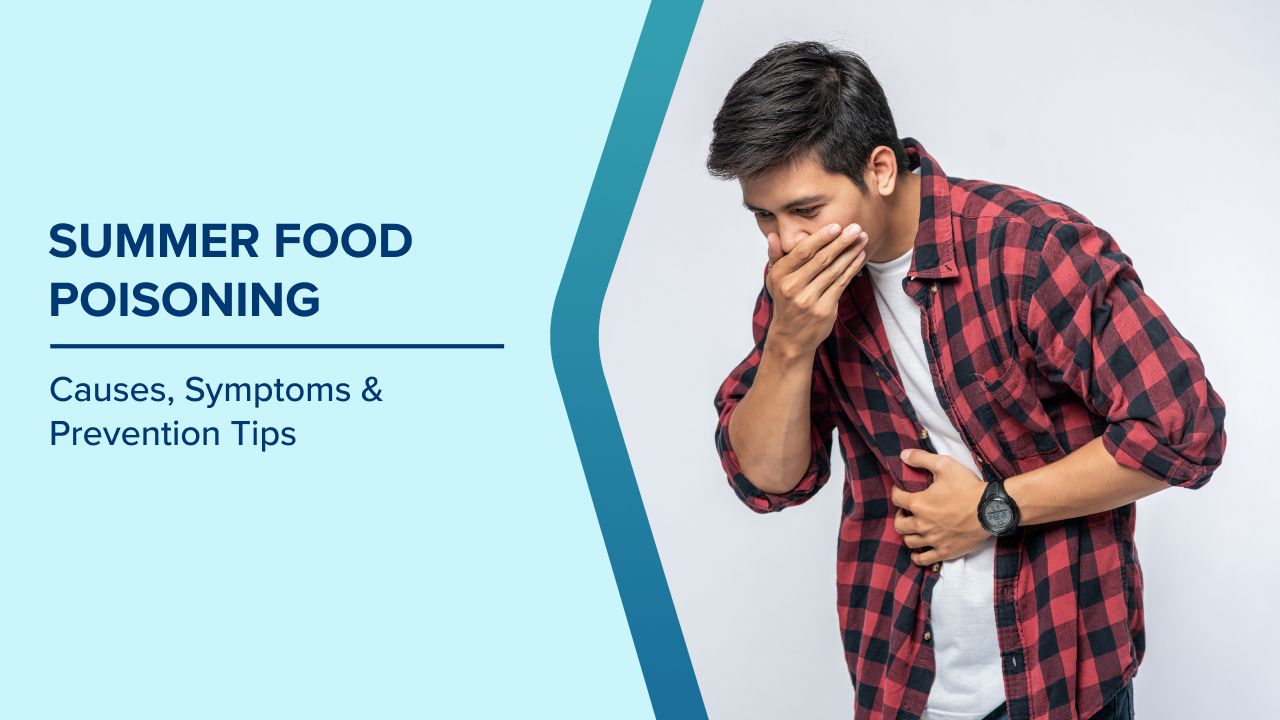
Food poisoning in summer can develop suddenly. The body reacts quickly to contaminated food, often within hours.
Common early signs include:
- Sudden nausea after eating
- Mild stomach discomfort or uneasiness
- Loss of appetite
- A general feeling of weakness or fatigue
As it progresses:
- Frequent loose motions
- Repeated vomiting
- Abdominal cramping
- Fever or chills
In hot weather, dehydration can develop quickly, making even mild symptoms feel more intense.
Who Is More Vulnerable During Summers?
While anyone can experience food poisoning, certain groups are more at risk during hot weather:
- Children: More sensitive to fluid loss
- Older adults: Slower recovery and higher risk of complications
- Pregnant women: Increased susceptibility to infections
- People with chronic conditions: Such as diabetes or kidney disease
- Individuals with weakened immunity
For these groups, early care and prevention become even more important.
Smart Food Safety Practices for Summer
Preventing food poisoning during summer does not require drastic changes, just consistent, mindful habits.
Control Temperature at Every Step
- Refrigerate perishable foods within 1–2 hours
- Avoid leaving cooked food outside for extended periods
- Keep packed meals insulated if travelling
Be Careful with Water and Ice
- Ensure drinking water is clean and filtered
- Avoid ice from unknown sources
- Use boiled or purified water for beverages
Handle Fruits and Raw Foods Safely
- Wash fruits thoroughly before cutting
- Avoid pre-cut fruits from roadside vendors
- Consume fresh produce soon after preparation
- Avoid keeping vegetables and fruits outside the refrigerator after cutting
Rethink Leftovers
- Store leftovers promptly in airtight containers
- Reheat thoroughly before eating
- Avoid reheating multiple times
Maintain Personal and Kitchen Hygiene
- Wash hands before handling food
- Clean surfaces and utensils regularly
- Keep raw and cooked foods separate
Eating Out Safely in Summer
Avoiding outside food completely is not always practical, but making informed choices helps reduce risk.
- Choose places with visible hygiene practices
- Avoid food that has been sitting out in the open
- Prefer freshly prepared, hot meals over pre-cooked items
- Be cautious with raw salads or chutneys served outside
- Stick to bottled or safe drinking water
Street food, especially in summer, may be exposed to dust, heat, and repeated handling, making careful selection important.
Hydration: The Overlooked Protective Factor
Hydration plays a key role in preventing and managing food-related illnesses during summer.
When the body is well-hydrated:
- Digestion functions more efficiently
- Toxins are processed and eliminated effectively
- The risk of severe dehydration during illness is reduced
Simple habits like drinking water regularly, consuming fluids like coconut water, and avoiding excessive caffeine can support overall digestive health.
When to Seek Medical Attention
While many cases improve with basic care, some situations require medical evaluation.
Seek medical help if:
- Symptoms persist beyond 48 hours
- There is severe weakness or dizziness
- Vomiting prevents fluid intake
- There are signs of dehydration (dry mouth, low urine output)
- High fever develops
In summer, delays in seeking care can worsen dehydration and recovery time.
Recovery Tips for Faster Relief
Once symptoms begin to improve, recovery should be gradual and supportive.
- Start with light, easily digestible foods
- Eat small portions instead of large meals
- Continue fluid intake even after symptoms reduce
- Avoid spicy, oily, or heavy foods
- Allow the body enough rest to recover fully
Rushing back to normal eating habits too quickly can delay recovery.
Long-Term Prevention
Preventing food poisoning in summer is less about strict rules and more about awareness. Small, consistent habits can make a significant difference:
- Being mindful of how long food is exposed to heat
- Choosing freshness over convenience
- Paying attention to storage and hygiene
- Staying hydrated and alert to early symptoms
Over time, these practices become routine and help reduce risk not just in summer, but throughout the year.
Conclusion
Summer increases the risk of food poisoning, because of environmental changes. The same food will not spoil easily in cold weather. Heat accelerates spoilage, weakens food safety margins, and amplifies the impact of small mistakes.
The key to staying safe lies in awareness, timely action, and simple preventive habits. By understanding how food behaves in warmer conditions and making mindful choices, it is possible to enjoy the season without compromising health.
Frequently Asked Questions
1. Why is food poisoning more common in summer than in winter?
Higher temperatures create ideal conditions for microorganisms to multiply rapidly, increasing the likelihood of food contamination.
2. Can refrigerated food still cause food poisoning in summer?
Yes, if refrigeration is inconsistent, interrupted, or if food is stored for too long, contamination can still occur.
3. Is it safe to eat leftovers during the summer?
Yes, but only if they are stored promptly, refrigerated properly, and reheated thoroughly before consumption.
4. How can you tell if food has gone bad in hot weather?
Not all contaminated food shows visible signs. Changes in smell, texture, or taste can indicate spoilage, but the absence of these signs does not guarantee safety.
5. Does spicy food increase the risk of food poisoning in summer?
Spicy food itself does not cause food poisoning, but it may irritate the stomach and worsen symptoms if the digestive system is already affected.
6. Can drinking cold beverages prevent food poisoning?
No, cold beverages do not prevent contamination. In fact, unsafe ice or water can increase the risk if not sourced properly.
Written and Verified by:

Related Blogs


Dr. Vandana Boobna In Internal Medicine
Nov 08 , 2020 | 2 min read
Blogs by Doctor

Interpreting CBC Test Results: What Your Blood Tells You about Your Health
Dr. Sehba Asim Nehal In Internal Medicine
Jul 22 , 2024 | 6 min read

Radioallergosorbent Test (RAST): Purpose, Risk & Results Interpretation
Dr. Sehba Asim Nehal In Internal Medicine
Apr 28 , 2025 | 3 min read
Most read Blogs


Related Blogs
Dr. Vandana Boobna In Internal Medicine
Nov 08 , 2020 | 2 min read
Blogs by Doctor
Interpreting CBC Test Results: What Your Blood Tells You about Your Health
Dr. Sehba Asim Nehal In Internal Medicine
Jul 22 , 2024 | 6 min read
Radioallergosorbent Test (RAST): Purpose, Risk & Results Interpretation
Dr. Sehba Asim Nehal In Internal Medicine
Apr 28 , 2025 | 3 min read
Most read Blogs